
Introduction: Nature’s Longevity Lessons
Have you ever wondered how some animals can live for hundreds of years while humans struggle to maintain vitality as we age? From the enormous bowhead whale to the tiny Hydra, these species hold astonishing secrets of longevity, tissue repair, and anti-aging. By examining their metabolism, habits, and natural defense mechanisms, we can uncover practical lessons to boost our own health, slow aging, and increase vitality—all inspired by nature’s most enduring species.
1. Galapagos Tortoise – The Slow and Steady Giant
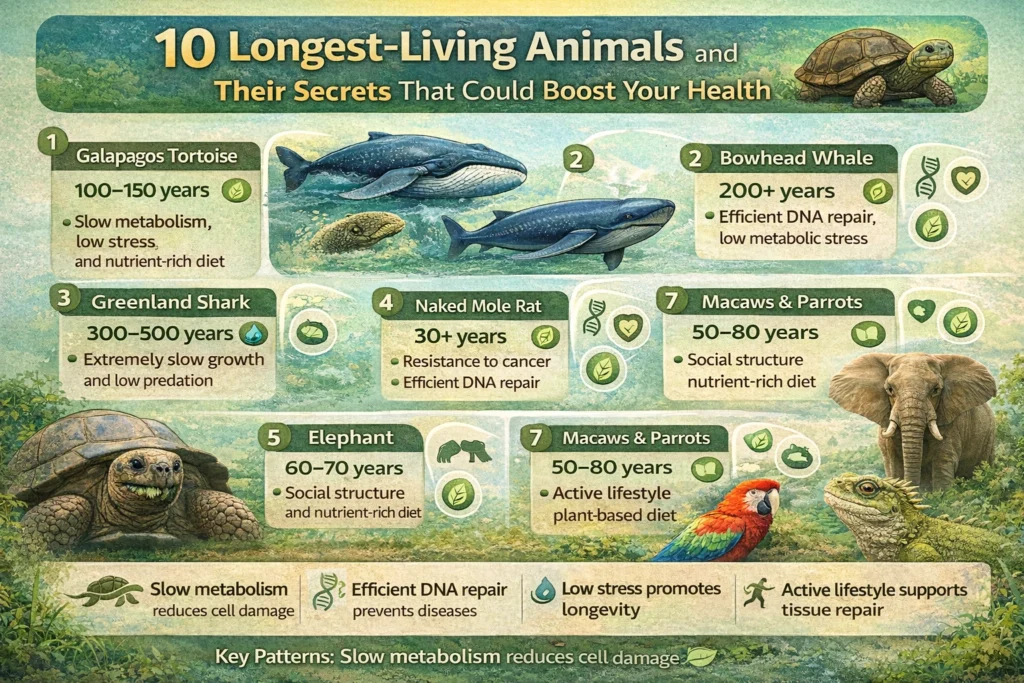
Average Lifespan: 100–150 years
Secrets: Slow metabolism, low stress, and protective shells allow these reptiles to live well over a century.
Human Takeaway: Embrace slower living where possible. Balanced meals, mindful eating, and avoiding metabolic overload help reduce cellular damage and support longevity.

Dr. Mohammed Abdul Azeem Siddiqui
Cosmo General Hospital
2. Bowhead Whale – The Arctic Survivor
Average Lifespan: 200+ years
Secrets: Efficient DNA repair and low metabolic stress help these whales resist age-related diseases.
Human Takeaway: Support DNA health with antioxidant-rich foods like berries, leafy greens, nuts, and seeds. Avoid toxins and UV overexposure.
3. Greenland Shark – The Deep-Sea Longevity Master
Average Lifespan: 300–500 years
Secrets: Extremely slow growth, deep-water habitat, and low predation reduce stress and cellular wear.
Human Takeaway: Limit chronic stress. Practices like meditation, deep breathing, and spending time in nature can mimic the benefits of low-stress environments.
4. Naked Mole Rat – The Cancer-Resistant Rodent
Average Lifespan: 30+ years
Secrets: Highly resistant to cancer, efficient DNA repair, and low oxidative stress contribute to longevity.
Human Takeaway: Antioxidants and phytonutrients protect DNA. Include foods like turmeric, green tea, and fatty fish to reduce oxidative damage.
5. Koi Fish – The Graceful Survivor
Average Lifespan: 200+ years
Secrets: Slow metabolism and low-stress aquatic environments extend life.
Human Takeaway: Incorporate calm routines and gentle movement. Even light daily exercise improves circulation, tissue repair, and cellular regeneration.
6. Elephants – Social Giants
Average Lifespan: 60–70 years
Secrets: Strong social structures reduce stress, and nutrient-rich plant-based diets support health.
Human Takeaway: Build strong social connections. Low stress, combined with a nutrient-rich diet, supports healthy aging and long-term vitality.
7. Macaws & Parrots – Colorful Longevity Experts
Average Lifespan: 50–80 years
Secrets: Active lifestyle, social bonding, and plant-based diets rich in antioxidants.
Human Takeaway: Stay socially active, eat colorful plant foods, and maintain gentle but consistent daily movement.
8. Tuatara – The Ancient Reptile
Average Lifespan: 100+ years
Secrets: Slow metabolism, low stress, and efficient cellular repair mechanisms.
Human Takeaway: Integrate restorative sleep, gentle exercise, and mindful living to allow your body to repair and regenerate.
9. Hydra – The Immortal Tiny CreatureAverage Lifespan: Potentially immortal
Secrets: Continuous cellular regeneration allows Hydra to avoid the typical aging process.
Human Takeaway: Support stem cell health and cellular repair with a balanced diet, regular exercise, proper sleep, and low-stress habits. While immortality isn’t possible, maximizing regeneration improves longevity and vitality.
10. Red Sea Urchin – The Oceanic Survivor
Average Lifespan: 100–200 years
Secrets: Slow aging at the cellular level and strong regenerative capabilities.
Human Takeaway: Support tissue repair with nutrient-dense foods and hydration. Gentle activity and antioxidant-rich diets mimic the regenerative signals observed in long-lived species.
Key Patterns Observed in Long-Lived Species
Researchers studying these species have uncovered recurring patterns that contribute to longevity and cellular health. These patterns are highly relevant for humans, as they provide clues on how we can adapt our lifestyles for a healthier, longer life.
1. Slow Metabolism Reduces Cellular Damage
Many long-lived animals, like tortoises and Greenland sharks, have slow metabolic rates. A slower metabolism reduces the production of free radicals—unstable molecules that damage cells over time. This low oxidative stress protects tissues and slows aging.
Human Adaptation:
While we cannot drastically slow metabolism, lifestyle choices like intermittent fasting, balanced meals, and avoiding overeating can mimic the benefits. Eating nutrient-dense foods and spacing meals reduces metabolic strain and supports cellular repair.
2. Efficient DNA Repair Prevents Age-Related Diseases
Long-lived animals often exhibit exceptional DNA repair mechanisms, which help prevent cancer and other age-related diseases. Bowhead whales, naked mole rats, and even some birds maintain cellular integrity well into old age.
Human Adaptation:
Humans can support DNA repair through antioxidant-rich diets and nutrient support. Foods like berries, leafy greens, nuts, seeds, and fatty fish provide compounds that protect DNA, reduce oxidative stress, and promote regeneration. Avoiding environmental toxins, UV overexposure, and smoking further supports DNA integrity.
3. Low Stress & Low Predation Environments Promote Longevity
Many long-lived species thrive in environments with minimal stress and low predation. Elephants benefit from strong social bonds and minimal threats, while deep-water sharks are safe from predators. Stress triggers cortisol, which accelerates cellular damage and aging in humans.
Human Adaptation:
Managing stress is key. Practices like meditation, yoga, deep breathing, social support, and time in nature can lower stress hormones and protect cellular health. Prioritizing mental and emotional well-being is as critical as diet and exercise.
4. Active Lifestyle & Consistent Movement Supports Tissue Repair
Even animals with long lifespans stay physically active. Birds fly daily, whales swim constantly, and tortoises slowly traverse large areas. Regular movement promotes circulation, nutrient delivery, and tissue repair, all critical for longevity.
Human Adaptation:
Humans can mirror this with daily physical activity, even gentle forms like walking, swimming, yoga, or stretching. Consistent movement supports joint health, cardiovascular health, and cellular regeneration. Aim for at least 30 minutes of moderate activity per day.
5. Protective Diet (Antioxidants, Polyphenols, Omega-3s) Enhances Regeneration
Many long-lived animals consume nutrient-rich diets. Elephants eat antioxidant-rich plants, seabirds consume omega-3 fatty acids from fish, and parrots eat colorful fruits high in phytonutrients. These foods combat oxidative stress and support cellular repair.
Human Adaptation:
Humans can benefit from plant-based, antioxidant-rich diets that include fruits, vegetables, nuts, seeds, green tea, and fatty fish. Incorporating these foods regularly supports regeneration and slows tissue aging.
6. Some Species Show Negligible Aging
Species like the Hydra exhibit nearly negligible aging due to continuous cellular renewal. While humans cannot achieve immortality, this demonstrates the importance of regenerative capacity in maintaining tissue and organ function over time.
Human Adaptation:
Encourage cellular renewal by combining nutrition, exercise, stress management, and proper sleep. Avoiding chronic inflammation and supporting stem cell health through lifestyle choices can maximize the body’s natural regenerative potential.
What Humans Can Learn
By observing these long-lived species, several practical lessons emerge for human health:
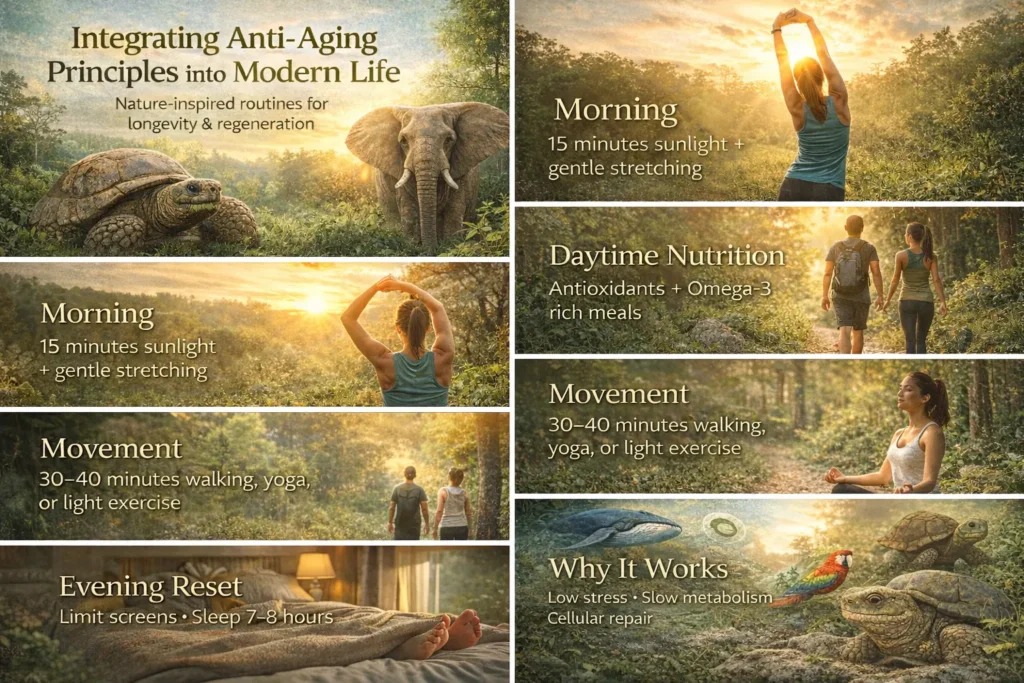
- Eat Wisely: Focus on antioxidant-rich foods, omega-3 fatty acids, and polyphenols to support cellular repair.
- Move Daily: Even gentle, consistent physical activity enhances circulation, tissue repair, and longevity.
- Manage Stress: Low-stress lifestyles reduce cortisol, protecting DNA and slowing aging.
- Prioritize Sleep: Restorative sleep supports regeneration, hormone balance, and cognitive health.
- Support DNA Health: Avoid toxins, UV overexposure, and smoking; consume foods that aid DNA repair.
- Practice Intermittent Fasting or Metabolic Control: Reduce metabolic overload to mimic longevity strategies seen in nature.
- Connect with Nature: Natural sunlight, fresh air, and exposure to greenery improve mood, reduce stress, and activate regenerative pathways.
Conclusion
The natural world holds profound lessons about longevity and regeneration. Long-lived animals demonstrate that slow metabolism, efficient DNA repair, low stress, consistent movement, and nutrient-rich diets all contribute to extended healthspan. By studying and adapting these principles, humans can take practical steps to live healthier, longer lives.
While we cannot become immortal like Hydra, integrating these lessons into our daily routines can help slow aging, protect our cells, and maintain vitality well into later years. The secrets of the animal kingdom remind us that nature provides the blueprint—and with simple, consistent practices, we can tap into these anti-aging strategies every day.
Disclaimer:
The content in this article is based on observational research and patterns seen in nature over time. The longevity and health insights presented are derived from studies of animals and their natural behaviors, interpreted from a nature-inspired healing perspective. These are intended as informational and lifestyle suggestions to support healthy living and are not a substitute for professional medical advice, diagnosis, or treatment. Readers should consult qualified healthcare providers before making any significant changes to diet, exercise, or wellness routines.