


Peptide therapy is gaining popularity in modern medicine and wellness circles, but what exactly is it, and what conditions can it address? This article dives deep into the uses, benefits, and real-world applications of peptide therapy.

What Is Peptide Therapy?
Peptides are short chains of amino acids, the building blocks of proteins, that naturally occur in the body. They play a crucial role in various biological processes, including hormone regulation, immune function, and tissue repair. Peptide therapy involves administering specific peptides to target particular health concerns, improve bodily functions, or slow down the effects of aging.
Unlike synthetic drugs, peptide therapy works by signaling the body to perform certain functions rather than overriding natural processes. This makes it a potentially safer, more natural approach to health optimization.
Conditions Treated by Peptide Therapy
Peptide therapy has a wide range of applications. Some of the most common conditions it is used to treat include:
- Anti-Aging and Skin Health
Certain peptides stimulate collagen production, improving skin elasticity, reducing wrinkles, and promoting youthful skin appearance. - Muscle Growth and Fat Loss
Peptides such as growth hormone-releasing peptides (GHRPs) can support muscle mass increase, accelerate fat metabolism, and improve workout recovery. - Joint and Tissue Repair
Peptides can enhance tissue regeneration, reduce inflammation, and accelerate healing for injuries such as ligament or tendon damage. - Immune System Support
Some peptides strengthen immune function, helping the body fight infections and maintain overall health. - Cognitive Function and Mood Support
Certain neuropeptides can improve focus, mental clarity, and mood balance. - Sexual Health
Specific peptides may support hormone balance, enhancing libido and overall sexual function.
Benefits of Peptide Therapy
The key benefits of peptide therapy include:
- Natural Stimulation: Encourages the body to produce its own hormones and proteins.
- Targeted Action: Different peptides are designed to address specific issues, from fat loss to immune enhancement.
- Fewer Side Effects: Compared to synthetic medications, peptides often have a lower risk of adverse reactions.
- Enhanced Recovery: Supports healing from injuries, surgeries, or chronic inflammation.
- Improved Quality of Life: Helps with energy levels, sleep quality, and overall wellness.
What Peptide Therapy Cannot Do
While peptide therapy offers many benefits, it is not a cure-all. It cannot replace a healthy lifestyle, proper nutrition, or standard medical treatments for serious conditions. It is best used as a complementary therapy under the supervision of a qualified healthcare professional.
How Peptide Therapy Is Administered
Peptides can be administered in several ways, depending on the type and purpose:
- Injectable Peptides: Most common method, delivering peptides directly into the bloodstream or targeted tissue.
- Topical Peptides: Creams or gels for localized skin or joint treatment.
- Oral Peptides: Less common, as digestion can break down some peptides before they are absorbed.
Safety and Considerations
Before starting peptide therapy, it is important to consult a healthcare provider. Dosage, frequency, and type of peptide should be tailored to individual health goals and conditions. Additionally, sourcing peptides from reputable providers is crucial to ensure quality and safety.
Peptide therapy is a versatile, promising approach for addressing a variety of health concerns—from anti-aging and muscle growth to immune support and tissue repair. By leveraging the body’s natural biological processes, peptides can enhance wellness and improve quality of life when used responsibly. However, they should always be part of a holistic approach to health under professional guidance.
Q1: What is peptide therapy used for?
A1: Peptide therapy is used to treat a variety of conditions, including anti-aging, muscle growth, fat loss, tissue repair, immune support, and cognitive enhancement.
Q2: How does peptide therapy work?
A2: Peptides signal the body to produce proteins and hormones naturally, targeting specific functions such as collagen production, fat metabolism, or hormone balance.
Q3: Is peptide therapy safe?
A3: When prescribed and monitored by a healthcare professional, peptide therapy is generally safe with fewer side effects compared to synthetic medications.
Q4: Can peptide therapy improve skin health?
A4: Yes, certain peptides stimulate collagen production, helping reduce wrinkles, improve elasticity, and promote youthful-looking skin.
Q5: How are peptides administered?
A5: Peptides can be administered via injections, topical creams, or oral supplements, depending on the type and intended effect.
Who Needs Peptide Therapy?
Peptide therapy can benefit individuals looking for anti-aging support, weight management, improved recovery, or hormone balance. However, it should always be administered under medical supervision, particularly for those who are pregnant, breastfeeding, or have existing health conditions.
Ideal Candidates for Peptide Therapy
- Those experiencing age-related decline
People in their late 20s or 30s may notice dips in natural growth hormone, resulting in low energy, muscle loss, or increased body fat. Peptides can help restore vitality and maintain healthy body composition. - Individuals aiming for body composition changes
Peptides may support weight management, fat loss, and muscle gain when combined with proper nutrition and exercise. - People with slow recovery
Athletes or those recovering from injuries can benefit from peptides that enhance tissue repair and speed up healing. - Those with hormonal imbalances
Women in perimenopause or menopause may find peptide therapy helpful for balancing hormones and alleviating related symptoms. - People with chronic fatigue or poor sleep
Certain peptides can improve energy levels and promote better sleep quality. - Individuals concerned about skin and hair health
Peptides may support skin elasticity, reduce wrinkles, and improve hair health.
Who Should Avoid or Use Peptides with CautionWho Should Avoid Peptides?
While peptide therapy can offer significant benefits, certain individuals should avoid or use peptides only under strict medical supervision. Peptides can influence hormones, interact with medications, and may carry unknown long-term risks. Many peptides are not FDA-approved and are unregulated, which increases the importance of caution.
Groups Who Should Avoid or Be Extremely Cautious
- Pregnant or Breastfeeding Individuals
Safety during pregnancy or lactation has not been established. Avoid peptide therapy entirely in these cases. - Individuals with Autoimmune Conditions
Peptides may affect immune system function and could worsen diseases such as lupus or rheumatoid arthritis. - People with Cardiovascular Issues
Some peptides can alter blood flow, which may pose risks for those with high blood pressure, heart failure, or other heart conditions. - Those with a History of Cancer
Growth hormone-stimulating peptides may potentially fuel the growth of existing cancer cells. - Individuals with Pancreatitis
Certain peptides, such as GLP-1 analogs, can exacerbate pancreatitis. - People with Severe Allergies
Risk of serious allergic reactions is possible with peptide administration. - Those Taking Other Medications
Peptides can interact with prescription or over-the-counter medications; always disclose all current medications to your healthcare provider. - Individuals with Kidney Issues
Some peptides have been linked to kidney complications.
Why Caution Is Important
- Lack of Regulation: Many peptides sold as supplements are not FDA-approved and may vary in purity and dosage.
- Uncertain Long-Term Effects: Human studies on long-term peptide use are limited.
- Hormonal Impact: Peptides can mimic or affect natural hormones, potentially causing imbalances.
How Quickly Do Peptides Work?
The speed at which peptides deliver results varies widely depending on the type of peptide, method of administration, and individual health. Some effects can be noticed within days, while others require months of consistent use.
Quick Results: Days to Weeks
- Sleep & Mood: Certain peptides, like DSIP (Delta Sleep-Inducing Peptide), can improve sleep quality and mood within a few days to a couple of weeks.
- Healing & Inflammation: Peptides such as BPC-157 or Thymosin Beta-4 may show early improvements in tissue repair and reduced inflammation within 1–2 weeks.
- Energy & Appetite: Weight loss peptides, like Semaglutide, may begin suppressing appetite and boosting energy within 1–3 weeks.
Medium-Term Results: Weeks to Months
- Skin Health: Improvements in fine lines, collagen production, and skin firmness typically appear after 2–3 months of regular use.
- Body Composition: Visible muscle growth and fat loss generally occur around 2–4 months, with significant changes taking 3–6 months.
Long-Term Results: 3–6+ Months
For anti-aging, deep tissue repair, or major body recomposition, the most substantial and lasting benefits are usually observed over 3–6 months or longer, as the body gradually adapts and builds up effects.
Key Factors That Influence Results
- Type of Peptide: Different peptides target distinct systems, such as growth hormone, immune function, or gut health.
- Method of Delivery: Injections typically act faster and are more potent than oral or topical forms.
- Consistency: Following the prescribed dosage and schedule is critical for achieving optimal results.
- Individual Health: Age, lifestyle, overall health, and metabolism significantly affect how quickly results appear.
Takeaway
Peptide therapy is a cumulative process. While some benefits appear quickly, the full effects often require consistent use over several months. Consulting a healthcare professional ensures proper peptide selection and administration for the best results.
Disadvantages of Peptides
While peptide therapy offers several benefits, it also has potential drawbacks that should be considered before use.
1. Limited Regulation and Quality Control
- Many peptides available online or as supplements are not FDA-approved.
- Purity, dosage, and labeling may be inconsistent, increasing the risk of contamination or ineffective treatment.
2. Unknown Long-Term Effects
- Research on long-term use in humans is limited.
- Potential risks over years of use are not fully understood.
3. Possible Side Effects
- Common minor side effects: redness or irritation at injection sites, mild headaches, fatigue, or nausea.
- More serious reactions are possible, including allergic reactions or hormonal imbalances.
4. Cost
- Peptide therapy can be expensive, especially injectable forms, and often requires ongoing treatment.
5. Time to See Results
- Benefits may take weeks to months to become noticeable, depending on the peptide and goal.
- Some users may become frustrated with the slow progression.
6. Medical Risks for Certain Individuals
- Not suitable for pregnant or breastfeeding women, people with autoimmune diseases, heart conditions, kidney issues, pancreatitis, or a history of certain cancers.
- Can interact with medications or exacerbate existing health conditions.
7. Dependency on Medical Supervision
- Proper administration and monitoring by a healthcare professional are necessary.
- Self-administration without guidance can lead to misuse or adverse effects.
Peptide therapy is not risk-free. Its effectiveness and safety rely on quality products, proper dosing, and medical supervision. Always consult a qualified healthcare provider to weigh potential benefits against risks.
Frequently Asked Questions About Peptides
1. How much weight can you lose with peptide therapy?
Peptide therapy can support fat loss, but results vary based on the type of peptide, diet, exercise, and individual metabolism. Most people see gradual weight loss over 2–4 months, with significant changes taking longer. Peptides are best used alongside a healthy lifestyle, not as a standalone solution.
2. How long does a peptide last?
The duration depends on the peptide type and administration method. Some peptides have short half-lives of a few hours, while others may last several days. Injections generally provide more sustained effects compared to oral or topical forms.
3. Will insurance pay for peptide therapy?
Most peptide therapies are considered experimental or cosmetic and are usually not covered by insurance. Coverage depends on medical necessity and your insurance provider’s policies.
4. How do you know if peptides are working?
Effectiveness can be measured by improvements in your target goals, such as increased energy, better sleep, faster recovery, enhanced muscle tone, or skin/hair health. Regular monitoring and lab tests under medical supervision help track progress.
5. What is the best time to take peptides?
Timing depends on the peptide and its purpose. For example, growth hormone-related peptides are often taken at night to align with natural hormone cycles. Weight-loss peptides may be taken before meals. Your healthcare provider will determine the optimal schedule.
6. What happens when you stop using peptides?
Stopping peptides may lead to a gradual loss of benefits over time, such as reduced energy, slower recovery, or return of previous symptoms. Some effects, like collagen improvements, may persist for a while, but continued use is typically required for maintenance.
7. What foods are high in collagen?
Collagen-rich foods include bone broth, chicken skin, fish, egg whites, and gelatin. Vitamin C-rich foods like citrus, bell peppers, and berries support collagen synthesis in the body.
8. Can peptides affect your liver?
Most peptides are safe for the liver at prescribed doses, but some can cause strain or liver enzyme changes, particularly if taken in high doses or alongside other medications. Always monitor with blood tests under medical supervision.
9. Who should not use peptides?
- Pregnant or breastfeeding women
- People with autoimmune disorders, heart disease, kidney issues, pancreatitis, or a history of certain cancers
- Those on medications that may interact with peptides
Consult a healthcare provider before starting therapy.
10. Why do doctors prescribe peptides?
Doctors prescribe peptides to address specific health goals or medical conditions, including hormone deficiencies, slow tissue repair, muscle loss, skin aging, metabolic issues, or immune support. Peptides can stimulate natural body processes safely when monitored.
11. Where to inject peptides?
Peptides are commonly injected subcutaneously (under the skin) or intramuscularly (into the muscle). Common sites include the abdomen, thigh, or upper arm. A healthcare professional should demonstrate proper injection techniques to ensure safety and effectiveness.
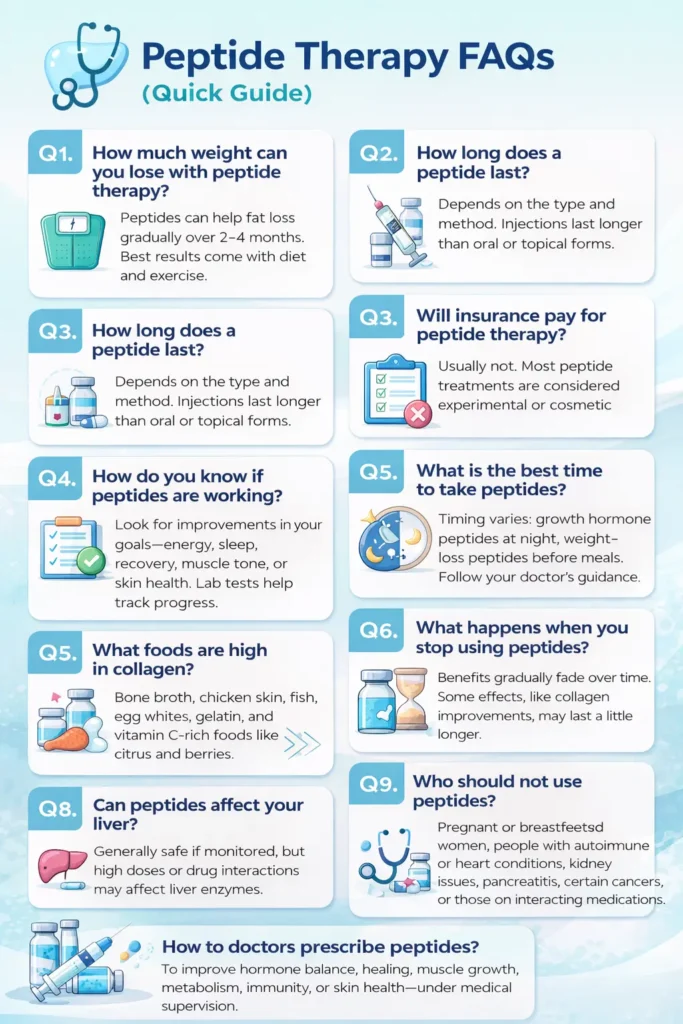
Peptide Therapy FAQs
Q1: How much weight can you lose with peptide therapy?
Peptides can help fat loss gradually over 2–4 months. Best results come with diet and exercise.
Q2: How long does a peptide last?
Depends on the type and method. Injections last longer than oral or topical forms.
Q3: Will insurance pay for peptide therapy?
Usually not. Most peptide treatments are considered experimental or cosmetic.
Q4: How do you know if peptides are working?
Look for improvements in your goals—energy, sleep, recovery, muscle tone, or skin health. Lab tests help track progress.
Q5: What is the best time to take peptides?
Timing varies: growth hormone peptides at night, weight-loss peptides before meals. Follow your doctor’s guidance.
Q6: What happens when you stop using peptides?
Benefits gradually fade over time. Some effects, like collagen improvements, may last a little longer.
Q7: What foods are high in collagen?
Bone broth, chicken skin, fish, egg whites, gelatin, and vitamin C-rich foods like citrus and berries.
Q8: Can peptides affect your liver?
Generally safe if monitored, but high doses or drug interactions may affect liver enzymes.
Q9: Who should not use peptides?
Pregnant or breastfeeding women, people with autoimmune or heart conditions, kidney issues, pancreatitis, certain cancers, or those on interacting medications.
Q10: Why do doctors prescribe peptides?
To improve hormone balance, healing, muscle growth, metabolism, immunity, or skin health—under medical supervision.
Q11: Where to inject peptides?
Common injection sites: abdomen, thigh, upper arm. Always learn proper technique from a healthcare professional.
What are peptides most commonly used to treat?
Peptides are most commonly used to support anti-aging, hormone balance, muscle growth, fat loss, tissue repair, immune function, and skin health. In medical settings, they may also be used to aid recovery from injuries, improve sleep, and support metabolic health.
What are the negative side effects of peptide therapy?
Possible side effects of peptide therapy include injection-site irritation, headaches, fatigue, nausea, fluid retention, or hormonal imbalances. More serious risks can occur if peptides are used without medical supervision, especially in people with heart disease, autoimmune conditions, kidney issues, or a history of cancer.
What does peptide therapy treat?
Peptide therapy is used to address conditions related to aging, poor recovery, low energy, hormone imbalances, metabolic dysfunction, skin aging, and inflammation. It is often prescribed as a supportive or regenerative treatment rather than a cure for disease.
Does peptide therapy actually work?
Yes, peptide therapy can work when the correct peptide, dosage, and protocol are used under medical supervision. Results vary by individual and goal, with benefits often appearing gradually over weeks to months. Clinical evidence supports certain peptides, while others are still under ongoing research.
Common Benefits & Uses of Peptide Therapy
Anti-Aging
Peptide therapy may help reduce visible signs of aging by supporting skin elasticity, hair health, cellular repair, and overall vitality.
Recovery & Performance
Certain peptides accelerate injury healing, reduce inflammation, and enhance muscle repair, making them useful for athletes and active individuals.
Fat Loss Support
Some peptides target fat metabolism by signaling fat cells to release stored fat for energy, supporting gradual and sustainable weight loss.
Hormonal Balance
Peptides can stimulate the body’s natural hormone production, which may improve mood, libido, energy levels, and overall well-being.
Cognitive Function & Sleep
Specific peptides may enhance sleep quality, mental clarity, focus, and stress regulation.
Immune Support
Peptides help regulate immune responses and may reduce chronic inflammation, supporting long-term health.
Important Considerations Before Using Peptides Wide Variety of Peptides There are thousands of peptides, each with distinct biological roles—from collagen synthesis and tissue repair to blood pressure and metabolic regulation.
Regulatory Status & Safety Although peptides naturally occur in the body, not all therapeutic peptides are FDA-approved. Improper use can lead to side effects, including hormonal imbalances.
Not the Same as Steroids Peptide therapy does not involve synthetic hormones. Instead, peptides signal the body to activate and optimize its own natural systems.
What it does:
Peptide therapy supports the body’s natural healing, hormone balance, fat metabolism, and cellular repair processes.
Who it’s for:
Adults experiencing aging-related changes, poor recovery, fatigue, hormonal imbalance, or metabolic slowdown—under medical supervision.
How fast it works:
Some benefits appear in days to weeks, while full results often take 2–6 months of consistent use.
Is it safe?
Generally safe when prescribed and monitored by a qualified healthcare provider. Not suitable for everyone.
Peptide Therapy vs Steroids: Key Differences
| Feature | Peptide Therapy | Steroids |
|---|---|---|
| How it works | Signals the body to activate natural processes | Replaces or overrides natural hormones |
| Hormonal impact | Supports natural hormone production | Suppresses natural hormone production |
| Side effect risk | Lower when medically supervised | Higher, especially long-term |
| Long-term safety | Still being researched | Well-known risks with misuse |
| Purpose | Healing, balance, regeneration | Rapid muscle growth or inflammation control |
Conclusion
Peptide therapy represents a growing area of modern, regenerative medicine with applications ranging from anti-aging and recovery to metabolic and hormonal support. By working with the body’s natural biological signals, peptides offer a targeted and potentially effective approach to improving overall health and performance.
However, peptide therapy is not a one-size-fits-all solution. Results depend on the specific peptide used, the treatment protocol, individual health status, and—most importantly—proper medical supervision. When used responsibly as part of a holistic health plan that includes nutrition, exercise, and lifestyle management, peptide therapy may provide meaningful benefits for the right candidates.
As research continues to evolve, informed decision-making and professional guidance remain essential for safe and effective outcomes.
About the Author
Dr. Mohammed Abdul Azeem Siddiqui, MBBS
Registered Medical Practitioner (Reg. No. 39739)
Dr. Mohammed Abdul Azeem Siddiqui is a senior medical practitioner with over 30 years of clinical experience in family medicine and preventive healthcare. His professional focus is on making quality healthcare affordable, accessible, and evidence-based.
He has a strong interest in:
- Early disease diagnosis and prevention
- Lifestyle-related and metabolic disorders
- Patient education and long-term wellness strategies
Dr. Siddiqui believes in empowering patients with accurate, ethical medical information, enabling informed decisions about emerging therapies such as peptide therapy—always emphasizing safety, clinical judgment, and evidence-based care.
Contact:
📧 powerofprevention@outlook.com
Medical Disclaimer
The information provided in this article is for educational and informational purposes only and is not intended as medical advice, diagnosis, or treatment. Peptide therapy may not be suitable for everyone and can carry risks, especially for individuals with underlying medical conditions or those taking certain medications.
Always consult a qualified healthcare professional before starting peptide therapy or making any changes to your health regimen. Never self-prescribe peptides or use products from unverified sources.