


Discover what rhabdomyolysis is, its common causes, early symptoms, and treatment options. Learn how to prevent muscle damage and protect your health.

What Is Rhabdomyolysis?
Rhabdomyolysis (often called rhabdo) is a serious medical condition where damaged muscle tissue breaks down rapidly, releasing substances like myoglobin and creatine kinase (CK) into the bloodstream. These substances can harm your kidneys and lead to acute kidney injury (AKI) if not treated quickly.
This condition can result from trauma, intense exercise, heat stress, drug use, or certain medications. In simple terms, your muscles get overworked or damaged — and your kidneys suffer the consequences.
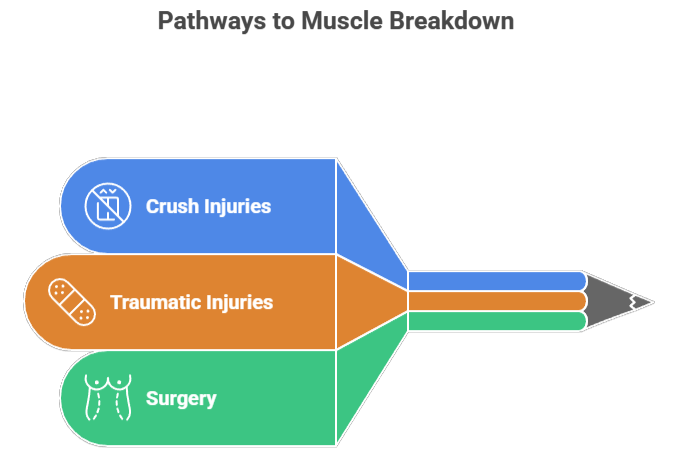
Main Causes of Rhabdomyolysis
- Intense Physical Activity: Sudden, extreme workouts (especially in untrained individuals).
- Trauma or Crush Injuries: Car accidents or being trapped under heavy objects.
- Heat Stress & Dehydration: Common among outdoor workers and athletes.
- Medications: Statins or certain antivirals can sometimes trigger rhabdo.
- Drug & Alcohol Use: Cocaine, heroin, or binge drinking increase risk.
- Medical Conditions: Seizures, infections, or metabolic disorders.
Tip: If you take medication that affects your muscles, discuss it with your doctor before starting any new exercise routine.
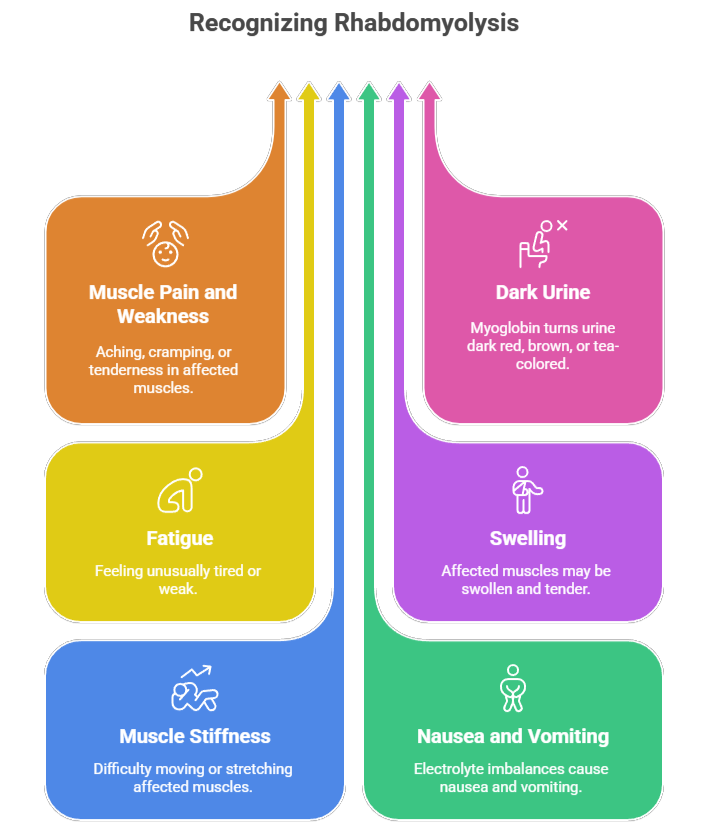
Early Symptoms to Watch For
Recognizing early warning signs can save your kidneys and your life. Watch out for:
- Severe muscle pain or swelling (especially thighs, shoulders, or lower back)
- Weakness or inability to move your muscles normally
- Dark-colored urine (tea, cola, or rust-like color)
- Nausea, vomiting, or confusion
- Low urine output or swelling in your legs or face
If you notice these symptoms after an intense workout, trauma, or heat exposure — seek medical attention immediately.
Diagnosis of Rhabdomyolysis
Doctors confirm the diagnosis through:
- Blood tests: High levels of creatine kinase (CK) and myoglobin.
- Urine tests: Detecting myoglobin and assessing kidney function.
- Electrolyte checks: Imbalances in potassium, phosphate, and calcium.
- ECG and kidney monitoring: To prevent heart or renal complications.
Treatment & Recovery
Treatment focuses on flushing out toxins and protecting kidney function:
- Aggressive IV Hydration: Keeps urine flowing and dilutes harmful substances.
- Electrolyte Management: Balances potassium and calcium levels.
- Stopping Triggers: Cease medications, relieve muscle compression, or cool the body if heat-related.
- Dialysis: Required in severe kidney failure cases.
- Fasciotomy (rare): For muscle compartment pressure relief.
With early treatment, most patients recover completely. Delay, however, can cause permanent kidney damage.
Prevention Tips
You can reduce your risk of rhabdomyolysis with simple lifestyle habits:
- Stay hydrated before, during, and after exercise.
- Avoid sudden, extreme workouts — build up gradually.
- Don’t train in excessive heat or while dehydrated.
- Monitor medications known to affect muscles.
- Rest and recover after strenuous activity.
- Listen to your body: Pain beyond normal soreness is a warning signal.
💡 Pro tip: Workers exposed to high heat or athletes training outdoors should drink water regularly and take cooling breaks to avoid heat-induced rhabdomyolysis.
Complications You Shouldn’t Ignore
Untreated rhabdomyolysis can cause:
- Acute Kidney Failure (AKI)
- Irregular heart rhythms due to potassium imbalance
- Shock or multi-organ failure in extreme cases
Prompt diagnosis and aggressive hydration can prevent these life-threatening outcomes.
Key Takeaways
- Rhabdomyolysis is muscle breakdown releasing harmful toxins into the blood.
- Early symptoms: Muscle pain, weakness, and dark urine.
- Major risks: Over-exertion, dehydration, heat, or certain drugs.
- Treatment: IV fluids, electrolyte control, and kidney monitoring.
- Prevention: Hydrate, rest, and avoid overtraining or heat stress.
When to See a Doctor
If you notice dark urine, muscle pain, swelling, or weakness after intense activity or heat exposure, get a blood test for CK levels right away. Early detection saves kidneys and prevents hospitalisation.
Final Word
Rhabdomyolysis may sound rare, but it’s a hidden danger for athletes, workers, and even casual gym-goers. Awareness, hydration, and moderation are your best protection. Remember — pushing your body beyond its limit isn’t a sign of strength; it’s a risk to your health.
🧠 Frequently Asked Questions (FAQ) About Rhabdomyolysis
1. What is the main cause of rhabdomyolysis?
The most common causes of rhabdomyolysis include intense exercise, muscle trauma, heat stress, drug or alcohol use, and certain medications like statins. When muscle tissue breaks down too quickly, it releases myoglobin into the blood, which can damage your kidneys.
2. What are the early warning signs of rhabdomyolysis?
Early signs include severe muscle pain, weakness, swelling, and dark urine (tea- or cola-colored). You may also feel tired, nauseous, or notice reduced urination. These symptoms can develop within hours or days after extreme exertion or injury.
3. Can exercise cause rhabdomyolysis?
Yes. Exercise-induced rhabdomyolysis occurs when muscles are pushed beyond their endurance—especially during CrossFit, HIIT, or weight training in hot, humid conditions. Overexertion, dehydration, or lack of conditioning increase the risk.
4. How is rhabdomyolysis diagnosed?
Doctors diagnose rhabdomyolysis through blood tests (checking high creatine kinase (CK) levels), urine tests for myoglobin, and kidney function tests. Severe cases may require ECG and electrolyte monitoring.
5. What is the best treatment for rhabdomyolysis?
The cornerstone of treatment is IV hydration, which helps flush toxins and prevent kidney damage. Other treatments include correcting electrolyte imbalances, stopping harmful drugs, and treating underlying causes. In critical cases, dialysis may be needed.
6. Can rhabdomyolysis go away on its own?
Mild cases may resolve with rest and hydration, but self-treating is risky. Always consult a doctor—untreated rhabdo can cause acute kidney failure, heart problems, or death in severe situations.
7. Who is most at risk of rhabdomyolysis?
People at higher risk include athletes, manual laborers, soldiers, and individuals on certain medications like statins. Dehydration, heat exposure, or combining workouts with alcohol or drugs also raise the risk.
8. How can I prevent rhabdomyolysis?
You can prevent rhabdo by:
- Staying hydrated during workouts and outdoor labor
- Increasing exercise intensity gradually
- Avoiding exercise in extreme heat
- Monitoring medication side effects
- Resting when your muscles feel sore or weak
9. Is rhabdomyolysis life-threatening?
Yes. If untreated, rhabdomyolysis can cause acute kidney failure, arrhythmias, or shock. Early diagnosis and aggressive hydration are key to preventing complications and ensuring full recovery.
10. How long does it take to recover from rhabdomyolysis?
Recovery depends on severity. Mild cases may improve within a few days, while severe cases requiring hospitalization or dialysis can take weeks to months. After recovery, avoid strenuous activity until cleared by your doctor.
**************************************************************************************
Disclaimer:
Dr. Mohammed Abdul Azeem Siddiqui, MBBS
Registered Medical Practitioner (Reg. No. 39739)
With over 30 years of dedicated clinical experience, Dr. Siddiqui has built his career around one clear mission: making quality healthcare affordable, preventive, and accessible.
He is deeply passionate about:
- Early disease diagnosis – empowering patients with timely detection and reducing complications.
- Preventive healthcare – guiding individuals and families towards healthier, longer lives through lifestyle interventions and screenings.
- Affordable treatments – ensuring cost-effective, evidence-based medical solutions that reach people from all walks of life.
Through his blog, Dr. Siddiqui shares practical health insights, early warning signs, and preventive strategies that readers can trust. Every article is rooted in evidence-based medicine and enriched by decades of hands-on clinical practice.
Contact us on: powerofprevention@outlook.com
📌 Disclaimer: The content in this blog is for educational purposes only and should not replace personalized medical consultation. For specific health concerns, please consult your physician.