
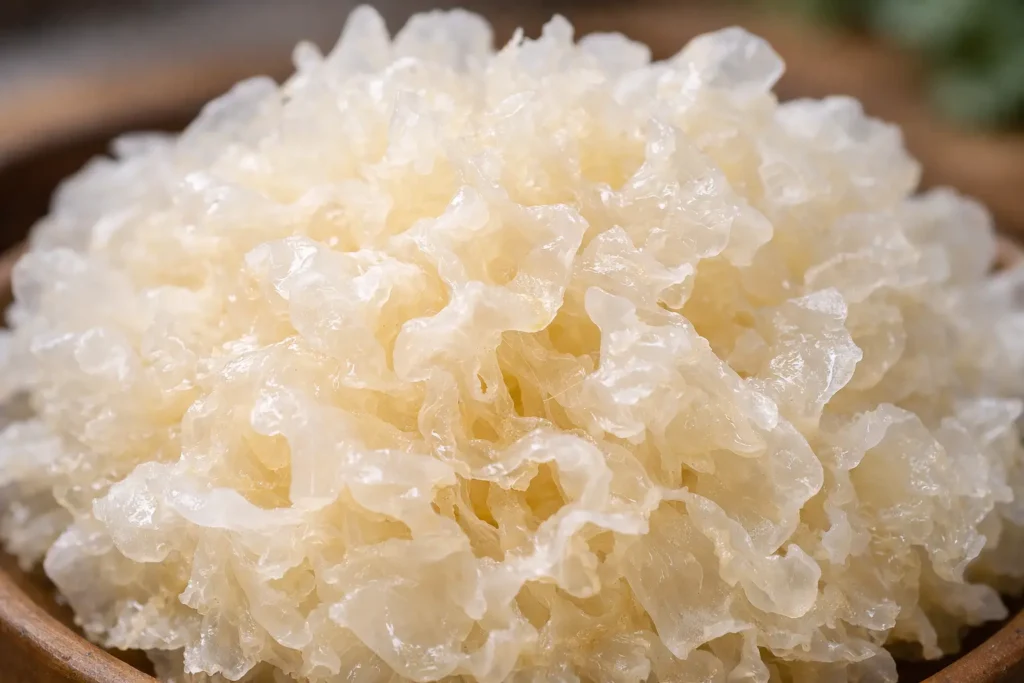

Discover what snow fungus is made of, its powerful polysaccharides, nutrients, and why it’s called nature’s plant-based hyaluronic acid.
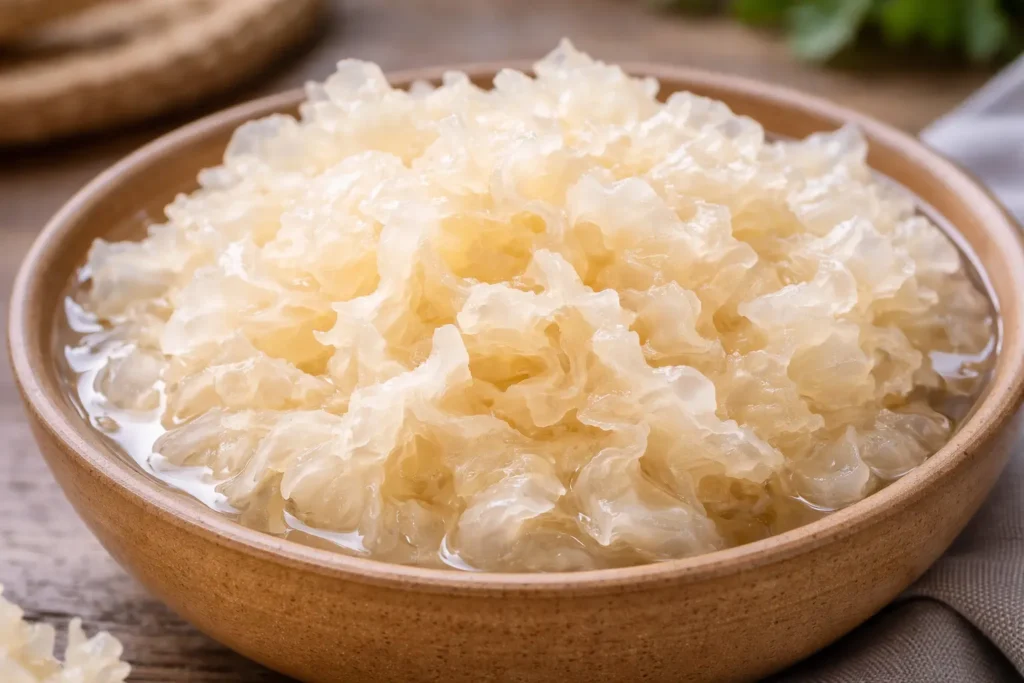
1. What is snow fungus primarily made of?
Snow fungus is primarily made of polysaccharides, water-binding carbohydrates that support hydration, immunity, and skin health.
2. Is snow fungus made of gelatin?
No. Snow fungus is plant-based and contains no animal gelatin. Its jelly-like texture comes from natural polysaccharides.
3. Does snow fungus contain collagen?
Snow fungus does not contain collagen, but its polysaccharides help support the body’s natural collagen production.
4. Is snow fungus high in sugar?
No. It contains small amounts of natural sugars and is low on the glycemic index.
5. Is snow fungus safe to consume daily?
Yes, when properly prepared and consumed in moderate amounts, snow fungus is generally safe for regular consumption.
6. Why is snow fungus used in skincare?
Its polysaccharides retain water efficiently, making it a natural alternative to hyaluronic acid in hydration-focused skincare.
What Is Snow Fungus Made Of? A Complete Breakdown of Its Natural Composition
Snow fungus—also known as Tremella fuciformis, white jelly mushroom, or silver ear mushroom—has gained global popularity for its beauty, skin, and health benefits. Frequently used in Asian cuisine and traditional medicine, this translucent, cloud-like fungus raises a common question among readers and wellness enthusiasts:
What is snow fungus actually made of?
This article explains the natural composition of snow fungus, its key bioactive compounds, and why its structure makes it so beneficial.
What Is Snow Fungus?
Snow fungus is a naturally occurring edible mushroom that grows on dead or fallen hardwood trees, especially in warm, humid climates. It has a gelatinous texture when cooked and a mild taste, making it ideal for both sweet and savory dishes.
Beyond food, snow fungus is widely used in:
- Skincare formulations
- Herbal medicine
- Nutritional supplements
Its benefits are directly linked to what it is made of at a molecular level.
What Is Snow Fungus Made Of? (Main Components)
Snow fungus is composed primarily of complex carbohydrates, water-binding compounds, and micronutrients. Below is a detailed breakdown.
1. Polysaccharides (The Primary Component)
The most important constituent of snow fungus is polysaccharides, which are long-chain natural sugars.
Key facts:
- Make up a large percentage of its dry weight
- Known as Tremella polysaccharides
- Water-soluble and gelatin-forming
Why they matter:
These polysaccharides are responsible for snow fungus’s:
- Hydration ability
- Immune-support properties
- Anti-inflammatory effects
They have a molecular structure similar to hyaluronic acid, allowing them to retain moisture efficiently.
2. Natural Plant-Based Sugars
Snow fungus contains small amounts of:
- Glucose
- Mannose
- Xylose
These sugars contribute to its mild sweetness and help form its jelly-like texture when cooked.
3. Dietary Fiber
Snow fungus is rich in soluble fiber, which:
- Supports gut health
- Slows sugar absorption
- Promotes satiety
This fiber content also contributes to its low glycemic impact, making it suitable for balanced diets.
4. Water (Hydrophilic Structure)
Fresh snow fungus is composed largely of water, which explains:
- Its sponge-like structure
- Its ability to absorb liquid during cooking
- Its moisturizing effect when applied topically
When dried, it expands dramatically after soaking due to its hydrophilic polysaccharides.
5. Proteins and Amino Acids (In Small Amounts)
Snow fungus contains modest levels of:
- Plant-based protein
- Essential and non-essential amino acids
While not a protein powerhouse, these compounds support:
- Cell repair
- Enzyme activity
6. Vitamins and Minerals
Snow fungus naturally provides trace amounts of:
- Vitamin D (when sun-exposed)
- B-vitamins
- Potassium
- Calcium
- Magnesium
- Iron
These micronutrients support metabolism, bone health, and circulation.
7. Antioxidant Compounds
Snow fungus contains natural antioxidants that help:
- Neutralize free radicals
- Protect cells from oxidative stress
- Support skin elasticity and aging processes
These antioxidants work synergistically with polysaccharides.
Why Snow Fungus Composition Is So Unique
Unlike many mushrooms, snow fungus has:
- A gelatinous polysaccharide matrix
- Exceptional water-binding capacity
- Low fat and calorie content
This makes it:
- Ideal for skincare hydration
- Suitable for weight-conscious diets
- Gentle on digestion
Is Snow Fungus Natural or Processed?
Snow fungus is 100% natural in its raw form.
However, when used in:
- Skincare products
- Powders
- Capsules
It may be:
- Extracted
- Concentrated
- Purified
The core bioactive compounds remain derived from the natural fungus.
Final Thoughts
Snow fungus is made primarily of hydrating polysaccharides, natural sugars, fiber, water, and trace nutrients. Its unique molecular structure explains why it is prized in both traditional medicine and modern wellness industries.
Whether consumed as food or applied topically, its composition makes it one of nature’s most effective hydration-focused functional mushrooms.