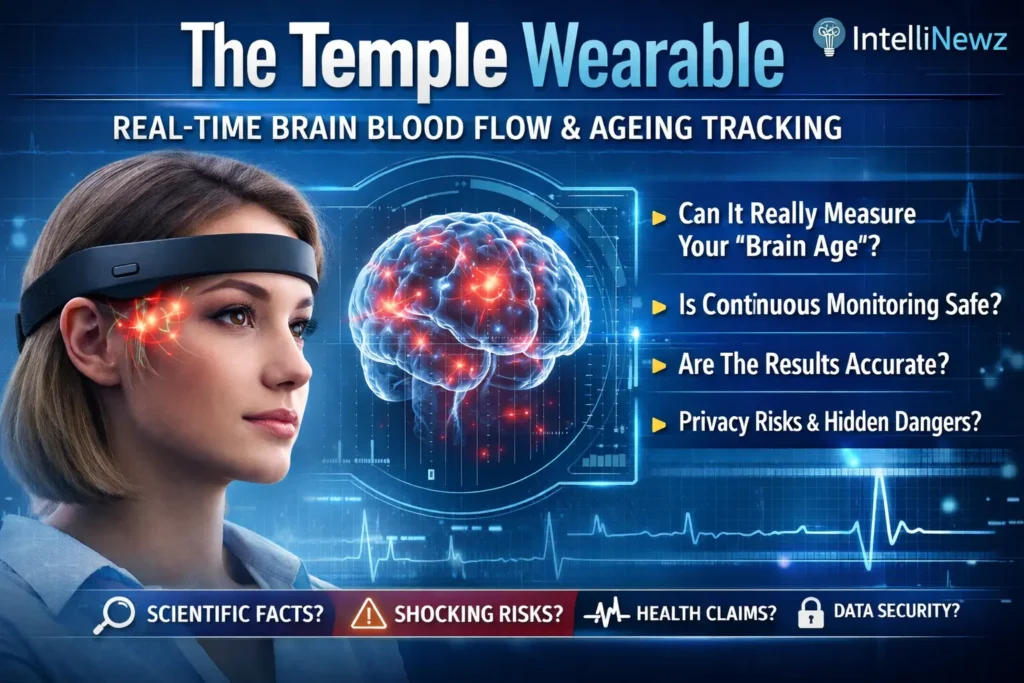
The Temple wearable claims to track real-time cerebral blood flow and ageing. Discover 7 shocking scientific truths, risks, and what doctors say.
Temple Wearable Device: Exploring Real-Time Brain Blood Flow Monitoring and the “Gravity Ageing Hypothesis”
Overview
In late 2025 and early 2026, a small wearable device dubbed Temple drew global attention after Indian entrepreneur Deepinder Goyal — founder and CEO of Zomato’s parent company — was seen wearing the gadget near his temple on multiple public occasions. Goyal described it as an experimental sensor designed to measure cerebral (brain) blood flow in real time and continuously, linking the technology to broader questions of ageing and longevity. The Times of India+1
Temple is still in research and prototype form, not commercially available, not regulated as a medical device, and has no published clinical validation confirming its claims. India Today+1
What Temple Claims to Do
Real-Time, Continuous Cerebral Blood Flow Measurement
According to information circulating in media and Goyal’s own public communications, Temple is intended to:
- Track cerebral blood flow non-invasively by sensing signals near the temporal region (the side of the head above the ear).
- Provide continuous data in real time, rather than a single snapshot.
- Potentially serve as a data source for research into brain health, ageing, cognition, and lifestyle effects on cerebral circulation. The Times of India+1
This continuous capture of physiological data — if truly reflective of deep brain circulation — would represent a notable advance in wearable health technology because current clinical tools for cerebral blood flow (e.g., MRI, Doppler ultrasound, PET scans, functional near-infrared spectroscopy) require specialized equipment and clinical environments. The Indian Express
Underlying Theory: The Gravity Ageing Hypothesis
Temple’s development is tightly linked to what Goyal has described as the “Gravity Ageing Hypothesis.” Under this hypothesis:
- The constant pull of gravity on the human body over decades could gradually reduce effective blood flow to the brain.
- Reduced cerebral circulation, according to this idea, might contribute to aspects of ageing, cognitive decline, or neurological changes associated with ageing.
- The hypothesis suggests that studying long-term blood-flow patterns could shed light on biological ageing processes. mint+1
Importantly, Goyal has publicly stated that the gravity-based theory is not established science but rather a working idea to explore with data. He clarified that Temple’s role is separate from the hypothesis itself — as a tool to collect continuous brain blood flow data to investigate many models of ageing. The Week
Scientific and Medical Community Response
Criticism and Skepticism
A range of medical professionals, including neurologists and radiologists, have expressed serious concerns about both Temple’s scientific basis and its purported function:
- Lack of Clinical Validation: Experts note there is no published peer-reviewed evidence showing Temple accurately measures cerebral blood flow. Without clinical trials, accuracy benchmarks, or external validation, its claims remain speculative. www.ndtv.com
- Surface Measures vs. Deep Physiology: Sensors placed on the skin cannot currently provide reliable readings of deep brain blood flow or full cerebral perfusion; established clinical tools like MRI or transcranial Doppler achieve this using sophisticated imaging and controlled conditions. The Indian Express
- Simplistic Interpretation of Complex Biology: The idea that gravity alone can meaningfully drive ageing is viewed skeptically; ageing is understood by most researchers to involve cellular processes such as DNA repair, metabolic dysregulation, chronic inflammation, and genetic regulation. Hindustan Times
AIIMS clinicians have publicly described the device as having “zero scientific standing” in terms of clinical usefulness and cautioned against equating experimental prototypes with validated diagnostic technology. India Today
What Temple Is — and Is Not
Current Status
- Research Prototype: Temple is a privately developed experimental wearable from Goyal’s research initiative Continue Research, which he has funded with significant personal investment (reported around $25 million). The Indian Express
- Not a Medical Device: It has no regulatory approval from any major health authority (e.g., USFDA, EMA) as a device for diagnosis, treatment, or medical monitoring. The Indian Express
- Not Commercially Available: There is no public sale or formal product launch — it remains a research instrument. India Today
Hypothetical vs. Proven Functionality
Temple aims to measure continuous brain blood flow signals, but there is currently no demonstrable evidence showing that:
- The measured data accurately reflects cerebral perfusion (blood flow within the brain), or
- Such data correlates reliably with ageing, cognition, or health outcomes.
In contrast, devices that do measure other health signals (e.g., heart rate, pulse oximetry, ECG) undergo rigorous validation and often regulatory review before being marketed as health monitors. Available medical imaging technologies for brain blood flow measurement are clinically validated precisely because they are complex and scientifically demanding. The Indian Express
Scientific Context for Brain Blood Flow Monitoring
Established Techniques (For Comparison)
Validated methods used in clinical practice for brain blood flow and neurological assessment include:
- MRI Angiography (MRA) and Functional MRI (fMRI) — using magnetic fields to observe blood oxygenation and flow.
- Transcranial Doppler Ultrasound — non-invasive ultrasound measuring blood velocity in cerebral arteries.
- Positron Emission Tomography (PET) — imaging metabolic activity correlated with circulation. The Indian Express
These tools require controlled environments, expert operators, and rigorous calibration — conditions that no consumer wearable has yet replicated. Contemporary research wearables in academic settings (e.g., near-infrared spectroscopy caps or laser speckle devices) are still largely experimental and require significant development to approach clinical utility. arXiv+1
Public and Research Implications
Temple’s emergence underscores:
- A growing public fascination with wearable neurotechnology and continuous physiological monitoring.
- The gap between early prototype exploration and established clinical science.
- The importance of peer-reviewed research, regulatory assessment, and clinical trials before experimental sensors are promoted as health tools. Business Standard
For consumers and clinicians interested in brain health wearables, experts advise cautious interpretation of data from any unvalidated device and recommend reliance on validated medical methods for clinical decisions.
Conclusion
The Temple wearable represents an ambitious attempt to push the boundaries of wearable health technology toward continuous brain blood flow monitoring and longevity research. However:
- It is currently experimental, without regulatory approval or clinical validation.
- Its foundational theories — including the Gravity Ageing Hypothesis — are not established mainstream science.
- Medical experts caution that its measurement claims are unproven, and real brain blood flow assessment remains confined to clinical imaging technologies.
Temple’s ongoing development may generate interesting exploratory data, but it remains a research prototype rather than a verified health monitoring device. Future progress would depend on rigorous testing, peer-reviewed studies, and transparent scientific validation. www.ndtv.com
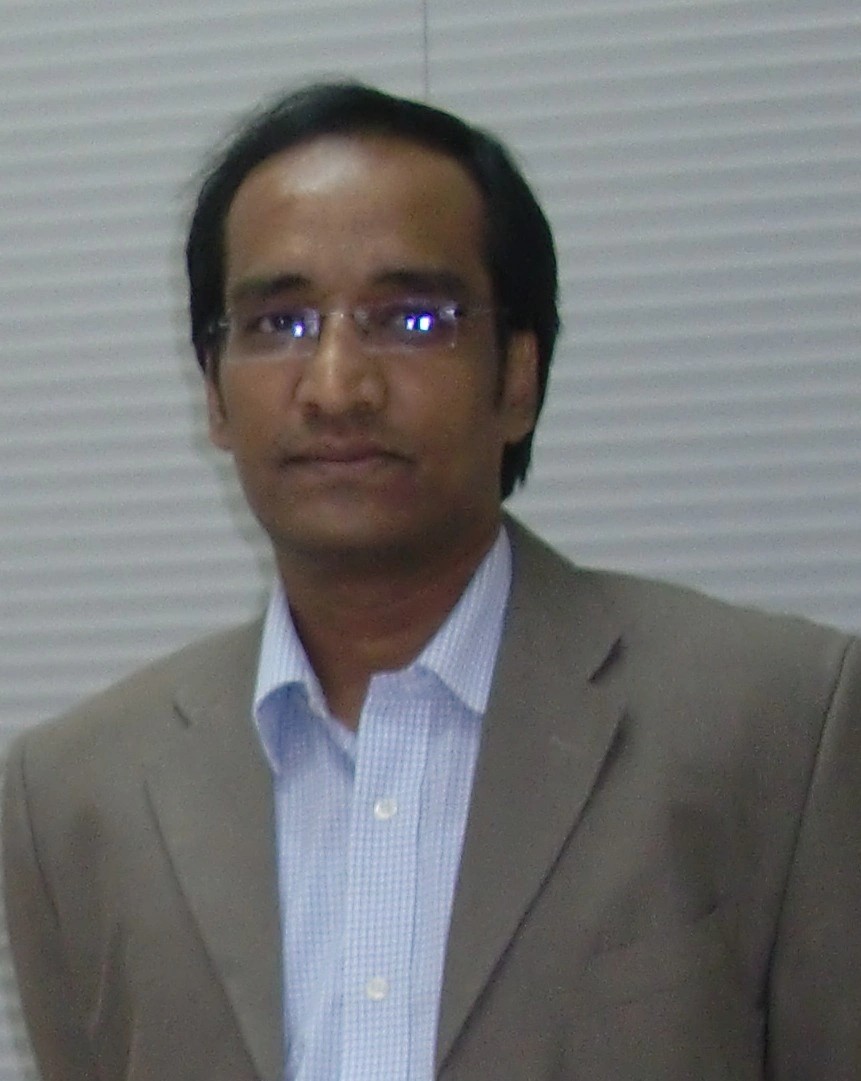
Dr. Mohammed Abdul Azeem Siddiqui, MBBS, M.Tech (Biomedical Engineering – VIT, Vellore)
Registered Medical Practitioner – Reg. No. 39739
Physician • Clinical Engineer • Preventive Diagnostics Specialist
Dr. Mohammed Abdul Azeem Siddiqui is a physician–engineer with over 30 years of dedicated clinical and biomedical engineering experience, committed to transforming modern healthcare from late-stage disease treatment to early detection, preventive intelligence, and affordable medical care.
He holds an MBBS degree in Medicine and an M.Tech in Biomedical Engineering from VIT University, Vellore, equipping him with rare dual expertise in clinical medicine, laboratory diagnostics, and medical device engineering. This allows him to translate complex laboratory data into precise, actionable preventive strategies.
Clinical Mission
Dr. Siddiqui’s professional mission centers on three core pillars:
Early Disease Detection
Identifying hidden biomarker abnormalities that signal chronic disease years before symptoms appear — reducing complications, hospitalizations, and long-term disability.
Preventive Healthcare
Guiding individuals and families toward longer, healthier lives through structured screenings, lifestyle intervention frameworks, and predictive diagnostic interpretation.
Affordable Evidence-Based Treatment
Delivering cost-effective, scientifically validated care accessible to people from all socioeconomic backgrounds.
Clinical & Technical Expertise
Across three decades of continuous practice, Dr. Siddiqui has worked extensively with:
Advanced laboratory analyzers and automation platforms
• Cardiac, metabolic, renal, hepatic, endocrine, and inflammatory biomarker systems
• Preventive screening and early organ damage detection frameworks
• Clinical escalation pathways and diagnostic decision-support models
• Medical device validation, calibration, compliance, and patient safety standards
He is recognized for identifying subclinical biomarker shifts that predict cardiovascular disease, diabetes, fatty liver, kidney disease, autoimmune inflammation, neurodegeneration, and accelerated biological aging long before conventional diagnosis.
Role at IntelliNewz
At IntelliNewz, Dr. Siddiqui serves as Founder, Chief Medical Editor, and Lead Clinical Validator. Every article published is:
Evidence-based
• Clinically verified
• Technology-grounded
• Free from commercial bias
• Designed for real-world patient and physician decision-making
Through his writing, Dr. Siddiqui shares practical health intelligence, early warning signs, and preventive strategies that readers can trust — grounded in decades of frontline medical practice.
Contact:
powerofprevention@outlook.com
📌 Disclaimer: The content on IntelliNewz is intended for educational purposes only and does not replace personalized medical consultation. For individual health concerns, please consult your physician.