


Explore 10 essential types of exercises categorized by purpose, intensity, and movement. Learn how cardio, strength, flexibility, and balance workouts boost overall fitness.
FAQs on Types of Exercises
1. What are the main types of exercises?
The main types include:
- Aerobic (Cardio) exercises – improve heart and lung health (e.g., running, swimming).
- Anaerobic (Strength/Power exercises) – build muscle and bone strength (e.g., weightlifting, sprinting).
- Flexibility exercises – increase range of motion (e.g., yoga, stretching).
- Balance and stability exercises – improve coordination and core strength (e.g., Tai Chi, balance exercises).
- Functional exercises – enhance real-life movement efficiency (e.g., squats, lunges).
- Mind-body exercises – combine mental focus and physical movement (e.g., Pilates, yoga).
- HIIT (High-Intensity Interval Training) – alternate intense activity with rest.
- Endurance exercises – improve stamina over long durations (e.g., long-distance running, cycling).
2. What is aerobic exercise and why is it important?
Aerobic exercise, also called cardio, involves continuous movement that raises your heart rate and breathing. It strengthens your heart and lungs, improves stamina, and supports weight management.
3. What is anaerobic exercise?
Anaerobic exercise consists of short bursts of high-intensity activity that rely on energy stored in muscles rather than oxygen. It helps build muscle strength, power, and bone density.
4. How is flexibility exercise different from other exercises?
Flexibility exercises focus on stretching muscles and joints to improve mobility, reduce stiffness, and prevent injuries. Unlike cardio or strength training, flexibility exercises are low-intensity but essential for overall fitness.
5. Can yoga be considered an exercise?
Yes! Yoga improves flexibility, balance, and core strength. Some forms, like Vinyasa or Power yoga, can even provide aerobic benefits by increasing heart rate.
6. What are balance exercises and who should do them?
Balance exercises improve coordination and stability, which are crucial for preventing falls, especially in older adults. Examples include single-leg stands, stability ball exercises, and Tai Chi.
7. What is functional exercise?
Functional exercises mimic everyday movements, helping your body perform daily tasks efficiently while reducing injury risk. Examples: squats, lunges, push-ups, and carrying objects.
8. What is HIIT and why is it popular?
High-Intensity Interval Training (HIIT) alternates between short bursts of intense exercise and rest periods. It’s popular because it burns calories fast, boosts metabolism, and improves endurance in less time.
9. How do I choose the right type of exercise?
- For heart health → aerobic/cardio exercises
- For strength and muscle building → anaerobic/strength training
- For flexibility and stress relief → yoga or stretching
- For balance and stability → balance or functional exercises
- For quick calorie burn → HIIT
10. Can one type of exercise cover all fitness needs?
No single type covers everything. A well-rounded fitness plan should include:
- Cardio for heart health
- Strength training for muscles and bones
- Flexibility for joint mobility
- Balance/stability for coordination
1. Aerobic (Cardio) Exercises
Definition: Continuous, rhythmic activities that increase heart rate and improve cardiovascular endurance.
Benefits: Strengthens heart and lungs, burns calories, improves stamina.
Examples:
- Running or jogging
- Swimming
- Cycling
- Brisk walking
- Dancing
- Jump rope
2. Anaerobic (Strength/Power) Exercises
Definition: Short bursts of high-intensity activity where the body relies on energy stored in muscles rather than oxygen.
Benefits: Builds muscle strength, power, and bone density.
Examples:
- Weight lifting
- Sprinting
- High-intensity interval training (HIIT)
- Plyometric exercises (jump squats, box jumps)
3. Flexibility Exercises
Definition: Activities that improve the range of motion in muscles and joints.
Benefits: Reduces injury risk, improves posture, enhances mobility.
Examples:

- Yoga
- Stretching routines (static and dynamic stretches)
- Pilates
4. Balance and Stability Exercises
Definition: Exercises that enhance coordination, balance, and core stability.
Benefits: Prevents falls, strengthens core, improves posture.
Examples:
- Tai Chi
- Stability ball exercises
- Single-leg stands
- Balance board exercises
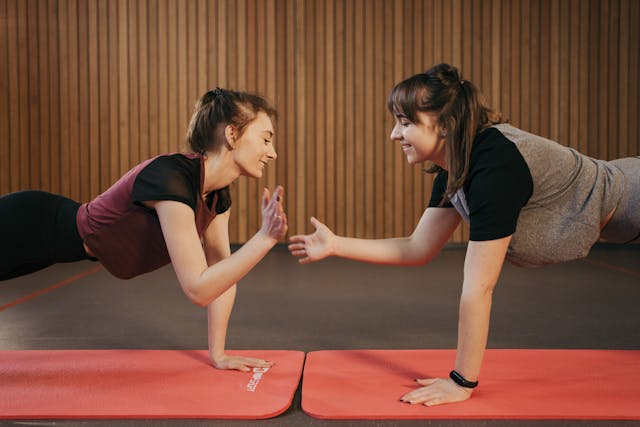
5. Functional Exercises
Definition: Movements that mimic daily life activities to improve overall functionality.
Benefits: Enhances real-life movement efficiency, reduces injury risk.
Examples:
- Squats
- Lunges
- Push-ups
- Farmer’s carry
6. Mind-Body Exercises
Definition: Focus on connecting physical movement with mental focus, breathing, and relaxation.
Benefits: Reduces stress, improves mental health, enhances flexibility and balance.
Examples:
- Yoga
- Pilates
- Tai Chi
- Qigong
7. High-Intensity Interval Training (HIIT)
Definition: Alternating short bursts of intense exercise with periods of rest or low-intensity activity.
Benefits: Burns fat, boosts metabolism, improves endurance quickly.
Examples:
- Sprint intervals
- Circuit training with weights and cardio
- Tabata workouts
8. Endurance or Stamina Exercises
Definition: Activities designed to increase the ability to perform prolonged physical activity.
Benefits: Builds cardiovascular health, improves muscle endurance.
Examples:
- Long-distance running
- Cycling for hours
- Rowing