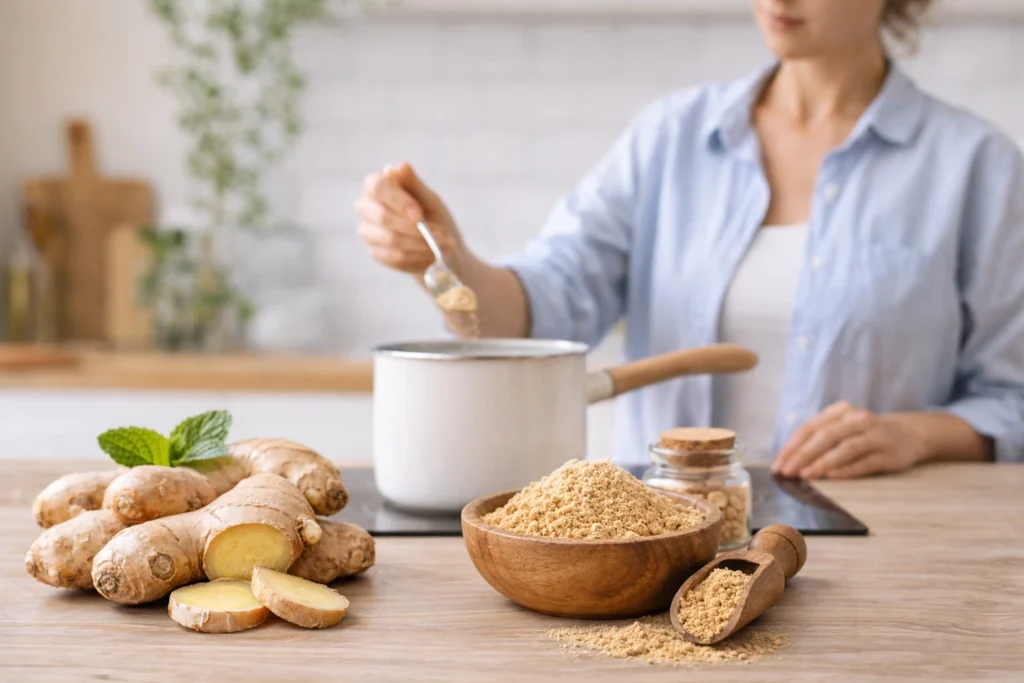

Ginger is commonly recommended by U.S. physicians, registered dietitians, and integrative medicine specialists for digestive support, inflammation control, and immune health. As ginger supplements and powdered forms become more popular in American kitchens and wellness routines, a frequent patient question arises: is dry ginger powder as effective as fresh ginger?
From a clinical standpoint, both fresh ginger and dried ginger powder contain biologically active compounds that influence inflammation, metabolism, and gastrointestinal function. However, the drying process alters these compounds, affecting potency, absorption, and appropriate use for specific health concerns. This article reviews the medical evidence comparing dry ginger powder and fresh ginger, helping readers make informed, practical choices based on current scientific understanding.
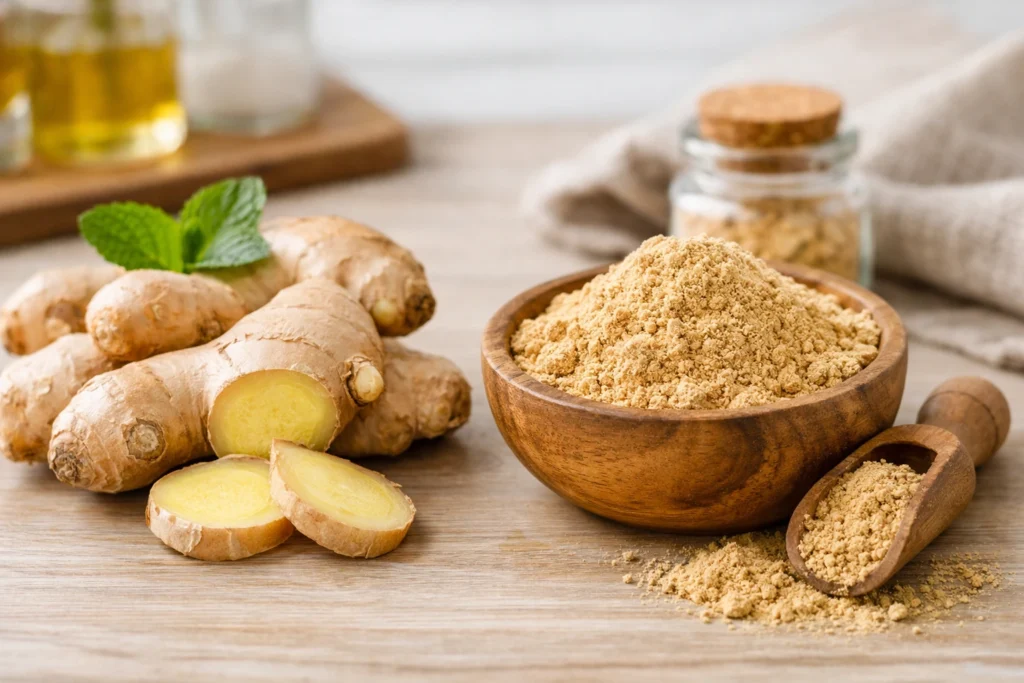
Ginger has been used for centuries in traditional medicine, cooking, and home remedies. However, a common question among health-conscious readers is: is dry ginger powder as effective as fresh ginger?
The short answer is yes—but with important differences. This article explores the nutritional value, medicinal potency, benefits, limitations, and best use cases of dry ginger powder vs fresh ginger, based on scientific and traditional perspectives.
Understanding Fresh Ginger and Dry Ginger Powder
What Is Fresh Ginger?
Fresh ginger comes from the rhizome of Zingiber officinale. It contains active compounds such as gingerols, which are responsible for its anti-inflammatory, antioxidant, and digestive properties.
What Is Dry Ginger Powder?
Dry ginger powder (also called sonth in Ayurveda) is made by drying mature ginger rhizomes and grinding them into a fine powder. During drying, some gingerols convert into shogaols, which are more concentrated and potent in certain therapeutic actions.
Nutritional Comparison: Fresh Ginger vs Dry Ginger Powder
| Aspect | Fresh Ginger | Dry Ginger Powder |
|---|---|---|
| Main active compound | Gingerols | Shogaols |
| Water content | High | Very low |
| Shelf life | Short | Long |
| Flavor | Mild, zesty | Strong, spicy |
| Concentration | Diluted | Highly concentrated |
Key Insight:
Dry ginger powder is more concentrated by weight, while fresh ginger retains heat-sensitive enzymes and volatile oils.
Is Dry Ginger Powder as Effective Medicinally?
1. Anti-Inflammatory Benefits
- Dry ginger powder contains shogaols, which are shown to have stronger anti-inflammatory effects than gingerols.
- It is often more effective for joint pain, arthritis, and muscle soreness.
Verdict: Dry ginger powder may be more effective for chronic inflammation.
2. Digestive Health
- Fresh ginger stimulates digestive enzymes and soothes the stomach lining.
- Dry ginger powder improves digestion by enhancing gut motility and reducing gas.
Verdict:
- Fresh ginger is better for nausea and acid reflux.
- Dry ginger powder is better for bloating and sluggish digestion.
3. Cold, Cough, and Immunity
- Dry ginger powder produces more internal heat.
- Commonly used in herbal teas for colds, cough, and sore throat.
Verdict: Dry ginger powder is more effective for respiratory conditions.
4. Weight Loss and Metabolism
- Dry ginger powder boosts thermogenesis and fat oxidation.
- Often used in metabolism-boosting formulations.
Verdict: Dry ginger powder is slightly more effective for weight management.
5. Nausea and Morning Sickness
- Fresh ginger is widely studied and recommended for nausea, especially during pregnancy.
- Dry ginger powder may be too strong for sensitive stomachs.
Verdict: Fresh ginger is safer and more effective for nausea.
Bioavailability: Which Is Absorbed Better?
Dry ginger powder has higher bioavailability due to its concentrated shogaol content. However, fresh ginger’s enzymes may support gentler absorption for sensitive individuals.
When Should You Choose Fresh Ginger?
Choose fresh ginger if you:
- Have acid reflux or gastritis
- Need nausea relief
- Are pregnant (in moderation)
- Prefer mild, fresh flavor in food
When Is Dry Ginger Powder Better?
Choose dry ginger powder if you:
- Want stronger anti-inflammatory effects
- Are treating cold, cough, or joint pain
- Need long shelf life and convenience
- Are using ginger for weight loss or metabolism
Can Dry Ginger Powder Replace Fresh Ginger Completely?
From a medicinal standpoint, dry ginger powder can replace fresh ginger in many cases—sometimes with even better results.
From a culinary and digestive sensitivity standpoint, fresh ginger still has advantages.
Best practice: Use both strategically rather than choosing one exclusively.
How Much Dry Ginger Powder Equals Fresh Ginger?
- ½ teaspoon dry ginger powder ≈ 1 tablespoon fresh grated ginger
Because dry ginger is more concentrated, dosage should be adjusted carefully.
Safety and Side Effects
Both forms are generally safe, but:
- Excess dry ginger powder may cause heartburn or heat sensations.
- Limit intake if you have ulcers or are on blood-thinning medication.
Final Verdict: Is Dry Ginger Powder as Effective as Fresh Ginger?
Yes—dry ginger powder is as effective as fresh ginger, and in some cases, even more potent.
However, effectiveness depends on your health goal, dosage, and tolerance.
- For inflammation, colds, and metabolism → dry ginger powder
- For nausea, digestion, and gentle daily use → fresh ginger
FAQs
Is dry ginger powder stronger than fresh ginger?
Yes, by weight it is more concentrated due to lower water content and higher shogaols.
Can I use dry ginger powder daily?
Yes, in moderation—typically ¼ to ½ teaspoon per day.
Does drying ginger destroy nutrients?
Some heat-sensitive compounds reduce, but therapeutic shogaols increase.
Is dry ginger powder good for immunity?
Yes, especially during cold and flu season.
Medical Disclaimer
The information provided in this article is for educational and informational purposes only and is not intended as medical advice.
Dr. Mohammed Abdul Azeem Siddiqui, MBBS is a registered medical practitioner with over 30 years of clinical experience, focused on preventive care, early diagnosis, and evidence-based, affordable healthcare.
Educational content only. Not a substitute for medical advice.
Contact: powerofprevention@outlook.com
Dietary supplements, including ginger and ginger powder, are not regulated by the U.S. Food and Drug Administration (FDA) in the same way as prescription medications. Individual responses may vary. Always consult your healthcare provider before starting any new supplement, especially if you are pregnant, nursing, have a medical condition, or are taking prescription or over-the-counter medications.