

Discover what are the 7 rules of kosher cooking, explained simply for beginners, and how they promote clean, ethical, and mindful eating.
The kosher diet follows Jewish dietary laws known as kashrut, which outline what foods are allowed, how they must be prepared, and how they should be consumed. While kosher eating is rooted in Jewish tradition, millions of people across the United States choose kosher foods for reasons related to food safety, ingredient transparency, ethics, and personal health preferences.
This guide explains what a kosher diet is, how it works, and why it continues to gain popularity beyond religious communities.
Ever noticed “kosher” labels in U.S. grocery stores?
A kosher diet isn’t just religious—it follows strict food safety, cleanliness, and ethical preparation standards that appeal to many health-conscious Americans.
What Does “Kosher” Mean?
The word kosher means fit or proper according to Jewish law. Foods that meet kosher requirements are considered acceptable to eat, while non-kosher foods are avoided.
Kosher laws are based on ancient texts but remain highly relevant today due to their emphasis on clean food handling, ethical sourcing, and clear labeling.
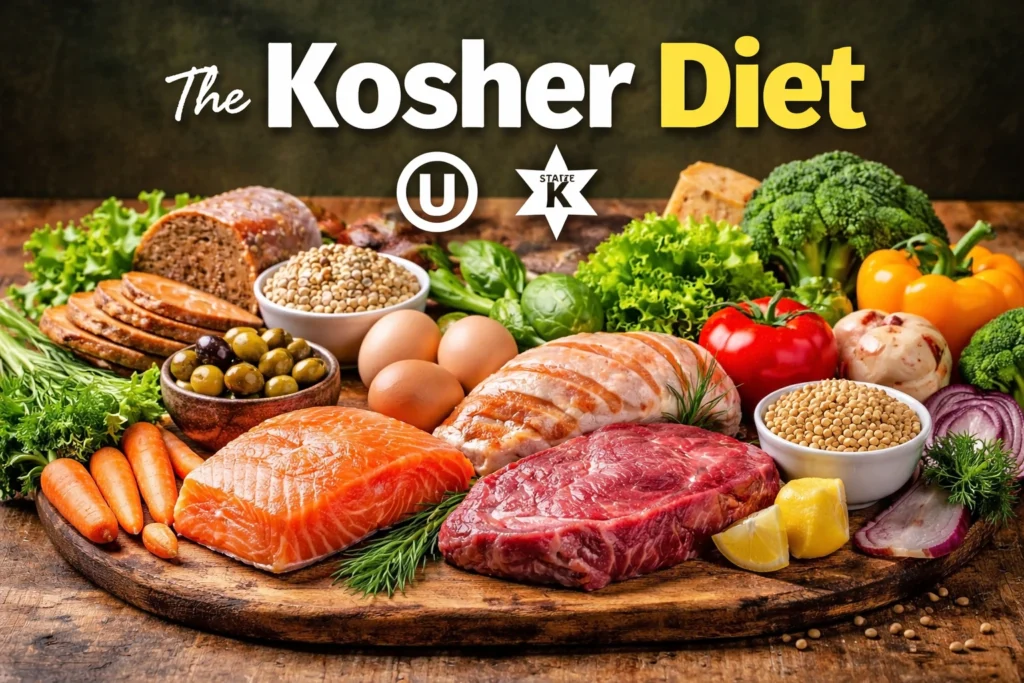
Core Rules of the Kosher Diet
1. Permitted Animals
Only certain animals are allowed:
- ✔ Beef, lamb, goat
- ✔ Chicken, turkey
- ❌ Pork, rabbit, camel
Permitted animals must both chew the cud and have split hooves.
2. Seafood Rules
✔ Allowed:
- Fish with fins and scales (salmon, tuna, cod)
❌ Not allowed:
- Shellfish (shrimp, crab, lobster)
- Eels and sharks
3. Meat and Dairy Are Never Mixed
One of the most distinctive kosher rules is the strict separation of meat and dairy:
- No cheeseburgers
- No butter on meat
- Separate utensils and cookware
This rule influences many eating habits in kosher households.
4. Kosher Slaughter (Shechita)
Meat must be:
- Slaughtered humanely by trained professionals
- Free from blood
- Inspected for health conditions
The process emphasizes animal welfare and hygiene, which appeals to ethically conscious consumers.
5. Kosher Certification in the USA
In the United States, kosher products often carry certification symbols such as:
- OU
- OK
- Star-K
- Kof-K
These symbols ensure compliance with kosher laws and ingredient transparency.
Why Many Americans Choose a Kosher Diet
Even outside religious observance, Americans choose kosher food for several reasons:
✔ Ingredient Transparency
Kosher certification requires detailed ingredient disclosure, helpful for people with allergies or food sensitivities.
✔ Food Safety Standards
Kosher foods undergo strict inspection and handling, reducing contamination risks.
✔ Ethical Food Preparation
Humane animal treatment and cleanliness are central principles.
✔ Dietary Structure
Separating meat and dairy naturally encourages mindful eating.
Is a Kosher Diet Healthy?
From a medical and nutritional perspective:
- Kosher food is not automatically healthier
- But it promotes clean processing, quality control, and moderation
When combined with a balanced diet rich in fruits, vegetables, whole grains, and lean proteins, kosher eating can support overall health.
Kosher Diet vs Halal Diet (Quick Comparison)
| Feature | Kosher | Halal |
|---|---|---|
| Religious origin | Judaism | Islam |
| Pork | Not allowed | Not allowed |
| Blood consumption | Forbidden | Forbidden |
| Meat & dairy together | Not allowed | Allowed |
| Certification | Kosher symbols | Halal certification |
Who Can Follow a Kosher Diet?
A kosher diet is suitable for:
- Jewish individuals observing tradition
- Health-conscious Americans
- People avoiding pork or shellfish
- Consumers seeking transparent food labeling
No religious requirement is needed to eat kosher food.
Kosher dietary rules focus on food quality, cleanliness, ethical sourcing, and proper preparation, which is why many non-Jewish people also choose kosher foods for health or lifestyle reasons.
Basic Rules of the Kosher Diet
- Permitted Animals Only certain animals are allowed:
Allowed meats: Beef, lamb, goat, chicken, turkey
Not allowed: Pork, rabbit, camel
Animals must both chew the cud and have split hooves.
- Seafood Rules ✔ Allowed:
Fish with fins and scales (salmon, tuna, cod)
❌ Not allowed:
Shellfish (shrimp, crab, lobster)
Sharks, eels, catfish
- No Mixing Meat and Dairy Kosher law strictly forbids:
Eating meat and dairy together
Cooking meat and dairy together
Using the same utensils for both
For example: ❌ Cheeseburger ✔ Chicken with vegetables (no dairy)
- Kosher Slaughter (Shechita) Meat must be:
Slaughtered humanely by a trained professional
Fully drained of blood
Inspected for health
This process emphasizes animal welfare and hygiene.
- Kosher Certification Packaged foods often display kosher symbols such as:
OU
OK
Kof-K
Star-K
These symbols confirm compliance with kosher laws.
Health Aspects of a Kosher Diet From a nutrition and food safety perspective, kosher diets may offer:
Strict food inspection standards
Reduced risk of contamination
Emphasis on clean food handling
No blood consumption
Clear ingredient transparency
While kosher food is not automatically healthier, its regulated preparation appeals to health-conscious consumers.
Kosher Diet vs Halal Diet (Quick Comparison) Feature Kosher Halal Religious basis Judaism Islam Pork Forbidden Forbidden Blood Forbidden Forbidden Meat & dairy mixing Forbidden Allowed Slaughter method Shechita Zabiha
Who Follows a Kosher Diet? Jewish communities (religious observance)
People seeking strict food standards
Individuals concerned about food sourcing
Some lactose-intolerant individuals (due to separation of dairy and meat)
Is a Kosher Diet Suitable for Everyone? Yes. Anyone can follow a kosher diet. It is especially helpful for:
People seeking clearly labeled foods
Those avoiding shellfish or pork
Individuals with food sensitivities
What Is Kosher?
Kosher means fit or proper according to Jewish dietary laws called kashrut. A food is considered kosher if it follows specific rules about:
- The type of food
- How it is prepared
- How it is combined with other foods
Kosher foods are clearly labeled in the U.S. with certification symbols such as OU, OK, Star-K, or Kof-K.
Who Eats Kosher Food?
People who eat kosher include:
- Jewish individuals observing religious laws
- Health-conscious Americans seeking strict food standards
- People avoiding pork or shellfish
- Consumers who value ingredient transparency
- Some individuals with food allergies or sensitivities
In the U.S., many people eat kosher foods without being Jewish.
Kosher Diet Menu
Breakfast
- Scrambled eggs
- Whole-grain toast
- Fresh fruit
- Coffee or tea (no meat involved)
Lunch
- Grilled chicken salad (no dairy)
- Olive oil dressing
- Quinoa or rice
Snack
- Fruit, nuts, or hummus with vegetables
Dinner
- Baked salmon
- Steamed vegetables
- Brown rice
Dessert (Dairy or Pareve)
- Sorbet or dairy-free dessert
(If dairy is used, it must not follow a meat meal)
List of Kosher Foods (Common)
Kosher Proteins
- Beef, lamb, chicken, turkey (kosher-certified)
- Fish with fins and scales (salmon, tuna, cod)
- Eggs from kosher birds
Kosher Dairy
- Milk, cheese, yogurt (kosher-certified)
- Butter and cream (used separately from meat)
Plant-Based Foods (Usually Kosher)
- Fruits and vegetables
- Grains, rice, pasta
- Beans, lentils, legumes
- Nuts and seeds
What Foods Are Not Kosher?
Foods that are not kosher include:
- Pork and pork products
- Shellfish (shrimp, crab, lobster)
- Meat from non-kosher animals
- Meat and dairy eaten together
- Blood and improperly slaughtered meat
- Foods without kosher certification when required
How Is Kosher Food Prepared?
Kosher food preparation follows strict guidelines:
- Animals are slaughtered humanely (shechita)
- Blood is fully removed from meat
- Meat and dairy are prepared separately
- Separate cookware and utensils are used
- Food is inspected for compliance
These rules emphasize cleanliness, safety, and ethical handling.
Kosher vs Halal
| Feature | Kosher | Halal |
|---|---|---|
| Religious origin | Judaism | Islam |
| Pork | Forbidden | Forbidden |
| Shellfish | Forbidden | Allowed (most schools) |
| Blood | Forbidden | Forbidden |
| Meat & dairy together | Not allowed | Allowed |
| Slaughter method | Shechita | Zabiha |
Both diets focus on ethical slaughter and food purity, but rules differ.
Can Jews Cook Meat in Butter?
No.
Jewish dietary law strictly forbids cooking meat in butter because butter is a dairy product. One of the core rules of kosher law is that meat and dairy must never be cooked, eaten, or served together.
✔ Meat must be cooked with:
- Oil
- Margarine (dairy-free)
- Animal fat (from kosher sources)
❌ Not allowed:
- Butter
- Cream
- Cheese
- Milk
How to Cook Kosher at Home
Cooking kosher at home focuses on separation, certification, and cleanliness:
- Buy foods with kosher certification (OU, OK, Star-K, Kof-K)
- Keep meat and dairy completely separate
- Use separate cookware, utensils, and storage
- Check vegetables and grains for insects
- Use pareve foods (neutral foods like fruits, vegetables, eggs) wisely
Many Americans start with simple kosher meals using plant-based or fish dishes.
How to Start Eating Kosher (Beginner-Friendly)
You can start gradually:
✔ Step 1: Avoid pork and shellfish
✔ Step 2: Do not mix meat and dairy
✔ Step 3: Choose kosher-certified meat and packaged foods
✔ Step 4: Eat more pareve meals (plant-based)
✔ Step 5: Learn kosher labels and symbols
You do not need to be Jewish to eat kosher.
How Do I Kosher My Kitchen?
Koshering a kitchen means preparing it to follow kosher laws. This is often done when moving into a new home.
Basic Steps:
- Clean all surfaces thoroughly
- Separate meat and dairy areas
- Use different:
- Pots and pans
- Utensils
- Plates and cutlery
- Kosher cookware by:
- Boiling metal utensils
- Heating ovens to high temperatures
- Label cabinets and drawers
For full observance, many consult a rabbi, but basic separation is sufficient for most beginners.
Health Benefits of a Kosher Diet
The kosher diet, based on Jewish dietary laws (kashrut), is followed not only for religious reasons but also by many people in the United States who value food safety, cleanliness, ingredient transparency, and ethical food practices. While kosher eating is not a medical diet, it can offer several practical health advantages when followed as part of a balanced lifestyle.
1. Higher Food Safety and Cleanliness Standards
Kosher foods undergo strict inspection and certification. Meat is examined for disease, blood is fully removed, and food handling follows clearly defined rules. These steps may reduce the risk of contamination and improve overall food hygiene.
2. Reduced Risk of Foodborne Illness
Kosher meat preparation requires:
- Healthy animals
- Humane slaughter
- Complete blood removal
- Careful storage and handling
These measures can help lower exposure to harmful bacteria when compared to poorly regulated food sources.
3. Clear Ingredient Transparency
Kosher certification requires full disclosure of ingredients, which is beneficial for:
- People with food allergies
- Those avoiding additives
- Individuals with dietary sensitivities
This transparency makes label reading easier and safer.
4. Encourages Mindful Eating Habits
The separation of meat and dairy naturally promotes more thoughtful meal planning and portion control. This can reduce overeating and encourage balanced meals.
5. Limits Certain High-Risk Foods
A kosher diet eliminates:
- Pork
- Shellfish
- Blood products
Avoiding these foods may reduce exposure to parasites, heavy metals, and allergens for some individuals.
6. Ethical and Humane Animal Treatment
Kosher slaughter (shechita) emphasizes:
- Minimal animal suffering
- Humane handling
- Proper animal health
Ethical food sourcing is increasingly linked to better food quality and consumer trust.
7. Supports Digestive Comfort for Some People
Because meat and dairy are not mixed, some people experience:
- Less bloating
- Easier digestion
- Reduced stomach discomfort
This is especially helpful for individuals with lactose sensitivity.
8. Can Fit Well Into a Heart-Healthy Diet
When combined with:
- Lean proteins
- Whole grains
- Fruits and vegetables
A kosher diet can support cardiovascular health by limiting processed meats and encouraging cleaner food choices.
Important Medical Perspective
A kosher diet is not automatically healthier than a non-kosher diet. Health benefits depend on:
- Food choices
- Cooking methods
- Portion sizes
Fried kosher foods or sugary kosher snacks are not healthier simply because they are kosher.
Who May Benefit Most From a Kosher Diet?
- Health-conscious individuals
- People with food sensitivities
- Those seeking ethical food sourcing
- Individuals wanting stricter food standards
Final Thoughts
The kosher diet is more than a religious practice—it represents a system of ethical food preparation, cleanliness, and transparency that resonates with many Americans today. Whether for faith, health, or personal preference, kosher eating offers a structured and mindful approach to food.
What Is a Kosher Diet? A kosher diet follows Jewish dietary laws known as kashrut, which define which foods are permitted and how they must be prepared. Foods that meet these standards are called kosher.
The kosher diet offers several health-related advantages rooted in cleanliness, structure, ethical food preparation, and ingredient transparency. While it is not a medical treatment, it can support healthier eating habits when combined with balanced nutrition and mindful food choices.
**************************************************************************************************************************************************
Medically Reviewed by:
Mrs. Meher, MSc (Nutrition)
Diet Planner & Nutrition Specialist, Cosmo General Hospital
Over 20 years of professional experience
diethelp@intellinewz.com
This article has been medically reviewed by Mrs. Meher, MSc (Nutrition), a certified diet planner and nutrition specialist at Cosmo General Hospital, with more than two decades of experience in clinical nutrition and dietary planning. The review ensures that the information presented is accurate, evidence-based, and aligned with current nutritional and health standards.
The content is intended for informational and educational purposes only and should not be considered a substitute for professional medical advice, diagnosis, or treatment. Readers are advised to consult a qualified healthcare provider or registered nutrition professional before making dietary or lifestyle changes, particularly if they have existing health conditions.
diethelp@intellinewz.com