
Medically reviewed by Dr. Zehra Siddiqui, MSc, PhD — Plant Cytogenetics & Biotechnology Specialist (27+ Years Experience)
Last updated: 2025-12-28
Introduction: Why Identification is Critical
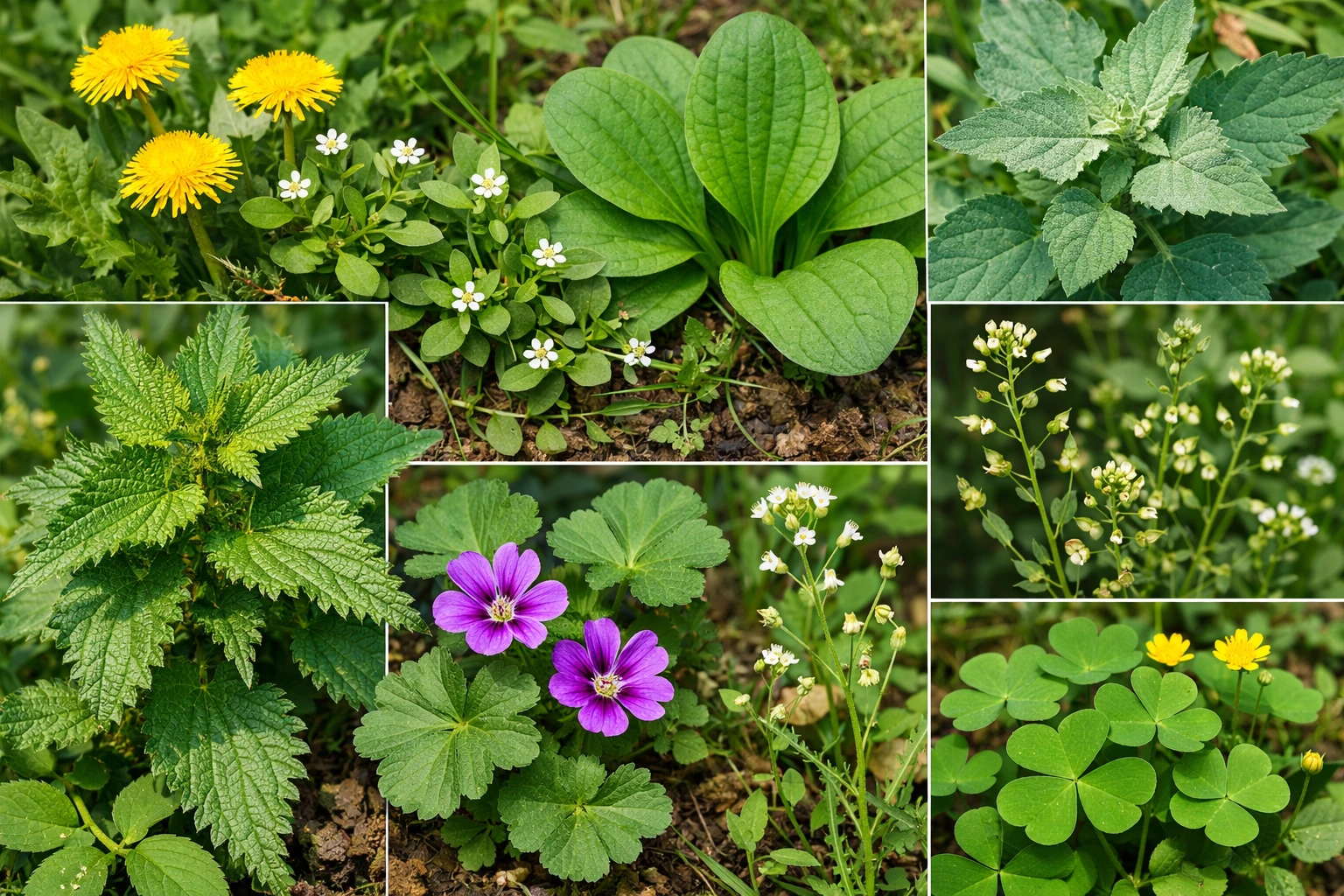
Foraging edible weeds in your backyard can be a nutritional goldmine, but misidentification can lead to accidental ingestion of toxic plants. Many wild plants like dandelion, purslane, and chickweed are safe and packed with vitamins, minerals, and antioxidants — yet look-alike species can be dangerous.
This beginner-friendly guide will teach you how to identify edible weeds safely, so you can enjoy free, nutrient-dense greens without risk.
Tools You Need for Safe Identification
Before you start, gather a few simple tools:
- Gloves – protect hands from thorns or irritants
- Magnifying glass – helps see leaf and flower details
- Smartphone or plant ID app – for extra verification
- Field guide / reference book – always cross-check
Tip: Never rely on memory alone. Always confirm using multiple sources.
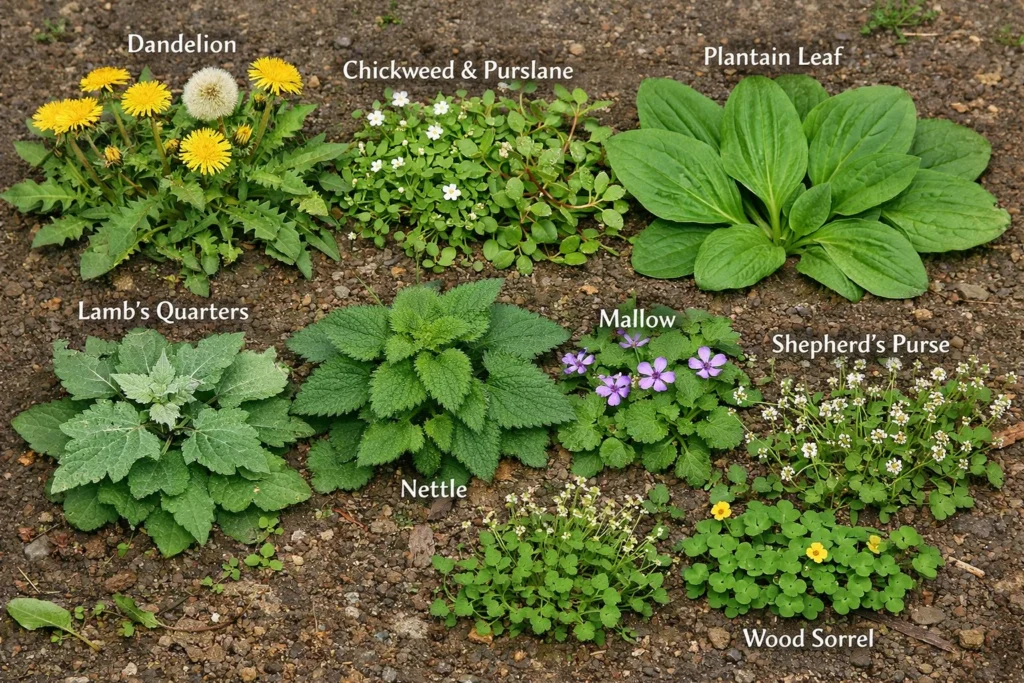
Top 10 Edible Backyard Weeds (with Images & Tips)
| Weed | Identification Tips | How to Use |
|---|---|---|
| Dandelion | Bright yellow flower, toothed leaves | Salads, tea, cooked greens |
| Purslane | Thick succulent leaves, red stems | Stir-fry, soups, salads |
| Chickweed | Small white flowers, trailing stems | Smoothies, salads |
| Plantain Leaf | Broad oval leaves with prominent veins | Tea, poultice |
| Lamb’s Quarters | Diamond-shaped leaves, powdery coating | Cooked greens |
| Nettle | Jagged leaves, stinging hairs | Tea, soups (cook before eating) |
| Mallow | Rounded leaves, small purple flowers | Soups, stews |
| Shepherd’s Purse | Heart-shaped seed pods, small white flowers | Stir-fry, salad |
| Wood Sorrel | Clover-like leaves, tangy taste | Raw garnish, salads |
| Fennel Weed | Feathery leaves, anise scent | Garnish, soups |
Pro Tip: Take photos of each plant in your backyard for reference before harvesting.
Common Look-Alikes & How to Avoid Them
Even edible weeds have dangerous doppelgangers. Learn these tips:
- Hemlock vs. Parsley/Dill – Hemlock is poisonous; avoid plants with purple stems.
- Foxglove vs. Plantain Leaf – Tall spikes with tubular flowers = toxic.
- Lamb’s Quarters vs. Goosefoot – Confirm leaf shape and powdery coating.
Safety Rule: When in doubt, leave it out. Never eat a plant you cannot identify 100%.
Foraging Safety Tips
- Avoid areas treated with herbicides or pesticides
- Avoid harvesting near roadsides or polluted soil
- Wash all weeds thoroughly before eating
- Introduce weeds into your diet gradually
Step-by-Step Harvesting Guide
- Identify and photograph the plant
- Confirm with multiple resources
- Harvest only a small portion of the plant
- Wash thoroughly in clean water
- Store in a cool, dry place if not eating immediately
Frequently Asked Questions (FAQ)
Q1: Can I eat weeds from my lawn?
Only if you are certain they have not been sprayed with chemicals. Always harvest from clean, untreated soil.
Q2: How do I avoid poisonous look-alikes?
Use apps, field guides, and multiple visual checks. Photos help prevent mistakes.
Q3: How much can I safely consume?
Start small. Gradually increase portions as your body adjusts to new fiber and nutrient intake.
Conclusion
Identifying edible weeds safely transforms your backyard into a free superfood source. By using these tools, recognizing key characteristics, and following safety rules, you can enjoy nutrient-packed greens like dandelion, purslane, and chickweed all year round.
For more information on nutrient-rich backyard weeds, check out our main guide: 9 Backyard “Weeds” That Are Actually Powerful Superfoods Growing in Plain Sight.

Dr. Mohammed Abdul Azeem Siddiqui, MBBS
Registered Medical Practitioner (Reg. No. 39739)
With over 30 years of dedicated clinical experience, Dr. Siddiqui has built his career around one clear mission: making quality healthcare affordable, preventive, and accessible.
He is deeply passionate about:
Early disease diagnosis – empowering patients with timely detection and reducing complications.
Preventive healthcare – guiding individuals and families towards healthier, longer lives through lifestyle interventions and screenings.
Affordable treatments – ensuring cost-effective, evidence-based medical solutions that reach people from all walks of life.
Through his blog, Dr. Siddiqui shares practical health insights, early warning signs, and preventive strategies that readers can trust. Every article is rooted in evidence-based medicine and enriched by decades of hands-on clinical practice.
EMAIL: powerofprevention@outlook.com
📌 Disclaimer: The content in this blog is for educational purposes only and should not replace personalized medical consultation. For specific health concerns, please consult your physician.
Leave a Reply