These little-known blood markers can predict heart disease, kidney failure, cancer, and metabolic damage long before symptoms begin. Discover the tests most doctors don’t order. Your routine blood tests may look normal.
Most Diseases Start Years Before Symptoms Appear
Heart disease, diabetes, fatty liver, autoimmune disorders, cognitive decline, and even many cancers do not begin with symptoms. They begin silently — at the cellular and inflammatory level — often 10 to 20 years before diagnosis.
By the time routine blood tests become “abnormal,” significant internal damage has already occurred.
Modern preventive medicine has identified a new class of laboratory indicators known as early or “hidden” biomarkers. These blood markers can detect organ stress, inflammation, insulin resistance, and tissue damage long before symptoms appear and long before standard tests change.
Intellinewz exists to make this early detection approach affordable, understandable, and accessible.
Why Standard Blood Tests Fail to Detect Early Disease
Routine health checkups typically include:
• Complete blood count (CBC)
• Fasting glucose
• Total cholesterol
• Liver enzymes (ALT, AST)
• Kidney markers (creatinine, urea)
These tests are valuable — but they are late-stage indicators.
Most chronic disease begins with:
• Cellular inflammation
• Mitochondrial dysfunction
• Hormonal disruption
• Oxidative tissue damage
• Early fibrotic scarring
These changes occur years before traditional lab ranges shift.
Hidden biomarkers detect the actual disease-initiating processes, not just the final damage.
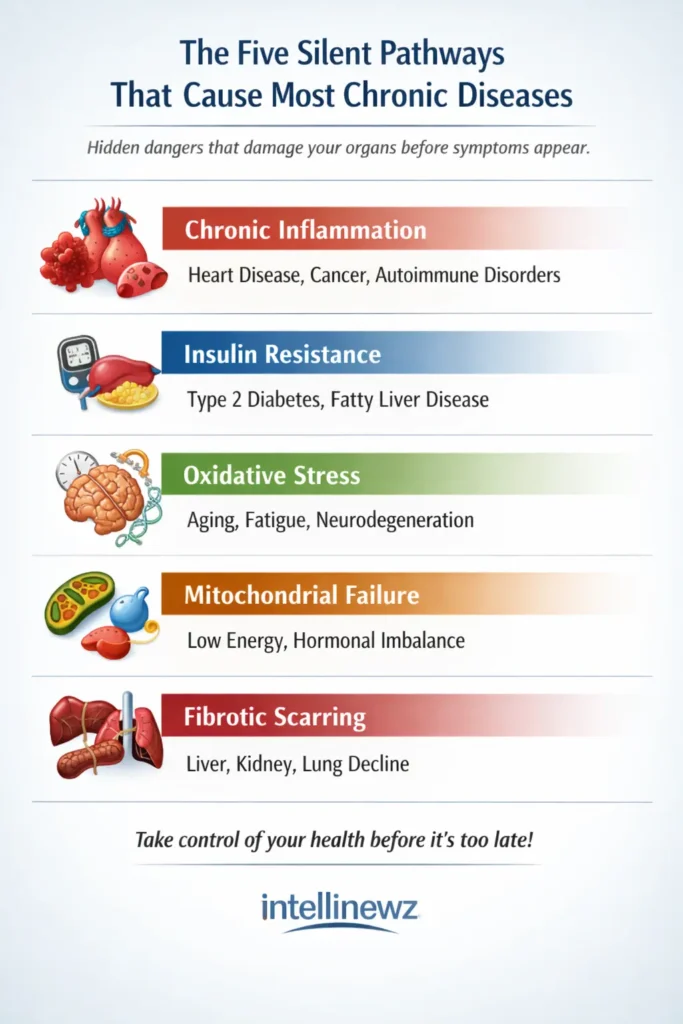
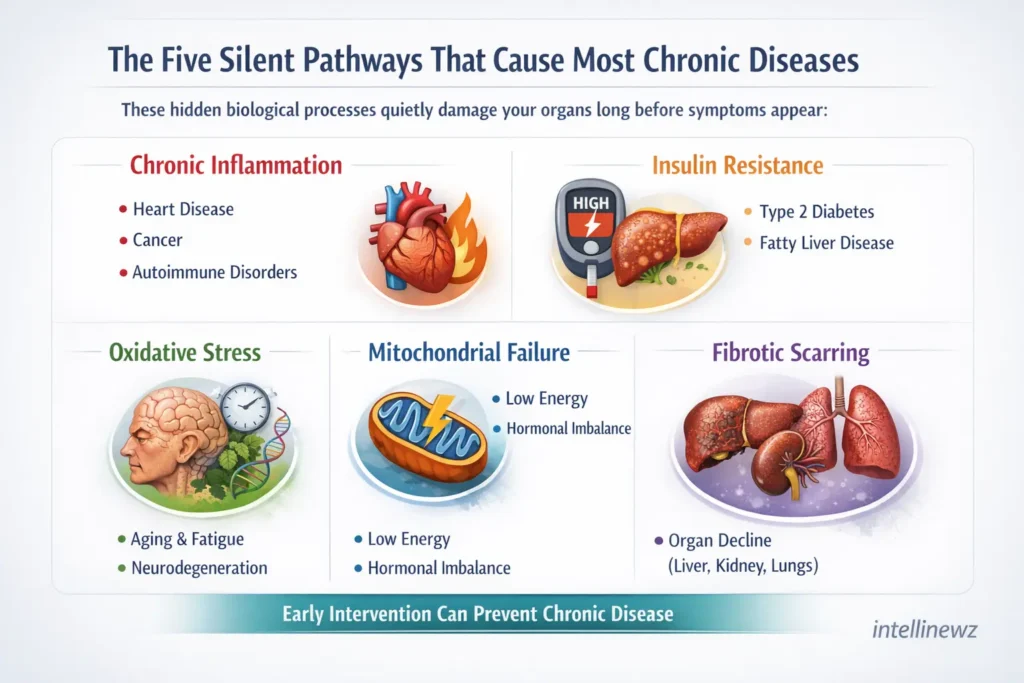
The Five Silent Pathways That Cause Most Chronic Diseases
Nearly all modern chronic diseases originate from five biological damage pathways:
| Pathway | What It Causes |
|---|---|
| Chronic Inflammation | Heart disease, cancer, autoimmune disorders |
| Insulin Resistance | Diabetes, fatty liver, metabolic syndrome |
| Oxidative Stress | Aging, neurodegeneration, fatigue |
| Mitochondrial Failure | Hormonal collapse, chronic exhaustion |
| Fibrotic Scarring | Liver, kidney, lung failure |
Hidden biomarkers measure these processes while damage is still reversible.
Hidden Blood Markers That Reveal Early Damage
| Biomarker | What It Detects | Organ Impact |
|---|---|---|
| GlycA | Chronic systemic inflammation | Whole body |
| suPAR | Early mortality & organ risk | Multi-organ |
| TyG Index | Insulin resistance | Metabolic |
| NfL (Neurofilament Light) | Brain cell injury | Brain |
| ELF Score | Liver fibrosis | Liver |
| Klotho | Accelerated aging | Whole body |
| miR-122 | Liver cell damage | Liver |
| 8-OHdG | DNA oxidative damage | Cellular |
These markers reveal future disease risk — not just present illness.
Early Heart & Vascular Damage Biomarkers
Before cholesterol becomes dangerous, arteries are already inflamed.
Important early markers include:
• GlycA
• suPAR
• Lp-PLA2
• Homocysteine
These predict arterial inflammation, plaque instability, and heart attack risk years before symptoms.
Early Liver Failure & Fatty Liver Biomarkers
Fatty liver disease is now one of the most common silent killers.
Early liver stress markers:
• ELF score
• miR-122
• K18 fragments
• FGF-21
They detect fibrosis and cellular injury before ultrasound or ALT become abnormal.
Pre-Diabetes & Metabolic Damage Biomarkers
Many people with “normal sugar” already have organ damage.
Early metabolic damage markers:
• TyG Index
• Fasting insulin
• C-peptide
• 1,5-Anhydroglucitol
They detect insulin resistance years before HbA1c rises.
Brain Decline & Cognitive Loss Biomarkers
Neurodegeneration begins decades before memory loss.
Early brain biomarkers:
• Neurofilament Light (NfL)
• GFAP
• p-Tau217
• BDNF
These detect neuronal damage long before dementia symptoms.
Hormonal Aging & Fertility Decline Biomarkers
Hormonal aging begins silently in your 30s.
Important markers include:
• AMH trend
• DHEA-S decline
• SHBG loss
• Cortisol awakening response
These predict fertility decline, fatigue, and mood changes early.
Autoimmune & Chronic Inflammation Biomarkers
Autoimmune disease can exist for years before diagnosis.
Early immune markers:
• ANA patterns
• Anti-CCP
• Calprotectin
• Complement C3/C4 imbalance
They detect immune dysregulation early.
Mitochondrial Fatigue & Chronic Energy Loss Biomarkers
Chronic fatigue often reflects cellular energy failure.
Markers include:
• Lactate-pyruvate ratio
• CoQ10 depletion
• Carnitine deficiency
• 8-OHdG oxidative DNA damage
Affordable Preventive Blood Testing: Why Early Detection Saves Money
Treating advanced disease is expensive.
Preventing it is affordable.
Hidden biomarker panels can detect disease processes early, reducing hospitalization, medication dependency, and long-term complications.
Preventive testing is one of the highest-return investments in personal health.
A Simple Preventive Health Roadmap
| Age Group | What to Screen |
|---|---|
| 20–30 | Inflammation, insulin resistance |
| 30–40 | Liver, metabolic, hormonal aging |
| 40–50 | Brain, heart, kidney |
| 50+ | Full organ protection panels |
FAQs on The Hidden Blood Markers That Detect Disease Years Before Diagnosis
Q1. What are hidden blood markers?
Hidden blood markers are advanced laboratory biomarkers that detect early inflammation, cellular injury, metabolic stress, hormonal imbalance, and organ scarring long before routine blood tests become abnormal. They reveal silent disease risk while damage is still reversible.
Q2. Why do routine blood tests miss early disease?
Standard tests detect late-stage organ failure rather than early cellular stress. Chronic diseases begin with inflammation, insulin resistance, oxidative damage, and fibrotic scarring — changes that are invisible to routine screening panels.
Q3. At what age should preventive biomarker testing start?
Preventive biomarker screening is recommended beginning in the late 20s to early 30s, especially for individuals with family history of chronic disease, unexplained fatigue, weight gain, brain fog, or lifestyle risk factors.
Q4. Can early biomarker detection prevent chronic disease?
Yes. Early detection allows targeted lifestyle and nutritional interventions that can reverse inflammation, insulin resistance, and oxidative stress — preventing progression to diabetes, heart disease, fatty liver, cognitive decline, and autoimmune disorders.
Q5. Are preventive biomarker tests expensive?
Many preventive biomarker panels are now affordable and cost significantly less than treating advanced chronic disease. Early testing reduces long-term medical costs and improves quality of life.
Q6. Do I need a doctor’s prescription for these tests?
Testing requirements vary by country and laboratory. A qualified healthcare provider can guide appropriate screening based on personal risk factors and medical history.
Q7. What is the most important early disease biomarker?
There is no single most important biomarker. A combination of inflammation, metabolic, hormonal, and organ-specific markers provides the most accurate early disease risk assessment.
Q8. How often should preventive biomarker testing be done?
Most individuals benefit from annual or biennial screening, depending on age, lifestyle, family history, and existing risk factors.
Real Medical Examples Where Early Biomarkers Now Prevent Fatal Disease
1. Fatty Liver Progressing to Liver Failure – Now Preventable
What used to happen
For decades, fatty liver disease (NAFLD/NASH) was considered “benign.”
Patients often had normal liver enzymes and felt healthy.
By the time ALT/AST rose or ultrasound detected cirrhosis, patients were already in irreversible liver failure — often requiring transplant.
What changed
Modern biomarkers now detect liver scarring 10–15 years earlier:
| New Biomarker | What It Detects |
|---|---|
| ELF Score | Early liver fibrosis |
| K18 Fragments | Liver cell apoptosis |
| miR-122 | Cellular liver injury |
| FGF-21 | Metabolic liver stress |
Why this matters
Today, patients with early fibrosis can reverse liver damage through weight loss, insulin correction, and targeted nutrition — preventing cirrhosis, liver cancer, and transplant.
This is one of the most dramatic examples of how early biomarkers now prevent fatal disease progression.
2. Silent Brain Cell Loss Before Alzheimer’s – Now Detectable
What used to happen
Memory loss was considered the first sign of Alzheimer’s.
By then, 30–40% of brain neurons were already lost — irreversible damage.
There was no way to detect the disease early.
What changed
Advanced biomarkers can now detect neuronal injury 15–20 years earlier:
| Biomarker | What It Detects |
|---|---|
| Neurofilament Light (NfL) | Brain cell injury |
| p-Tau217 | Alzheimer’s pathology |
| GFAP | Astrocyte stress |
| BDNF | Loss of neuroplasticity |
Why this matters
Early detection allows:
• Anti-inflammatory neuroprotection
• Blood sugar and vascular correction
• Nutritional and cognitive preservation
• Lifestyle reversal of disease risk
This dramatically slows decline and reduces suffering.
These examples demonstrate the real-world lifesaving power of early biomarker diagnostics — exactly what Intellinewz stands for.
If you want, I can also provide cardiovascular and cancer-prevention examples to further strengthen your authority pages.
yes
Below are two more high-impact, medically accepted examples you can safely cite inside your Hub page to demonstrate how early biomarkers are already preventing fatal disease and long-term suffering.
3. Heart Attack Prevention – When “Normal Cholesterol” Was Missing the Real Risk
What used to happen
For decades, heart attack risk was judged almost entirely by total cholesterol and LDL levels.
Many patients with “normal cholesterol” still suffered sudden heart attacks — often with no prior warning.
What changed
Advanced inflammatory and plaque-stability biomarkers now detect arterial danger years before blockage occurs:
| New Biomarker | What It Detects |
|---|---|
| Lp-PLA2 | Plaque inflammation |
| GlycA | Chronic vascular inflammation |
| suPAR | Early mortality & vascular stress |
| Homocysteine | Endothelial injury |
Why this matters
Patients with high inflammatory burden can now receive early lifestyle correction, vascular nutrition therapy, and metabolic stabilization — dramatically reducing heart attack and stroke risk long before arteries block.
4. Colon Cancer – Detecting Malignancy Before It Forms
What used to happen
Colon cancer was typically discovered only when tumors caused bleeding, pain, or obstruction — often late-stage.
What changed
New biomarkers now detect malignant risk before tumors fully develop:
| Biomarker | What It Detects |
|---|---|
| FIT (fecal immunochemical test) | Microscopic bleeding |
| Circulating free DNA (cfDNA) | Tumor DNA fragments |
| Calprotectin | Chronic bowel inflammation |
| CEA trend | Early malignant activity |
Why this matters
Early detection allows:
• Polyp removal
• Inflammation reversal
• Lifestyle correction
• Cancer prevention before malignancy develops
This has dramatically reduced colon cancer mortality in screened populations.
Medical Disclaimer
This information is educational and does not replace professional medical diagnosis. Always consult a qualified healthcare provider before making medical decisions.