Cooking Oils and Health: 9 Expert Answers That Can Prevent Heart Disease, Diabetes & Fatty Liver
Cooking oils are an essential part of our daily diet, providing energy, essential fatty acids, and fat-soluble vitamins. The type of oil you choose not only impacts the flavor of your meals but also significantly influences your heart health, metabolic function, liver health, and long-term disease risk. Understanding the composition, health effects, and proper culinary uses of oils can help you make informed choices for a healthier lifestyle.
Types of Cooking Oils
Cooking oils can be broadly categorized into vegetable, seed, nut, fruit, and animal-based oils. They vary in fat composition, smoke point, and health effects.

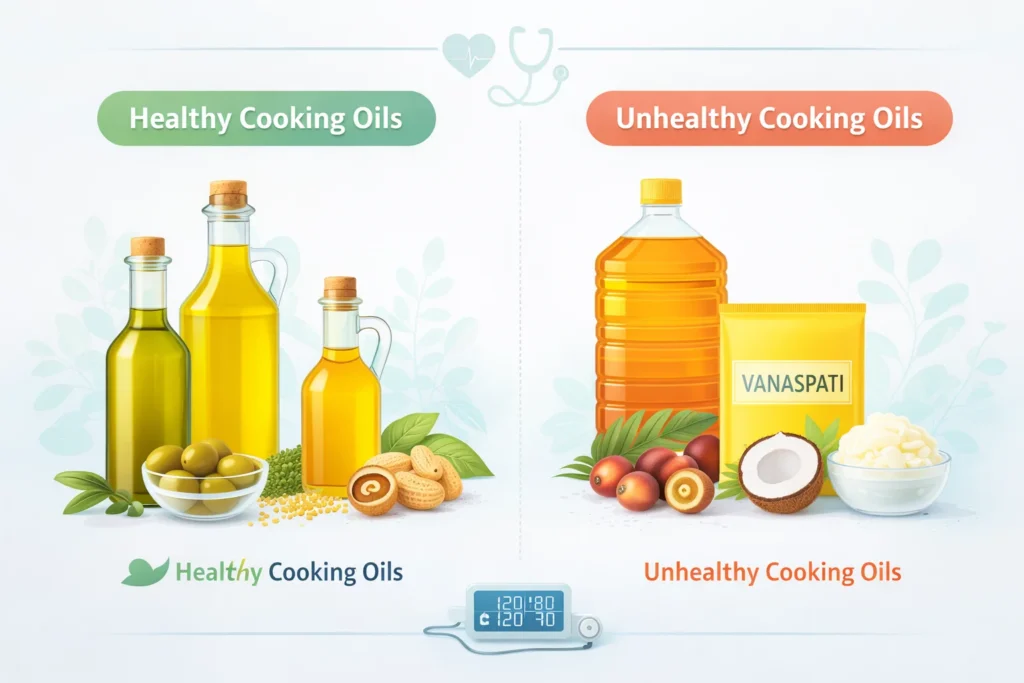
Healthy Oils
Oils rich in monounsaturated and polyunsaturated fats like olive oil, avocado oil, canola oil, and sunflower oil are considered heart-healthy.
Unhealthy Oils
Hydrogenated oils, vanaspati, and oils high in saturated fats should be limited to protect cardiovascular health.
Special Oils and Their Benefits
Some oils provide unique health benefits beyond basic nutrition:

- Olive Oil (Extra Virgin): Antioxidants protect the liver from oxidative stress.
- Flaxseed Oil: Omega-3s reduce inflammation and support liver function.
- MCT Oil: Easily digested and metabolized, providing quick energy.
Expert Q&A on Cooking Oils
- For patients with hyperlipidemia, which oils and what quantities have the most evidence for lowering LDL and triglycerides?
MUFA-rich oils like extra virgin olive oil and canola oil are most effective. Daily intake of 2–3 tablespoons (30–45 ml) improves lipid profiles. PUFA-rich oils also help but should be balanced with omega-3 intake. Limit saturated fats to <10% of total calories. - In type 2 diabetes, is there clinical data showing improved glycemic control with olive or canola oil?
Replacing saturated fats with olive or canola oil improves insulin sensitivity and postprandial glucose levels. Daily intake of 25–30 g is commonly used in studies. - For NAFLD patients, which oils improve liver fat or enzymes?
Olive oil and omega-3-rich oils (flaxseed, fish) reduce hepatic fat and improve liver enzymes. Saturated fats like palm and coconut should be limited. - In hypertensive patients, do MUFA or PUFA oils help blood pressure?
MUFA oils like olive oil reduce systolic and diastolic pressure by 2–5 mmHg through vasodilation and improved endothelial function. - Which oils are safest for long-term cardiovascular health?
MUFA (olive, avocado) and PUFA (canola, sunflower, soybean) oils are safest. Saturated fats sparingly; avoid trans fats. - How important is the balance between saturated, MUFA, and PUFA in daily intake?
Ideal distribution: saturated fats <10%, MUFA ~15–20%, PUFA ~5–10%. Maintains heart health and reduces inflammation. - Oils to avoid due to trans fats or industrial processing?
Avoid hydrogenated oils, margarine, and some refined vegetable oils. Even small amounts raise LDL and lower HDL. - Does the source of oil affect metabolic outcomes?
Plant-based oils (olive, canola, flaxseed) are cardioprotective; animal fats like butter, ghee, lard may raise LDL if consumed excessively. - Are antioxidants in oils clinically relevant?
Polyphenols in extra virgin olive oil and vitamin E in sunflower oil have moderate protective effects when included in a balanced diet. - Do omega-3 fatty acids in oils impact inflammation or lipids?
Omega-3s reduce triglycerides, CRP, and platelet aggregation. Daily 1–3 g EPA/DHA has clinically relevant benefits. - How does repeated heating affect oils and health?
Repeated heating generates oxidized lipids and free radicals, increasing oxidative stress and cardiovascular risk. PUFA oils degrade faster than MUFA oils. - Should omega-6:omega-3 ratio be considered in dietary counseling?
Aim for ~4:1 ratio. Use omega-3-rich oils and limit high omega-6 oils (sunflower, corn) to reduce inflammation. - Oils resistant to oxidative degradation for frying?
MUFA-rich oils (peanut, refined olive, avocado) and some saturated oils (ghee, coconut) are stable at high heat. PUFA oils degrade quickly. - Difference between refined vs unrefined oils clinically?
Unrefined oils retain antioxidants, beneficial for low-medium heat or raw use. Refined oils are safer for high-heat frying but have lower bioactive compounds. - Oils safest for children and adolescents?
MUFA/PUFA oils like olive, canola, sunflower. Nut oils cautiously. Limit saturated fats. - Oils recommended in pregnancy?
Omega-3 oils (flaxseed, fish) for fetal brain. Olive oil for maternal cardiovascular health. Saturated and trans fats should be limited. - Oils for elderly patients to support cognition and reduce inflammation?
Extra virgin olive oil and omega-3-rich oils (fish, flaxseed) slow cognitive decline and reduce inflammation. - Oils to avoid in gallbladder, pancreatitis, or malabsorption?
High-fat saturated oils (coconut, palm, ghee) or large quantities of PUFA. Prefer refined olive or canola oil. - Oils reducing systemic inflammation markers?
Extra virgin olive oil and omega-3 oils lower CRP, IL-6, and endothelial inflammation. - Can oils modify autoimmune disease progression?
Omega-3 oils reduce joint stiffness and inflammatory markers in rheumatoid arthritis. MUFA oils support cardiovascular health. - Difference in inflammation between raw vs heated oils?
Raw oils retain antioxidants; heating beyond smoke point generates oxidative compounds promoting inflammation. - Does coconut oil raise HDL without raising LDL?
Coconut oil raises both HDL and LDL; MUFA/PUFA oils are safer for heart health. - Does extra virgin olive oil prevent cancer?
Observational studies suggest risk reduction when consumed as part of a Mediterranean diet, but not conclusive alone. - Are “heart-healthy” packaged oil blends evidence-based?
Often not. Benefits depend on composition, MUFA/PUFA content, and refinement process. - Public health recommendations for oils?
Prioritize olive, canola, sunflower over palm or hydrogenated oils to reduce CVD risk. - Risks of refined vegetable oils in urban diets?
High omega-6 refined oils may increase inflammation; repeated heating generates oxidized lipids. Balance is key. - Public health advice for high-temperature cooking cultures?
Use high-smoke-point MUFA oils (peanut, refined olive, avocado); avoid PUFA oils for frying. - Emerging oils with clinical benefits?
Avocado oil (high MUFA, heat stable), algal oil (DHA), rice bran oil (oryzanol, antioxidant). Human trials ongoing. - How to counsel patients when evidence is conflicting?
Emphasize balance, moderation, and substitution with MUFA/PUFA-rich oils; limit saturated and avoid trans fats. - Biomarkers to assess long-term oil consumption impact?
Lipid profile (LDL, HDL, triglycerides), inflammation (CRP, IL-6), oxidative stress (MDA, oxidized LDL), plasma/erythrocyte fatty acid profile. - Practical guidelines for patients at risk of heart disease?
Prefer olive, canola, avocado oils. Limit saturated fats to <10% of calories. 2–3 tbsp MUFA-rich oils daily. Low-medium heat cooking; avoid repeated deep frying. - Balancing taste, culinary habits, and health risks?
Substitute healthier oils gradually. Raw oils for dressings, high-smoke-point oils for frying. Rotate oils to preserve taste and nutrients. - Rotate oils weekly/monthly for fatty acid balance?
Recommended for MUFA/PUFA and omega-3/6 balance, reduce exposure to oxidized compounds, and maintain culinary variety.
Choosing the right cooking oil is a balance between taste, cooking method, and health benefits. Incorporating a variety of oils, prioritizing MUFA and PUFA, and moderating saturated fats can improve heart health, metabolism, liver function, and reduce inflammation. Rotate oils and incorporate omega-3 sources for optimal health benefits.
Dr. Mohammed Abdul Azeem Siddiqui, MBBS, M.Tech (Biomedical Engineering – VIT, Vellore)
Registered Medical Practitioner – Reg. No. 39739
Physician • Clinical Engineer • Preventive Diagnostics Specialist
Dr. Mohammed Abdul Azeem Siddiqui is a physician–engineer with over 30 years of dedicated clinical and biomedical engineering experience, committed to transforming modern healthcare from late-stage disease treatment to early detection, preventive intelligence, and affordable medical care.
He holds an MBBS degree in Medicine and an M.Tech in Biomedical Engineering from VIT University, Vellore, equipping him with rare dual expertise in clinical medicine, laboratory diagnostics, and medical device engineering. This allows him to translate complex laboratory data into precise, actionable preventive strategies.
Clinical Mission
Dr. Siddiqui’s professional mission centers on three core pillars:
Early Disease Detection
Identifying hidden biomarker abnormalities that signal chronic disease years before symptoms appear — reducing complications, hospitalizations, and long-term disability.
Preventive Healthcare
Guiding individuals and families toward longer, healthier lives through structured screenings, lifestyle intervention frameworks, and predictive diagnostic interpretation.
Affordable Evidence-Based Treatment
Delivering cost-effective, scientifically validated care accessible to people from all socioeconomic backgrounds.
Clinical & Technical Expertise
Across three decades of continuous practice, Dr. Siddiqui has worked extensively with:
Advanced laboratory analyzers and automation platforms
• Cardiac, metabolic, renal, hepatic, endocrine, and inflammatory biomarker systems
• Preventive screening and early organ damage detection frameworks
• Clinical escalation pathways and diagnostic decision-support models
• Medical device validation, calibration, compliance, and patient safety standards
He is recognized for identifying subclinical biomarker shifts that predict cardiovascular disease, diabetes, fatty liver, kidney disease, autoimmune inflammation, neurodegeneration, and accelerated biological aging long before conventional diagnosis.
Role at IntelliNewz
At IntelliNewz, Dr. Siddiqui serves as Founder, Chief Medical Editor, and Lead Clinical Validator. Every article published is:
Evidence-based
• Clinically verified
• Technology-grounded
• Free from commercial bias
• Designed for real-world patient and physician decision-making
Through his writing, Dr. Siddiqui shares practical health intelligence, early warning signs, and preventive strategies that readers can trust — grounded in decades of frontline medical practice.
Contact:
powerofprevention@outlook.com
📌 Disclaimer: The content on IntelliNewz is intended for educational purposes only and does not replace personalized medical consultation. For individual health concerns, please consult your physician.