
Understanding the invisible journey of microplastics and their potential implications for infant health
Introduction
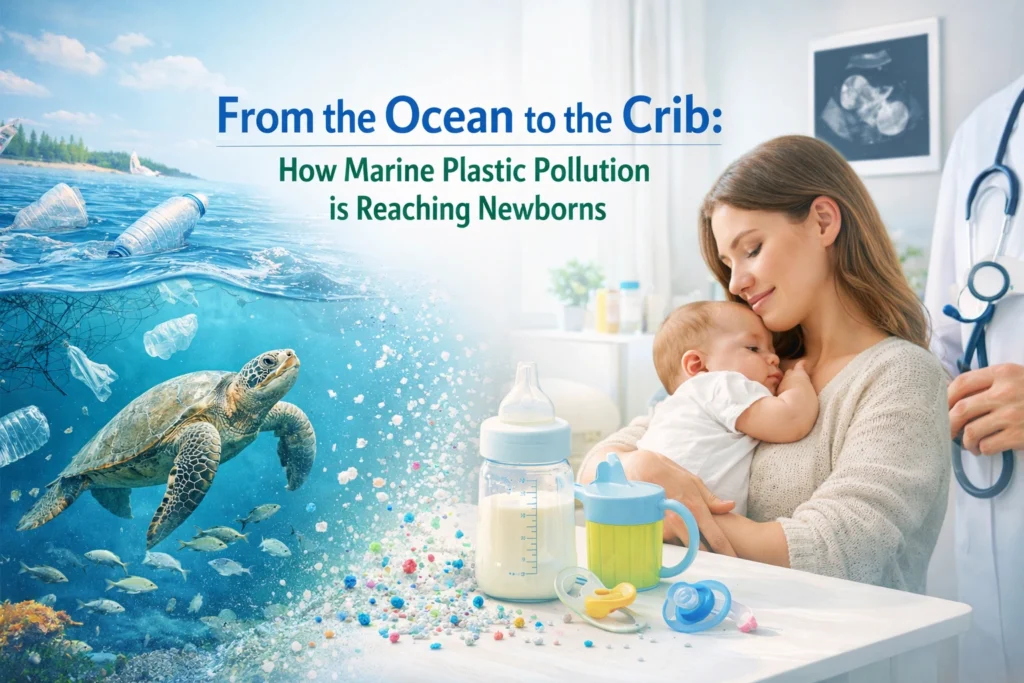
Marine plastic pollution has escalated into a global health concern. Once considered an environmental issue confined to beaches and ocean gyres, research now shows that tiny plastic particles known as microplastics are infiltrating the human body — including vulnerable populations such as newborns and developing fetuses.
So microplastics and infant health explains what microplastics are, how they reach humans, the evidence for their presence in people, their potential health effects, and practical strategies to reduce exposure.

Cosmo General Hospital
Preventive Health Education
What Are Microplastics?
Microplastics are plastic particles smaller than 5 millimetres — roughly less than the width of a pencil eraser. They arise from two primary sources:
- Primary microplastics — engineered microscopic plastics used in cosmetics, industrial applications, and cleaning products.
- Secondary microplastics — breakdown products of larger plastic debris (e.g., bottles, packaging, fishing gear) due to sunlight, wave action, and mechanical abrasion. These particles are now spread across oceans, air, soil, and freshwater systems.

How Marine Microplastics Reach Humans
Once plastics enter waterways, they undergo degradation and fragmentation, creating microplastics that can circulate globally. Marine microplastics can return to humans through several pathways:
- Seafood — Fish, shellfish, and other marine foods contain microplastics, which can be consumed during meals.
- Drinking water — Both tap and bottled water show detectable microplastic particles.
- Airborne microplastics — Tiny particles can become airborne via aerosolization and dust, particularly in indoor environments.
- Daily products — Plastic containers, bottles, and synthetic textiles shed particles that enter the body through ingestion or inhalation.
These exposure routes make avoidance difficult, leading scientists to describe microplastic exposure as nearly ubiquitous in human populations.

Where Microplastics Have Been Found in Humans
Multiple scientific studies have now detected microplastics in human biological samples, confirming actual exposure:
- Bloodstream and circulation — Microplastics have been detected in human blood, indicating systemic exposure.
- Organs and tissues — Research reports microplastics in organ tissues (e.g., placenta, heart, liver) in humans and mammals.
- Placenta and fetal tissues — Microplastics have been identified in placental tissue, including in preterm births, showing they can reach the fetal environment.
- Biofluids — Presence in urine and breast milk suggests exposure in both adults and infants.
These findings demonstrate that microplastics are not merely environmental contaminants but can physically enter and remain within the human body.
Potential Health Effects of Microplastics
What Evidence Suggests
Microplastics interact with biological systems in ways that could pose health risks:

1. Inflammation and Oxidative Stress
Animal and cell studies show microplastics can trigger inflammation and oxidative stress, which are implicated in chronic diseases.
2. Immune Modulation and Cellular Damage
Experimental evidence indicates that microplastics may affect immune responses and cellular functions, leading to stress responses in tissue culture models.

3. Digestive and Gut Microbiome Effects
Microplastics may disrupt the balance of gut bacteria, which can influence metabolic and immune homeostasis.
4. Reproductive and Developmental Concerns
Some epidemiological studies correlate microplastic presence with reproductive outcomes (e.g., birthweight, gestational age), but larger investigations are needed for definitive conclusions.
5. Respiratory and Cardiovascular Indicators
In animal models and limited human observations, inhalation of microplastics has been associated with pulmonary inflammation, and microplastics in vascular plaques have been linked to cardiovascular events.
Collectively, current evidence suggests potential risks to human health, particularly for digestive, reproductive, and respiratory systems, but more high-quality research is required.
What Is Not Yet Proven
Direct causation of specific diseases in humans. Despite associations with organ presence and markers of health outcomes, no definitive evidence yet establishes that microplastics directly cause illnesses such as cancer, diabetes, or neurological disorders.
- Exposure thresholds for harm. Scientific studies have not yet identified specific levels of microplastic exposure that reliably predict adverse health effects in humans.
- Long-term health outcomes. Longitudinal data tracking lifetime health effects of microplastic exposure across large populations remain limited.
In summary, evidence of exposure is strong and there are biologically plausible mechanisms for harm, but causative health effects in humans are still being investigated.
Practical, Evidence-Based Ways to Reduce Exposure
Although eliminating exposure entirely is currently unrealistic, several practical steps may reduce contact with microplastics:
- Prefer glass or stainless steel over plastic containers for drinking and food preparation.
- Avoid heating food in plastic (microwave or dishwasher).
- Use water filters that reduce particle load (e.g., carbon or reverse-osmosis systems).
- Choose fresh foods with minimal plastic packaging.
- Wash synthetic clothing less often and consider natural fibers to reduce microfibre shedding.
- Improve indoor ventilation to reduce airborne microplastic accumulation.
- Limit use of plastic teabags and disposable utensils.
Reducing exposure where feasible is a reasonable precaution while research continues to clarify health implications.
Conclusion
Microplastics represent a pervasive form of pollution with clear evidence of human exposure, including in newborns and fetal tissues. While the clinical health consequences in humans remain an active area of research, existing studies highlight plausible mechanisms of biological disruption, especially among vulnerable populations. Awareness, informed exposure reduction, and continued scientific investigation are essential for safeguarding public health as global plastic contamination persists.
12 FAQs: Microplastics & Infant Health
1. What are microplastics?
Tiny plastic particles under 5 mm from broken-down plastic or microbeads in products. How do humans get exposed?
Through seafood, drinking water, air, and plastic food containers.
3. Can microplastics reach babies?
Yes, studies found them in placentas, cord blood, and breast milk.4. Do microplastics cause disease in infants?
No direct evidence yet; research is ongoing.
5. What potential health effects exist?
May trigger inflammation, oxidative stress, or gut changes; long-term impact is unclear.
6. How can I reduce exposure?
Use glass or stainless steel, filter water, avoid heating plastics, and minimize packaged foods.
7. Can exposure be completely avoided?
No, microplastics are widespread, but precautions can lower contact.
8. Are bottled waters safer than tap water?
Not necessarily; filtered water is more effective than relying on bottles.
9. Can indoor air have microplastics?
Yes, from synthetic clothes, carpets, and household dust.
10. Should pregnant women be cautious?
Yes. Minimizing exposure is recommended, as microplastics can cross the placenta.
11. Can breastfeeding transfer microplastics?
Possibly, but breastfeeding benefits far outweigh potential risks.
12. Are there regulations for microplastics in food?
Some countries limit microbeads, but no global standard exists for food or water.