
What Is an Impacted Wisdom Tooth?
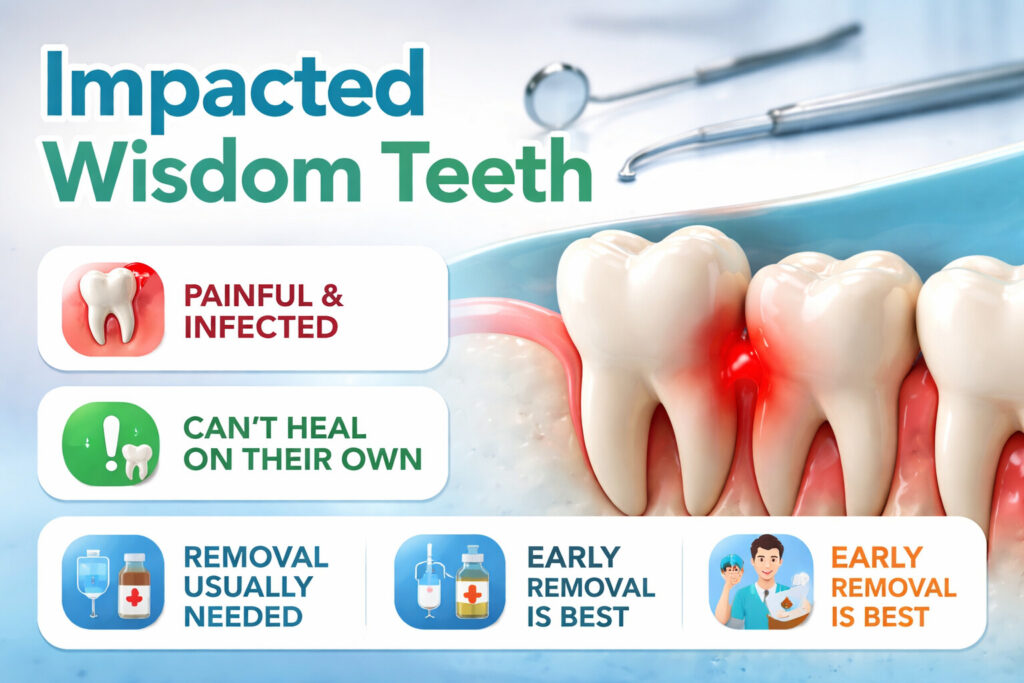
An impacted wisdom tooth is a third molar that cannot fully erupt because it is blocked by bone, gum tissue, or nearby teeth. When this happens, pressure builds inside the jaw and bacteria become trapped under the gum, leading to swelling, infection, and severe pain.
Why Impacted Wisdom Teeth Are So Common
Modern jaws are smaller than those of our ancestors because we eat softer, processed foods. This leaves little space for wisdom teeth to grow normally. As a result, these teeth often become trapped beneath the gums or grow sideways, pressing against other teeth and tissues.
This is why over 10 million wisdom teeth are removed every year in the United States.
Why Do Impacted Wisdom Teeth Hurt?
When a wisdom tooth only partially erupts, it creates a small pocket between the tooth and gum. Food and bacteria collect inside this space and cannot be cleaned properly. This causes an infection called pericoronitis.
The infection leads to:
- Swelling
- Pus formation
- Pressure on nerves
- Jaw stiffness
- Severe throbbing pain
Common Symptoms
You may have an impacted wisdom tooth if you notice:
- Pain in the back of the jaw
- Swollen or bleeding gums
- Bad breath or bad taste
- Difficulty opening your mouth
- Headache or ear pain
- Fever (sign of infection)
FEATURED HEALTH ALERT
Pregnancy
- Untreated infections can threaten both mother and baby.
Diabetes
- Slower healing increases the risk of severe infection.
Children & Teens
- Impacted teeth may exist before they erupt.
Heart Health
- Oral bacteria can enter the bloodstream and damage heart valves.
Chronic Fatigue
- Ongoing infection can drain immune energy.
Immune Disorders
- Persistent oral inflammation may worsen symptoms.
Pregnancy
- Untreated infections can threaten both mother and baby.
Diabetes
- Slower healing increases the risk of severe infection.
Children & Teens
- Impacted teeth may exist before they erupt.
Heart Health
- Oral bacteria can enter the bloodstream and damage heart valves.
Chronic Fatigue
- Ongoing infection can drain immune energy.
Immune Disorders
- Persistent oral inflammation may worsen symptoms.
Swelling that spreads to the cheek or neck is a dental emergency.
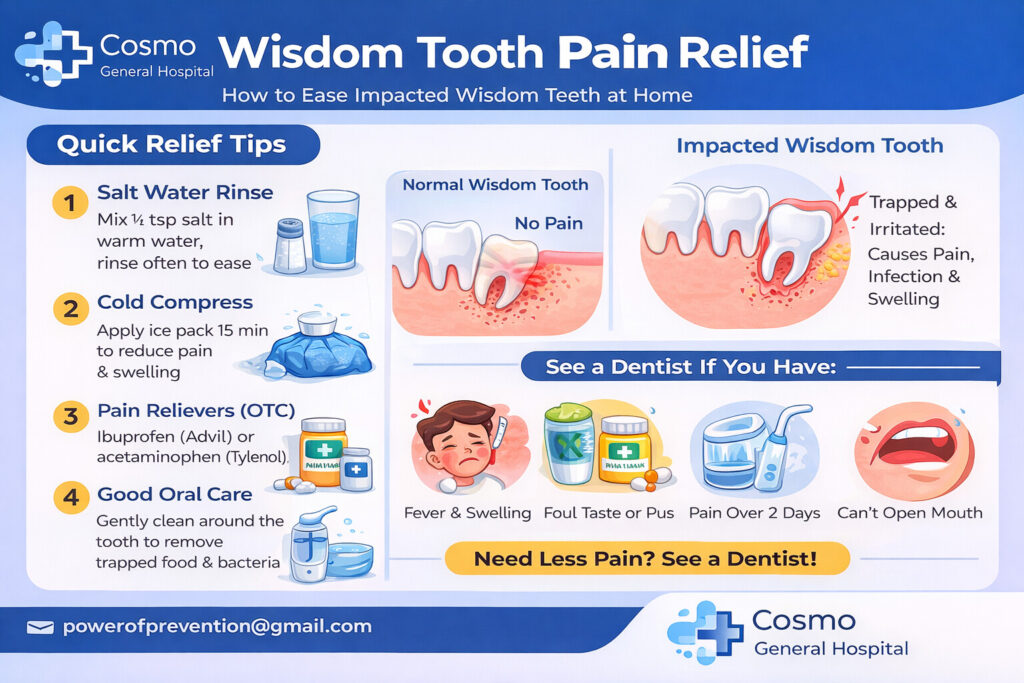
Quick Relief: What You Can Do Right Now
These measures help control pain until you see a dentist.
1. Saltwater Rinse
Mix ½ teaspoon salt in warm water and rinse 3–4 times daily.
2. Cold Compress
Apply ice to the outside of your cheek for 15 minutes to reduce swelling.
3. Pain Relievers
Ibuprofen or acetaminophen can reduce pain and inflammation.
4. Gentle Cleaning
Use a soft toothbrush or water flosser to clean around the tooth.
What NOT to Do
Avoid:
- Smoking or vaping
- Chewing on the painful side
- Putting aspirin on the gum
- Poking the area with sharp objects
These make the infection worse.Can Impacted Wisdom Teeth Heal on Their Own?
No. Impacted wisdom teeth do not resolve without treatment. Antibiotics may reduce infection temporarily, but the tooth remains trapped. Infections usually return and worsen over time. Extraction is the only permanent solution.
When Should a Wisdom Tooth Be Removed?
Removal is needed when there is:
- Pain
- Swelling
- Infection
- Damage to nearby teeth
- Repeated inflammation
Early removal in the late teens or early 20s is safer because the roots are not fully formed and healing is faster.
Why Early Removal Is Safer
In younger patients:
- Bone is softer
- Roots are shorter
- Nerve injury risk is lower
- Healing is faster
Delaying removal increases the risk of:
- Nerve damage
- Jaw infection
- Delayed healing
Permanent Treatment Options
| Treatment | Purpose |
|---|---|
| Antibiotics | Reduce infection |
| Gum irrigation | Clean trapped bacteria |
| Operculectomy | Remove gum flap |
| Wisdom tooth extraction | Permanent solution |
Infographic: How Impacted Wisdom Teeth Cause Pain
Wisdom tooth trapped under gum
           ↓
Food and bacteria accumulate
           ↓
Infection develops (pericoronitis)
           ↓
Swelling and pressure increase
           ↓
Nerves are irritated
           ↓
Severe jaw and tooth pain
Long-Term Risks If Left Untreated
Ignoring impacted wisdom teeth can lead to:
- Recurrent infections
- Jawbone damage
- Sinus infections
- Cysts or tumors
- Tooth crowding
- Chronic bad breath
Bottom Line
Impacted wisdom tooth pain is not just a toothache—it is a sign of infection and pressure inside the jaw.
Home remedies provide temporary relief, but professional dental care is required to prevent serious complications. Early diagnosis and treatment protect your teeth, jaw,and overall health.
A “sweet tooth” is a common phrase that describes a strong liking or craving for sweet foods such as sugar, chocolate, desserts, pastries, and sugary drinks.
What it really means
If someone has a sweet tooth, it means their brain gets a strong reward response when they eat sugar. Sweet foods activate dopamine (the pleasure chemical), making the body want more of them.
Why people have a sweet tooth
A sweet tooth can develop due to:
- Blood sugar drops – the body asks for quick energy
- Stress or poor sleep – sugar boosts mood temporarily
- Habit – regular sugar intake trains the brain to crave it
- Gut bacteria – certain microbes thrive on sugar and signal cravings
- Nutrient deficiencies – especially magnesium or chromium
Is having a sweet tooth unhealthy?
Occasional sugar cravings are normal, but a strong sweet tooth can lead to:
- Tooth decay
- Weight gain
- Insulin resistance
- Increased risk of diabetes
- Inflammation
How to control a sweet tooth
- Eat more protein and fiber
- Avoid skipping meals
- Stay hydrated
- Get enough sleep
- Replace refined sugar with fruit or dark chocolate
In short, a sweet tooth is not a disease—it is a biological and behavioral craving for sugar, and it can be managed with better nutrition and habits.
For impacted wisdom teeth, especially during recovery or to prevent further dental issues, it’s advisable to avoid certain types of fruits that can be difficult to chew, irritating, or cause discomfort. These include:
- Hard Fruits: Apples, pears, and unripe fruits that require significant biting force.
- Sticky or Chewy Fruits: Dried fruits like raisins or dried apricots, which can stick to your teeth and be hard to remove.
- Fruits with Small Seeds: Strawberries, raspberries, or blackberries with tiny seeds that can irritate the surgical site or be difficult to clean.
- Citrus Fruits: Oranges, grapefruits, lemons, and limes, which are acidic and can cause irritation or discomfort.
Recommended alternatives: Soft fruits like bananas, ripe melons, canned peaches or pears (in juice), and smoothies.
FAQs:
1. What is an impacted wisdom tooth?
It is a wisdom tooth that cannot come out normally because it is blocked by gum, bone, or another tooth.
2. Why do impacted wisdom teeth hurt?
They trap bacteria under the gum, causing infection, swelling, and pressure on nearby nerves.
3. Can impacted wisdom teeth heal on their own?
No. The problem usually gets worse without dental treatment.
4. How can I get fast pain relief?
Saltwater rinses, cold compresses, and ibuprofen can temporarily reduce pain and swelling.
5. When should I see a dentist?
If pain lasts more than two days, or if swelling, fever, or bad taste develops.
6. Do all impacted wisdom teeth need removal?
Most do, especially if they cause pain, infection, or damage to nearby teeth.
7. Can antibiotics cure the problem?
Antibiotics reduce infection but do not remove the impacted tooth, so the pain usually returns.
8. Is wisdom tooth removal painful?
No. It is done with anesthesia, and pain after surgery is manageable with medication.
9. How long does recovery take?
Most people recover in 3–7 days, with full healing in a few weeks.
10. Is it dangerous to ignore an impacted wisdom tooth?
Yes. Infection can spread to the jaw, face, or bloodstream.
11. Can impacted wisdom teeth affect other teeth?
Yes. They can cause crowding, decay, and gum disease in nearby teeth.
12. Is early removal better?
Yes. Younger patients heal faster and have fewer complications.