

In the modern world, constant noise—from traffic, smartphones, and endless notifications—has become the background of daily life. Yet, amid this urban hum, the sounds of nature—birdsong, flowing water, and rustling leaves—can act as more than just a pleasant distraction. Emerging research suggests that sound therapy may support stress reduction, mood improvement, and even regenerative processes in the body.
How Sound Influences the Body
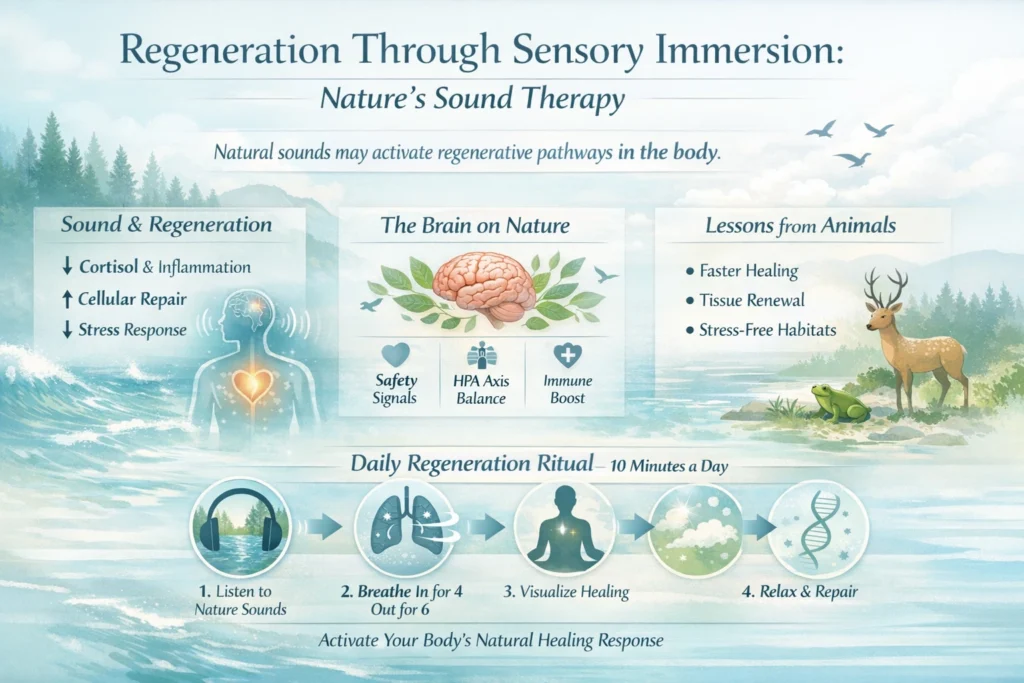
Our bodies respond to sound on both psychological and physiological levels. Chronic stress triggers the release of cortisol, which suppresses immune function, slows tissue repair, and increases inflammation. Natural soundscapes can counteract these effects by:
- Reducing cortisol and adrenaline
- Activating the parasympathetic “rest-and-repair” nervous system
- Improving heart rate variability (a marker of cellular resilience)
- Lowering inflammatory signaling
These changes create an environment in which the body can focus on repair and recovery.
Why Nature Sounds Feel Healing
Humans evolved in natural environments, so our nervous system interprets sounds like flowing water or birdsong as signals of safety. This perception reduces threat responses, regulates neurotransmitters such as dopamine, serotonin, and GABA, and increases blood flow to organs involved in repair.
Birdsong, in particular, has been linked to:
- Serotonin release – promoting calm and positive mood
- Dopamine activation – enhancing pleasure and focus
- Oxytocin release – fostering emotional comfort and connection
Even short exposure to these sounds can improve emotional well-being and cognitive clarity.
The Role of Solfeggio Frequencies
Solfeggio frequencies, like 396 Hz (liberation of fear and guilt) and 528 Hz (cellular repair and transformation), are used in sound therapy to promote relaxation and emotional balance. While their effects on cellular regeneration are not yet clinically proven, research supports that rhythmic frequencies and musical tones can influence:
- Brainwave patterns
- Stress hormone regulation
- Nervous system activity
- Emotional and cognitive states
Combining these frequencies with natural soundscapes amplifies the calming and restorative benefits.
Sound Therapy in Daily Life
You don’t need to hike a forest trail to experience the benefits. Sound therapy is accessible in homes, offices, and urban settings. Here’s a simple daily practice:
10-Minute Sound Therapy Routine
- Sit comfortably and close your eyes.
- Play natural sounds: rain, ocean waves, forest birds, or wind.
- Breathe deeply: inhale for 4 seconds, exhale for 6 seconds.
- Visualize your body repairing at a cellular level.
- Repeat daily for 10 minutes.
Regular practice trains your nervous system to exit chronic stress and enter restorative, regenerative mode.
Scientific Insights
Forest soundscapes vs. urban noise: Studies show that exposure to natural acoustic environments improves mood, focus, and stress recovery.
- Heart Rate Variability (HRV): Combining natural sounds with musical elements enhances HRV—a key indicator of parasympathetic nervous system activity.
- Animal parallels: Just as mammals heal faster in calm, safe habitats, humans respond to restorative sound by reallocating energy from survival to repair.
When people say “happy hormone release”, they’re referring to the brain chemicals that create feelings of pleasure, calm, connection, and well-being. In medicine and neuroscience, these are called neurotransmitters and neurohormones.
Here are the four most important “happy hormones” and what they do:
The 4 Happy Hormones (Feel-Good Chemicals)
| Hormone | What it Does | How to Naturally Increase It |
|---|---|---|
| Dopamine | Motivation, reward, focus, pleasure | Listening to music, achieving goals, exercise, sunlight |
| Serotonin | Mood stability, calmness, sleep | Nature exposure, walking, breathing exercises, gratitude |
| Endorphins | Pain relief, euphoria, stress reduction | Laughter, movement, music, cold showers |
| Oxytocin | Connection, trust, relaxation | Touch, social bonding, meditation, soothing sounds |
How nature sounds trigger happy hormones
Listening to natural soundscapes (rain, waves, birds, wind):
- Lowers cortisol (stress hormone)
- Activates the parasympathetic nervous system
- Increases serotonin & oxytocin
- Supports dopamine release through relaxation and pleasure
This is why people feel lighter, calmer, and more focused after sound immersion.
The Takeaway
Sound therapy is a low-cost, accessible, and scientifically supported tool to improve emotional well-being, reduce stress, and support the body’s natural repair mechanisms. Whether you’re in a bustling city or a quiet suburb, nature’s frequencies—live or recorded—can be your daily reset, fostering calm, focus, and resilience.
Sometimes, the path to regeneration begins with simply listening.
FAQs: Sound Therapy and Nature’s Frequencies
1. What is sound therapy and how does it work?
Sound therapy uses natural sounds—like birdsong, ocean waves, or wind—and specific frequencies to promote relaxation, reduce stress, and support emotional well-being. These sounds influence the nervous system, lower cortisol levels, and activate the parasympathetic “rest-and-repair” response in the body.
2. What are Solfeggio frequencies and how are they used?
Solfeggio frequencies are specific tones (e.g., 396 Hz for emotional release, 528 Hz for transformation) traditionally used in sound healing. While not clinically proven for cellular regeneration, they can help modulate mood, reduce stress, and enhance relaxation when combined with nature soundscapes.
3. How can I practice sound therapy at home?
You can easily practice daily sound therapy:
- Sit comfortably and close your eyes.
- Play nature sounds—forest, ocean, or rainfall—or Solfeggio frequencies.
- Breathe slowly (inhale 4 sec, exhale 6 sec).
- Visualize your body repairing and relaxing.
Just 10 minutes daily can improve stress levels, emotional balance, and mental clarity.
Disclaimer:
Sound therapy and Solfeggio frequencies may support relaxation, stress reduction, and mood, but their effects on cellular repair or disease are not clinically proven. This practice is complementary and should not replace professional medical care. Consult a healthcare provider for medical concerns.