
For the millions of Americans managing type-2 diabetes, the diagnosis often feels like a life sentence. It usually means a future of rising medication costs, complex treatment plans, and the anxiety of potential long-term health complications. But what if the key to reversing the disease wasn’t a new miracle drug or an expensive specialty program, but simply going back to eating real, traditional food?
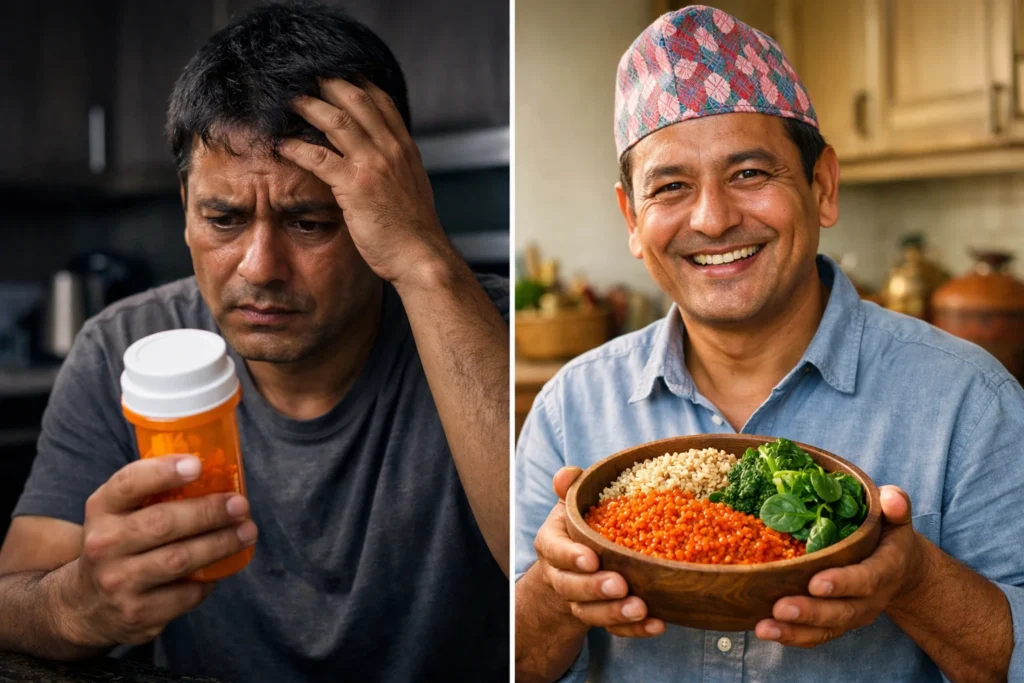
A groundbreaking study from Nepal, known as the Ho-DIRECT NEPAL trial, suggests this isn’t just a hypothetical question. Published in 2024 in The Lancet Regional Health – Southeast Asia, the research shows that an ultra-low-cost diet made of lentils, vegetables, and whole grains helped nearly a third of participants put their type-2 diabetes into complete remission .
Here is why this matters to you, even if you are thousands of miles away from the Himalayas.
The Study: Proof in the Numbers
The trial, conducted by a team from Kathmandu University and the University of Glasgow, took a group of 70 urban Nepalese adults who had been diagnosed with type-2 diabetes for less than five years . Researchers asked them to follow a strict, 850-calorie-per-day diet for eight weeks.
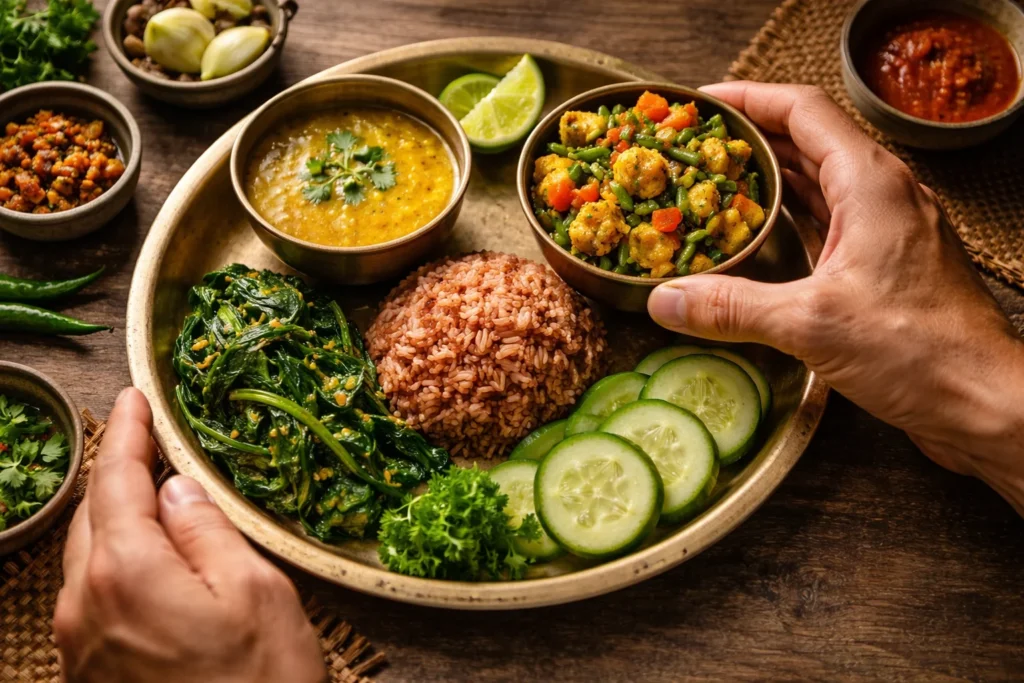
But here is the most important part: they didn’t use fancy meal replacements, shakes, or imported “superfoods.” They used traditional Nepali staples—think lentils (dal), vegetables, and whole grains—all of which cost about 50 cents per meal.
- At 24 weeks, nearly half (48%) of the participants had their blood sugar levels (HbA1c) drop below the diabetes threshold (6.5%).
- At the one-year mark, 29% were still in remission. This means they had maintained an HbA1c of less than 6.5% for at least three months without taking any diabetes medication .
Why It Worked: The “Why” Behind the “What”
For a US audience used to seeing diet fads come and go, the success of the Ho-DIRECT trial boils down to three key factors: biology, culture, and cost.
1. It tackles the “South Asian Phenotype”
You might wonder, “Why is this news relevant to Americans?” Because it highlights a major truth about diabetes. Diabetes is often more aggressive in South Asian populations. Doctors describe a “South Asian phenotype,” where individuals develop diabetes at younger ages and lower body weights compared to white Europeans . They tend to store more dangerous “ectopic fat” in their livers and pancreas, which directly drives the disease .
The Nepali diet worked because it targeted that fat. By cutting calories drastically with healthy foods, participants lost weight—specifically, the harmful fat clogging up their organs. As lead researcher Professor Michael Lean noted, the goal was to remove “ectopic fat in liver and pancreas,” which is high in people with diabetes .
2. It was culturally familiar
In the US, many “medical diets” fail because they ask people to eat alienating, expensive, or bland food. The Ho-DIRECT trial succeeded because it worked with the people, not against them. They used familiar ingredients.
Participants reported that the diet was “easy to follow” because they weren’t trying to figure out complicated recipes . A separate qualitative study on the project found that adherence was boosted because the food was simple to prepare and culturally appropriate .
3. It was affordable
Perhaps the most shocking part of the study is the cost. In Nepal, where diabetes prevalence is rising rapidly—estimated at 8.5% of the population—Western-style medical diets are often unaffordable . By using local lentils and vegetables, the cost was minimal. Participants also reported a major “incentive” was the “reduced doses and costs of medications” .
The Takeaway for Americans
Now, this doesn’t mean everyone in the US should switch to a Nepali diet tomorrow. But the implications of the study are profound for how we think about diabetes management.
It proves that you don’t need a high-tech clinic or a pharmaceutical budget to reverse type-2 diabetes. You need a structured, calorie-controlled plan built on whole foods. In a country like the US, where processed foods are often cheaper than fresh produce, this is a challenge. But the principle remains the same: real food is powerful medicine.
It also reinforces the idea that “remission” is possible. For years, type-2 diabetes was viewed as a chronic, progressive disease. The Ho-DIRECT trial, building on the success of the UK’s original DiRECT trial, shows that with significant weight loss, the body can often heal itself .
A Note of Caution
It is important to remember that the participants in the Nepal study were supervised by medical professionals. They stopped taking their medication under doctor supervision. The 850-calorie phase is extreme and not something anyone should try on their own without medical advice. Additionally, participants did face barriers, such as fears of weakness or the diet being inconvenient while traveling .
However, the message is hopeful. Whether it is lentils in Kathmandu or beans in Boston, the evidence is mounting that the cure for our modern disease epidemic might just be hiding in our grandmothers’ kitchens.
References
- Karmacharya, B., Sapkota, S., Rai, P., et al. (2024). A service evaluation of weight management for glycaemic control and remission of type 2 diabetes using traditional food in Nepal (Ho-DIRECT NEPAL): a single-arm trial. The Lancet Regional Health – Southeast Asia, 29, 100465.
- Sapkota, S., et al. (2025). Implementation of a remission diet for type 2 diabetes in South Asia: Qualitative evidence from the HoDiRECT Nepal project. Diabetic Medicine, Online ahead of print.
- Mohan, V. (2025). Lessons Learned From Epidemiology of Type 2 Diabetes in South Asians: Kelly West Award Lecture 2024. Diabetes Care, 48(2), 153–163.
- Karmacharya, B., Sapkota, S., Rai, P., et al. (2024). A service evaluation of weight management for glycaemic control and remission of type 2 diabetes using traditional food in Nepal (Ho-DIRECT NEPAL): a single-arm trial. PubMed, PMID: 39253354.
- Karmacharya, B., et al. (2024). A service evaluation of weight management… Research in context. The Lancet Regional Health – Southeast Asia, 29, 100465.
- Not used in article
- Karmacharya, B., et al. (2024). A service evaluation of weight management for glycaemic control and remission of type 2 diabetes using traditional food in Nepal (Ho-DIRECT NEPAL): a single-arm trial. ScienceDirect, 29, 100465.
- Mohan, V. (2025). Lessons Learned From Epidemiology of Type 2 Diabetes in South Asians. Diabetes Care, 48(2), 153–163.
- Karmacharya, B., et al. (2024). A service evaluation… OUCI, citing Lean et al. (DiRECT trial).