
From Gut Health to Whole-Body Wellness
How Gut Remodeling Is Reshaping Prevention of Cancer, Liver Disease, and Leaky Gut Syndrome
Gut Remodeling
From reactive to preventive: Building gut health for life through systematic, science-backed lifestyle interventions.
The 7 Pillars of Gut Remodeling
Increase Fiber Gradually
Weekly Build-Up
Week 1: +5g above baseline
Week 2: 15-20g
Week 3: 20-25g
Week 4: 25-30g
Week 5+: 30-40g
Fiber-Rich Foods
✓ Lentils, chickpeas, beans
✓ Broccoli, artichokes, carrots
✓ Apples, berries, pears (with skin)
✓ Oats, quinoa, barley
✓ Chia, flax, pumpkin seeds
⚠️ Increase slowly with plenty of water to avoid digestive discomfort
30 Different Plant Foods Weekly
Pro Tip: Count each plant once per week—herbs and spices count too!
Incorporate Fermented Foods
Best Choices:
Plain yogurt, kefir, refrigerated sauerkraut, kimchi, kombucha (low-sugar), miso, tempeh
Prioritize Omega-3 Fatty Acids
Marine Sources
- ✓ Salmon (wild): 1.5-2.0g per 3-4 oz
- ✓ Sardines: 1.2-1.5g per 3 oz
- ✓ Mackerel: 1.0-1.5g per 3 oz
Plant Sources
- ✓ Walnuts: 2.5g ALA per oz
- ✓ Flaxseed (ground): 1.6g ALA per tbsp
- ✓ Chia seeds: 1.4g ALA per tbsp
Target: 2-3 servings fatty fish weekly + daily plant sources
Reduce Ultra-Processed Foods
The 80/20 Approach: 80% whole foods, 20% flexibility for sustainability
Support Sleep and Circadian Rhythm
Disruption Effects
- • Irregular sleep → Altered microbial composition
- • Late-night eating → Misaligned bacterial activity
- • Insufficient sleep → Reduced diversity
- • Shift work → Increased gut permeability
Sleep Hygiene
- • Consistent schedule ±30 min
- • Last meal 3 hours before bed
- • Morning sunlight, dim evenings
- • Caffeine cutoff 8-10 hours before bed
Manage Stress
Timeline of Gut Remodeling
Sustainable change requires consistency rather than short-term detoxes
Weekly Gut Remodeling Checklist
30+ plants this week: _____ cumulative count
Take Action Today
Remember: Small steps, consistently taken, create massive change.
Join the Gut Health Revolution
Visit www.intellinewz.com/gut-health
Because prevention isn’t passive—it’s a practice.
Over the last decade, biomedical research has converged on a powerful thesis: the gut is not merely a digestive conduit but a dynamic, immunologic, metabolic, and neuroendocrine command center. The human gastrointestinal tract houses trillions of microorganisms—collectively referred to as the gut microbiota—that participate in nutrient metabolism, immune modulation, epithelial integrity, bile acid signaling, and even neurotransmitter synthesis.
The concept of gut remodeling—structural and functional restoration of the intestinal environment through dietary intervention—is emerging as one of the most promising frontiers in preventive medicine. This paradigm goes beyond symptom suppression. It aims to recalibrate microbial ecology, reinforce epithelial barriers, normalize inflammatory signaling, and optimize metabolic cross-talk between the gut, liver, and systemic circulation.

The implications are profound. Evidence now links gut dysbiosis (microbial imbalance) to gut-associated malignancies, chronic liver disease, metabolic syndrome, autoimmune pathology, and what is commonly referred to as “leaky gut syndrome.” Strategic dietary interventions—especially fiber diversity, polyphenol-rich foods, fermented products, and prebiotic substrates—are central to this remodeling process.
This article examines how gut remodeling works mechanistically and how it influences whole-body health outcomes.
The Gut as a Systemic Control Center
The intestinal tract contains approximately 70% of the body’s immune tissue (gut-associated lymphoid tissue, GALT). It is lined with a single layer of epithelial cells that form a selectively permeable barrier. Tight junction proteins (occludin, claudins, zonulin-regulated complexes) regulate permeability.
When functioning optimally, the gut:
- Extracts nutrients
- Produces short-chain fatty acids (SCFAs)
- Regulates immune tolerance
- Metabolizes bile acids
- Communicates with the brain via the gut-brain axis
- Filters endotoxins from entering systemic circulation
However, modern dietary patterns—low fiber, high ultra-processed foods, excess refined sugars, seed oil imbalance, low polyphenol intake—have shifted microbial composition in many populations. The result is chronic low-grade inflammation, increased intestinal permeability, and systemic metabolic disruption.
Gut remodeling addresses these breakdowns at their root.
What Is Gut Remodeling?
Gut remodeling refers to the deliberate restoration of:
- Microbial diversity
- Epithelial barrier integrity
- Mucosal immunity
- Metabolic signaling balance
It is not a single supplement protocol. It is a sustained dietary shift that modifies the microbial ecosystem over weeks to months.
Key elements include:
- Diverse plant fibers (soluble and insoluble)
- Resistant starch
- Fermented foods
- Polyphenol-rich plants
- Omega-3 fatty acids
- Reduced ultra-processed intake
When these inputs change, the microbiota shifts compositionally and functionally, producing more beneficial metabolites—particularly SCFAs like butyrate.
Butyrate, in particular, is a cornerstone molecule in gut remodeling. It fuels colonocytes, reduces inflammation, enhances tight junction integrity, and exerts anti-carcinogenic properties.
Gut-Associated Cancers: Mechanisms and Prevention
The relationship between gut microbiota and colorectal cancer is now well-established in scientific literature. Dysbiosis can promote carcinogenesis through several pathways:
- Increased production of pro-inflammatory cytokines
- Elevated secondary bile acids
- Generation of carcinogenic metabolites
- Impaired SCFA production
- Chronic epithelial damage
Microbial Balance and Cancer Risk
Certain bacterial strains are associated with tumor progression, while others are protective. A high-fiber diet encourages beneficial microbes such as Faecalibacterium prausnitzii and Bifidobacterium species, both linked to anti-inflammatory effects.
Butyrate plays a dual role:
- It nourishes healthy colon cells.
- It induces apoptosis (programmed cell death) in malignant cells.
This selective cytotoxicity makes SCFA production one of the most promising nutritional prevention strategies for colorectal malignancy.
Bile Acid Modulation
Diet influences bile acid composition. High-fat, low-fiber diets increase secondary bile acids, which can damage DNA and promote carcinogenesis. Fiber binds bile acids and promotes excretion, reducing carcinogenic exposure.
Immune Surveillance
A diverse microbiome enhances T-cell regulation and anti-tumor immune activity. Gut remodeling supports immune vigilance, a critical factor in early cancer suppression.
The Gut-Liver Axis: A Bidirectional Highway
The liver receives approximately 70% of its blood supply from the portal vein, which drains directly from the intestine. This means everything absorbed in the gut—including microbial metabolites and endotoxins—flows directly to hepatic tissue.
When gut permeability increases, lipopolysaccharides (LPS) from gram-negative bacteria enter circulation. This endotoxemia activates hepatic inflammation, contributing to:
- Non-alcoholic fatty liver disease (NAFLD)
- Non-alcoholic steatohepatitis (NASH)
- Fibrosis
- Cirrhosis
Dietary Remodeling and Liver Health
Increasing soluble fiber intake reduces endotoxin translocation. SCFAs regulate lipid metabolism and improve insulin sensitivity—both critical for fatty liver reversal.
Fermented foods and polyphenols reduce inflammatory signaling within the liver. Omega-3 fatty acids further modulate hepatic fat accumulation.
The gut-liver axis demonstrates how intestinal health directly determines hepatic outcomes. Remodeling the gut often leads to measurable improvement in liver biomarkers.
Leaky Gut Syndrome: Barrier Breakdown and Systemic Impact
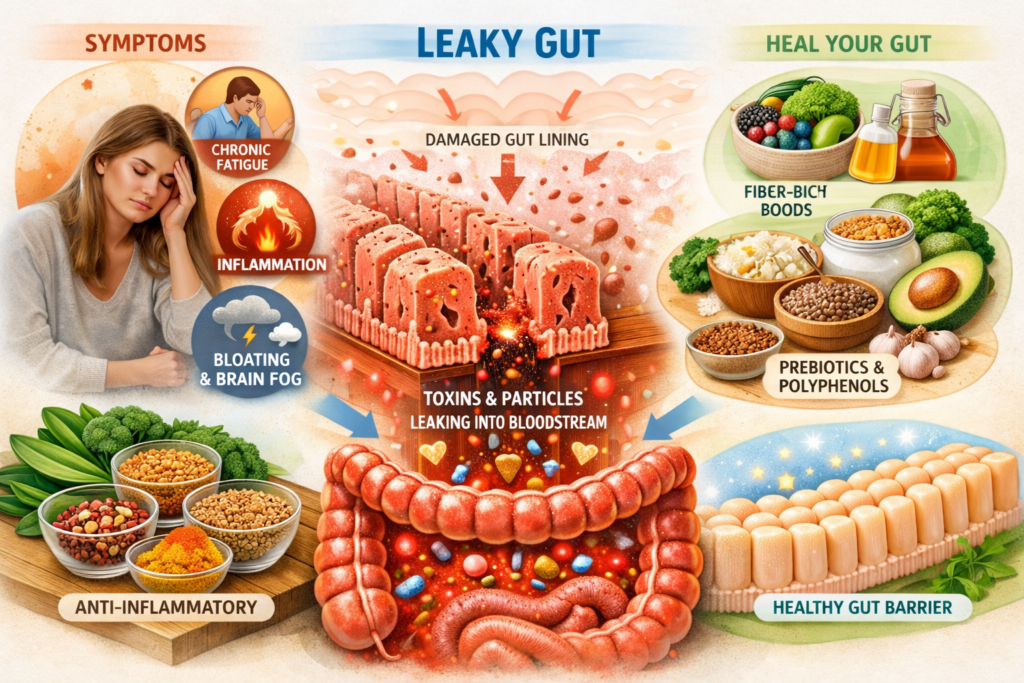
“Leaky gut syndrome” is a non-clinical term describing increased intestinal permeability. While controversial in mainstream nomenclature, the phenomenon itself is scientifically documented.
Increased permeability allows:
- Bacterial fragments
- Undigested proteins
- Toxins
to enter circulation, triggering immune activation.
This process has been associated with:
- Autoimmune conditions
- Chronic fatigue
- Food sensitivities
- Inflammatory bowel disease
- Metabolic disorders
Tight Junction Integrity
Zonulin regulates tight junction opening. Diets high in refined carbohydrates and inflammatory fats can increase zonulin activity, loosening junctions.
Butyrate strengthens tight junction proteins. Glutamine, zinc, and polyphenols also support epithelial repair.
Reducing ultra-processed foods while increasing prebiotic fibers significantly lowers permeability markers in clinical studies.
Microbial Diversity: The Foundation of Resilience
A diverse microbiome correlates strongly with health outcomes. Hunter-gatherer populations consuming 30+ plant types weekly show far greater microbial diversity than Western populations averaging fewer than 10.
Diversity improves:
- Immune modulation
- Pathogen resistance
- Metabolic flexibility
- Anti-inflammatory signaling
Dietary monotony, in contrast, reduces ecological resilience.
The practical solution: increase plant diversity weekly—legumes, seeds, leafy greens, root vegetables, berries, herbs, and whole grains.
Polyphenols: Microbial Fuel and Anti-Inflammatory Agents
Polyphenols found in berries, green tea, dark chocolate, turmeric, and olive oil serve as prebiotics.
They:
- Promote beneficial microbes
- Reduce oxidative stress
- Modulate NF-kB inflammatory pathways
- Support endothelial function
Unlike vitamins, polyphenols are transformed by gut bacteria into bioactive compounds, reinforcing the reciprocal relationship between diet and microbiome.
Fermented Foods and Probiotic Ecology
Traditional diets frequently included fermented products such as yogurt, kefir, kimchi, sauerkraut, and miso.
These foods:
- Introduce live microbes
- Enhance microbial diversity
- Improve immune tolerance
- Reduce inflammatory markers
Regular consumption has been associated with lower inflammatory cytokines and improved metabolic markers.
However, fermented foods complement—but do not replace—fiber intake. Probiotics require prebiotic substrates to thrive.
The Gut-Brain Axis and Whole-Body Wellness
The vagus nerve connects gut and brain. Microbial metabolites influence:
- Serotonin production
- Dopamine pathways
- Stress response
- Mood regulation
Chronic gut inflammation correlates with anxiety and depressive symptoms. Butyrate and microbial balance modulate neuroinflammation.
Gut remodeling, therefore, extends beyond digestive comfort; it influences cognitive and emotional health.
Metabolic Syndrome and Insulin Sensitivity
SCFAs improve insulin sensitivity by:
- Reducing hepatic glucose production
- Increasing GLP-1 secretion
- Modulating adipose inflammation
High-fiber diets consistently reduce HbA1c and fasting glucose in clinical trials.
This positions gut remodeling as a primary prevention strategy for type 2 diabetes.
FAQS:
Can fermented foods really help repair leaky gut syndrome?
Yes, traditional fermented foods such as sauerkraut, kimchi, kefir, and miso contain lactic acid bacteria (LAB) that support gut barrier integrity. These beneficial microbes help strengthen tight junction proteins in the intestinal lining, reducing intestinal permeability. Fermentation also produces bioactive peptides and short-chain fatty acids that lower inflammation—one of the key drivers of leaky gut syndrome.
2. How do fermented foods reduce the risk of colorectal cancer?
Fermented foods may reduce colorectal cancer risk through multiple mechanisms. Lactic acid bacteria compete with harmful microbes, decrease inflammatory cytokines in the colon, and enhance the production of butyrate—a short-chain fatty acid that promotes healthy cell turnover and apoptosis of abnormal cells. Additionally, fermentation enhances antioxidant and anti-carcinogenic phytochemicals, creating a gut environment less favorable for tumor development.
3. Why did traditional societies have lower rates of gut-related diseases?
Populations in Korean, German, Caucasian, and Japanese cultures traditionally consumed fermented foods daily. These diets supplied consistent exposure to live beneficial microbes and bioactive fermentation compounds. When Westernized diets replaced traditional ferments with processed foods, rates of inflammatory disorders, leaky gut syndrome, and colorectal cancer increased significantly. The protective effect appears closely tied to the regular intake of fermented foods that support microbial diversity and gut barrier function.
Leaky Gut Syndrome – 110 Expert Questions & Answers
Disclaimer: