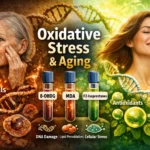

OGG1 (full name: 8-oxoguanine DNA glycosylase 1, also known as hOGG1 in humans) is the primary mammalian enzyme responsible for initiating the repair of 8-oxoguanine (8-oxoG or 8-OHdG)—the most common and mutagenic oxidative lesion in DNA. As a key player in the base excision repair (BER) pathway, OGG1 acts as a bifunctional DNA glycosylase with both glycosylase and AP lyase activities. It recognizes, excises, and begins processing oxidative damage caused by reactive oxygen species (ROS), helping prevent mutations, genomic instability, accelerated aging, and diseases like cancer, neurodegeneration, diabetes complications, and cardiovascular issues.
This enzyme is central to preventive health strategies: Efficient OGG1 function keeps urinary 8-OHdG levels low (a biomarker of oxidative DNA damage), supporting longer healthspan and aligning with IntelliNewz‘s emphasis on early detection of oxidative stress through biomarkers.
Gene and Protein Overview
- Gene: Human OGG1 is located on chromosome 3p25.3. It encodes multiple isoforms via alternative splicing; the main nuclear form is α-OGG1 (~345 amino acids, ~38-39 kDa).
- Protein Structure:
- Conserved domains: An N-terminal domain (unclear function in some homologs), an AlkA_N-like domain, and a helix-hairpin-helix (HhH-GPD) motif characteristic of many DNA glycosylases.
- Key catalytic residues: Lys249 (nucleophile for lyase activity), Asp268 (stabilizes the reaction intermediate), and others in the active site pocket that recognize the lesion.
- The enzyme has a lesion recognition pocket that specifically accommodates the extrahelical 8-oxoG base, distinguishing it from normal guanine via hydrogen bonding and steric features.
- C-terminal αO helix is essential for glycosylase activity.
Cryo-EM and crystal structures show OGG1 bending DNA, flipping the damaged base out of the helix into its active site for precise excision.
(Conceptual illustration: OGG1 protein structure with HhH motif, active site pocket, and DNA lesion recognition.)
Function and Role in Base Excision Repair (BER)
OGG1 initiates BER for oxidative lesions, particularly 8-oxoG paired opposite cytosine (8-oxoG:C), the most frequent and mutagenic context.
- Lesion Recognition:
- OGG1 scans DNA non-specifically, then forms an “interrogation” or “encounter” complex at potential sites.
- It detects 8-oxoG via shape complementarity and specific interactions (e.g., hydrogen bonds to the C8 carbonyl and N7).
- The damaged base is extrahelically flipped (extruded from the DNA helix) into the enzyme’s active site pocket, while an arginine finger inserts into the helix to stabilize the void.
- Glycosylase Activity:
- OGG1 cleaves the N-glycosidic bond between the 8-oxoG base and deoxyribose sugar, releasing the free 8-oxoG base and creating an abasic (AP) site.
- AP Lyase Activity (Bifunctional):
- Via β-elimination, OGG1 (using Lys249 as nucleophile) incises the DNA backbone at the AP site, producing a single-strand break (SSB) with a 3′-α,β-unsaturated aldehyde (or similar blocked end) and a 5′-phosphate.
- This contrasts with monofunctional glycosylases, which leave an intact AP site for APE1.
- Handover to Downstream BER:
- The blocked 3′ end is processed (e.g., by APE1 or PNKP), followed by gap-filling (POLβ in short-patch BER) and ligation (LIG3α/XRCC1 or LIG1).
OGG1 prefers 8-oxoG:C pairs but can act on 8-oxoG paired with A, T, or G (less efficiently for strand incision). It also repairs other oxidized purines like formamidopyrimidine (FAPY-G).
Beyond Repair: Emerging Multifunctional Roles
Recent research (up to 2025–2026) reveals OGG1’s “moonlighting” functions:
- Transcriptional regulation: Non-catalytic binding to 8-oxoG in gene promoters modulates chromatin accessibility, gene expression (e.g., inflammatory genes), and metabolic homeostasis.
- Innate immunity & inflammation: OGG1 influences cytokine production and redox-sensitive signaling; defective OGG1 can dysregulate immunity and promote chronic inflammation.
- Redox-sensitive modulator: Oxidation of OGG1 itself (e.g., cysteines) alters activity; variants like Ser326Cys show extended DNA interaction, linking to inflammatory responses.
- Aging & disease links: Reduced OGG1 activity with age accelerates cellular aging; agonists are explored to boost function for neuroprotection and longevity.
Genetic Variants & Disease Associations
- Common polymorphism: rs1052133 (Ser326Cys) — Cysteine variant (Cys326) is prevalent (20–60% depending on ethnicity, higher in Asians) and often linked to:
- Reduced repair efficiency (especially under oxidative conditions).
- Increased risk for lung, gastric, breast, prostate, colorectal cancers, diabetes, Alzheimer’s, COPD, cardiovascular disease, and worse outcomes in some therapies.
- The variant may facilitate prolonged DNA binding, altering inflammation or repair dynamics.
- Other somatic mutations or variants impair activity, raising cancer susceptibility.
Practical Implications for Prevention
- Efficient OGG1 keeps oxidative DNA damage low → lower 8-OHdG excretion.
- Support via antioxidant-rich diet (berries, greens), exercise, blood sugar control (CGM tracking), and stress management.
- Emerging: OGG1 agonists or activators for age-related decline (research stage).
- Test urinary 8-OHdG as a proxy for OGG1/BER function.
Ready to protect your DNA from oxidative damage? Monitor oxidative biomarkers like 8-OHdG and adopt habits that support enzymes like OGG1 for better longevity outcomes.