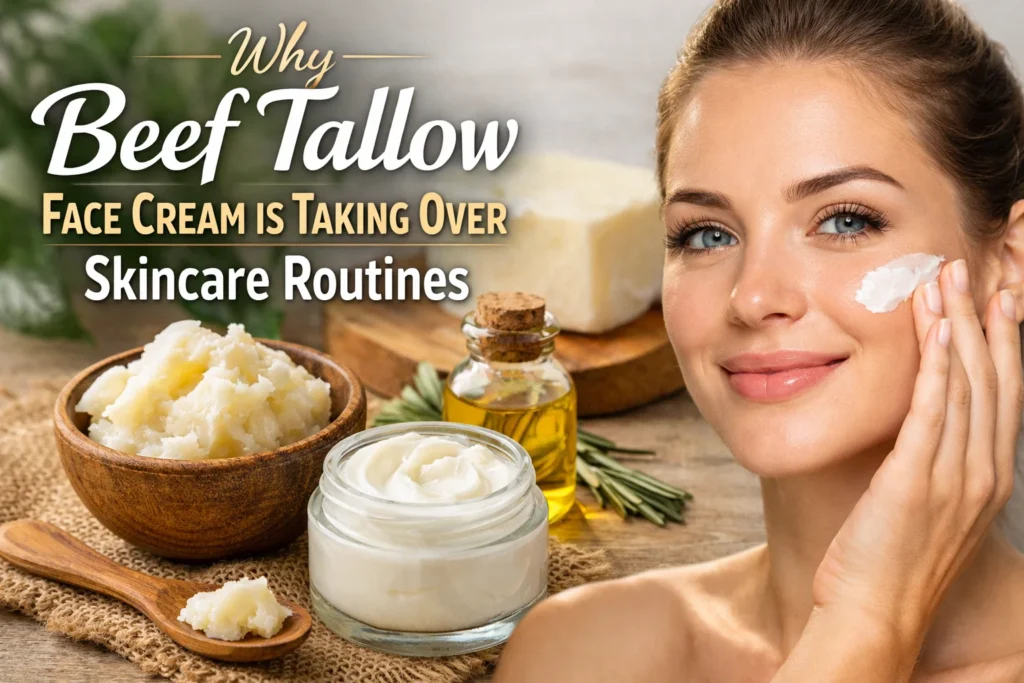

Is this ancestral beauty secret a miracle moisturizer or just another viral trend?
In the ever-evolving world of skincare, the next big thing often comes from the most unexpected places. The latest ingredient to trend on social media isn’t a lab-engineered peptide or a rare plant extract from the Amazon—it is beef fat.
Beef tallow face cream has taken over TikTok and Instagram feeds, with influencers slathering the creamy substance on their faces and claiming it is the ultimate natural remedy for everything from dry skin to eczema . But as this “ancestral” ingredient makes its way from the kitchen counter to the bathroom cabinet, many are left wondering: Is this a genuine skincare breakthrough, or just another internet fad?
Here is everything you need to know about the beef tallow trend, the science behind the claims, and what dermatologists really think about putting cow fat on your face.
What Exactly Is Beef Tallow?
Before diving into the benefits, it helps to understand what beef tallow actually is. Simply put, beef tallow is rendered cow fat. It is typically made from the fatty tissue surrounding the animal’s kidneys and organs, which is slowly cooked down (rendered) to remove impurities and moisture, leaving behind a pure, solid fat .
At room temperature, high-quality tallow has a smooth, buttery consistency similar to a balm. While it has been a staple in cooking (think the perfect frying fat for potatoes) and soap-making for centuries, its current fame is rooted in the “ancestral living” and “natural skincare” movements .
The Purported Benefits: More Than Just Fat?
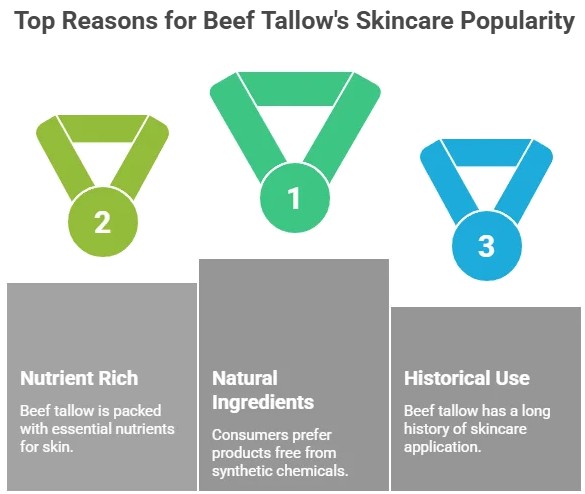
Proponents of beef tallow skincare refer to it as a “skin superfood,” and the claims are backed by a look at its biochemical composition. Tallow is rich in compounds that are surprisingly compatible with human skin .
1. A Biochemical Match for Your Skin
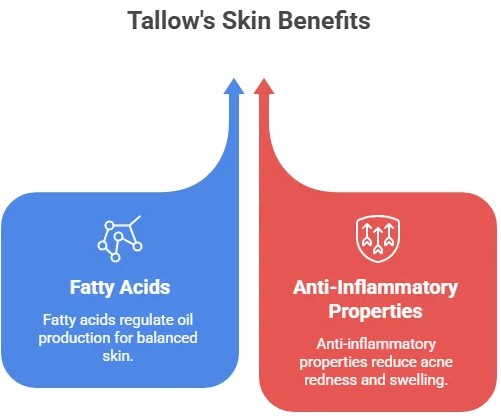
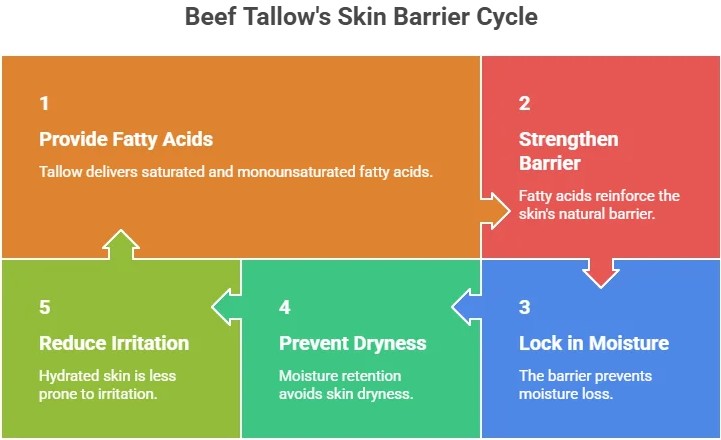
One of the most compelling arguments for beef tallow is its similarity to the sebum (natural oil) produced by human skin. Tallow contains a profile of fatty acids—including palmitic acid, stearic acid, and oleic acid—that closely mimics the lipid structure of our cell membranes . Because of this biocompatibility, the theory is that the skin readily recognizes these fats, allowing for deeper absorption and reinforcement of the skin’s natural barrier rather than just sitting on top of the skin .
2. A Natural Source of Fat-Soluble Vitamins
Unlike many petroleum-based moisturizers, beef tallow contains a complex profile of nutrients. Depending on the diet of the cow (specifically grass-fed sources), tallow contains trace amounts of Vitamins A, D, E, and K, as well as Vitamin B12 .
- Vitamin A is essential for cell turnover and can help improve the appearance of wrinkles .
- Vitamin E is a potent antioxidant that helps protect skin from environmental damage .
- Vitamin K may aid in wound healing and reduce the appearance of dark spots .
3. Deep Hydration and Barrier Repair
As an occlusive agent, tallow creates a protective layer on the skin that prevents transepidermal water loss (TEWL) , keeping the skin hydrated for longer periods . This makes it particularly attractive for those suffering from extreme dryness, eczema, or psoriasis, where the skin’s natural barrier is compromised . A 2024 scoping review published in Cureus noted that tallow-based emulsions could provide moisturizing benefits and act as a vehicle for delivering other beneficial substances into the skin .
The Dermatologist’s Dilemma: Proceed with Caution
Despite the glowing testimonials online, the medical community remains largely skeptical. Dermatologists urge consumers to separate anecdotal evidence from clinical science .
The Comedogenic Concern
The biggest risk associated with beef tallow is its potential to clog pores. Tallow is considered highly comedogenic, meaning it can block hair follicles . For individuals with oily or acne-prone skin, using a heavy fat like tallow can trap bacteria and dead skin cells, leading to increased breakouts rather than curing them .
“If your skin is acne-prone, this is not the product for you,” warns Associate Professor David Francis, a dermatologist at the Royal Brisbane and Women‘s Hospital. “It can trap bacteria and clog your pores.”
The “Natural” Misconception
Just because something is natural does not mean it is safe or effective for topical use. Experts point out that “natural” products are not regulated by the FDA in the same way that traditional skincare is . This lack of oversight means there is no standardized formulation.
- Purity Issues: If the cow was exposed to pesticides or toxins during its life, those chemicals can accumulate in the fat .
- Rancidity: Pure tallow lacks the preservatives found in commercial creams. If stored improperly or contaminated during home rendering, it can go rancid or grow bacteria, essentially putting infection directly onto the skin .
- Sensitization: Many products add essential oils to mask the “beefy” smell of the tallow, which can cause allergic reactions or increased skin sensitivity .
Who Should (and Shouldn’t) Use Beef Tallow?
If you are considering jumping on this trend, it is vital to assess your skin type first.
✅ Beef Tallow May Be For You If:
- You have chronically dry, cracked, or dehydrated skin.
- You suffer from eczema or psoriasis and are looking for a heavy-duty emollient to soothe flare-ups .
- You prefer minimalist, single-ingredient products and want to avoid the long list of chemicals found in some commercial moisturizers.
❌ Beef Tallow Is Likely NOT For You If:
- You have oily, combination, or acne-prone skin. The risk of clogged pores is high .
- You have rosacea or sensitive skin that reacts to heavy, occlusive textures .
- You follow a vegan or cruelty-free lifestyle .
How to Use It Safely
If you have dry skin and want to experiment, dermatologists suggest a cautious approach :
- Source Wisely: Look for commercial products from reputable brands that use grass-fed, organic tallow. These are more likely to be free from hormones and pesticides and are often processed in controlled environments to prevent rancidity .
- Patch Test: Apply a small amount (pea-sized) to your inner arm or behind your ear for a few days to check for any adverse reaction or clogged pores .
- Use Sparingly: At night, apply a thin layer to damp skin to lock in moisture. Limit use to once or twice a week rather than daily .
- Mind the Smell: Be prepared for a faint earthy or fatty scent. If the product smells rotten or sour, it has gone bad and should be discarded immediately .
The Verdict: Miracle or Marketing?
Beef tallow face cream sits at an interesting intersection of ancestral wisdom and modern marketing. It does have a legitimate scientific basis for moisturizing very dry skin due to its lipid profile and vitamin content. However, it is far from the one-size-fits-all miracle it is often portrayed as online .
For those with dry, compromised skin, it may indeed be a game-changer. For the majority dealing with oiliness or blemishes, it is likely a pore-clogging nightmare. As with any skincare trend, the best approach is to consult with a dermatologist who can help you navigate whether this “heritage ingredient” has a place in your specific routine—or if you are better off sticking to a tested, ceramide-rich moisturizer instead
General Questions & Benefits
Is beef tallow good for your face?
The answer depends on your skin type. Beef tallow is rich in fatty acids (like oleic, palmitic, and stearic acid) that are similar to those found in human skin, which can make it an effective emollient to soften and moisturize . It also contains trace amounts of fat-soluble vitamins A, D, E, and K, which are beneficial for skin health . However, dermatologists caution that there isn’t enough research to prove these vitamins are effectively absorbed or provide meaningful benefits . It is generally considered more suitable for those with very dry or compromised skin rather than oily or acne-prone types .
Can I use beef tallow as a face moisturizer?
Yes, you can use beef tallow as a face moisturizer. Its occlusive nature helps create a protective barrier on the skin to prevent water loss, locking in hydration . Users often apply a small, pea-sized amount to clean, slightly damp skin, warming it between the fingers first to help it absorb .
Can I use tallow on my face every day?
You can, but it depends on your skin’s tolerance and the specific product. Some brands suggest daily use, especially for normal to dry skin . However, because tallow is very rich, it’s best to start slowly. For combination or oily skin, it’s advisable to use it only on dry areas (like the cheeks) and less frequently to avoid clogging pores .
What are the benefits of beef tallow for skin?
Proponents and some initial studies highlight several benefits:
- Deep Hydration: It acts as an occlusive, sealing in moisture and strengthening the skin barrier .
- Nutrient-Rich: It contains fat-soluble vitamins A, D, E, and K, as well as other nutrients like iron, zinc, and selenium that support skin health .
- Biocompatibility: Its fatty acid profile closely mimics the oils our skin naturally produces, which may allow for better absorption .
- Soothing: It can help reduce dryness, flakiness, and the tightness associated with irritated skin .
Disadvantages & Expert Opinions
What are the disadvantages of tallow for skin?
Dermatologists point to several significant drawbacks:
- Clogged Pores (Comedogenic): Tallow is high in oleic acid and is considered highly comedogenic, meaning it can easily clog pores and lead to breakouts, especially for those with acne-prone skin .
- Lack of Regulation: There is no standard formulation for tallow products. It’s hard to know the exact concentration of nutrients, and products may contain contaminants if not sourced properly .
- Risk of Rancidity and Bacteria: As a natural product without preservatives, tallow can spoil or grow bacteria if not stored correctly, potentially leading to skin infections .
- Irritation: The thick consistency can trap heat and irritate conditions like rosacea. Added fragrances used to mask the smell can also cause allergic reactions .
- Strong Smell: Pure tallow can have an unpleasant, fatty odor .
Why don’t dermatologists like beef tallow?
Dermatologists are cautious because the risks often outweigh the unproven benefits. Key concerns include the high potential for clogging pores and causing acne, the lack of scientific evidence supporting its superiority over other moisturizers, and the safety issues related to unregulated, preservative-free products that can spoil or harbor bacteria . As Dr. Angela Wei from the Cleveland Clinic states, “There are other moisturizers out there with more consistent formulations that are better and safer for use on the skin” .
Recipes & DIY
How to make beef tallow cream for face? (3-Ingredient DIY)
A simple 3-ingredient recipe involves whipping tallow with nourishing oils. Here is a basic method :
- Melt: Gently melt ½ cup of beef tallow in a double boiler.
- Combine: Once melted, stir in ¼ cup of olive oil (or herb-infused oil) and ¼ cup of sweet almond oil.
- Whip: Transfer the mixture to a bowl and let it cool slightly. Using a hand mixer, whip the mixture until it becomes light, fluffy, and holds its shape. Spoon into a clean jar.
How to make homemade face cream for wrinkles?
To create a cream targeting wrinkles, you can add ingredients known for their anti-aging properties. A recipe from a dermatology perspective would focus on safe, natural emollients . A basic recipe includes:
- Base: ½ cup beef tallow
- Oils: ¼ cup olive oil, ¼ cup sweet almond oil, and 2 tablespoons argan oil (rich in vitamin E).
- Optional: Essential oils like frankincense (10 drops) are often added for their purported skin-firming properties . Note: Always patch test essential oils.
Beef tallow face cream recipe with honey
Honey can be added for its humectant and antibacterial properties. A recipe from one brand combines:
- Grass-fed beef tallow
- Manuka honey
- Cold-pressed olive oil
- Organic vitamin E
To make your own, you would gently melt the tallow with the olive oil, then whisk in the manuka honey and vitamin E oil before allowing the mixture to cool and whip.
What is a 3-ingredient DIY moisturizer?
Yes, a very effective 3-ingredient whipped moisturizer can be made with:
- Beef Tallow: The base moisturizer.
- Olive Oil (or Jojoba Oil): To add spreadability and additional fatty acids.
- Beeswax: To help stabilize the mixture and give it a thicker, balm-like consistency .
Product & Brand Recommendations
Best beef tallow moisturizer for face
Based on recent reviews, several brands are noted for their quality formulations:
- Evil Goods: Known for a whipped cream blending tallow with manuka honey and olive oil for a lightweight feel .
- Primally Pure: Offers products with a thicker, balm-like texture rich in vitamins A, D, E, and K from grass-fed cows .
- Ancestral Cosmetics: Features Irish grass-fed tallow blended with raw honey and beeswax .
- Tallow: A German brand offering a clinically tested, fragrance-free moisturizer made with organic tallow, jojoba oil, and beeswax .
Sky and Sol moisturizer reviews
While not found in the search results, reviews for brands like Tallow show high satisfaction. In a clinical study by the brand, 97% of participants reported significantly reduced dryness and tightness after use .
Unscented Tallow Whipped Moisturizer
Yes, unscented options are available for those with sensitive skin or who prefer no fragrance. The “Everyday Moisturizer Natural” from the brand Tallow is an example of an unscented formulation, containing only grass-fed beef tallow, jojoba oil, beeswax, and vitamin E .
Application & Use
How to use beef tallow as a facial moisturizer?
For best results :
- Cleanse: Start with a clean face.
- Dampen Skin: Apply to slightly damp skin, as this helps lock in more moisture.
- Warm It Up: Scoop out a pea-sized amount and rub it between your fingertips to melt it into an oil.
- Apply: Gently massage the oil into your face and neck using upward, circular motions. A little goes a long way.
The information in this article is for educational purposes only and is not intended as medical advice. It has not been evaluated by the FDA and is not meant to diagnose, treat, or cure any condition.
Individual skin types vary. Results mentioned in testimonials or product descriptions are not guarantees of personal results. Always consult a qualified dermatologist or healthcare provider before starting a new skincare routine, especially if you have sensitive skin, allergies, or a pre-existing skin condition.
Any product mentions, brand references, or DIY recipes are for informational use only. Intellinewz.com assumes no responsibility for adverse reactions, product effectiveness, or misuse of information. Use of this article constitutes agreement to this disclaimer.