
For cheese lovers with digestive sensitivities, navigating the dairy aisle can feel like a minefield. Lactose intolerance affects approximately 36% of Americans, and for those with conditions like Small Intestinal Bacterial Overgrowth (SIBO), even small amounts of lactose can trigger uncomfortable symptoms .
But here’s the good news: you don’t have to give up cheese. Understanding which cheeses are naturally low in lactose—and why—can help you enjoy your favorite foods without the bloating, gas, and discomfort.
In this guide, we’ll answer four critical questions:
- Which cheeses are naturally lactose-free?
- Can lactose intolerant people eat cheese?
- What cheese is good for SIBO?
- What cheeses are the worst for lactose intolerance?
The Science: What Makes Cheese Low in Lactose?
Before we dive into specific cheeses, it helps to understand why some cheeses are easier to digest than others.
Lactose is the natural sugar found in milk . During the cheesemaking process, something remarkable happens: roughly 96% of the lactose is removed when the whey is separated from the curds . The remaining lactose then serves as food for bacteria during fermentation, which convert it into lactic acid .
This is where aging becomes the magic factor. As cheese ages, bacteria continue to consume any remaining lactose. The longer a cheese ages, the less lactose remains . An entire wheel of Parmigiano Reggiano, aged for 12+ months, contains less lactose than a single glass of milk .
The rule is simple: Hard, aged cheeses = low lactose. Soft, fresh cheeses = higher lactose.
Which Cheeses Are Naturally Lactose-Free?
Several cheeses are naturally very low in lactose—so low that they’re often considered “virtually lactose-free” without any enzyme treatment. Here are the top options, backed by expert sources :
Parmigiano Reggiano (Parmesan)
Considered the lowest-lactose cheese available, Parmigiano Reggiano is aged for a minimum of 12 months—often up to 36 months. This extended aging reduces lactose to nearly undetectable levels . It contains approximately 0-3 grams of lactose per 100 grams .
Aged Cheddar
Cheddar aged for 12-14 months contains minimal lactose. Sharp and extra-sharp cheddars are particularly safe options . Lactose content ranges from 0.4 to 0.6 grams per ounce (approximately 1-3 grams per 100g) .
Swiss Cheese (Emmental, Gruyère)
Swiss cheese contains only trace amounts of lactose—approximately 0-1 grams per 100 grams . Its nutty, mild flavor and excellent melting properties make it a versatile choice.
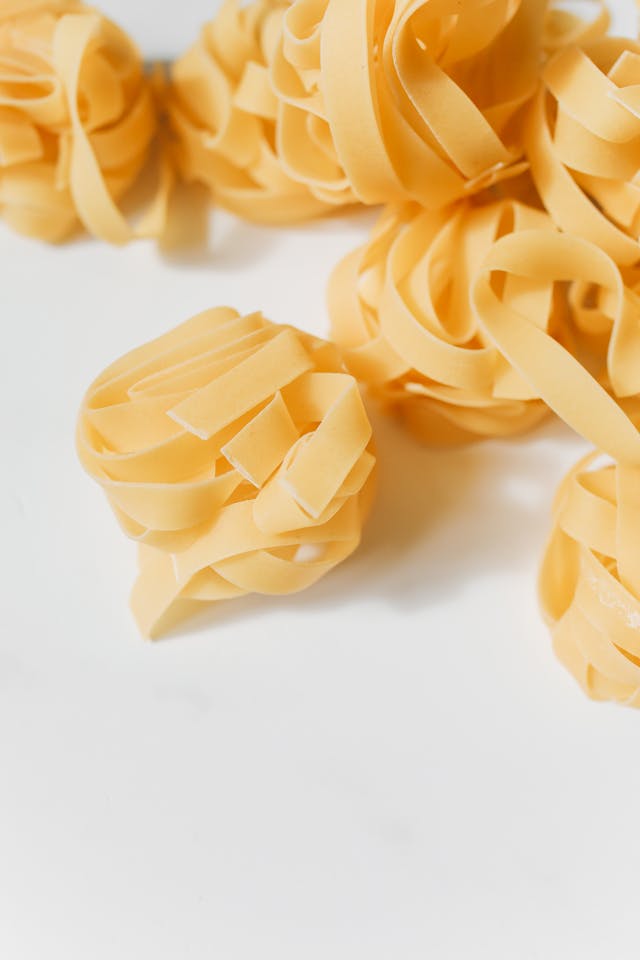
Aged Gouda
Aged Gouda develops a rich, distinctive flavor while losing most of its lactose. It contains approximately 0-2 grams of lactose per 100 grams .
- Shop Aged Gouda on Amazon Choose aged or lactose-free cheese for better digestion”
Manchego
This Spanish sheep’s milk cheese is aged for a minimum of 60 days, significantly reducing its lactose content. Sheep’s milk has a different molecular structure than cow’s milk, which some people find easier to digest .
- Explore Manchego Cheese on Amazon 🔥 Check latest price on Amazon & see real reviews before buying
Goat Cheese (Aged Varieties)
While fresh goat cheese contains some lactose, aged goat cheeses like Midnight Moon (aged 6+ months) are excellent low-lactose options. Goat’s milk contains less lactate protein than cow’s milk, making it naturally more digestible for some .
Alpine Cheeses (Gruyère, Raclette, Comté)
These mountain cheeses are aged for a minimum of 6 months and often longer. Their hard texture and rich flavor come with very low lactose content .
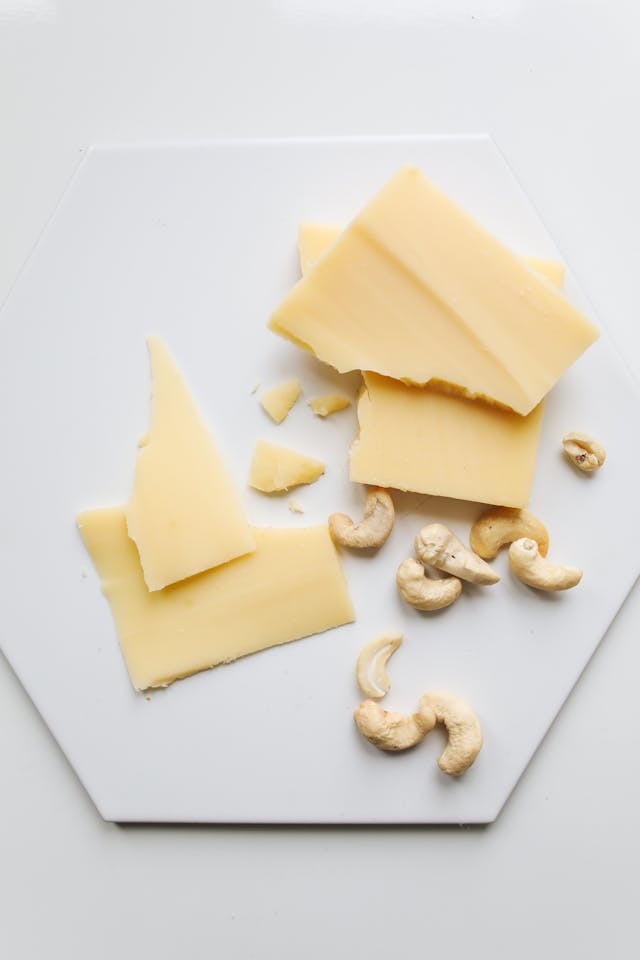
Brie and Camembert
Surprisingly, these creamy French cheeses are relatively low in lactose, containing approximately 0-1 grams per 100 grams . Many lactose-intolerant individuals tolerate them well in moderation .
Can Lactose Intolerant People Eat Cheese?
Yes, absolutely. The common misconception that all dairy is off-limits for lactose-intolerant individuals is simply not true.
According to a study published in the Journal of Dairy Science, individuals with lactose intolerance can often tolerate certain cheeses without adverse effects because the fermentation and aging processes significantly reduce lactose levels .
The key is choosing the right cheeses and paying attention to portion sizes. Here’s a quick guide:
Safe Choices (Very Low Lactose)
| Cheese | Lactose per 100g | Notes |
|---|---|---|
| Parmigiano Reggiano | 0-3g | Aged 12+ months |
| Swiss Cheese | 0-1g | Trace amounts only |
| Brie/Camembert | 0-1g | Well-tolerated in moderation |
| Aged Cheddar | 1-3g | Sharp/extra-sharp varieties |
| Gouda | 0-2g | Aged varieties preferred |
| Provolone | 1-3g | Semi-hard, aged |
| Feta | 1-2g | Made from sheep/goat milk |
Moderate Choices (Use Caution)
| Cheese | Lactose per 100g | Notes |
|---|---|---|
| Fresh Mozzarella | 1-3g | Stick to 1-2 oz portions |
| Blue Cheese | Varies | Aged varieties are safer |
| Havarti | Varies | Aged 12-month versions available |
Cheeses to Avoid or Limit
| Cheese | Lactose per 100g | Reason |
|---|---|---|
| Ricotta | 0.3-6g per ½ cup | Made from whey, retains lactose |
| Cottage Cheese | 0.7-4g per ½ cup | Fresh, high-moisture |
| Cream Cheese | 0.1-0.8g per oz | Fresh, minimal aging |
| Processed American | 0.5-4g per oz | Often contains added milk solids |
*Sources: *
What Cheese Is Good for SIBO?
Small Intestinal Bacterial Overgrowth (SIBO) requires a more nuanced approach than standard lactose intolerance. The recommended dietary approach for SIBO is the low FODMAP diet, which has a 75-85% success rate for relieving symptoms .
Why Low FODMAP Matters for SIBO
FODMAPs (Fermentable Oligosaccharides, Disaccharides, Monosaccharides, and Polyols) are carbohydrates that can be poorly absorbed in the small intestine . When bacteria in the small intestine ferment these undigested carbohydrates, they produce gas, leading to bloating, pain, and other symptoms .
Lactose is a disaccharide FODMAP—the very type of sugar that triggers SIBO symptoms .
SIBO-Friendly Cheeses
For those managing SIBO, the same aged, hard cheeses that work for lactose intolerance are generally safe. According to low FODMAP diet guidelines, the following cheeses are considered gut-friendly :
| Cheese | Low FODMAP Serving Size |
|---|---|
| Cheddar | Standard serving |
| Parmesan | Standard serving |
| Swiss | Standard serving |
| Brie | Up to 40g (about 1.4 oz) |
| Camembert | Up to 40g |
| Feta | Up to 40g |
| Mozzarella | Up to 40g (fresh, firm varieties) |
| Goat Cheese (Chèvre) | Up to 40g |
Helpful Tools for SIBO Management
If you’re navigating SIBO, having the right tools and resources can make a significant difference:
Important Note for SIBO Sufferers
While these cheeses are low FODMAP, individual tolerance varies. Some SIBO patients may need to avoid all dairy during the initial elimination phase, then slowly reintroduce aged cheeses to assess tolerance . Working with a healthcare provider or dietitian is recommended when following a low FODMAP protocol for SIBO.
What Cheeses Are the Worst for Lactose Intolerance?
The cheeses highest in lactose are typically fresh, soft, unaged, or high-moisture varieties. Here are the ones to approach with caution—or avoid entirely:
1. Ricotta Cheese
Ricotta is made from whey, which is the liquid byproduct of cheesemaking that contains most of the lactose. A half-cup serving can contain 0.3 to 6 grams of lactose . This wide range depends on the brand and production method, but ricotta consistently ranks as one of the highest-lactose cheeses .
- Better Alternative: Look for lactose-free ricotta options like Galbani Lactose-Free Ricotta on Amazon
2. Cottage Cheese
Cottage cheese is fresh, unaged, and retains significant moisture and whey. A half-cup serving contains approximately 0.7 to 4 grams of lactose .
- Better Alternative: Explore lactose-free cottage cheese brands on Amazon
3. Cream Cheese
While cream cheese has a lower lactose content than milk, it still contains 0.1 to 0.8 grams per ounce . For those with high sensitivity, even this amount can cause symptoms, especially if consumed in larger quantities.
- Better Alternative: Green Valley Creamery Lactose-Free Cream Cheese on Amazon
4. Processed American Cheese
Processed cheese products often contain added milk solids, whey, and other dairy derivatives that increase lactose content. A one-ounce serving can contain 0.5 to 4 grams of lactose .
- Better Alternative: Choose naturally aged cheddar or Swiss instead.
5. Fresh Mozzarella
Fresh mozzarella (the soft, water-packed variety) contains 1-3 grams of lactose per 100 grams . While not as high as ricotta, it’s still significantly higher than aged cheeses. Low-moisture, part-skim mozzarella is a better option.
- Better Alternative: Low-Moisture Mozzarella on Amazon
6. Some Feta Varieties
Authentic Greek feta made from sheep’s milk is relatively low in lactose (1-2g per 100g) . However, many mass-produced “feta-style” cheeses made from cow’s milk can have significantly higher lactose content . Always check the label.
- Better Alternative: Authentic Sheep’s Milk Feta on Amazon
Lactose Content Comparison Chart
| Cheese Type | Lactose per Serving | Risk Level |
|---|---|---|
| Ricotta (½ cup) | 0.3-6g | High |
| Cottage Cheese (½ cup) | 0.7-4g | High |
| Processed American (1 oz) | 0.5-4g | Moderate-High |
| Cream Cheese (1 oz) | 0.1-0.8g | Moderate |
| Fresh Mozzarella (1 oz) | 0.08-0.9g | Moderate |
| Feta (1 oz) | 1-2g per 100g | Low-Moderate |
| Cheddar (1 oz) | 0.4-0.6g | Low |
| Swiss (1 oz) | Trace | Very Low |
*Source: *
Special Considerations: Lactose-Free vs. Naturally Low-Lactose
It’s important to distinguish between two categories:
Naturally Low-Lactose Cheeses
These cheeses (Parmigiano, aged Cheddar, Swiss, etc.) achieve their low lactose status through the natural aging process. No enzymes are added—the bacteria simply consume the lactose over time.
Lactose-Free Cheeses (Enzyme-Treated)
These cheeses are made by adding the lactase enzyme to the milk during production, which breaks down lactose into simpler sugars . Brands like Kraft’s lactose-free line and Green Valley Creamery produce these products. They offer the advantage of enjoying softer cheeses like mozzarella or cream cheese without lactose concerns.
Practical Tips for Enjoying Cheese with Digestive Sensitivities
- Start with aged, hard cheeses. Parmigiano, aged Cheddar, and Swiss are your safest bets.
- Pay attention to portion sizes. Even low-lactose cheeses can cause issues if consumed in large quantities .
- Read labels carefully. Look for “lactose-free” certifications. Be aware that “lactose-free” regulations vary by country .
- Consider lactase enzyme supplements. If you want to enjoy higher-lactose cheeses, over-the-counter lactase pills can help.
- Try goat or sheep milk cheeses. Many people who react to cow’s milk find they tolerate goat or sheep cheeses better due to different protein structures .
- Consult a healthcare provider. If you suspect SIBO or have severe symptoms, professional guidance is essential .
Summary: Your Cheese Survival Guide
| Question | Answer |
|---|---|
| Naturally lactose-free cheeses? | Parmigiano Reggiano, aged Cheddar, Swiss, aged Gouda, Manchego, aged goat cheese, Alpine cheeses (Gruyère, Raclette) |
| Can lactose-intolerant people eat cheese? | Yes—aged hard cheeses are generally well-tolerated; enzyme-treated lactose-free cheeses are another option |
| SIBO-friendly cheeses? | Low FODMAP options: Cheddar, Parmesan, Swiss, Brie (≤40g), Camembert (≤40g), Feta (≤40g), Mozzarella (≤40g) |
| Worst cheeses for lactose intolerance? | Ricotta, cottage cheese, cream cheese, processed American cheese, fresh mozzarella |
1. Aged Parmesan (Best for Digestion)
👉 Parmesan Cheese Block
✔ Naturally very low in lactose
✔ Easier to digest due to long aging
✔ Rich in protein and calcium
💡 Best for: SIBO, lactose intolerance
📌 Aged cheeses lose most lactose during fermentation
🐐 2. Goat Cheese (Easier on the Gut)
👉 Vermont Creamery Goat Cheese Log
✔ Lower lactose than cow’s milk cheese
✔ Easier digestion for many people
✔ Good for mild sensitivity
💡 Best for: Bloating, mild intolerance
📌 Goat milk is naturally lower in lactose
🌱 3. Plant-Based Cheese (100% Lactose-Free)
👉 Plant-Based Cheddar Cheese
✔ Completely dairy-free
✔ Zero lactose → safest option
✔ Ideal for severe intolerance or SIBO
💡 Best for: Strict dairy-free diets
🧀 4. Fresh Goat Cheese (Soft but Digestible Option)
👉 Chèvre Goat Cheese Log
✔ Soft texture, mild flavor
✔ Lower lactose than traditional soft cheeses
✔ Easy to incorporate into meals
💡 Best for: Light digestion support
🌿 5. Vegan Cheese Bundle (Gut-Safe Alternative)
👉 Plant-Based Cheese Block Bundle
✔ No lactose, no dairy proteins
✔ Good for elimination diets (SIBO protocol)
✔ Variety of flavors
💡 Best for: Sensitive gut + elimination phase
🧠 What Makes These Cheeses Gut-Friendly?
✔ Aged cheeses (Parmesan, Cheddar) → almost no lactose
✔ Goat cheese → easier to digest
✔ Plant-based cheese → completely lactose-free
👉 Hard, aged cheeses contain very little lactose due to fermentation and aging
⚠️ Cheeses to Avoid
❌ Cream cheese
❌ Ricotta
❌ Cottage cheese
❌ Processed cheese slices
👉 These contain higher lactose levels and may trigger bloating or SIBO symptoms
✔ Aged cheese = safest dairy option ✔ Goat cheese = easier digestion ✔ Plant-based = zero risk
Final Thoughts
Living with lactose intolerance or SIBO doesn’t mean resigning yourself to a cheese-free life. The world of cheese is vast, and the aging process that creates complex, nutty, and savory flavors also happens to make these cheeses more digestible.
From the crystalline crunch of aged Parmigiano to the buttery melt of Swiss, there are plenty of options to satisfy your cheese cravings without the digestive distress. The key is knowing what to look for—and now you do.
Ready to build your lactose-friendly cheese board? Click any of the links above to explore the best cheeses, lactase supplements, and low FODMAP resources on Amazon through our store ID cosmoclinic-20. Enjoy fast shipping and the confidence that comes with choosing quality products.
Disclaimer: This article contains affiliate links. As an Amazon Associate, I earn from qualifying purchases. This information is for informational purposes only and does not constitute medical advice. If you have lactose intolerance, SIBO, or other digestive conditions, please consult with a qualified healthcare provider for personalized guidance. Individual tolerance to dairy products varies significantly.