
By Dr. mohammed abdul azeem siddiqui
Reviewed for emerging digital health trends
Your smartphone already tracks your steps, your sleep, and your heartbeat. But can it screen for cervical cancer?
The answer is yes—and the technology is already here.
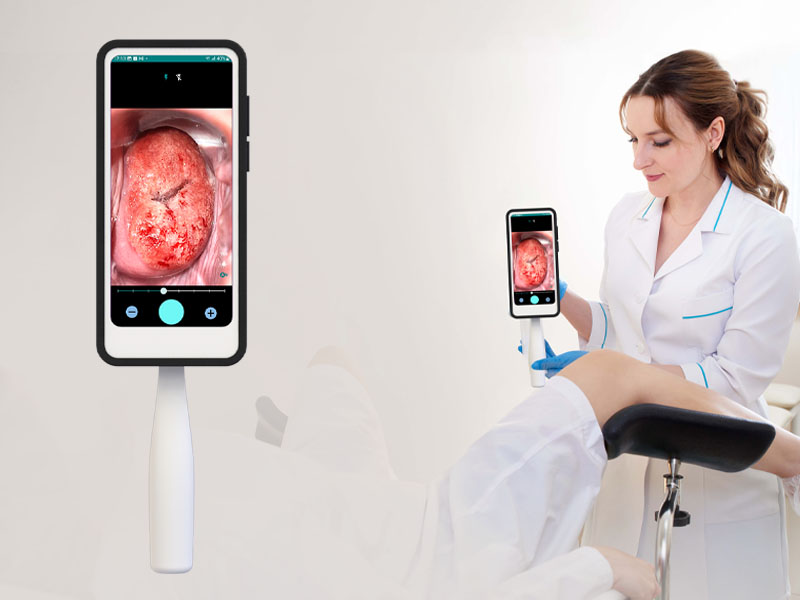
Across the globe, from rural Tanzania to urban clinics in the United States, smartphone-based cervical screening tools are transforming how women access early detection. These devices range from AI-powered imaging apps to portable colposcopes that turn any iPhone into a diagnostic tool.
For American women tired of invasive Pap smears, long wait times, and expensive specialist visits, the question isn’t if smartphone screening will arrive—it’s how soon you can use it.
Why Smartphone Screening Is a Game-Changer
Traditional cervical cancer screening has three major barriers:
| Barrier | Traditional Approach | Smartphone Solution |
|---|---|---|
| Cost | Colposcopy: $300–$1,000+ | Mobile colposcope attachments: $400–$2,000 (one-time) |
| Access | Requires specialist visit | Use in primary care or at home |
| Convenience | Scheduling, travel, time off work | Point-of-care, same-day results |
The World Health Organization reports over 660,000 new cervical cancer cases and 350,000 deaths globally each year, with over 90% occurring in low- and middle-income countries . But even in the USA, rural women and those without insurance face significant screening gaps.
Smartphone tools address this by putting colposcopy-grade imaging into the hands of nurses, midwives, and even patients themselves.
The Current Landscape: FDA-Cleared and Emerging Tools
Several smartphone-based cervical screening systems have already received regulatory clearance or are in advanced clinical trials.
1. EVA System by MobileODT (FDA Cleared)
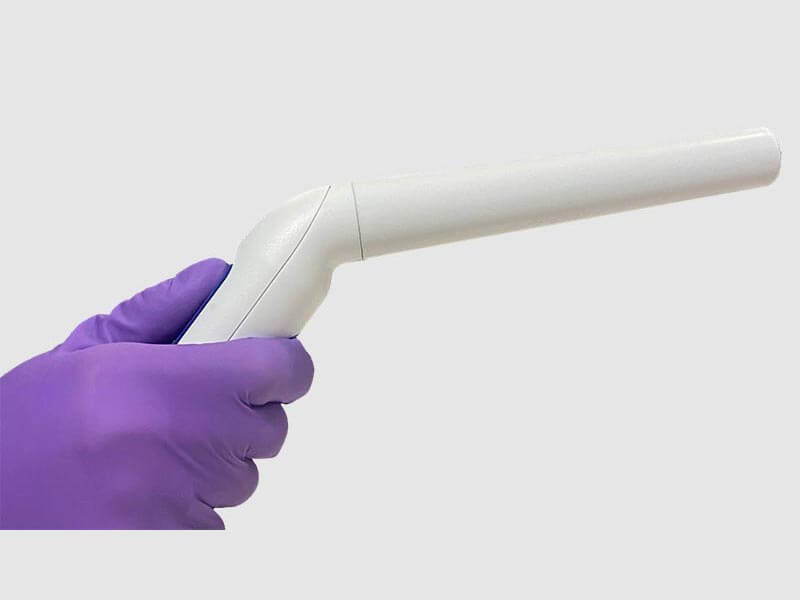
The EVA (Enhanced Visual Assessment) System is a handheld digital colposcope that attaches to a smartphone . It received FDA 510(k) clearance in December 2016 and is currently used in over 60 countries worldwide .
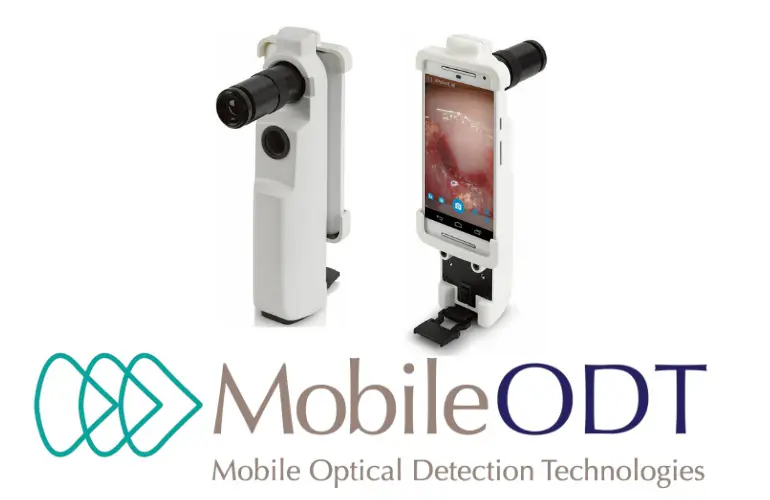
Key features:
- Optical magnification up to 4x (16x with digital zoom)
- LED illumination with glare reduction
- Secure image capture and telemedicine upload
- Used by Planned Parenthood and other US women’s health organizations
Technical specifications from the FDA filing :
| Specification | Detail |
|---|---|
| Working Distance | 225–425 mm |
| Optical Magnification | 4.0x |
| Digital Zoom | Up to 16x |
| Field of View | 45–100 mm |
| Light Source | 3W 6500K LED |
| Battery Life | 10 hours |
| Weight | 0.5 kg (about 1.1 lbs) |
For USA patients: The EVA System is not sold directly to consumers—it’s a medical device for clinics. However, its existence proves that smartphone colposcopy is FDA-approved and clinically valid.
2. SEVIA: AI-Powered Cervical Screening App
The Smartphone Enhanced Visual Inspection with Acetic Acid (SEVIA) system is a mobile app that uses artificial intelligence to analyze cervical images .
Here’s how it works:
- A healthcare provider applies acetic acid (diluted vinegar) to the cervix
- They capture images using a smartphone with the SEVIA app
- The AI scores the images and highlights potential lesions within 60 seconds
- An expert reviewer confirms the finding remotely
The SEVIA system is currently deployed across 148 health facilities in Tanzania through a Columbia University ICAP project funded by PEPFAR and the CDC . To date, over 11,000 cervical images have been submitted, with the system identifying more than 1,000 “mismatched” cases that could have been wrongly classified by providers alone .
For the USA: While SEVIA is focused on low-resource settings, its AI technology is directly applicable to American telehealth and rural health programs.
3. Smartphone-Compatible Confocal Micro-Endoscope (SCME)
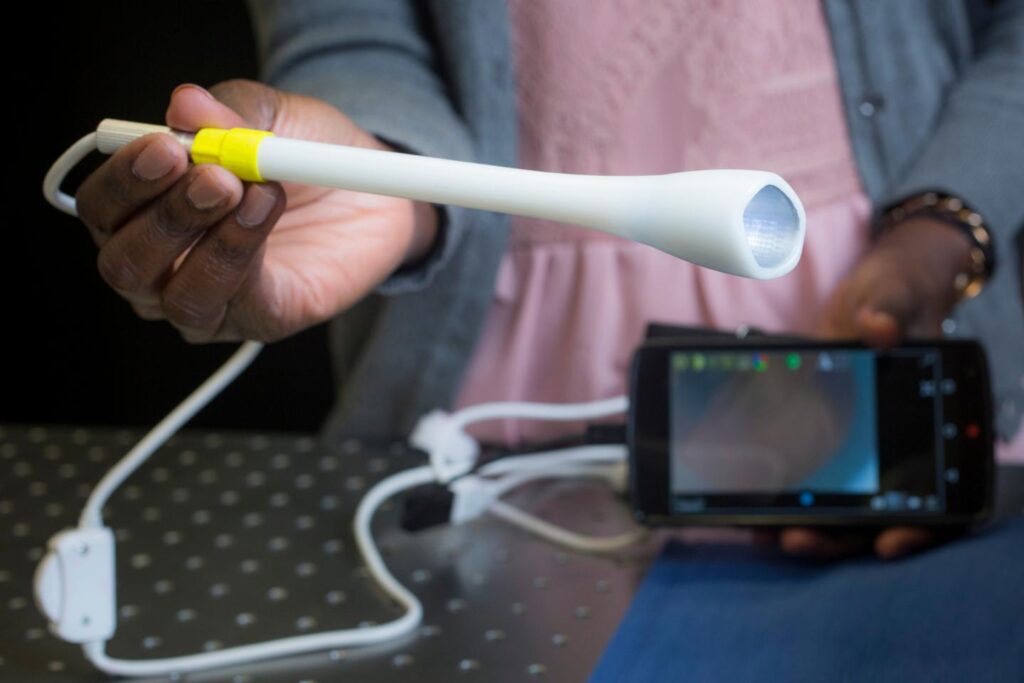
Researchers at NIH have developed a prototype smartphone-compatible confocal micro-endoscope that provides cellular-level imaging of the cervix .
In a study of 291 women in Uganda, the SCME achieved:
- 79% of images showing distinguishable cellular features
- 60% of women found it comfortable
- 81% were willing to use it again
Nurses rated the device 85% for usefulness to their work, though ease of learning scored lower at 57% .
Why this matters for the USA: Confocal microscopy can detect precancerous changes with 93–100% sensitivity and specificity in research settings—comparable to traditional biopsy . A smartphone version makes this technology accessible outside of major academic centers.
4. Cervix App (Research Stage)
Researchers in Ecuador developed the Cervix app, a mobile application for cervical cancer diagnosis built with React Native and Firebase for cross-platform compatibility (iOS and Android) .
The system uses:
- UNET models for image segmentation
- GANs for data augmentation
- ResNet models for classification
Early testing shows 90% accuracy in classifying benign vs. malignant images . The research was presented at the SPIE Optical Engineering + Applications conference in San Diego in August 2025 .
Can You Use Smartphone Screening at Home Today?
Short answer: Not yet for definitive diagnosis—but you can start monitoring your cervical health using smartphone-compatible tools right now.
What You Can Do Today
While FDA-approved home cervical cancer screening apps don’t yet exist for consumers, you can use smartphone accessories to:
- Track cervical mucus changes (visual inspection)
- Monitor pH levels (using test strips + phone camera)
- Document changes over time (photo journaling)
Recommended At-Home Monitoring Tools on Amazon
Smartphone Macro Lens Kit – For detailed cervical mucus photography (for personal tracking, not diagnosis).
👉 Shop Macro Lens Kit on Amazon
Vaginal pH Test Strips – Track pH changes with your phone’s camera for color comparison.
👉 Buy pH Test Strips on Amazon
Phone-Compatible Speculum – For personal visualization (FDA-cleared as Class II device for patient use).
👉 Check Speculum on Amazon
The AI Revolution in Cervical Screening
Artificial intelligence is the engine powering most smartphone screening tools. Here’s what AI brings to the table:
Real-Time Risk Assessment
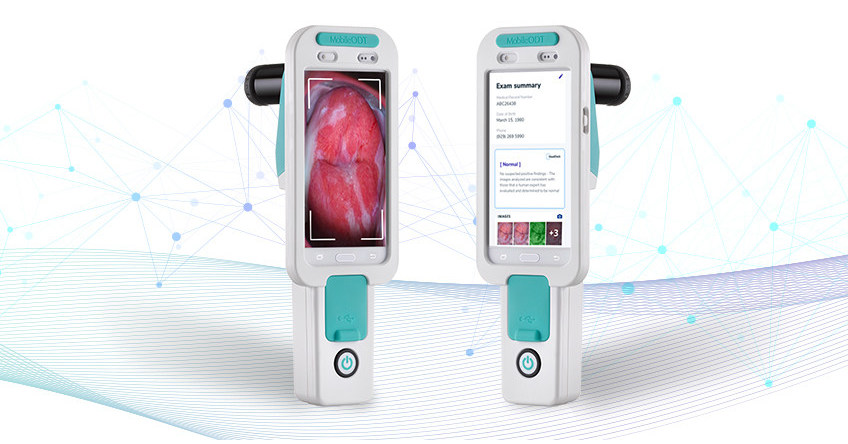
The MobileODT EVA system’s AI software provides results within 60 seconds, with accuracy similar to human colposcopists .
Reduced Over-Screening
A digital “One-ID” platform tested in rural China reduced over-screening (unnecessary repeat testing) from 12.64% to just 0.17% —a relative reduction of nearly 99% . The same system nearly doubled the detection rate of high-grade precancerous lesions from 0.35% to 0.67% .
Task Shifting
AI allows nurses and community health workers to perform screenings that previously required specialist gynecologists. In Tanzania, the SEVIA system has empowered non-physician providers to capture and interpret cervical images with remote expert backup .
“SEVIA brings together the power of AI and human clinical acumen in a seamless way,” says Dr. Julie Franks, principal investigator of the FIKIA+ project at Columbia University. “The synergy of the two has tremendous promise.”
Limitations: What Smartphone Screening Cannot Do Yet
As exciting as this technology is, it has important limitations:
| Limitation | Why It Matters |
|---|---|
| No FDA-approved home cancer app | Consumer apps cannot legally claim to detect cervical cancer |
| Requires acetic acid application | VIA-based screening needs a trained provider to apply solution |
| Image quality depends on skill | Poor technique yields unusable images |
| Cannot replace histology | Biopsy is still needed for definitive diagnosis |
| Limited US clinical adoption | Most systems are deployed internationally, not in American clinics |
The FDA has cleared mobile colposcopes for clinical use, not for direct-to-consumer cancer screening. If you see an app claiming to “detect cervical cancer from a selfie,” it’s likely fraudulent.
The Future: What’s Coming to the USA in 2026–2030
Several developments are on the horizon for American women:
1. At-Home HPV Testing (Already Here)
Self-collected vaginal swabs for HPV testing are now available through services like Teal Health and Nurx. Combine this with smartphone imaging for a complete at-home screening workflow.
2. AI Triage for Abnormal Paps
Several AI companies are developing algorithms to prioritize which abnormal Pap smears need immediate colposcopy versus watchful waiting.
3. Telecolposcopy
Rural clinics are beginning to adopt smartphone colposcopes with remote specialist review—bringing expert care to underserved areas.
4. Consumer Cervical Imaging Apps
Once FDA clears a smartphone-based cancer detection app (likely within 3–5 years), home cervical screening will become as routine as home pregnancy testing.
How to Prepare for Smartphone Cervical Screening
Even if you can’t use a smartphone colposcope at home yet, you can:
1. Get a Baseline HPV Test
Know your status. At-home HPV testing kits are available now.
Recommended At-Home HPV Test
Everlywell HPV Test – FDA-authorized, mail-in kit.
👉 Order Everlywell HPV Test on Amazon
2. Track Your Cervical Health Metrics
Use your phone to log:
- Menstrual cycle changes
- Unusual discharge (color, odor, texture)
- Post-coital bleeding
- Pelvic pain
3. Support Cervical Health with Supplements
Vaginal Probiotics – Supports healthy cervical microbiome.
👉 Buy Vaginal Probiotics on Amazon
NAC (N-Acetylcysteine) – Shown to support cervical health and reduce inflammation.
👉 Shop NAC Supplement on Amazon
DIM + Broccoli Sprout Extract – Supports healthy estrogen metabolism.
👉 Get DIM Supplement on Amazon
When to See a Doctor
Smartphone tools are supplements to, not replacements for, professional medical care. See a gynecologist immediately if you have:
- Post-coital bleeding (blood after sex)
- Persistent pelvic pain not linked to your period
- Foul-smelling discharge with unusual color
- Known abnormal Pap smear requiring follow-up
- Visible lesions on self-examination
Ask your provider if they offer telecolposcopy or mobile colposcopy services. Some forward-thinking clinics already use EVA systems for remote consultations.
The Bottom Line for American Women
Smartphone-based cervical screening tools are no longer science fiction. The EVA System is FDA-cleared and used in US clinics today. SEVIA’s AI technology is saving lives in Africa and will likely come to American telehealth platforms soon. Confocal microscopy on a smartphone is in clinical trials.
For now, the smartest approach is a hybrid one:
- Use at-home HPV testing for baseline screening
- Track your cervical health with phone-compatible pH strips and photo journaling
- Support your cervical immune system with targeted supplements
- See your gynecologist annually for Pap smears and clinical exams
- Ask about telecolposcopy if you live in a rural area
The smartphone in your pocket is becoming a medical device. Cervical cancer screening is about to get a whole lot more accessible.
Ready to Take Control of Your Cervical Health?
Build your smartphone-supported cervical health kit on Amazon:
- Smartphone macro lens – For detailed visual tracking
- Vaginal pH test strips – For inflammation monitoring
- At-home HPV test – For baseline status
- Vaginal probiotics + NAC + DIM – For immune support
👉 Click Here to Shop the Complete Cervical Health Kit on Amazon
Disclaimer: This article contains affiliate links. As an Amazon Associate, I earn from qualifying purchases. This information is for educational purposes only and is not a substitute for professional medical advice. Smartphone-based cervical screening tools are not FDA-approved for at-home cancer diagnosis. Always consult your gynecologist for cervical cancer screening and follow recommended guidelines for Pap smears and HPV testing.