

Walk into any American grocery store today, and you will face an entire wall of yogurt options. Among them, one variety has risen above the rest as a nutritional powerhouse: Greek yogurt. But with so many choices—low fat greek yogurt, full fat greek yogurt, vanilla greek yogurt, and even lactose free greek yogurt—how do you know which one is right for you?how to select Best greek yogurt for gut health: ?
This guide breaks down everything you need to know about greek yogurt protein, the most trusted greek yogurt brands, the differences between greek yogurt vs regular yogurt, and how to find the best greek yogurt for your specific health goals.
Part 1: What Is Greek Yogurt? And Why Does Protein Matter?
Greek yogurt is not just regular yogurt with a fancy name. It is regular yogurt that has been strained to remove the liquid whey. This straining process concentrates the solids, resulting in a thicker, creamier texture and—most importantly—significantly more protein per serving.
Greek Yogurt Protein: The Nutritional Star
The greek yogurt protein content is what sets it apart from almost every other dairy product. A standard 7-ounce (200g) serving of plain, non-fat Greek yogurt contains approximately 15-20 grams of protein. By comparison, the same serving of regular yogurt contains only 5-10 grams.
Why does this matter? Protein is essential for:
- Muscle repair and growth (especially post-workout)
- Satiety (keeping you full longer, which aids weight management)
- Blood sugar stabilization
- Hormone and enzyme production
For those seeking high protein greek yogurt, look for brands that specifically advertise “high protein” or “extra strained”—some options pack 25 grams or more per serving.
Part 2: Greek Yogurt vs Regular Yogurt – What’s the Difference?
The greek yogurt vs regular yogurt debate is one of the most common questions in the dairy aisle. Here is the breakdown:
| Feature | Greek Yogurt | Regular Yogurt |
|---|---|---|
| Texture | Thick, creamy, almost like soft cheese | Thin, pourable, runny |
| Protein (per 7 oz) | 15-20 grams | 5-10 grams |
| Carbohydrates | Lower (whey removed) | Higher (contains liquid whey) |
| Sodium | Slightly higher (added during straining) | Lower |
| Calcium | Slightly lower (some lost in whey) | Higher |
| Taste | Tangy, sometimes sour | Milder, sweeter |
| Best for | High-protein meals, dips, baking | Drinking, smoothies, children’s snacks |
Which one should you choose?
- Choose greek yogurt if you want high protein, thick texture, and lower sugar.
- Choose regular yogurt if you prefer a milder taste, higher calcium, or a drinkable consistency.
Part 3: Fat Matters – Low Fat vs Full Fat Greek Yogurt
One of the most confusing decisions is whether to buy low fat greek yogurt or full fat greek yogurt. Both have their place, depending on your dietary goals.
Low Fat Greek Yogurt (0-2% milkfat)
Best for: Weight loss, high-protein diets, and anyone watching saturated fat intake.
Typical nutrition (7 oz serving):
- Calories: 120-150
- Protein: 15-20g
- Fat: 0-3g
- Sugar: 5-8g (naturally occurring)
Pros: Highest protein-to-calorie ratio; leanest option.
Cons: Less satisfying; may contain added thickeners to mimic creaminess.
Full Fat Greek Yogurt (5% or higher milkfat)
Best for: Keto diets, bulking, sustained energy, and those who prioritize taste.
Typical nutrition (7 oz serving):
- Calories: 190-220
- Protein: 15-20g
- Fat: 8-11g
- Sugar: 6-9g
Pros: Creamier, more satisfying, better for hormone production (fat is needed to absorb fat-soluble vitamins).
Cons: Higher calorie density; not ideal for aggressive weight loss.
The verdict:
- Weight loss goal: Choose low fat greek yogurt.
- Keto or low-carb: Choose full fat greek yogurt.
- Kids or athletes: Either works; prioritize taste and protein.
Part 4: The Best Greek Yogurt Brands – Ranked
Not all greek yogurt brands are created equal. Some use traditional straining; others use thickeners like pectin or corn starch to fake the texture. Here are the top contenders for the title of best greek yogurt.
1. Fage Greek Yogurt (Total, Total 0%, Total 2%, Total 5%)
Fage greek yogurt (pronounced “fa-yeh”) is widely considered the gold standard. A family-owned Greek company, Fage uses traditional straining without thickeners. Their fage greek yogurt comes in multiple fat levels:
- Fage Total 0%: Non-fat, 18g protein, 90 calories per serving
- Fage Total 2%: Low-fat, 20g protein, 150 calories
- Fage Total 5%: Full-fat, 18g protein, 190 calories
Why it is the best: No additives, incredibly thick texture, consistent quality, and a clean tangy taste. Fage greek yogurt is the benchmark against which all others are measured.
2. Chobani
America’s best-selling Greek yogurt brand. Widely available, affordable, and offers a huge range of flavors including vanilla greek yogurt.
Pros: Great taste, extensive flavor lineup, good protein (12-15g per serving).
Cons: Slightly thinner than Fage; some varieties contain added sugar.
3. Oikos (by Danone)
Oikos Triple Zero (zero added sugar, zero artificial sweeteners, zero fat) is a favorite for high protein greek yogurt seekers—15g protein and only 100 calories.
Pros: High protein, low calorie, widely available.
Cons: Contains stevia and corn starch; texture is artificially thick.
4. Siggi’s (Icelandic Skyr – technically not Greek but similar)
Siggi’s makes skyr, an Icelandic cultured dairy product that is even thicker and higher in protein than Greek yogurt (16-18g per serving). While not technically Greek, it is an excellent alternative.
5. Stonyfield Organic
Best for those who prioritize organic, non-GMO, and pasture-raised dairy. Their Greek yogurt is slightly thinner but clean-label.
6. Two Good (by Danone)
A low fat greek yogurt with only 2g sugar and 12g protein. Uses a slow-straining process to remove sugar. Great for diabetics.
Summary: Best Greek Yogurt by Category
| Category | Winner |
|---|---|
| Best overall | Fage Total 5% (full fat) |
| Best low fat | Fage Total 0% or Oikos Triple Zero |
| Best high protein | Siggi’s Skyr (19-21g protein) |
| Best vanilla | Chobani Vanilla Greek Yogurt |
| Best lactose free | Green Valley Lactose-Free Greek Yogurt |
| Best budget | Great Value (Walmart) Greek Yogurt |
Part 5: Vanilla Greek Yogurt – The Flavorful Option
Plain Greek yogurt is versatile but can be sour for some palates. Enter vanilla greek yogurt—a naturally sweetened or artificially flavored version that requires no added honey or fruit.
What to look for in vanilla greek yogurt:
| Feature | What to Avoid | What to Choose |
|---|---|---|
| Sugar content | >15g per serving | <10g per serving |
| Sweetener | High fructose corn syrup | Cane sugar, stevia, monk fruit, or naturally flavored |
| Protein | <10g per serving | >12g per serving |
| Ingredients | “Natural flavors” (vague) | Real vanilla bean or vanilla extract |
Top vanilla greek yogurt picks:
- Fage Total 0% with Honey (add your own vanilla extract at home)
- Chobani Less Sugar Vanilla (9g sugar, 12g protein)
- Two Good Vanilla (2g sugar, 12g protein)
Pro tip: Buy plain low fat greek yogurt and add your own vanilla extract and a teaspoon of maple syrup or stevia. You control the sugar and avoid artificial ingredients.
Part 6: Lactose Free Greek Yogurt – For Sensitive Stomachs
Traditional Greek yogurt is lower in lactose than regular yogurt because the straining process removes some of the whey (where most lactose resides). However, for those with true lactose intolerance, even that small amount can cause bloating, gas, or diarrhea.
Is there lactose free greek yogurt?
Yes. Lactose free greek yogurt is made by adding the lactase enzyme to milk before culturing, which breaks down lactose into digestible sugars (glucose and galactose). The result is a yogurt that tastes slightly sweeter (because glucose is sweeter than lactose) but causes no digestive distress.
Best lactose free greek yogurt brands:
| Brand | Protein per serving | Fat Level | Notes |
|---|---|---|---|
| Green Valley Creamery | 15g | Full-fat (10%) | Organic; contains live probiotics; no added sugar |
| Fage BestSelf (Lactose Free) | 18g | Low-fat (2%) | Same thick texture as regular Fage |
| Yoplait Lactose Free | 12g | Low-fat | Widely available; contains added sugar |
Can you make your own lactose free greek yogurt?
Yes. Buy lactose-free milk (like Lactaid), heat it to 180°F, cool to 110°F, add a starter culture (plain Greek yogurt with live cultures), incubate for 8-12 hours, then strain through a cheesecloth or yogurt strainer.
Part 7: High Protein Greek Yogurt – Maximizing Your Intake
For bodybuilders, athletes, or anyone on a high-protein diet, high protein greek yogurt is a game-changer. Some brands have engineered their straining process to push protein content even higher.
Top high protein greek yogurt options (protein per 7 oz):
| Brand / Product | Protein (g) | Calories | Fat (g) |
|---|---|---|---|
| Siggi’s Simple Skyr | 21g | 160 | 5g |
| Fage Total 2% | 20g | 150 | 4g |
| Oikos Pro (Triple Zero) | 20g | 140 | 3g |
| Chobani Complete (Greek + Whey) | 20g | 140 | 3g |
| Ratio Keto-Friendly Yogurt | 15g | 170 | 15g (full fat) |
How to boost protein even further:
- Mix high protein greek yogurt with a scoop of vanilla or unflavored whey protein powder.
- Top with hemp seeds (10g protein per 3 tbsp) or crushed almonds.
- Use as a base for protein smoothies: 1 cup Greek yogurt + 1 scoop protein powder + frozen berries + almond milk.
Part 8: How to Choose the Best Greek Yogurt for You
The best greek yogurt is not the same for everyone. Use this decision flowchart:
Step 1: Do you have lactose intolerance?
- Yes: Choose lactose free greek yogurt (Green Valley or Fage BestSelf)
- No: Proceed to Step 2
Step 2: What is your primary goal?
- Weight loss / low calorie: Choose low fat greek yogurt (Fage Total 0%, Oikos Triple Zero)
- Keto / low-carb / bulking: Choose full fat greek yogurt (Fage Total 5%, Ratio Keto)
- Maximum protein intake: Choose high protein greek yogurt (Siggi’s Skyr, Oikos Pro)
- Taste / dessert substitute: Choose vanilla greek yogurt (Chobani Vanilla, Two Good Vanilla)
Step 3: What is your budget?
- Premium (best quality): Fage greek yogurt or Siggi’s
- Mid-range: Chobani or Oikos
- Budget: Great Value (Walmart) Greek yogurt or Aldi’s Friendly Farms
Part 9: Creative Ways to Use Greek Yogurt
Beyond eating it straight from the tub, Greek yogurt is incredibly versatile:
Savory uses:
- Tzatziki sauce: Mix full fat greek yogurt with shredded cucumber, garlic, dill, lemon juice, and olive oil.
- Marinade for chicken: The lactic acid tenderizes meat. Combine with spices and lemon.
- Substitute for sour cream: Use low fat greek yogurt on tacos, baked potatoes, or chili.
- Ranch dip: Mix with ranch seasoning powder.
Sweet uses:
- Protein breakfast bowl: High protein greek yogurt + berries + granola + drizzle of honey.
- Smoothies: 1 cup Greek yogurt + 1 banana + handful of spinach + almond milk.
- Baking substitute: Replace oil, butter, or sour cream in muffin and cake recipes with Greek yogurt (1:1 ratio).
- Frozen yogurt: Blend vanilla greek yogurt with frozen fruit and freeze for 2 hours.
Part 10: Greek Yogurt Myths – Debunked
| Myth | Truth |
|---|---|
| “Greek yogurt is always healthy.” | Flavored versions can have 15-20g of added sugar. Read labels. |
| “Low fat Greek yogurt has less protein.” | False. Low fat and full fat often have identical protein (15-20g). |
| “You cannot eat Greek yogurt if you are vegan.” | True for dairy-based. But there are coconut, soy, and almond-based Greek-style yogurts (though lower protein). |
| “Greek yogurt is bad for your heart.” | Full fat greek yogurt contains saturated fat, but recent research shows dairy fat is not linked to heart disease in moderate amounts. |
| “All Greek yogurt brands are the same.” | False. Compare fage greek yogurt to a budget brand—the texture, protein, and ingredients vary significantly. |
Final Verdict: Which Greek Yogurt Should You Buy?
- For the purist: Fage greek yogurt (Total 5% full fat or Total 0% low fat) – no thickeners, traditional straining, perfect texture.
- For the athlete: High protein greek yogurt – Siggi’s Skyr or Oikos Pro.
- For the sweet tooth: Vanilla greek yogurt – Chobani Less Sugar Vanilla or Two Good Vanilla.
- For the sensitive stomach: Lactose free greek yogurt – Green Valley Creamery.
- For the budget shopper: Great Value (Walmart) Greek Yogurt – surprisingly decent for the price.
No matter which you choose, incorporating Greek yogurt into your daily diet is one of the smartest nutritional moves you can make. The greek yogurt protein content alone makes it a superior choice to regular yogurt, and with so many greek yogurt brands available—from fage greek yogurt to Chobani to store brands—there is an option for every palate, budget, and dietary need.
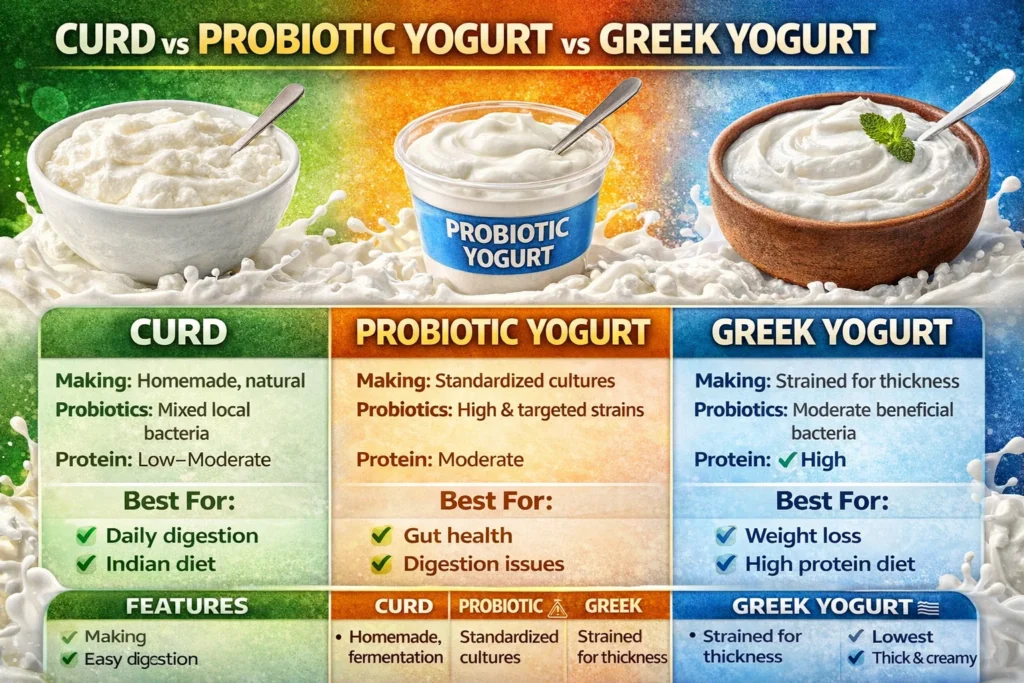
Curd vs Probiotic Yogurt vs Greek Yogurt:
When it comes to fermented dairy, many people use “curd,” “yogurt,” and “Greek yogurt” interchangeably. But from a nutritional science and gut microbiome perspective, they are distinct products with different benefits.
Let’s break it down clearly so you can choose the right one for your health goals.
🥛 What is Curd?
Curd is a naturally fermented milk product made by adding a small amount of previous curd (starter) to warm milk.
Key Features:
- Contains mixed, naturally occurring bacteria
- Fermented at room temperature
- Taste varies depending on climate and fermentation time
Best For:
- Daily digestion support
- Traditional Indian diets
- People sensitive to packaged dairy
🧪 What is Probiotic Yogurt?
Probiotic yogurt is yogurt fortified with specific, clinically studied bacterial strains that benefit gut health.
Common Strains:
- Lactobacillus acidophilus
- Bifidobacterium species
- Lactobacillus rhamnosus
Key Features:
- Scientifically selected bacteria
- Consistent gut health benefits
- Often labeled “live & active cultures”
Best For:
- Gut microbiome repair
- Antibiotic recovery
- IBS / bloating issues
🇬🇷 What is Greek Yogurt?
Greek yogurt is yogurt that has been strained to remove whey, making it thicker and richer in protein.
Key Features:
- High protein (almost double of curd)
- Thick, creamy texture
- Lower lactose (easier digestion for some)
Best For:
- Weight loss & muscle gain
- High-protein diets
- Satiety (keeps you full longer)
🔬 Nutritional Comparison (Per 100g Approx)
| Feature | Curd 🥛 | Probiotic Yogurt 🧪 | Greek Yogurt 🇬🇷 |
|---|---|---|---|
| Protein | Low–Moderate | Moderate | High |
| Probiotics | Natural (variable) | High & targeted | Moderate |
| Fat | Depends on milk | Varies | Moderate–High |
| Lactose | Moderate | Lower | Lowest |
| Texture | Soft | Smooth | Thick & creamy |
🧠 Which One is Best for You?
👉 For Gut Health
Choose Probiotic Yogurt
✔ Targeted strains
✔ Clinically backed benefits
👉 For Daily Use (Indian Diet)
Choose Curd
✔ Affordable
✔ Easily available
✔ Natural fermentation
👉 For Weight Loss & Fitness
Choose Greek Yogurt
✔ High protein
✔ Keeps you full longer
✔ Supports fat loss
⚠️ Common Mistakes to Avoid
- ❌ Assuming all yogurt = probiotic (not true)
- ❌ Buying flavored yogurt (often high sugar)
- ❌ Ignoring live culture labels
- ❌ Replacing traditional curd completely (it still has value
- Curd → Best for daily digestion & tradition
- Probiotic Yogurt → Best for gut health therapy
- Greek Yogurt → Best for weight loss & protein needs
👉 There’s no single “best”—the right choice depends on your goal.
🔥 Pro Tip (High-Value Insight)
For optimal health, you can combine all three strategically:
- Morning: Probiotic yogurt (gut boost)
- Lunch: Curd (daily digestion)
- Evening: Greek yogurt (protein + satiety)
Summary Table: Quick Reference
| If you want… | Choose… |
|---|---|
| Highest quality | Fage Greek Yogurt (Total 5%) |
| Most protein per calorie | Oikos Triple Zero or Siggi’s Skyr |
| No digestive issues | Lactose free Greek yogurt (Green Valley) |
| A sweet, ready-to-eat snack | Vanilla Greek Yogurt (Chobani Less Sugar) |
| To lose weight | Low Fat Greek Yogurt (Fage Total 0%) |
| To build muscle or go keto | Full Fat Greek Yogurt (Fage Total 5%) |
Disclaimer: This article is for informational purposes only and does not constitute medical or dietary advice. Consult a healthcare provider or registered dietitian before making significant changes to your diet.
Affiliate Note: Looking for the best greek yogurt delivered to your door? [Click here to shop Fage Greek Yogurt on Amazon](https://www.amazon.com/s?k=Fage+Greek+Yogurt&tag=your affiliate id-20) or explore [high protein greek yogurt options](https://www.amazon.com/s?k=high+protein+greek+yogurt&tag=your affiliate id-20) for your next grocery order.