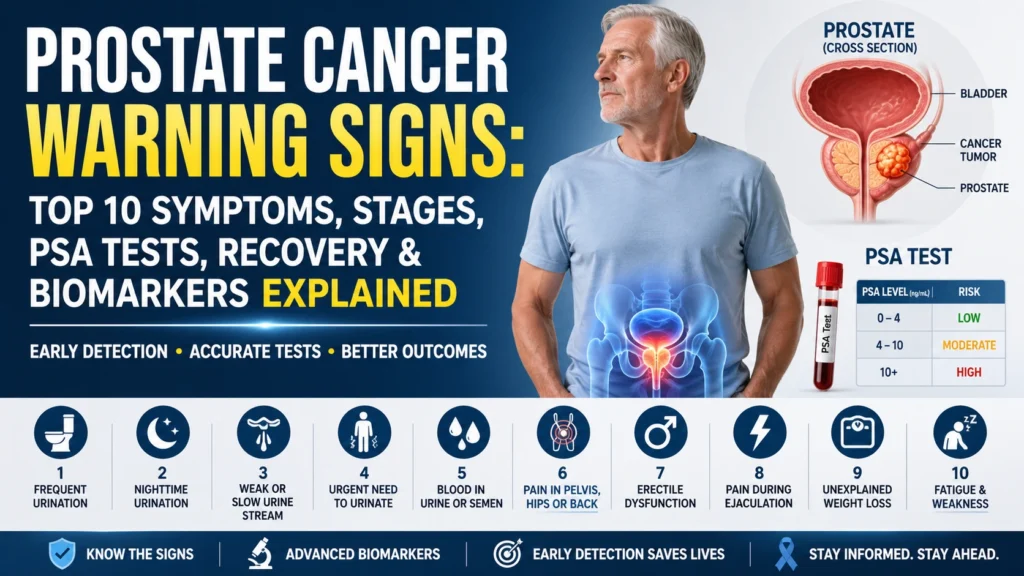

Prostate cancer is one of the most common cancers in men, and understanding the symptoms, stages, prevention methods, and diagnostic tools can improve survival rates. Many men search for terms like Signs you are dying of prostate cancer, Stage 1 prostate cancer symptoms, What are the 5 warning signs of prostate cancer, and What are the biomarkers in prostate disease to better understand the condition.
Here is a complete guide covering everything you need to know.
Recommended Prostate Health Products
Premium products that may support prostate health, pelvic comfort, and overall wellness.






What Are the 5 Warning Signs of Prostate Cancer?
The most common early warning signs of prostate cancer include:
- Difficulty starting urination
- Weak or interrupted urine flow
- Frequent urination, especially at night
- Blood in urine or semen
- Pain or burning during urination
These are often among the first prostate cancer symptoms men notice.
What Are the 7 Signs of Prostate Cancer?
If you’re asking, “What are the 7 signs of prostate cancer?”, they commonly include:
- Frequent urination
- Weak urine stream
- Difficulty emptying the bladder
- Blood in urine
- Erectile dysfunction
- Painful ejaculation
- Pelvic or lower back pain
These may overlap with symptoms of enlarged prostate or prostatitis.
What Are the Top 10 Signs of Prostate Cancer?
Here are the top 10 signs of prostate cancer:
- Frequent urination
- Trouble starting urination
- Weak urine flow
- Painful urination
- Blood in urine
- Blood in semen
- Erectile dysfunction
- Painful ejaculation
- Bone pain
- Unexplained weight loss
Recognizing these signs of prostate cancer early can lead to faster diagnosis.
Stage 1 Prostate Cancer Symptoms
Stage 1 prostate cancer symptoms are often mild or absent because the tumor is small and localized.
Possible symptoms include:
- Slight changes in urination
- Mild pelvic discomfort
- Elevated PSA on a prostate cancer test
In many cases, Stage 1 cancer is found during routine screening.
Stage 2 Prostate Cancer Symptoms
Stage 2 prostate cancer symptoms may become more noticeable:
- Frequent urination
- Difficulty urinating
- Weaker urine stream
- Blood in urine or semen
At this stage, cancer remains inside the prostate but may be larger.
Stage 3 Prostate Cancer Symptoms
Stage 3 prostate cancer symptoms occur when cancer spreads beyond the prostate.
Symptoms may include:
- Severe urinary problems
- Erectile dysfunction
- Pelvic pain
- Lower back pain
- Fatigue
Immediate treatment is often needed.
Signs You Are Dying of Prostate Cancer
Searches for Signs you are dying of prostate cancer often relate to advanced or metastatic cancer.
Late-stage signs may include:
- Severe bone pain
- Extreme fatigue
- Significant weight loss
- Loss of appetite
- Difficulty breathing
- Swelling in legs
- Confusion or weakness
These symptoms often occur when cancer has spread to bones or organs.
What Is the Biggest Symptom of Prostate Cancer?
The biggest symptom of prostate cancer in many men is difficulty urinating or changes in urinary habits.
However, early prostate cancer may have no symptoms at all, which is why screening is important.
Prostate Cancer Test Options
A prostate cancer test may include:
PSA Blood Test
Measures prostate-specific antigen levels.
Digital Rectal Exam (DRE)
A doctor physically checks the prostate.
MRI / Ultrasound
Imaging helps identify abnormal areas.
Biopsy
Confirms cancer diagnosis.
How to Avoid Prostate Cancer
Many men ask How to avoid prostate cancer. While prevention is not guaranteed, you can lower risk by:
- Eating fruits and vegetables
- Exercising regularly
- Maintaining healthy weight
- Avoiding smoking
- Limiting processed foods
- Getting routine screening
What Foods Lower PSA Levels?
Certain foods may help lower PSA levels naturally:
- Tomatoes (lycopene)
- Green tea
- Pomegranate
- Broccoli and cruciferous vegetables
- Salmon and omega-3-rich fish
- Soy products
- Nuts and seeds
These may support better prostate health.
Can I Recover From Prostate Cancer?
A common question is: Can I recover from prostate cancer?
Yes. Many men fully recover, especially when diagnosed early.
Recovery depends on:
- Stage of cancer
- Overall health
- Treatment type
- Response to therapy
Localized prostate cancer has a high survival rate.
What Are the Biomarkers in Prostate Disease?
If you’re asking what are the biomarkers in prostate disease, these are biological indicators used in diagnosis and monitoring.
Important biomarkers include:
PSA (Prostate-Specific Antigen)
Most common screening marker.
Free PSA
Helps distinguish cancer from benign conditions.
PCA3
A urine-based genetic biomarker.
PHI (Prostate Health Index)
Combines total PSA, free PSA, and proPSA.
4Kscore
Measures four kallikrein proteins to assess risk.
TMPRSS2-ERG Gene Fusion
Associated with aggressive cancer.
Testosterone / Hormonal Markers
Can influence prostate growth.
These biomarkers help guide diagnosis and treatment decisions.
Typical signs and symptoms of Benign Prostatic Hyperplasia (BPH)—also called an enlarged prostate—mainly affect urination because the enlarged gland presses on the urethra.
Common Symptoms of BPH
- Frequent urination, especially at night (nocturia)
- Sudden, urgent need to urinate
- Difficulty starting urination (hesitancy)
- Weak or slow urine stream
- Stop-and-start urine flow
- Dribbling at the end of urination
- Feeling that the bladder is not fully empty
- Straining while urinating
- Urinary retention (inability to urinate in severe cases)
- Sometimes blood in urine or recurrent urinary infections
These symptoms usually worsen gradually over time. Severe untreated BPH can lead to bladder stones, kidney damage, or infections.
Success Rate of Early Diagnosis of Malignancy (Prostate Cancer)
If prostate cancer is diagnosed early—when it is still localized to the prostate—the prognosis is excellent.
- Localized prostate cancer (Stage 1 or 2): nearly 100% 5-year survival rate
- Regional spread (Stage 3): around 96%–100% 5-year survival
- Distant/metastatic (Stage 4): survival drops significantly, roughly 36%–47% 5-year survival depending on age and health
About 80–85% of prostate cancers are detected at local or regional stages, and many men treated early remain disease-free after five years. Early diagnosis through PSA blood tests, digital rectal exams, MRI, and biopsy greatly improves the chance of cure.
Key Difference Between BPH and Malignancy
BPH symptoms and prostate cancer symptoms can overlap, but these signs are more concerning for malignancy:
- Blood in semen
- Persistent bone pain
- Unexplained weight loss
- Erectile dysfunction with other urinary symptoms
- Severe fatigue
Frequently Asked Questions About Early Detection of Prostate Cancer
Q: What is considered early detection in prostate cancer?
A: Early detection means finding prostate cancer before it spreads outside the prostate, usually at Stage 1 or Stage 2, through PSA tests, digital rectal exams, MRI, or biopsy.
Q: What is the 2 week rule for prostate cancer?
A: The 2 week rule is a fast-track referral system in countries like the UK where patients with suspected prostate cancer symptoms are seen by a specialist within two weeks.
Q: How early can prostate cancer be diagnosed?
A: Prostate cancer can be diagnosed very early, sometimes before symptoms appear, through routine PSA screening or a prostate exam.
Q: What are the 5 early warning signs of prostate cancer?
A: The 5 common early warning signs are:
- Frequent urination
- Weak urine stream
- Difficulty starting urination
- Blood in urine or semen
- Painful urination
Q: What is the survival rate with early detection of prostate cancer?
A: The 5-year survival rate for early-detected localized prostate cancer is nearly 100%.
Q: What are the early detection treatment options for prostate cancer?
A: Early-stage treatment options include:
- Active surveillance
- Surgery
- Radiation therapy
- Hormone therapy in some cases
Q: What are Stage 1 prostate cancer symptoms?
A: Stage 1 prostate cancer symptoms are often mild or absent. Some men notice slight urinary changes or elevated PSA levels.
Q: What causes prostate cancer?
A: Possible causes include:
- Age
- Family history
- Hormonal changes
- Obesity
- Poor diet
- Genetic mutations
Q: Is prostate cancer curable?
A: Yes, prostate cancer is often curable when found early and treated promptly.
Q: How can I avoid prostate cancer?
A: To lower risk:
- Eat healthy
- Exercise regularly
- Avoid smoking
- Maintain healthy weight
- Get regular screenings
Q: What are the 5 warning signs of prostate cancer?
A: The top 5 warning signs are:
- Frequent urination
- Difficulty urinating
- Weak urine stream
- Blood in urine
- Pelvic pain
Q: What does NCCN say about early detection of prostate cancer?
A: The National Comprehensive Cancer Network recommends discussing PSA screening based on age, risk factors, and family history to improve early detection of prostate cancer.
Final Thoughts
Understanding Stage 1 prostate cancer symptoms, Stage 2 prostate cancer symptoms, Stage 3 prostate cancer symptoms, and the top 10 signs of prostate cancer can help you take action early.
Regular prostate cancer test screenings, a healthy diet, and awareness of what foods lower PSA levels may improve your prostate health and reduce risk.