
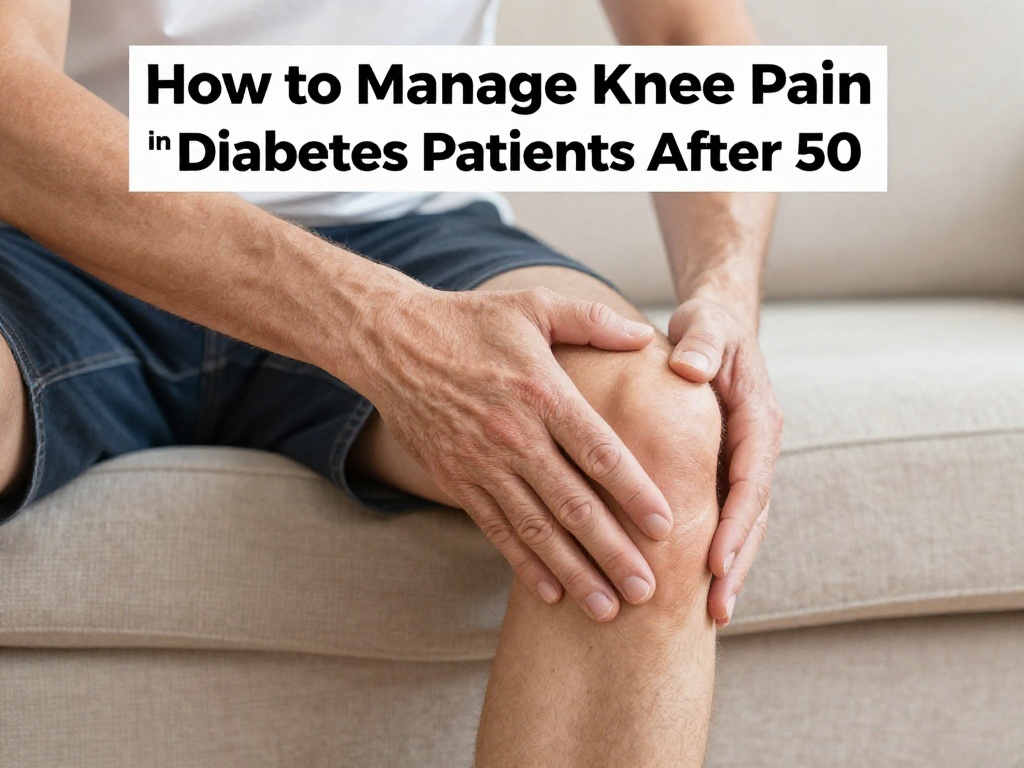

Understanding the Link Between Diabetes, Age, and Knee Pain
*(U.S.-Focused Guide for Type 2 Diabetes & Knee Osteoarthritis)*
For Americans over 50 living with type 2 diabetes, knee pain is a common and challenging issue. Diabetes increases the risk of osteoarthritis (OA) — the wear-and-tear form of arthritis — due to shared risk factors like obesity, systemic inflammation, and metabolic dysfunction. High blood sugar promotes advanced glycation end-products (AGEs) that stiffen cartilage and make joints more vulnerable.
Diabetes also raises the likelihood of bilateral knee pain and greater pain severity in those with OA. Peripheral neuropathy can alter sensation and gait, while poor circulation slows healing. After age 50, natural joint degeneration accelerates, making proactive management essential.
1. Medical Management & When to See a Doctor
Work closely with your healthcare team. Good glycemic control (HbA1c ≤7.0–7.5%) is foundational — it reduces inflammation and may slow joint damage.

- Metformin’s dual benefit: Recent research highlights that metformin (a first-line diabetes drug) may reduce knee OA pain in people with overweight or obesity, beyond its blood sugar effects. If you are not already on metformin, discuss this with your doctor.
- Physical therapy – Core for strengthening peri-articular muscles and improving gait.
- Medications – Acetaminophen first-line; oral NSAIDs (ibuprofen, naproxen) used cautiously due to kidney and cardiovascular risks in diabetes. Topical NSAIDs (e.g., diclofenac gel) are safer.
- Injections – Corticosteroids (temporarily raise glucose for 2–5 days) or hyaluronic acid for short-term relief.
- Surgery – Knee replacement for severe cases, with diabetes control optimized beforehand to reduce infection and healing complications.
Red flags requiring prompt medical attention:
- Sudden severe pain or swelling
- Inability to bear weight
- Fever (possible septic arthritis – diabetes increases infection risk)
- Visible deformity or joint giving way
- Worsening neuropathy symptoms or foot ulcers
2. What to Do: Evidence-Based Strategies
Achieve & Maintain Healthy Weight
Every pound lost reduces knee load by roughly 4 pounds of pressure. A 5–10% weight loss (e.g., 10–20 lbs for a 200 lb person) significantly reduces pain.
- Combine calorie control with low-impact activity.
- Mediterranean or anti-inflammatory diet – rich in vegetables, fatty fish, nuts, whole grains – helps both diabetes and joint inflammation.
Exercise Regularly (Low-Impact)
Strengthen quads, hamstrings, and glutes to stabilize the knee. Aim for 150 min/week of moderate activity.
| Recommended | Avoid |
|---|---|
| Swimming, water aerobics | Running, jumping |
| Stationary cycling (seat high) | Deep squats, lunges |
| Walking on soft grass/track | Stair climbing (if painful) |
| Tai chi, chair yoga | Kickboxing, high-impact aerobics |
Sample strengthening exercises (start without weights):
- Straight leg raises
- Seated hamstring curls
- Side leg lifts
- Shallow wall sits (30 sec)
- Calf raises
Always warm up 5 min. Stop if you feel sharp pain (not just muscle fatigue).
Physical Therapy & Assistive Devices
- PT – designs a personalized program, including gait retraining and taping.
- Knee brace (unloader type for medial OA)
- Walking cane – held in opposite hand reduces joint load by 20–30%.
- Supportive shoes – cushioned insoles, stiff soles (e.g., Hoka, New Balance Fresh Foam).
Blood Sugar & Foot Monitoring
- Keep HbA1c in target range. Pain can worsen with glucose spikes.
- Check feet daily for blisters, redness, or ulcers – neuropathy can mask injury.
RICE for Flares
- Rest (avoid but don’t immobilize completely)
- Ice 15–20 min (for swelling/inflammation)
- Compression (elastic bandage)
- Elevation (above heart)
- Use heat before activity for stiffness (avoid heat if neuropathy – burn risk).
3. What Not to Do: Common Mistakes
| Mistake | Why it harms |
|---|---|
| Ignoring pain or resting excessively | Weakens muscles, worsens stiffness |
| High-impact activities | Accelerates cartilage breakdown |
| Worn-out or unsupportive shoes | Alters gait, increases knee load |
| Long-term high-dose NSAIDs | Kidney damage (diabetes patients at higher risk) |
| Smoking | Impairs circulation and healing |
| Extreme or unmonitored high-intensity exercise | Risk of falls, hyper/hypoglycemia |
| Relying on supplements without guidance | Some interact with diabetes meds (e.g., blood thinners) |
4. Home Remedies for Knee Pain Relief
Safe, low-cost options that complement medical care:
- Heat & cold therapy – Ice for acute swelling (first 48–72 hrs); heat for chronic morning stiffness.
- Anti-inflammatory eating – Fatty fish (omega-3s), berries, leafy greens, turmeric, ginger. Limit added sugars and processed foods.
- Gentle movement – Tai chi improves balance and pain.
- Epsom salt soaks (warm water, 15 min) – magnesium absorption is minimal but soothing.
- Topical capsaicin cream – from chili peppers; test on small area first for burning sensation.
- Elevation & compression during rest.
Consistency matters more than any single remedy.
5. Herbal & Alternative Medicine Approaches
Always discuss with your doctor – herbs can affect blood sugar, blood pressure, or interact with medications (e.g., warfarin, insulin).
| Supplement | Evidence | Caution |
|---|---|---|
| Turmeric/curcumin (500–1000 mg/day with piperine) | Anti-inflammatory; may match some NSAIDs for OA pain | May lower blood sugar; monitor |
| Ginger (tea, capsules) | May ease OA pain and stiffness | Can increase bleeding risk |
| Boswellia (frankincense) | Some evidence for knee OA pain and function | Generally safe short-term |
| Omega-3 (fish oil) (1–2 g/day EPA+DHA) | Reduces inflammation; supports heart health | May affect platelet function |
| Alpha-lipoic acid (600–1200 mg/day) | Evidence for diabetic neuropathy; limited for OA | Monitor glucose (may lower it) |
| Glucosamine/chondroitin | Evidence mixed; not strongly recommended by most guidelines | Safe to try under supervision |
Other modalities:
- Acupuncture – Mixed but promising for knee OA pain; some benefit for diabetic neuropathy. Safe if performed by a licensed practitioner.
- Massage therapy – May reduce pain perception and stress.
- Mindfulness / CBT – Helps with pain catastrophizing and diabetes distress.
6. Sample Daily Routine (U.S. Patient, 55–70 years old)
| Time | Action |
|---|---|
| Morning | Check fasting glucose. Heat pack on knees (10 min). Gentle tai chi or chair stretches. |
| Breakfast | Low-glycemic, high-protein (e.g., Greek yogurt + berries + walnuts). |
| Mid-day | Walk 5–10 min after meals (helps glucose). Seated leg lifts at desk. |
| Afternoon | Stationary cycling (15–20 min) or water aerobics. Apply topical diclofenac if painful. |
| Evening | Balanced dinner (Mediterranean style). Monitor 2-hour post-meal glucose. |
| Bedtime | Ice knees if swollen. Foot check. Use cane for nighttime bathroom trips. |
7. Long-Term Prevention & Empowerment
Managing knee pain as a diabetes patient over 50 requires a multifaceted approach:
- Tight blood sugar control
- Weight management
- Low-impact strengthening exercise
- Medical oversight (including metformin consideration)
- Safe use of medications, supplements, and home remedies
1. Diabetic knee pain treatment
Treatment focuses on blood sugar control + joint protection + strengthening:
First-line: Metformin (may reduce OA pain directly), weight loss (5–10% body weight), physical therapy.
Medications: Acetaminophen; topical diclofenac gel (safer than oral NSAIDs for kidneys).
Injections: Corticosteroids (temporarily raise glucose) or hyaluronic acid.
Avoid: Long-term oral NSAIDs (ibuprofen, naproxen) – risk of kidney injury and heart failure in diabetes.
If pain persists >3 months despite above, consider orthopedics referral for knee brace or surgery evaluation.
2. Leg pain in diabetes treatment
Treating leg pain in diabetes requires first identifying the cause, because different causes need different treatments. If the leg pain is a burning, tingling, electric shock sensation that is worse at night, it is likely peripheral neuropathy.- Neuropathy treatment includes alpha-lipoic acid at six hundred milligrams per day, plus prescription medications such as gabapentin, pregabalin, or duloxetine. Strict glucose control can prevent worsening but rarely reverses established nerve damage. If the leg pain is a cramping pain in the calves or thighs that comes on with walking and goes away with rest, that is likely peripheral artery disease or PAD.
- PAD treatment includes a supervised walking program to build collateral blood vessels, antiplatelet medications like aspirin or clopidogrel, and sometimes stenting or bypass surgery. PAD in a diabetic patient is a serious warning sign and should never be ignored because it raises amputation risk.
- If the leg pain is a deep aching in the knees or thighs that worsens with activity, it is likely musculoskeletal from osteoarthritis or sarcopenia. Treatment then focuses on strengthening exercises, weight loss, and physical therapy. Sudden one-sided leg pain with swelling could be a deep vein thrombosis, which requires immediate medical attention.
3. Diabetic knee pain symptoms
Diabetic knee pain typically presents as a deep, aching sensation that worsens with weight-bearing activities such as walking, climbing stairs, or rising from a chair. Morning stiffness lasting less than thirty minutes that improves with movement is very common. - Many patients notice a grinding, clicking, or crunching sensation inside the knee, known as crepitus. Unlike non-diabetic osteoarthritis, diabetic knee pain is more often bilateral, meaning both knees are affected.
- The pain severity is often greater than what X-rays would predict, meaning diabetics feel more pain for the same amount of joint damage. Swelling may come and go, usually after periods of increased activity. It is important to distinguish this from neuropathic pain.
- Neuropathic pain from diabetes causes burning, tingling, numbness, or electric shock sensations, not the deep aching pain of osteoarthritis. Some patients have both conditions simultaneously, making the pain pattern mixed.
4. Diabetic leg pain home remedy
Several safe home remedies can help diabetic leg pain, but you must always check your feet for blisters or ulcers first because neuropathy can mask injury. A warm Epsom salt bath for fifteen to twenty minutes, two to three times per week, can relax muscles and soothe aching knees. However, if you have peripheral neuropathy, test the water temperature with your elbow, not your hand or foot, because you may not feel excessive heat. For acute swelling after activity, apply a cold pack wrapped in a thin cloth for fifteen minutes every two to three hours. - Gentle stretching performed seated, such as hamstring stretches and quadriceps stretches, held for twenty to thirty seconds without bouncing, helps relieve stiffness. Turmeric tea made with one teaspoon of turmeric powder and a pinch of black pepper in warm milk or water has anti-inflammatory properties but may lower blood sugar, so monitor your glucose.
- Elevating your legs above heart level for fifteen to twenty minutes after being on your feet helps reduce swelling. Topical capsaicin cream, which comes from chili peppers, can be applied to the painful knee but not on broken skin. It may cause a burning sensation initially, which usually fades with regular use. Never use heating pads on numb feet or massage legs with known peripheral artery disease, as this can cause tissue damage.
5. Type 2 diabetes and knee pain
Type 2 diabetes and knee pain are strongly connected. Having type 2 diabetes increases your risk of developing knee osteoarthritis by two to three times, even after accounting for body weight. The reason is that high blood sugar promotes the formation of advanced glycation end products, or AGEs, which stiffen cartilage and make knee joints more vulnerable to wear and tear. Chronic inflammation from diabetes also accelerates cartilage breakdown. - Once a diabetic patient develops knee osteoarthritis, the pain tends to be more severe and the disease progresses faster compared to non-diabetics. Diabetes also increases the likelihood of having bilateral knee pain, meaning both knees hurt. Importantly, this relationship works both ways.
- Aggressively treating diabetes with good glucose control, metformin, and weight loss directly improves knee pain outcomes. Metformin in particular has been shown in recent trials to reduce knee osteoarthritis pain independent of its effect on blood sugar. GLP-1 agonist medications like semaglutide help with weight loss, which is the single most effective non-surgical treatment for knee pain. Therefore, managing your diabetes is not separate from managing your knee pain, it is a direct treatment for it.
6. Diabetes knee pain with swelling
When a diabetic patient over fifty has knee pain with swelling, the cause needs to be determined quickly because some causes are emergencies. The most common cause is an osteoarthritis flare, which presents with gradual onset after increased activity, mild to moderate swelling, no redness, and no fever. - This can be managed with rest, ice, compression, and elevation for one to two days. However, if the knee is hot, red, and tense with swelling, and you have a fever or chills, that could be septic arthritis. Septic arthritis is a medical emergency caused by infection in the joint.
- Diabetes increases the risk significantly. You must go to the emergency room immediately for joint aspiration and intravenous antibiotics. Another possibility is gout or pseudogout, which causes sudden severe pain, redness, and swelling in one knee. Diabetes increases gout risk.
- This requires a doctor visit for joint aspiration to confirm and then anti-inflammatory treatment. A Baker’s cyst causes swelling behind the knee, sometimes with tightness. If it ruptures, it can cause calf swelling and bruising that looks like a blood clot. Ultrasound can distinguish this.
- Finally, Charcot joint is a rare but serious condition in patients with severe peripheral neuropathy. The joint swells dramatically but with surprisingly little pain because the nerves are numb. This requires emergency casting to prevent joint destruction. The rule of thumb is: if the knee is hot, red, and you have a fever, go to the emergency room immediately. If it is just swollen after walking, it is likely an osteoarthritis flare.
7. Can diabetic leg pain be reversed
Whether diabetic leg pain can be reversed depends entirely on what is causing the pain. For leg pain caused by poor blood sugar control leading to acute nerve irritation, there is partial reversibility. If you achieve strict glucose control with an HbA1c below seven percent, you may see significant pain reduction within six to twelve months. However, once peripheral neuropathy has been present for more than two years, the nerve damage is largely permanent and cannot be reversed. - The pain can still be managed with medications like gabapentin, pregabalin, duloxetine, and alpha-lipoic acid, but the underlying nerve damage remains. For leg pain caused by peripheral artery disease, the pain of claudication can be functionally reversed.
- A supervised walking program builds new collateral blood vessels around blockages, so the leg cramping with walking can disappear entirely within three to six months. Severe cases may need stenting or bypass surgery.
- For leg pain caused by sarcopenia, which is age-related muscle loss accelerated by diabetes, this is highly reversible with strength training and adequate protein intake of one point two to one point five grams per kilogram of body weight daily. You can see significant improvement in three to six months. For knee osteoarthritis pain, it cannot be completely cured, but it can be dramatically improved. With weight loss, physical therapy, and joint protection, many patients reduce their pain to near zero without surgery. The key message is to act early. Neuropathy becomes irreversible after about two years, but other causes of leg pain have excellent potential for reversal.
8. Type 2 diabetes symptoms leg pain
Leg pain is not typically a direct symptom of type 2 diabetes itself. Instead, leg pain is usually the first sign of a complication from diabetes that has been present for some time. The pattern of leg pain tells you which complication. - A burning or tingling sensation starting in the feet and moving upward into the legs suggests peripheral neuropathy. This typically begins after several years of elevated blood sugar, though some patients with prediabetes can also develop it.
- A cramping pain in the calves or thighs that comes on with walking and is relieved by rest suggests peripheral artery disease. This often appears after age fifty-five, especially in diabetics who smoke or have high blood pressure. A deep aching pain in the knees that worsens with weight-bearing activity suggests osteoarthritis accelerated by diabetes. Interestingly, knee osteoarthritis may appear even before a person is formally diagnosed with type 2 diabetes.
- A restless, creepy-crawly sensation in the legs that is worse at night and improves with movement suggests restless legs syndrome, which is more common in diabetics. Sharp, electric shock-like pains that come and suddenly go are typical of small fiber neuropathy and can occur even with a normal HbA1c if blood sugar fluctuates widely.
- Most importantly, new-onset leg pain in a person with type 2 diabetes should never be automatically blamed on diabetes. Other causes like deep vein thrombosis, spinal stenosis, or a pinched nerve must be ruled out by a doctor before assuming the pain is from diabetes.
- Key takeaway for Americans: You don’t have to accept severe knee pain as normal aging. Many people achieve significant relief and maintain mobility without surgery by acting early and consistently. Focus on sustainable habits rather than quick fixes. Work with your primary care doctor, endocrinologist, and a physical therapist to build a plan that fits your life.
If knee pain limits your ability to exercise or causes glucose instability, ask for a referral to physical therapy and consider an evaluation by orthopedics if conservative measures fail after 3–6 months.
scientific references:
- Mayo Clinic on diabetes and joint problems.
- WebMD Knee Pain Dos and Don’ts.
- Studies on metformin, exercise, herbs from PubMed/JAMA sources cited inline.
- Healthline home remedies overview.
Consult a qualified healthcare provider for personalized care tailored to your health profile in the USA. Regular monitoring and adjustments are key to success.
Disclaimer: This article is for informational purposes only and is not a substitute for professional medical advice. Knee pain in people with diabetes can have serious underlying causes. Always consult your doctor, endocrinologist, or orthopedic specialist before starting any new treatment, exercise program, supplement, or remedy, especially if you have diabetes. Individual results vary, and some treatments may interact with medications or affect blood sugar levels.