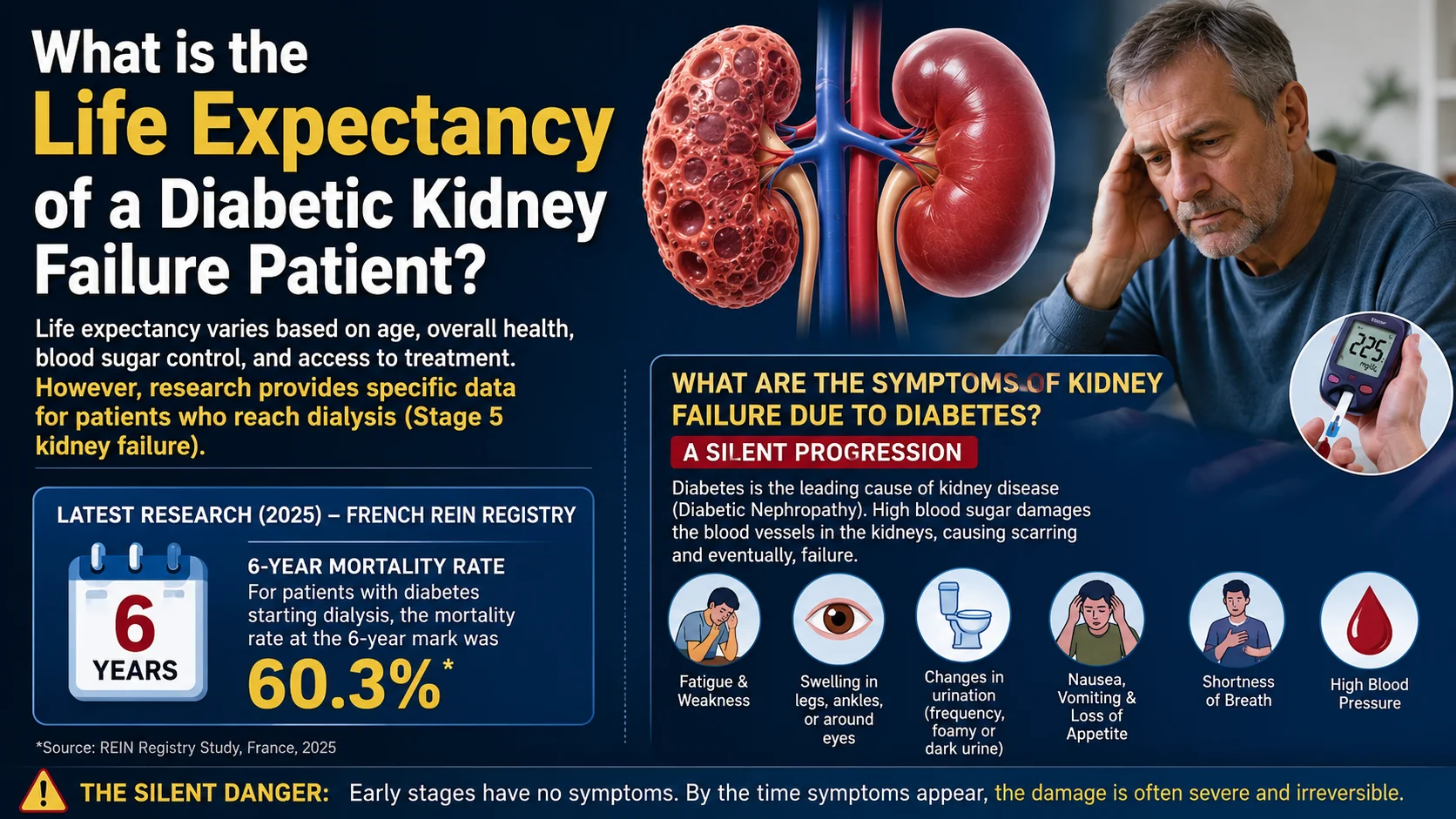

Diabetes is the leading cause of kidney disease, a condition clinically known as Diabetic Nephropathy. For millions living with type 1 or type 2 diabetes, the kidneys are under constant stress as they work to filter excess sugar (glucose) from the blood. Over time, high blood sugar damages the delicate blood vessels inside the kidneys, leading to scarring and eventually, failure.
The most dangerous aspect of diabetic kidney failure is that it is a silent killer. In the early stages, you feel completely normal. By the time physical symptoms appear, the damage is often severe and irreversible.
If you are diabetic, understanding the answer to the question “what are the symptoms of kidney failure due to diabetes” is not just medical knowledge—it is a survival skill.
Here is a breakdown of the symptoms, organized by the stage of disease progression.
Stage 1: The Silent Zone (No Symptoms)
Before we list visible symptoms, it is crucial to understand that early diabetic kidney disease has zero symptoms. During this phase, the kidneys begin to leak small amounts of protein (albumin) into the urine. You cannot see this, and you cannot feel it. The only way to detect it is via a urine test (uACR) ordered by a doctor.
Stage 2-3: The First Warning Signs (Mild to Moderate Damage)
As the kidney function declines to 60-89% (Stage 2) and then 30-59% (Stage 3), the body begins to struggle, though symptoms are still vague. Many patients mistake these for normal aging or stress.
1. Changes in Urination
- Nocturia: Waking up 2 or more times during the night to urinate. This is often the very first functional symptom.
- Foamy or Frothy Urine: This indicates excess protein spilling into the urine. The bubbles look like the foam on a beer and do not flush away easily.
- Color changes: Urine may appear dark, brownish, or contain blood (hematuria).
2. Fatigue and Weakness
Healthy kidneys produce a hormone called erythropoietin (EPO) that tells your bone marrow to make red blood cells. As kidneys fail, EPO drops, leading to anemia. You will feel constantly tired, weak, and dizzy, regardless of how much sleep you get.
3. Swelling (Edema)
This usually starts mildly. You may notice puffiness around your eyes in the morning, or your shoes feel tight by the evening because your kidneys cannot remove excess sodium and water.
Stage 4: Severe Symptoms (Advanced Kidney Failure)
When kidney function drops below 30% (Stage 4), the symptoms become impossible to ignore. At this point, the body is retaining toxins like urea and creatinine.
1. Pronounced Swelling (Edema)
- Swollen ankles, feet, legs, and hands: The fluid retention becomes severe, causing pitting edema (pressing a finger into the skin leaves a dent).
- Shortness of breath: Fluid builds up in the lungs (pulmonary edema), making it hard to lie flat or walk up stairs.
2. Metallic Taste and Halitosis
A classic sign of uremia (toxins in the blood) is a persistent metallic taste in the mouth (like sucking on pennies). This is often accompanied by ammonia-smelling breath (sometimes described as urine-like breath) because the body is trying to excrete urea through saliva.
3. Severe Itching (Pruritus)
Mineral and bone disorders caused by failing kidneys lead to a buildup of phosphorus in the blood. This causes an intense, whole-body itch that lotions cannot fix.
4. Nausea and Vomiting
The buildup of uremic toxins irritates the gastrointestinal tract. You may lose your appetite entirely, feel nauseous after eating, or vomit frequently, leading to rapid weight loss.
5. Neurological Symptoms
- Muscle cramps: Especially in the legs, caused by electrolyte imbalances (calcium and potassium).
- Restless legs syndrome: An uncontrollable urge to move your legs when resting.
- Brain fog: Difficulty concentrating, confusion, or memory lapses.
Stage 5: End-Stage Renal Disease (ESRD)
At Stage 5 (kidney function below 15%), the kidneys are essentially no longer working. Without dialysis or a transplant, this is fatal. Symptoms of ESRD include:
- Complete cessation of urination (anuria).
- Cardiac symptoms: Chest pain, pressure, or irregular heartbeats due to dangerous potassium levels (hyperkalemia).
- Uremic frost: In very late stages, urea crystals from sweat evaporate and leave a white, frosty powder on the skin, face, and eyebrows.
- Coma or seizures: Due to severe toxin buildup affecting the brain.
The Crucial Difference: Diabetes vs. Other Kidney Disease
When answering “what are the symptoms of kidney failure due to diabetes,” note one specific difference: Blood pressure control becomes erratic. Diabetics with kidney failure often develop resistant hypertension (blood pressure that stays high despite 3 or 4 medications) because the kidneys lose the ability to regulate salt and water.
Prevention: Catching it before symptoms start
Since symptoms only appear at Stages 4 and 5, waiting for them is deadly.
If you have diabetes, you must ignore how you feel and rely on labs.
- Annual Microalbumin Urine Test: Detects protein years before symptoms begin.
- eGFR Blood Test: Estimates your filtration rate. A drop from 90 to 60 is a red flag, even if you feel fine.
When to see a doctor immediately
Do not wait for your annual physical if you experience:
- Blood in your urine.
- Sudden, severe swelling in one leg (could be a blood clot).
- Chest pain or difficulty breathing.
- Confusion or loss of consciousness.
FAQS:
1.How does diabetes cause kidney failure?
Diabetes leads to kidney failure through a complex, two-pronged attack on the kidneys’ filtering units (nephrons). Over time, high blood sugar (hyperglycemia) and high blood pressure cause progressive, irreversible damage .
The process involves several key mechanisms:
- Metabolic Damage (High Blood Sugar): Excess glucose in the blood is toxic to the small blood vessels in the kidneys. This “hyperglycemia-induced vascular dysfunction” triggers a cascade of harmful events, including the formation of advanced glycation end-products (AGEs), oxidative stress, and inflammation, which scar the delicate kidney tissue .
- Hemodynamic Damage (High Blood Pressure & Hyperfiltration): Diabetes disrupts the kidneys’ blood flow regulation. The body enters a maladaptive state where the filtering pressure inside the kidneys becomes too high, a condition known as glomerular hyperfiltration . While the kidneys are working overtime, this extra pressure physically damages the filtering membranes, causing them to leak protein (albumin) into the urine. This also activates hormonal systems (like the renin-angiotensin system), which further constricts kidney blood vessels and raises systemic blood pressure, creating a vicious cycle of injury .
The pathological hallmarks of this damage include a thickening of the glomerular basement membrane and an expansion of the mesangium (supporting tissue in the filter), which eventually leads to the kidneys being unable to clean the blood .
2.What are the 4 stages of diabetic kidney disease?
While some classifications use 5 stages, a common clinical model combines the final stages. Based on the Joint Committee on Diabetic Nephropathy 2014 classification, the progression is measured by two key metrics: eGFR (how well the kidneys filter blood) and UACR (urine albumin-to-creatinine ratio, measuring protein leakage) .
Here are the four primary functional stages:
**Note: An eGFR below 60 (even with normal urine) is considered CKD, but doctors will look for other causes besides diabetes .*
3.How to keep kidneys healthy for diabetic patients?
Protecting your kidneys requires a multi-pronged strategy focusing on controlling diabetes and its related risks. The American Diabetes Association emphasizes managing several “pillars” simultaneously: glucose, blood pressure, and the use of specific protective medications .
1. Strict Glucose Control
Keeping your blood sugar levels in a target range (usually defined by an A1C goal set by your doctor) is the most important step to prevent microvascular damage to the kidneys.
2. Manage Blood Pressure
Hypertension is a primary driver of kidney damage. A diet low in sodium (salt) is essential. Doctors often prescribe ACE inhibitors or ARBs specifically because these blood pressure medications have an added protective effect on the kidneys, reducing intraglomerular pressure .
3. Use Kidney-Protective Medications (Newer Therapies)
Beyond traditional drugs, new medications offer significant protection:
- SGLT2 Inhibitors: Originally developed for blood sugar, these drugs are now considered “kidney superstars.” They reduce intraglomerular pressure and have been shown to lower the risk of serious kidney events by 30-40% .
- GLP-1 Receptor Agonists: Known for weight loss and blood sugar control, these drugs also offer significant protection against kidney disease progression .
- Finerenone: A newer type of medicine that helps stop inflammation and fibrosis directly in the kidney .
4. Annual Monitoring
Because early kidney disease has no symptoms, you cannot rely on how you feel. Get tested annually:
- Urine Albumin-to-Creatinine Ratio (UACR): Checks for protein leakage.
- Blood eGFR: Checks filtration rate .
4.What is the life expectancy of a diabetic kidney failure patient?
This is a difficult question, as life expectancy varies significantly based on age, overall health, blood sugar control, and access to treatment. However, research provides specific data regarding survival once a patient reaches the stage of requiring dialysis.
A large 2025 study using the French REIN registry provided up-to-date statistics for patients with Type 2 diabetes starting dialysis (Stage 5 kidney failure) :
- 6-Year Mortality Rate: For patients with diabetes starting dialysis, the mortality rate at the 6-year mark was 60.3% .
- Comparison to Non-Diabetic Kidney Disease: Interestingly, the study found that survival rates on dialysis were similar between patients whose kidney failure was caused by diabetes (DKD) and those whose failure was caused by other diseases. This suggests that having diabetes itself significantly impacts overall health, regardless of why the kidneys failed .
- The Bigger Picture: While a 60% mortality rate at 6 years sounds high, it is important to remember that these patients are typically older and have multiple complex health issues. Life expectancy can be significantly better for those who receive a kidney transplant (though diabetics must meet strict criteria) or those who manage to halt progression before Stage 5.
Important Takeaway: These statistics apply to patients already on dialysis. The goal of early diagnosis and modern medications (SGLT2 inhibitors, etc.) is to prevent ever reaching Stage 5, which can lead to a much longer life expectancy compared to those who progress to kidney failure.
Conclusion
The answer to “what are the symptoms of kidney failure due to diabetes” changes depending on the stage. Early on, there are none. Later, look for foamy urine, night-time urination, fatigue, swelling, and a metallic taste.
If you have diabetes, do not rely on symptoms to tell you your kidneys are failing. By the time you feel sick, you are likely facing dialysis. Request a urine albumin test today—your future self will thank you.
Disclaimer: This article is for informational purposes only and does not constitute medical advice. Always consult your endocrinologist or nephrologist for diagnosis and treatment.