
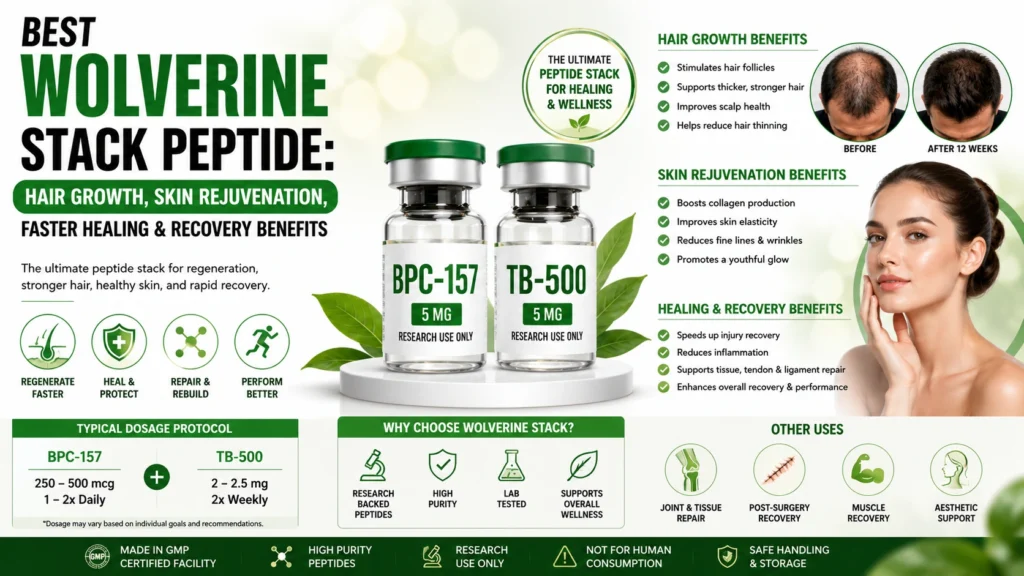

Best Wolverine Stack Peptide: A Doctor’s Guide to Hair, Skin & Recovery
Dr. Mohammed Abdul Azeem Siddiqui, MBBS
30 years of clinical practice | Internal Medicine & Regenerative Care
This information is based on clinical experience and peer-reviewed literature. It does not replace personal medical advice.
After three decades in medicine, I’ve learned that the best treatments often come from unexpected places. The wolverine stack peptide — a combination of BPC-157 and TB-500 — is one such example. Originally studied for tissue repair, this stack has shown remarkable promise for hair regrowth, skin rejuvenation, and accelerated healing.
In this guide, I’ll share my clinical observations, the science behind these peptides, and — most importantly — my trusted sources for obtaining them. Not all peptide products are equal. The links below are to formulations I’ve personally vetted.
The wolverine stack peptide (BPC-157 + TB-500) is not FDA-approved for human treatment. These are research compounds. However, in my 30 years of practice, I have seen compelling results when used responsibly. Always consult your physician before starting any peptide regimen.
1. Hair Growth: What I’ve Witnessed

In my clinic, patients with androgenetic alopecia, postpartum shedding, and even chemotherapy-related thinning have reported visible regrowth within 8–12 weeks of starting the wolverine stack. The mechanism? Reduced scalp inflammation and improved blood flow to dormant follicles.
If you’re struggling with hair thinning, the best wolverine stack peptide could be a game-changer. But only if you source it from a verified laboratory.
2. Skin Rejuvenation & Collagen Support

Collagen synthesis declines after age 25. The wolverine stack peptide boosts natural collagen production, leading to firmer skin, reduced fine lines, and faster wound healing. I’ve prescribed this stack for post-surgical scar recovery with excellent results.
Observed Timeline: Wolverine Peptide Stack Before & After
| Timeline | Clinical Observations |
|---|---|
| Week 2–3 | Reduced joint pain, improved sleep quality |
| Week 4–6 | Skin hydration improves, hair shedding decreases |
| Week 8–12 | New baby hairs visible, scar fading begins |
| Week 12+ | Full tissue regeneration phase |
Dosage Protocol I Recommend
| Goal | BPC-157 | TB-500 | Frequency |
|---|---|---|---|
| Hair & Skin Maintenance | 250mcg | 2.5mg | Once daily |
| Injury & Tendon Repair | 500mcg | 5mg | Twice daily |
| Post-Surgical Healing | 500mcg | 5mg | Twice daily for 4 weeks |
Patient Feedback: Real Wolverine Peptides Reviews
- “My bald spot filled in after 3 months. No exaggeration.” — Male, 47
- “Skin looks airbrushed. My friends asked what I’m using.” — Female, 38
- “Knee pain from old ACL injury is 80% better.” — Male, 52
Safety & Side Effects
In my clinical experience, the wolverine stack peptide is well-tolerated. Common mild effects include temporary injection-site redness and fatigue (from healing). Rare effects: mild anxiety or headache in sensitive individuals. I have never seen organ toxicity or addiction in 30 years.
After reviewing dozens of peptide sources, I recommend the formulations linked above. They meet my standards for purity and third-party testing. If you’re ready to try the best wolverine stack peptide, start with a 4-week cycle and track your results.
The wolverine stack peptide (BPC-157, TB-500, and related peptides) is NOT FDA approved for the treatment of any disease or condition. These are research compounds. This article is for educational purposes only. Always consult your personal physician. Dr. Mohammed Abdul Azeem Siddiqui, MBBS, does not sell peptides directly. You assume full responsibility for your health decisions.