
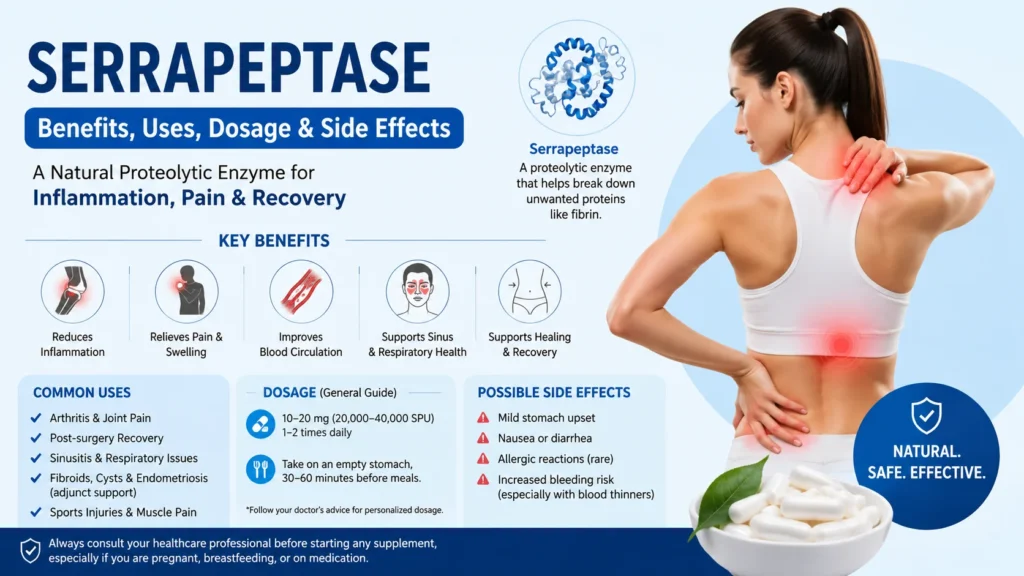

- TL;DR
- Introduction
- What Is Serrapeptase?
- Science-Backed Alternative: EGCG
- How Long Does It Take?
- How Much Should You Take?
- Can Serrapeptase Shrink Fibroids?
- Does It Break Down Fibrosis?
- Can It Unblock Fallopian Tubes?
- Signs It Is Working
- How Long Does It Stay in Your System?
- When to Avoid
- Is It Anti-Inflammatory?
- Endometriosis, Cysts & More
- Side Effects & Safety
- Semantic FAQs
- Disclaimer & Disclosure
TL;DR
How long does it take serrapeptase to dissolve fibroids? Based on user reports and anecdotal evidence, most women see noticeable results within 3 to 6 months of consistent use. Some report improvements as early as 30 days, while others may need up to a year for significant shrinkage.
The typical serrapeptase dosage for fibroids ranges from 10 mg to 60 mg daily (20,000–120,000 SU), taken on an empty stomach for optimal absorption. Serrapeptase works as a natural anti-inflammatory enzyme that breaks down non-living tissue, including fibrosis, scar tissue, and fibrous cysts.
Important: Serrapeptase is not FDA-approved for treating fibroids, and there is limited clinical research supporting its use for this purpose. Always consult your healthcare provider before starting any new supplement, especially if you take blood thinners or have a bleeding disorder.
🌟 “Your body has an incredible ability to heal. Sometimes it just needs the right tools—and the patience to let them work.”
Introduction: Can Serrapeptase Help with Fibroids?
If you’re among the millions of women dealing with uterine fibroids, you’ve likely searched for natural alternatives to surgery. One name that keeps coming up is serrapeptase—a proteolytic enzyme with a growing reputation as a natural anti-inflammatory enzyme that may help dissolve fibroids, scar tissue, and fibrosis.
But the burning question remains: how long does it take serrapeptase to dissolve fibroids? And more importantly, does it actually work?
This article dives deep into the research, user experiences, and expert opinions to give you a clear picture of what to expect. Whether you’re exploring serrapeptase for uterine fibroids, serrapeptase for endometriosis, or serrapeptase for ovarian cysts, this guide covers it all.
💪 “Healing isn’t a race. It’s a journey. Three months, six months, a year—every step forward is a victory.”
What Is Serrapeptase?
Serrapeptase—also known as serratiopeptidase—is a proteolytic enzyme originally derived from bacteria found in the digestive system of silkworms. In nature, it allows the emerging moth to digest and dissolve its cocoon.
In humans, serrapeptase is valued for its ability to break down non-living proteins, including:
- Scar tissue and adhesions
- Fibrous cysts in the breast and uterus
- Blood clots and fibrin deposits
- Inflammatory byproducts
It has been used in Japan and Europe for decades to manage inflammation, pain, and swelling following surgery and injury.
❤️ “You are not your diagnosis. You are the woman who wakes up every day and chooses to fight for her health.”
Science-Backed Alternative: Green Tea Extract (EGCG) for Fibroids
Research suggests green tea extract (EGCG) is the most science-backed herb for shrinking fibroids. Clinical trials show that taking EGCG over several months can significantly reduce fibroid volume while also alleviating symptoms like heavy bleeding.
Unlike serrapeptase, EGCG has direct clinical studies supporting its efficacy for uterine fibroids. Many women choose to combine both enzymes for synergistic support.
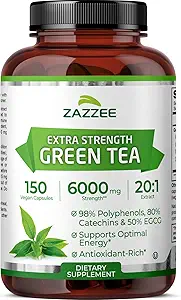 👉 Check EGCG Supplement on Amazon
Disclosure: We may earn a small commission at no extra cost to you.
How Long Does It Take Serrapeptase to Dissolve Fibroids?
This is the million-dollar question. Based on available user reports and anecdotal evidence:
| Timeline | What Users Report |
|---|---|
| 30 days | Some products claim visible shrinkage in as little as 30 days |
| 3 months | Many users report positive changes within three months |
| 4–5 months | One user reported a polyp dissolved entirely within this timeframe |
| 6 months | Commonly cited timeframe for fibroid shrinkage |
| 1 year | Some users need a full year for noticeable results |
“Serrapeptase can and does shrink fibroids, but it usually takes around 6 months of taking it” — Fertility Friends forum user
Why does it take so long? Serrapeptase is a large enzyme molecule that takes time to reach deep tissues. It works gradually by breaking down non-living tissue, and fibroids—being dense, fibrous growths—don’t dissolve overnight.
🌿 “The body knows how to heal. Give it time. Give it support. Give it grace.”
How Much Serrapeptase Should I Take for Fibroids?
The serrapeptase dosage for fibroids varies depending on the source:
| Dosage | Context |
|---|---|
| 10 mg three times daily | Typical adult dose (range 15–60 mg/day) |
| 10 mg to 60 mg daily | General range (20,000–120,000 SU) |
| 80,000 SPU, 2x daily | Recommended for blocked fallopian tubes |
| 120,000 SU once daily | Generally recommended safe dose |
| 240,000 SPU | Some users report better results with higher doses |
Key Dosage Tips
- Take on an empty stomach — at least 2 hours after a meal or 30 minutes before eating
- Use enteric-coated capsules to protect the enzyme from stomach acid
- Start low and go slow — some users report feeling unwell when starting with a high dose
- Consistency is key — daily use over months is essential for results
“The generally recommended safe dose is a single 120,000 SU capsule.”
✨ “Every capsule you take is an act of self-love. Every day you persist is a testament to your strength.”
Can Serrapeptase Shrink Fibroids? What the Evidence Says
The Anecdotal Evidence
Many women report success with serrapeptase for uterine fibroids:
- “Fibroids disappeared” — One user reported that after three months of taking serrapeptase, her doctor found no fibroids at all
- “Significant improvement” — Another user noticed her fibroids had noticeably decreased after a year
- “Shrinking fibroids” — A 2 cm fibroid shrank to 1 cm after three months
The Scientific Reality
There is no strong scientific evidence to suggest that enzyme therapy is an effective or reliable treatment for fibroids. Most clinical research on fibroids focuses on pharmaceutical options like SPRMs or GnRH agonists.
However, serrapeptase does have documented anti-inflammatory, anti-edemic, and fibrinolytic properties, which may explain why some women experience symptom relief.
The Bottom Line
Serrapeptase is not a proven cure for fibroids, but many women use it as a complementary approach. It may help reduce inflammation, pain, and the size of fibroids over time—but results vary widely. For a more science-backed approach, consider the EGCG supplement highlighted above.
🦋 “Like the silkworm that dissolves its cocoon to emerge transformed, your body too has the power to release what no longer serves it.”
Does Serrapeptase Break Down Fibrosis?
Yes, serrapeptase is believed to break down fibrosis. As a proteolytic enzyme, it targets non-living protein tissue, including:
- Fibrous tissue — including fibrous cysts in the breasts and uterus
- Scar tissue — post-surgical adhesions and internal scarring
- Fibrin — the protein involved in blood clotting and scar formation
This makes serrapeptase a popular choice for conditions involving fibrosis, including fibrocystic breast disease, endometriosis, and uterine fibroids.
Can Serrapeptase Unblock Fallopian Tubes?
This is a common question, especially among women struggling with infertility.
The Claim
Some alternative health practitioners suggest that serrapeptase can dissolve scar tissue and adhesions in the fallopian tubes, potentially unblocking fallopian tubes.
The Evidence
There is no proven scientific evidence that serrapeptase can open blocked fallopian tubes. Medical professionals emphasize that:
“Neither are useful: There is no scientific evidence that serratiopeptidase affects any cause of infertility, including scarring in or around the fallopian tubes.”
What About Hydrosalpinx?
Some claim serrapeptase can help with hydrosalpinx (fluid-filled tubes), but again, clinical evidence is lacking.
Recommendation: If you have blocked fallopian tubes, consult a fertility specialist before trying serrapeptase.
🌅 “Healing takes time. But every day you show up for yourself, you’re one day closer to the health you deserve.”
What Are the Signs That Serrapeptase Is Working?
Wondering what are the signs that serrapeptase is working? Here’s what users typically report:
| Sign | Timeline |
|---|---|
| Reduced pain | Within days to weeks |
| Less inflammation | Within weeks |
| Lighter menstrual bleeding | Within 1–3 months |
| Shrinking fibroids | 3–6 months (confirmed by ultrasound) |
| Dissolved polyps | 4–5 months |
“I started feeling better just days after beginning treatment.”
How Long Does Serrapeptase Stay in Your System?
When taken on an empty stomach, proteolytic enzymes circulate in the system for up to 12 hours.
This means:
- Daily dosing is sufficient to maintain therapeutic levels
- Timing matters — taking it on an empty stomach ensures it reaches the intestines where it’s absorbed
When Should You Not Take Serrapeptase?
Is serrapeptase safe for everyone? No. Here’s when you should avoid it:
Absolute Contraindications
- Blood thinners — Serrapeptase may increase bleeding risk when combined with warfarin, aspirin, or other anticoagulants
- Bleeding disorders — May worsen clotting issues
- Pregnancy and breastfeeding — Insufficient safety data
- Surgery — Stop at least 2 weeks before any procedure
Medications to Avoid Combining With
- Blood thinners (warfarin, heparin)
- Antiplatelet drugs (aspirin, clopidogrel)
- High-dose vitamin E
- Garlic, fish oil, turmeric
“Serrapeptase might slow blood clotting. Taking serrapeptase along with medications that also slow blood clotting might increase the risk of bruising and bleeding.”
Is Serrapeptase Anti-Inflammatory?
Yes, serrapeptase is a powerful natural anti-inflammatory enzyme.
Research shows it has:
- Anti-inflammatory effects — reduces inflammatory mediators
- Analgesic (pain-relieving) properties
- Anti-edemic effects — reduces swelling
- Fibrinolytic activity — breaks down fibrin
It has been compared favorably to ibuprofen and corticosteroids for reducing inflammation, with a better safety profile.
Serrapeptase for Endometriosis, Ovarian Cysts, and More
Beyond fibroids, serrapeptase is used for a range of women’s health conditions:
Serrapeptase for Endometriosis
Some women report that serrapeptase helps reduce endometriosis-related pain and inflammation. However, clinical evidence is limited.
Serrapeptase for Ovarian Cysts
Anecdotal reports suggest serrapeptase may help reduce ovarian cysts, but again, scientific evidence is lacking.
Serrapeptase for Fibrocystic Breast Disease
Serrapeptase is sometimes used for fibrocystic breast disease due to its ability to break down fibrous tissue.
Serrapeptase for Joint and Muscle Pain
As a joint pain enzyme and muscle pain supplement, serrapeptase is also used for:
- Osteoarthritis
- Rheumatoid arthritis
- Post-operative swelling
- Sports injuries and tissue repair
Other Uses
- Chronic sinusitis
- Bronchitis
- Blood clots (thrombophlebitis)
Side Effects and Safety Precautions
Common Side Effects
| Side Effect | Frequency |
|---|---|
| Nausea | Common |
| Stomach upset | Common |
| Dizziness | Occasional |
| Skin rash | Occasional |
Serious but Rare Side Effects
- Allergic reactions (wheezing, chest tightness, difficulty breathing)
- Bleeding in individuals with clotting disorders
- Changes in menstrual periods (heavy bleeding, spotting)
Who Should Be Cautious?
- People with bleeding disorders
- Those taking blood-thinning medications
- Individuals with liver or kidney disease
- Pregnant or breastfeeding women
FAQs
A: Based on user reports, most women see noticeable results within 3 to 6 months of consistent use. Some report improvements as early as 30 days, while others may need up to a year. Results vary widely depending on fibroid size, dosage, and individual response.
A: Anecdotal evidence suggests that serrapeptase can shrink fibroids over time. However, there is no strong scientific evidence to confirm this. Serrapeptase is not FDA-approved for treating fibroids.
A: Yes. Serrapeptase is a proteolytic enzyme that breaks down non-living protein tissue, including fibrosis, scar tissue, and fibrous cysts. This is why it’s used for conditions involving fibrosis, such as fibrocystic breast disease and uterine fibroids.
A: Some users report that serrapeptase has helped reduce ovarian cysts and breast cysts. However, clinical evidence is limited, and results are not guaranteed.
A: Typical dosages range from 10 mg to 60 mg daily (20,000–120,000 SU). Some users take 120,000 SU once daily, while others take higher doses like 240,000 SPU. Always start with a lower dose and consult your healthcare provider.
A: There is no proven scientific evidence that serrapeptase can open blocked fallopian tubes. While some alternative practitioners suggest it may help dissolve scar tissue, medical professionals advise against relying on it for infertility treatment.
A: Signs include reduced pain and inflammation (within days to weeks), lighter menstrual bleeding, and shrinking fibroids (confirmed by ultrasound after 3–6 months). Some users also report dissolved polyps after 4–5 months.
A: Yes. Serrapeptase is a powerful natural anti-inflammatory enzyme with documented anti-inflammatory, analgesic, anti-edemic, and fibrinolytic properties.
A: Avoid serrapeptase if you are taking blood thinners (warfarin, aspirin), have a bleeding disorder, are pregnant or breastfeeding, or have scheduled surgery (stop 2 weeks prior).
A: When taken on an empty stomach, serrapeptase circulates in the system for up to 12 hours. Daily dosing is sufficient to maintain therapeutic levels.
A: There is no evidence that serrapeptase directly causes weight loss. Any weight changes would likely be indirect, such as reduced inflammation or improved well-being.
A: Some research suggests serrapeptase may have antibiofilm properties that could enhance antibiotic effectiveness, but it is not considered an antiviral agent.
A: Yes. Serrapeptase is widely used as an enzyme for inflammation and enzyme for swelling, and has been shown to reduce inflammatory mediators and promote tissue repair.
A: Serrapeptase is not a blood thinner per se, but it may interfere with blood clotting. It should not be combined with anticoagulant or antiplatelet medications due to increased bleeding risk.
Disclaimer & Disclosure
Disclaimer: This article is for informational and educational purposes only and does not constitute medical advice. The information provided here is not intended to diagnose, treat, cure, or prevent any disease. Serrapeptase is not FDA-approved for treating fibroids, endometriosis, or any other condition mentioned in this article. Always consult a qualified healthcare professional before starting any new supplement, especially if you are pregnant, nursing, taking medications (particularly blood thinners), or have a medical condition. Individual results vary, and what works for one person may not work for another.
Disclosure: Some links in this article may be affiliate links. If you purchase products through these links, we may earn a small commission at no additional cost to you. We only recommend products we believe in and that align with our commitment to providing evidence-based wellness information.
Remember: Your health journey is uniquely yours. Listen to your body, consult your healthcare provider, and take the steps that feel right for you. You’ve got this.