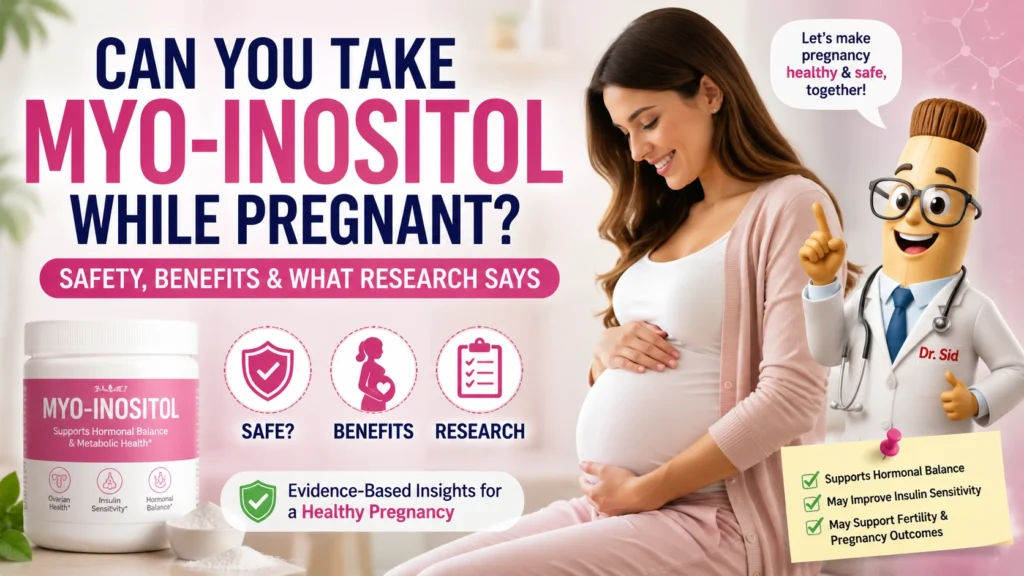

A: Yes, it is generally considered safe and has been studied in pregnant women, primarily for preventing gestational diabetes. However, its effectiveness for certain outcomes remains debated, and you should always discuss it with your OB/GYN first.
A: The evidence is mixed but promising. Some meta‑analyses show a significant reduction in GDM risk—up to 44‑60% in some studies—while other major trials in specific populations (like women with PCOS) have shown no significant benefit.
A: Current research suggests a favorable safety profile for both mother and fetus. It has not been shown to increase the risk of preterm birth, low birth weight, or other major neonatal complications. In fact, some studies even found reduced preterm birth risk.
TL;DR
The Big Question: Can you take myo‑inositol while pregnant? Yes, it is considered safe.
Mixed Evidence: While some large studies show it reduces the risk of gestational diabetes by up to 44%, a major 2025 trial on women with PCOS found it did not reduce major pregnancy complications compared to a placebo.
Bottom Line: It appears safe but may not work for everyone or deliver all the benefits previously hoped for. It is not a magic bullet.
For many expecting mothers, the question isn’t just if they can take a supplement, but if it works and if it’s truly safe. Myo‑inositol—a naturally occurring substance in fruits, beans, and grains—has been marketed as a potential game‑changer for pregnancy health.
But recent headlines have stirred up the conversation. Let’s cut through the noise and explore the science together.
The Promising Role in Managing Blood Sugar
Myo‑inositol is known to act as an insulin sensitizer, helping the body use glucose more efficiently. This makes it a logical candidate for preventing gestational diabetes mellitus (GDM), a condition that affects roughly one in seven pregnancies worldwide.
Several studies support this promise. A recent meta‑analysis found that myo‑inositol supplementation was associated with a 44% reduction in the risk of GDM across 12 randomized controlled trials. Another meta‑analysis echoed these findings, noting a significant reduction in GDM incidence, as well as lower fasting blood glucose levels.
For context, a separate randomized controlled trial showed the incidence of GDM was significantly lower in the MI group (14.9%) compared to the control group (28.5%).
The Complication: Recent Contradictory Evidence
However, a major study published in JAMA in 2025 challenged this narrative. This large, well‑designed randomized trial focused specifically on women with polycystic ovary syndrome (PCOS), a group at particularly high risk for pregnancy complications.
The study found that taking 4 grams of myo‑inositol daily did not reduce the risk of a composite outcome of major pregnancy complications (gestational diabetes, preeclampsia, or preterm birth) compared to a placebo. The primary outcome occurred in 25.0% of the myo‑inositol group and 26.8% of the placebo group—a difference that is statistically insignificant.
This contradictory evidence suggests that the supplement’s effectiveness may depend heavily on the population being studied or that previous, smaller studies may have overestimated its benefits. For now, the consensus is that myo‑inositol should not be recommended as a general strategy to improve obstetric outcomes, especially for those with PCOS.
The Safety Verdict: Is It Safe?
Despite the mixed results on efficacy, the safety profile of myo‑inositol during pregnancy is consistently positive.
- Strong Safety Record: More than 15 years of clinical research supports its safety during pregnancy. It is classified as Generally Recognized as Safe (GRAS) by the FDA.
- No Major Risks: Studies have not linked it to an increased risk of cesarean sections, preterm delivery, or neonatal complications like low blood sugar.
- Side Effects: Some women may experience mild side effects like nausea, flatulence, or diarrhea, though these are often indistinguishable from common pregnancy discomforts.
Frequently Asked Questions
Current evidence suggests it is safe and has been studied from the first trimester onward. However, always confirm with your healthcare provider before starting any new supplement.
Most clinical trials have used a dose of 2 grams twice daily (4 grams total), often in combination with folic acid.
It may interact with medications that affect blood sugar or serotonin activity. Always discuss all your medications and supplements with your doctor.
Disclosure
This article is for informational purposes only and is not a substitute for professional medical advice, diagnosis, or treatment. The author is not a medical professional.
Disclaimer
Always consult with your physician or a qualified healthcare provider before starting, stopping, or changing the dose of any supplement, especially during pregnancy.