
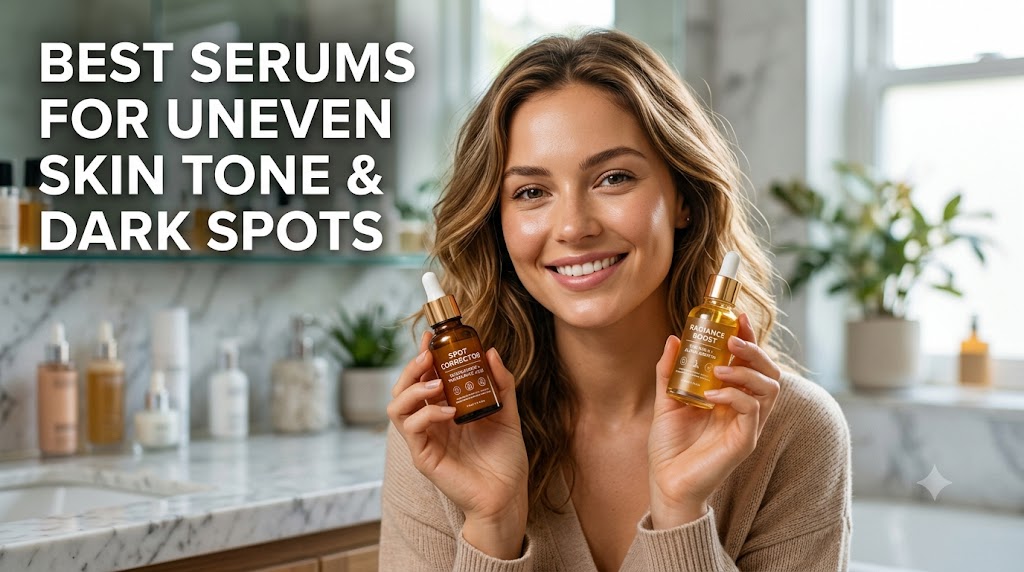

- What causes uneven skin tone? Sun exposure, hormonal changes (melasma), post-acne marks (PIH), and aging are the main culprits behind dark spots and pigmentation.
- What serum ingredients work best? Look for serums with Melasyl™, Niacinamide (Vitamin B3), Tranexamic Acid, Kojic Acid, Vitamin C, and Alpha Arbutin. These ingredients target melanin production at different stages to fade dark spots and even skin tone.
- How fast do serums work? Most people see visible improvement in 2 to 8 weeks of consistent use, with more stubborn spots taking longer to fade.
- What’s the most important step? Daily sunscreen (SPF 30+) is non-negotiable—sun exposure triggers new spots and darkens existing ones, undoing your serum’s work.
🌟 Like what you’re reading? Make this your go-to source!
Click the button below to add this site as a preferred source in eligible Google features.
(Button powered by Google’s official Preferred Sources implementation)
📖 Introduction: The Quest for Even Skin—What Actually Works?
We’ve all been there. You catch your reflection and notice patches of darker skin, stubborn spots that just won’t fade, or an overall dullness that makes your complexion look tired. Uneven skin tone isn’t just a cosmetic concern; it’s a sign that your skin has been through a lot—sun exposure, hormonal shifts, breakouts, or simply the passage of time.
The skincare aisle is overwhelming, and the burning question remains: what serum helps with uneven skin tone? The good news? Science has advanced, and today’s serums are more targeted and effective than ever. But the key is understanding why your skin tone is uneven and which ingredients actually tackle the root cause. This article breaks down the science of pigmentation, identifies the most effective serums, and gives you a roadmap to a clearer, more radiant complexion. Let’s dive in!
🧐 Why Is My Skin Tone Uneven? The Most Common Causes of Dark Spots and Pigmentation
Uneven skin tone boils down to one main culprit: melanin—the pigment that gives our skin, hair, and eyes their color. When certain areas produce too much melanin, you get dark spots or patches. Here’s what triggers that overproduction:
- ☀️ Sun Exposure (The #1 Cause): UV rays stimulate melanin production as a defense mechanism. Over time, this leads to sunspots, age spots, and makes all other forms of pigmentation worse.
- 🤰 Hormonal Changes: Fluctuations in estrogen and progesterone—often from pregnancy, birth control, or hormone therapy—can trigger melasma, which appears as brown or gray-brown patches on the face.
- 💥 Skin Inflammation (Post-Inflammatory Hyperpigmentation – PIH): Acne, eczema, cuts, or even aggressive skincare can leave behind dark marks after the skin heals—this is PIH.
- ⏳ Aging: As we age, melanin-producing cells (melanocytes) decrease in number but increase in size and cluster together, forming age spots. Skin cell turnover also slows, so pigmented cells stick around longer.
“Skin darkening and yellowing are significant concerns associated with aging, influenced by factors such as melanin deposition and dermal glycation.”
🔍 What Causes Uneven Skin Tone? How to Identify the Type of Pigmentation You Have
Not all dark spots are the same. Identifying your type helps you choose the right serum.
| Type of Pigmentation | What It Looks Like | Common Causes |
|---|---|---|
| Sun Spots / Age Spots | Flat, brown, or black spots on sun-exposed areas (face, hands, arms) | Cumulative sun exposure over the years |
| Melasma | Brown or gray-brown patches on cheeks, forehead, nose, upper lip (often symmetrical) | Hormonal changes, sun exposure, genetics |
| Post-Inflammatory Hyperpigmentation (PIH) | Dark marks left behind after acne, cuts, or burns | Inflammation, skin injury |
| Freckles | Small, light brown flat spots, often on cheeks and nose | Genetic predisposition, sun exposure |
🔄 Why Do Dark Spots Keep Coming Back? Understanding Persistent Skin Pigmentation
Ever feel like you’ve faded a spot, only for it to return? You’re not imagining things. Pigmentation can be stubborn and persistent for several reasons:
- Continued Sun Exposure: The biggest culprit. Even a little UV exposure can reactivate melanocytes and darken existing spots.
- Incomplete Treatment: Some serums only target melanin production on the surface. Deeper, more persistent spots require ingredients that work at multiple stages of melanin production.
- Hormonal Fluctuations: Conditions like melasma are chronic and can flare up with hormonal changes, so maintenance is key.
⚖️ Uneven Skin Tone vs. Hyperpigmentation: What’s the Difference and What Actually Helps?
Uneven skin tone is the broad term for skin that’s not uniform in color—it can include hyperpigmentation, hypopigmentation (lighter patches), and redness. Hyperpigmentation is a specific type of uneven skin tone where excess melanin causes darker patches or spots.
What actually helps? A combination approach:
- 🔬 Targeted Serums: Use serums with proven ingredients (more on this below!).
- 🧴 Daily Sunscreen (SPF 30+): This is your #1 defense against new spots and darkening of existing ones.
- 🩺 Consistency: Fading pigmentation takes time. Most serums require 8-12 weeks of consistent use to show significant results.
💡 “Skipping sunscreen while using a brightening serum works against what the product is trying to do.”
👵 Why Does Skin Become More Uneven With Age? The Science Behind Dark Spots
As we age, our skin’s natural renewal process slows down. We shed dead skin cells less efficiently, so pigment accumulates in the upper layers of the skin. Additionally, the melanocytes (pigment-producing cells) that remain become larger and more concentrated, leading to the appearance of age spots. Recent research also highlights that dermal fibroblasts (cells in the deeper layer of skin) play a role in signaling melanocytes to produce more pigment as skin ages, contributing to uneven tone.
✨ So, What Serum Helps with Uneven Skin Tone? Key Ingredients to Look For
Here are the superstar ingredients backed by science. Often, the best serums combine several of these for a multi-action approach.
1. Melasyl™ (A New Breakthrough)
What it does: A multi-patented ingredient that works as a “melanin trapper.” It intercepts excess melanin before it marks the skin, preventing and correcting dark spots. Found in La Roche-Posay Mela B3 Serum (combined with 10% Niacinamide).
2. Niacinamide (Vitamin B3)
What it does: A dermatological powerhouse. At 5% or 10%, it helps visibly fade dark spots, inhibits pigment transfer to the skin’s surface, strengthens the skin barrier, and soothes inflammation. It’s also gentler than some alternatives, making it a great choice for sensitive skin.
3. Tranexamic Acid
What it does: Effective for reducing melanocyte activity, making it particularly good for melasma, UV-induced hyperpigmentation, and PIH.
4. Kojic Acid & Alpha Arbutin
What they do: Both block the enzyme (tyrosinase) responsible for melanin production, stopping new pigment from forming.
5. Vitamin C (and derivatives)
What it does: A potent antioxidant that defends against environmental triggers (like pollution and UV) that cause dark spots while brightening the overall complexion.
6. Retinoids & AHAs (like Glycolic Acid)
What they do: These exfoliants speed up cell turnover, helping shed pigmented cells and revealing fresher, more evenly toned skin underneath.
🛒 Spotlight on Effective Serums
- La Roche-Posay Mela B3 Intense Anti-Dark Spot Serum: Features the new Melasyl™ ingredient + 10% Niacinamide. Targets persistent dark spots, sun spots, and PIH.
- Even Intensive Skin Tone Correcting Serum: Combines multiple brighteners like Niacinamide, Tranexamic Acid, Alpha Arbutin, and Vitamin C, plus AHAs for resurfacing.
- Reviva Labs Dark Spot Brightening Serum: Uses Kojic Acid, Arbutin, Glycolic Acid, 5% Niacinamide, and Vitamin C to attack pigmentation through four distinct pathways.
- Fixderma Epifager Advance Serum: Contains 10% Tranexamic Acid, Kojic Acid, and Alpha Arbutin to combat pigmentation.
This article is for informational purposes only and does not constitute medical advice. Always consult with a qualified dermatologist before starting any new skincare product, especially if you have sensitive skin or underlying conditions. The information provided is based on available research and product descriptions at the time of writing.
📦 Featured Product
💡 Looking for a targeted solution? Skin Even IQ is formulated to support even skin tone from the inside out.

❓ Frequently Asked Questions (FAQs)
While many serums can significantly fade dark spots, “complete removal” depends on the depth and type of pigmentation. Topical serums are highly effective for surface-level and some deeper pigmentation, but persistent cases may require professional treatments like chemical peels or laser therapy.
Most people notice a visible difference within 2 to 8 weeks of consistent, twice-daily use. Stubborn, years-old spots can take 3-4 months or longer to fade significantly.
Yes, but introduce them slowly to avoid irritation. Consider using the serum in the morning and retinol at night, or alternate nights. Always patch-test first.
Absolutely essential. Many brightening ingredients (like AHAs and retinol) increase sun sensitivity. Sun exposure is also the primary trigger for new pigmentation, so skipping SPF will undo your results.
Many serums are formulated for all skin types, but sensitive skin should patch-test and look for soothing ingredients like Niacinamide. Some products, like La Roche-Posay’s Mela B3, are specifically designed to be suitable for sensitive skin.
© 2026 · Skincare Science Hub · Always consult your dermatologist.