
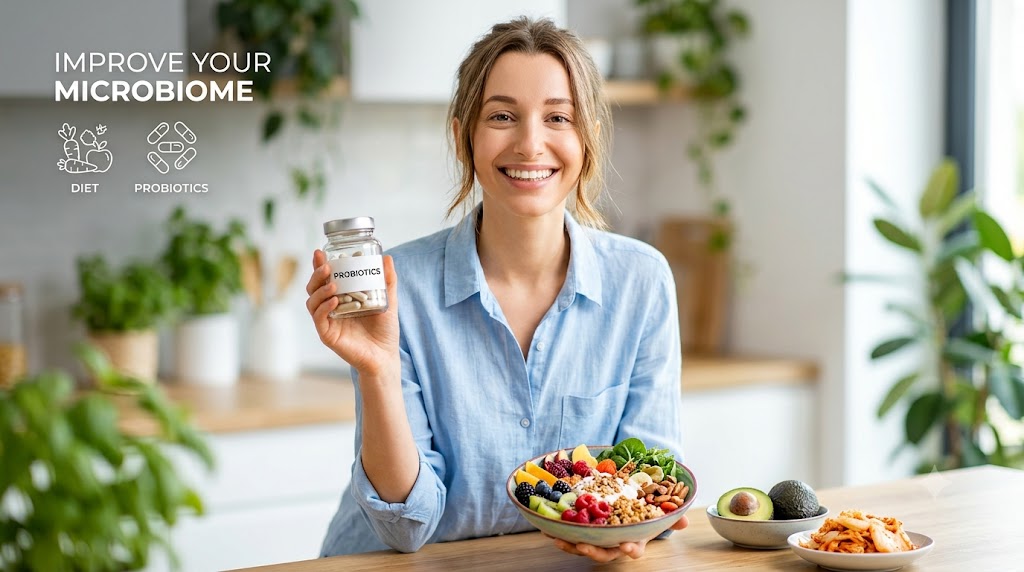

Introduction
Your gut is home to trillions of bacteria, viruses, and fungi—collectively called the gut microbiome. These microbes help digest food, produce vitamins, regulate inflammation, and even influence your mood and immune system.
But here’s the pressing question: Can changing my diet actually improve my microbiome?
The short answer is yes. Diet is one of the most powerful tools you have for shaping the composition and function of your gut bacteria. However, the specifics matter enormously. Not every “gut-friendly” food or supplement delivers on its promises.
This article breaks down what the science actually says about diet and your microbiome—what works, what doesn’t, and how to make practical changes that stick. If you’re struggling with persistent digestive issues, you may also want to explore strategies for how to heal gut dysbiosis naturally, which addresses deeper imbalances.
How Your Diet Shapes Your Gut Microbiome
Your microbiome is remarkably responsive to what you eat. Within days of changing your diet, the composition of your gut bacteria can begin to shift.
Fiber is the primary fuel for beneficial microbes. When you eat fiber-rich foods, your gut bacteria ferment that fiber into short-chain fatty acids (SCFAs) like butyrate, acetate, and propionate. These compounds nourish the cells lining your colon, reduce inflammation, and support metabolic health.
Conversely, diets high in processed foods, sugar, saturated fat, and alcohol promote the growth of less beneficial bacteria and reduce microbial diversity. Over time, this imbalance—called dysbiosis—can contribute to digestive issues, inflammation, and a weakened gut barrier.
A randomized controlled trial published in Nutrients found that simply swapping white bread for high-fiber bread doubled participants’ fiber intake and significantly increased gut bacterial diversity and SCFA-producing capability in just two weeks. That’s a single dietary change producing measurable results.
Key takeaway: Fiber diversity feeds microbial diversity. The more plant varieties you eat, the richer your gut ecosystem becomes.
Best Foods for a Healthier Microbiome
Harvard Health emphasizes that probiotics (beneficial bacteria) and prebiotics (fuel for those bacteria) work best together.
Prebiotic Foods (Feed the Good Bacteria)
These are fiber-rich foods your body can’t fully digest—but your gut bacteria can:
- Vegetables: Asparagus, artichokes, leeks, garlic, onions, sweet potatoes, corn, pumpkin
- Fruits: Bananas, apples, berries
- Grains: Oats, barley, whole wheat
- Legumes: Beans, lentils, peas
Probiotic Foods (Introduce Beneficial Bacteria)
These fermented foods contain live microorganisms:
- Yogurt (look for “live and active cultures”)
- Kefir
- Kimchi
- Kombucha
- Miso
- Tempeh
- Some aged cheeses (Swiss, Gouda, cheddar)
Polyphenol-Rich Foods
Garlic, cinnamon, turmeric, and oregano contain polyphenols that selectively feed beneficial microbes and discourage harmful ones. These flavor enhancers are easy additions to almost any meal.
A Stanford Medicine study found that participants who increased fermented food intake for 10 weeks experienced increased gut bacterial diversity and decreased inflammatory markers. Notably, those with low baseline microbial diversity didn’t benefit from increased fiber alone—they needed the fermented foods to rebuild their ecosystem first.
Practical tip: Aim for 30 different plant foods per week. Variety matters more than quantity.
Do Probiotics Actually Work?
The answer is more nuanced than supplement marketing suggests.
What probiotics can do: A systematic review found that synbiotics (probiotics + prebiotics combined) significantly increased Lactobacillus cell counts and propionate concentrations in healthy adults. In older adults, probiotic supplementation increased Bifidobacterium abundance and the Shannon diversity index.
What probiotics often fail to do: Multiple studies show that probiotic supplements frequently do not improve overall microbial diversity—a key marker of gut health. Some research even suggests that probiotics can delay natural gut recovery after antibiotics by disrupting the recolonization process.
The critical limitation: Most probiotic supplements contain a small number of strains. Your gut contains hundreds of species. Introducing a few foreign strains rarely reshapes the entire ecosystem.
A Stanford study found that participants with low baseline microbial diversity didn’t benefit from increased fiber alone—their fiber-degrading microbes were already depleted. For these individuals, fermented foods were more effective than fiber or supplements at rebuilding diversity.
Bottom line: Probiotics can help in specific contexts (like after antibiotics or for targeted strain benefits), but they’re not a universal fix. Whole foods—especially fermented foods and diverse fibers—are more likely to produce lasting improvements.
Diet Changes That Actually Work
Based on the research, here are the changes with the strongest evidence:
1. Swap Refined Grains for Whole Grains
A randomized trial found that replacing white bread with high-fiber bread significantly increased gut bacterial diversity and butyrate-producing capability. This is one of the simplest, most accessible changes you can make.
2. Add Fermented Foods Daily
Stanford’s research showed that a diet high in fermented foods (6 servings daily) increased microbiome diversity and reduced inflammation. Start with yogurt or kefir, then explore kimchi, kombucha, and tempeh.
3. Eat More Plant Variety
Different fibers feed different bacteria. Aim for 30+ plant foods weekly—vegetables, fruits, legumes, whole grains, nuts, and seeds. The Mediterranean and DASH diets are excellent templates.
4. Include Polyphenol-Rich Herbs and Spices
Garlic, turmeric, cinnamon, and oregano support beneficial microbes while inhibiting harmful ones. These are cheap, accessible additions to any diet.
5. Be Patient and Consistent
Microbiome changes take time. The Stanford study ran 10 weeks. The bread study saw results in 2 weeks. Consistency matters more than intensity.
6. Don’t Rely Solely on Supplements
Probiotic supplements have a role, but they’re not a substitute for a fiber-rich, whole-food diet. If you do supplement, choose products with clinically-studied strains and combine them with prebiotic foods.
Q&A: Common Questions About Diet and Microbiome
Q: How long does it take to change my microbiome through diet?
A: Some changes occur within days, but meaningful shifts in diversity and function typically take 2–10 weeks of consistent dietary change. The bread-swap study saw improvements in 2 weeks; the Stanford fermented food study ran 10 weeks. Patience and consistency are key.
Q: Are probiotic supplements worth it?
A: They can be, but with caveats. Supplements may increase specific beneficial bacteria like Lactobacillus and Bifidobacterium, but often don’t improve overall diversity. They’re most useful after antibiotics or for targeted strain benefits. Whole fermented foods generally provide broader microbial exposure.
Q: What’s the single best food for gut health?
A: There’s no single “best” food—diversity is the goal. However, fermented foods like yogurt, kefir, and kimchi have the strongest evidence for increasing microbial diversity and reducing inflammation when consumed regularly. Pair them with fiber-rich plants for best results.
Q: Can I repair my gut after antibiotics through diet?
A: Yes. Research suggests that whole foods—especially high-fiber plants and fermented foods—support natural recovery better than probiotic supplements, which may actually delay recolonization. Focus on diverse fibers and fermented foods rather than relying on supplements alone.
Q: Do I need to eat fiber if I have digestive issues?
A: Not all fiber works for everyone. If you have conditions like ulcerative colitis and can’t tolerate high fiber, try cooked, blended, or peeled produce, soluble fiber sources (oatmeal, bananas), and resistant starches (cooled potatoes, green bananas). Fermented foods may be better tolerated during flare-ups.
Final Thoughts
Changing your diet can improve your microbiome—but the most effective approach isn’t a pill or a single “superfood.” It’s a pattern: diverse fibers, fermented foods, polyphenol-rich herbs, and consistency over weeks and months.
Probiotic supplements have their place, particularly after antibiotics or for specific strains. But for most people, the path to a healthier gut runs through the grocery store, not the supplement aisle.
Start with one change. Swap your bread. Add yogurt to breakfast. Throw garlic into dinner. Small, consistent shifts compound into meaningful microbial change.
P.S. If you’re dealing with persistent bloating, digestive discomfort, or suspect dysbiosis, don’t ignore it. Addressing gut imbalance early can prevent more serious issues down the road. This guide on healing gut dysbiosis naturally walks through evidence-based strategies for restoring balance.
Medical Disclaimer: This article is for informational purposes only and does not constitute medical advice. The information provided is not a substitute for professional medical advice, diagnosis, or treatment. Always seek the guidance of your physician or other qualified health provider with any questions regarding a medical condition or before making dietary changes. If you have a diagnosed digestive condition or are taking medications, consult your healthcare provider before significantly altering your diet or adding supplements.
Affiliate Disclosure: This article contains affiliate links. If you purchase through these links, we may earn a small commission at no additional cost to you. We only recommend products we believe may be helpful based on available research and quality standards.