
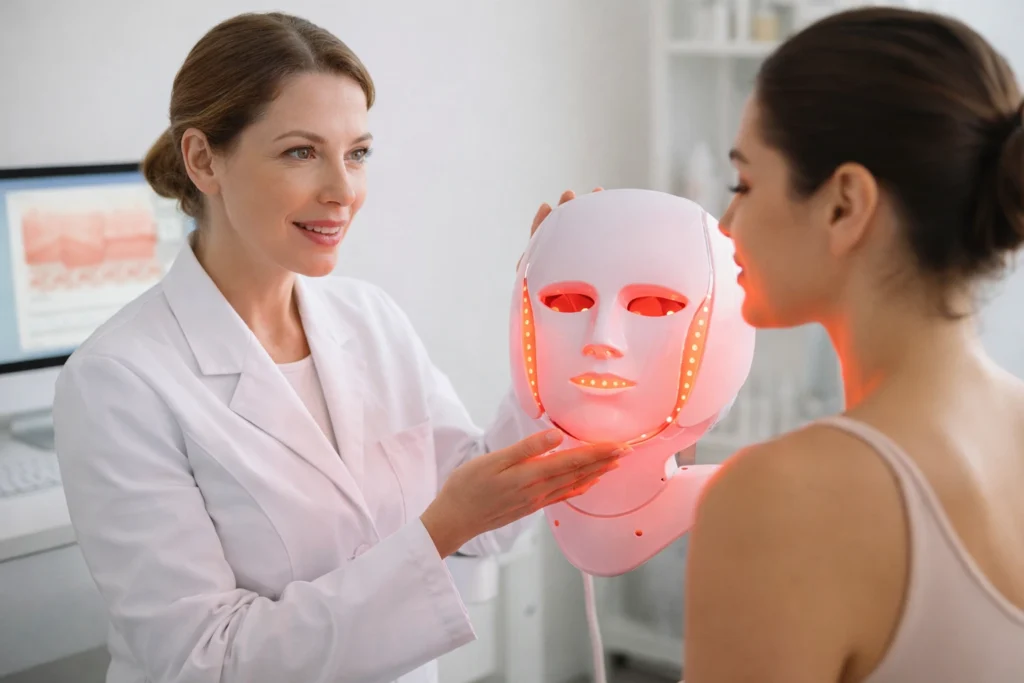

Red light therapy has rapidly emerged as one of the most trusted non-invasive skin treatments in dermatology and aesthetic medicine. From reducing wrinkles to improving skin tone, red light therapy for the face is now widely used in clinics and at-home devices alike.
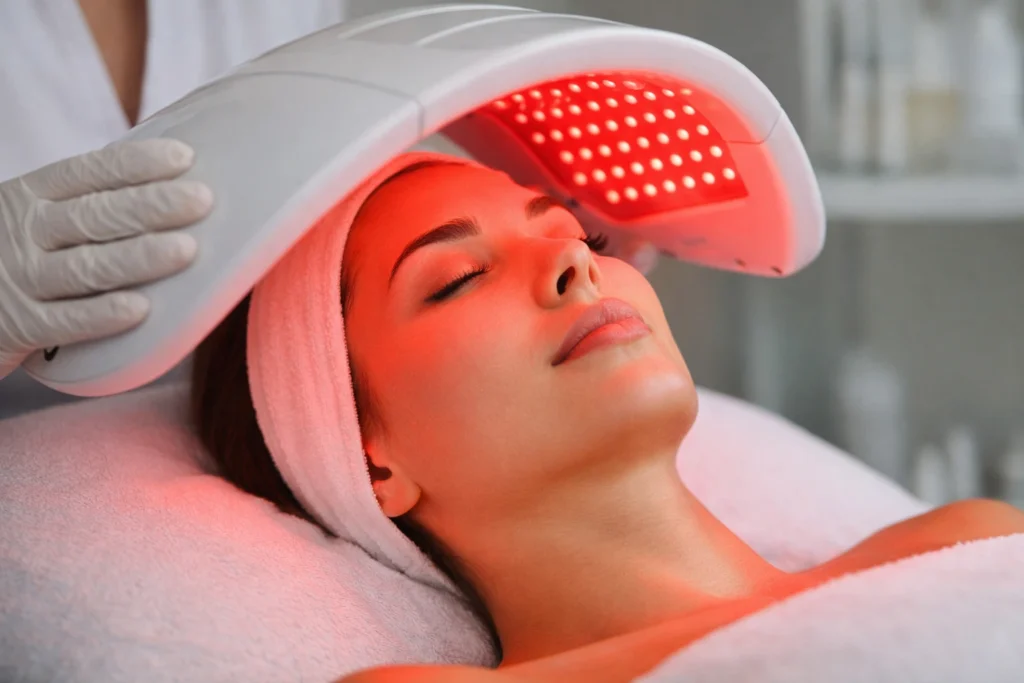
But what exactly does it do to your skin—and is it really worth the hype?
This article explains the proven benefits of red light therapy on the face, how it works, who can benefit most, and what science says about its safety and effectiveness.
What Is Red Light Therapy for the Face?
Red light therapy (RLT), also called low-level light therapy (LLLT) or photobiomodulation, uses specific wavelengths of red and near-infrared light (typically 630–850 nm) to penetrate the skin.
Unlike UV rays, red light does not damage skin cells. Instead, it stimulates cellular repair, boosts collagen production, and improves blood circulation—making it ideal for facial skin rejuvenation.
9 Key Benefits of Red Light Therapy on Face
1. Boosts Collagen and Reduces Wrinkles
One of the most researched benefits of red light therapy for facial skin is increased collagen production. Collagen is essential for firm, youthful skin, and its natural decline leads to wrinkles and sagging.
Regular red light therapy sessions:
- Smooth fine lines
- Improve skin elasticity
- Reduce signs of aging naturally
2. Improves Skin Texture and Tone
Red light therapy enhances cellular turnover and blood flow, resulting in:
- More even skin tone
- Smoother skin texture
- Reduced dullness
It is particularly beneficial for people with uneven pigmentation or tired-looking skin.
3. Helps Reduce Acne and Acne Scars
While blue light kills acne-causing bacteria, red light therapy reduces inflammation and speeds up healing.
Benefits for acne-prone skin include:
- Reduced redness and swelling
- Faster healing of active breakouts
- Gradual fading of acne scars
4. Accelerates Skin Healing and Repair
Red light therapy increases mitochondrial energy (ATP production), allowing skin cells to repair themselves faster.
This makes it effective for:
- Post-procedure recovery
- Minor wounds or skin damage
- Sensitive or compromised skin barriers
5. Reduces Inflammation and Facial Redness
For individuals with rosacea, eczema-prone skin, or chronic redness, red light therapy provides anti-inflammatory benefits without irritation.
It helps:
- Calm sensitive skin
- Reduce facial flushing
- Improve overall skin comfort
6. Enhances Blood Circulation for Natural Glow
Improved microcirculation means better oxygen and nutrient delivery to facial tissues.
The result:
- Healthy, natural glow
- Brighter complexion
- Reduced puffiness
7. Improves Skin Firmness Without Chemicals
Unlike chemical peels or injectables, red light therapy is:
- Non-invasive
- Pain-free
- Free from harsh chemicals
It supports natural skin tightening over time, making it ideal for long-term skin maintenance.
8. Safe for Most Skin Types and Ages
When used correctly, red light therapy is considered safe for all skin tones, including darker skin types that may not tolerate aggressive treatments well.
It is suitable for:
- Men and women
- Sensitive skin
- Preventive anti-aging care
9. Complements Other Skincare Treatments
Red light therapy works well alongside:
- Retinoids
- Vitamin C serums
- Professional facials
It can enhance treatment outcomes by improving skin receptivity and healing.
How Often Should You Use Red Light Therapy on Face?
Most dermatology-backed recommendations suggest:
- 3–5 sessions per week
- 10–20 minutes per session
- Consistent use for 8–12 weeks for visible results
Are There Any Side Effects?
Red light therapy is generally well tolerated. Mild, temporary effects may include:
- Slight warmth
- Temporary redness
Eye protection is recommended when using facial devices.
Expert Insight
Dermatologists increasingly recommend red light therapy as part of a preventive skincare strategy, especially for early signs of aging, inflammation, and post-acne recovery.
Final Verdict: Is Red Light Therapy for Face Worth It?
Yes—when used consistently and correctly, red light therapy offers multiple science-backed benefits for facial skin, including anti-aging, acne control, improved texture, and enhanced skin health without invasive procedures.
It is not an overnight miracle, but a long-term skin investment.
Q1. Does red light therapy really work on the face?
Yes. Clinical studies show it improves collagen production, reduces inflammation, and enhances skin repair.
Q2. Can I use red light therapy on my face every day?
Yes, but most experts recommend 3–5 times per week for optimal results.
Q3. Is red light therapy safe for sensitive skin?
Generally yes, as it is non-thermal and non-invasive.
Q4. How long does it take to see results?
Visible improvements typically appear after 4–8 weeks of consistent use.
Q5. Can kids use red light therapy for eczema?
Safety and effectiveness. Studies show that phototherapy can safely and effectively treat children with eczema.
Q6. Who cannot do red light therapy?
While red light therapy (RLT) is generally safe, certain individuals should avoid or use it with caution:
- Light-sensitive conditions: People with lupus, porphyria, or other photosensitivity disorders.
- Active skin issues: Those with skin cancer, open wounds, or infections.
- Medications: Individuals taking photosensitizing drugs such as certain antibiotics or diuretics.
- Pregnancy: Pregnant women should consult a healthcare professional before use.
- Existing skin or eye conditions: Those with eye disorders or dark skin tones should get professional advice first.
Tip: Always consult a dermatologist or healthcare provider before starting red light therapy to ensure it’s safe for your skin type and health conditions.
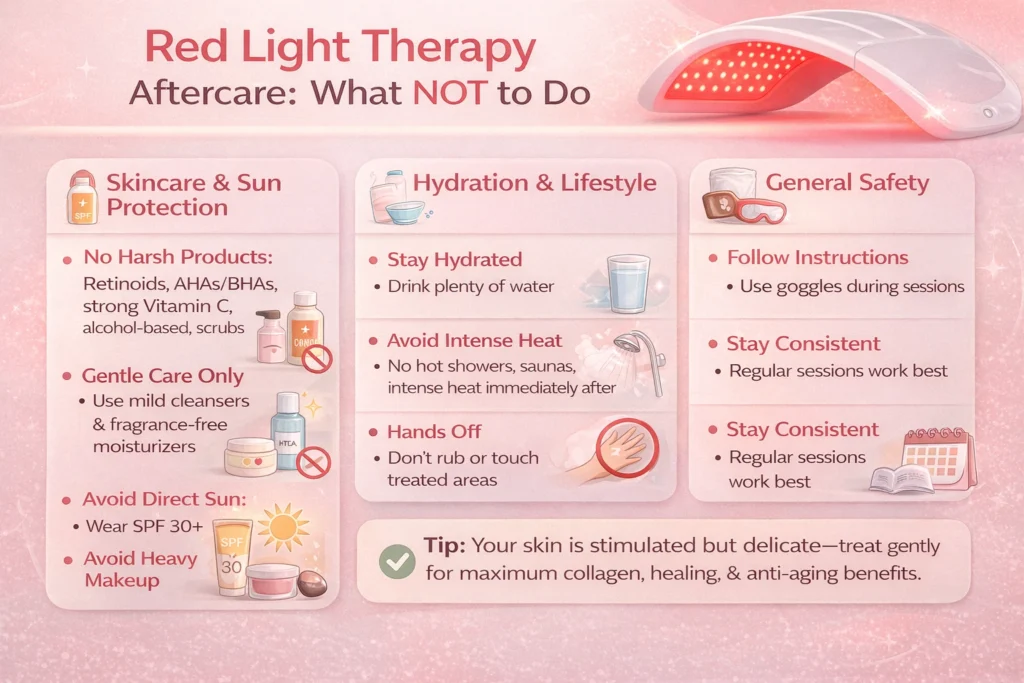
What Not to Do After Red Light Therapy on the Face
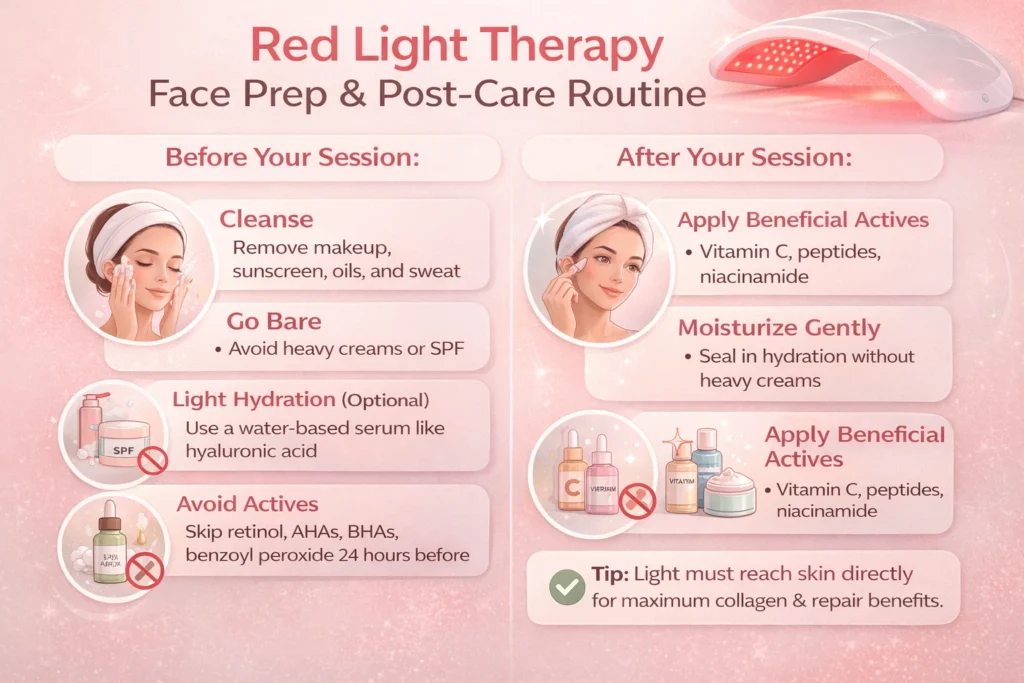
Proper post-treatment care helps your skin heal, absorb benefits, and avoid irritation.
Skincare & Sun Protection
- Avoid Harsh Products: Skip retinoids, AHAs, BHAs, strong vitamin C, alcohol-based products, and exfoliating scrubs for 24–48 hours.
- Gentle Care Only: Use mild cleansers and fragrance-free moisturizers.
- Limit Sun Exposure: Wear broad-spectrum SPF 30+ and avoid direct sunlight, as skin is temporarily more sensitive.
- Let Skin Breathe: Avoid heavy makeup immediately after treatment.
Hydration & Lifestyle
- Stay Hydrated: Drink plenty of water to support skin repair and cellular function.
- Mindful Activity: Exercise is fine, but avoid hot showers, saunas, or intense heat immediately after the session.
- Hands Off: Do not pick, rub, or touch the treated area.
General Safety
- Follow Device Instructions: Always adhere to your red light therapy device guidelines.
- Protect Eyes: Use goggles; never look directly into high-powered lights.
- Consistency Matters: Regular sessions enhance cumulative results.
Tip: Think of your skin as “stimulated but delicate” after RLT—treat it gently for optimal anti-aging, collagen-boosting, and healing benefits.
Disclaimer:
Dr. Mohammed Abdul Azeem Siddiqui, MBBS
Registered Medical Practitioner (Reg. No. 39739)
Dr. Siddiqui is a practicing physician with over 30 years of clinical experience, dedicated to making healthcare affordable, preventive, and accessible. His work focuses on early disease detection, preventive care, and evidence-based, cost-effective treatments. Through his blog, he shares trusted medical insights and practical prevention strategies grounded in decades of hands-on practice.
📧 Contact: powerofprevention@outlook.com
Disclaimer: This content is for educational purposes only and does not replace professional medical advice.