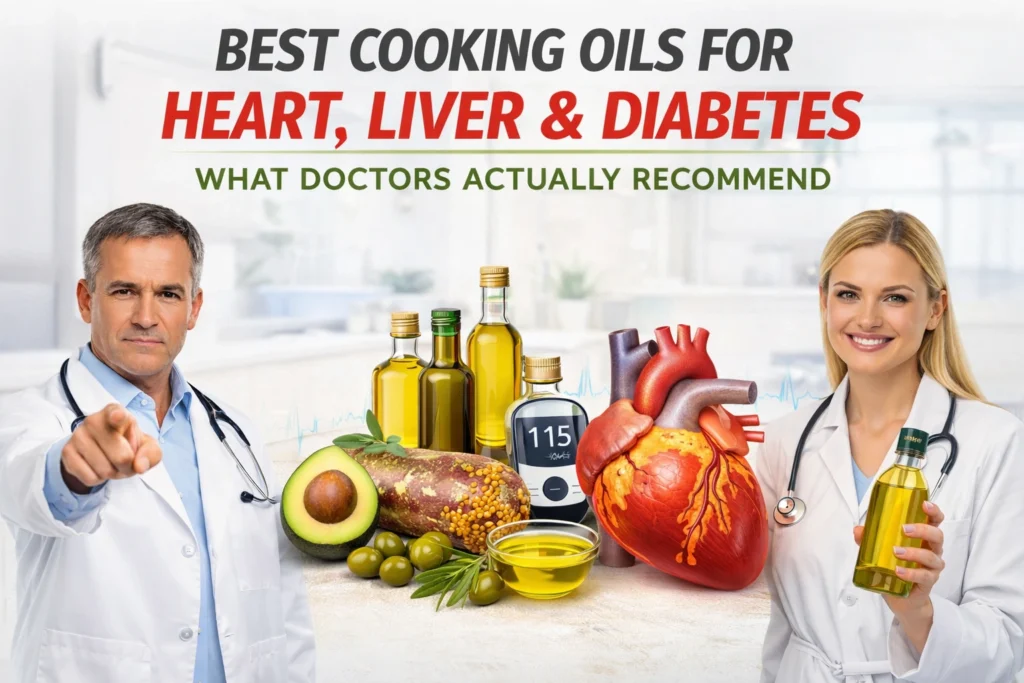
The cooking oil you use every day could raise your risk of heart disease, diabetes, and fatty liver. Doctors reveal which oils protect your heart — and which silently harm it.
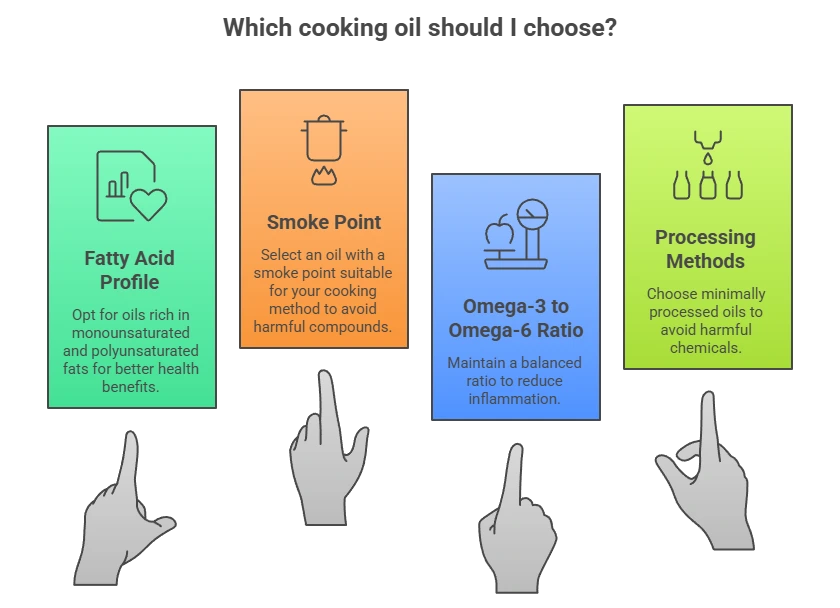
Choosing the right cooking oil is no longer just a culinary preference—it is a medical decision that can influence heart health, diabetes risk, liver function, and even brain health.
Cooking oils are our primary dietary source of fats, providing essential fatty acids and enabling absorption of fat-soluble vitamins A, D, E, and K. However, not all oils behave the same inside the body. Some actively protect blood vessels, while others quietly raise cholesterol, trigger inflammation, and increase chronic disease risk.
The oil you cook with daily can either protect your heart or slowly damage it.
Understanding oil composition, smoke point, and metabolic effects is one of the simplest yet most powerful upgrades you can make to your health.
Classification of Cooking Oils
1. By Source
| Oil Group | Examples | Key Features |
|---|---|---|
| Vegetable Oils | Soybean, sunflower, canola | PUFA-rich, commonly refined |
| Seed Oils | Sesame, flaxseed | High omega-6 or omega-3 |
| Nut Oils | Peanut, almond, walnut | MUFA-rich, flavorful |
| Fruit Oils | Olive, avocado, coconut | Olive & avocado are MUFA-dominant |
| Animal Fats | Ghee, butter, lard | Saturated fat–rich |
2. By Fat Composition
| Fat Type | Oils | Health Effect |
|---|---|---|
| Saturated fats | Coconut, butter, palm | Raise LDL cholesterol |
| Monounsaturated fats (MUFA) | Olive, avocado, peanut | Lower heart disease risk |
| Polyunsaturated fats (PUFA) | Sunflower, soybean | Lower LDL but need balance |
| Trans fats | Hydrogenated oils | Increase heart attack risk |
3. By Smoke Point (Cooking Suitability)
| Heat Level | Oils |
|---|---|
| High heat frying | Avocado, peanut, refined olive |
| Medium heat sautéing | Extra virgin olive, sesame |
| Cold/raw use only | Flaxseed, walnut |
Nutritional Profile of Cooking Oils
All oils provide approximately 120 calories per tablespoon, but their biological effects differ dramatically.
| Nutrient | Health Role |
|---|---|
| MUFA | Improves cholesterol & insulin sensitivity |
| PUFA | Supports heart but excess omega-6 causes inflammation |
| Omega-3 | Anti-inflammatory, brain protective |
| Polyphenols | Powerful antioxidants (especially in olive oil) |
| Vitamin E | Protects blood vessels |
Health Effects of Cooking Oils
1. Heart Health
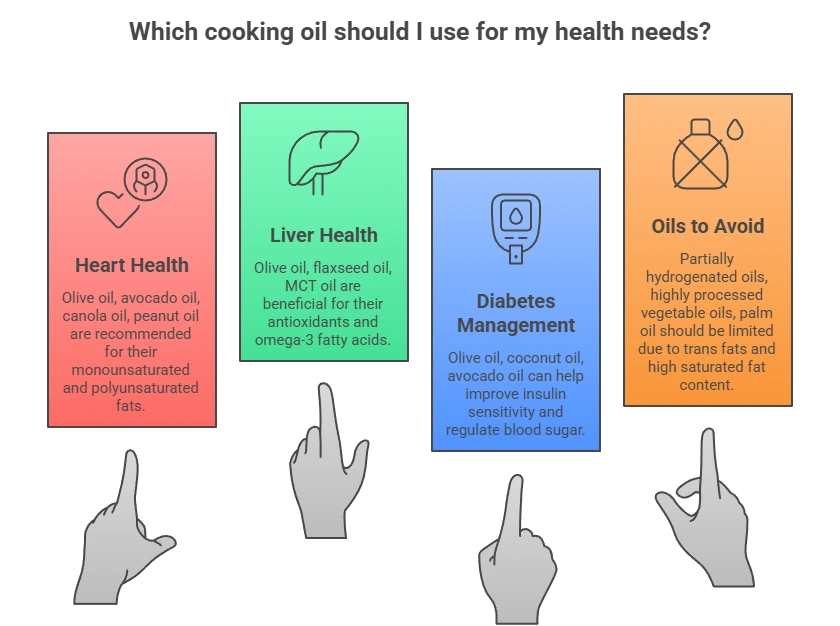
- Replacing saturated fats with olive, canola, and avocado oils reduces heart disease risk by 15–30%.
- Trans fats increase heart attack risk even in small amounts.
- Coconut and palm oil raise LDL cholesterol despite marketing claims.
(AHA, 2022; Harvard School of Public Health)
2. Diabetes & Weight Management
MUFA oils improve insulin sensitivity and reduce post-meal glucose spikes. Mediterranean diet studies consistently show:
- Lower diabetes incidence
- Better weight control
- Reduced abdominal fat
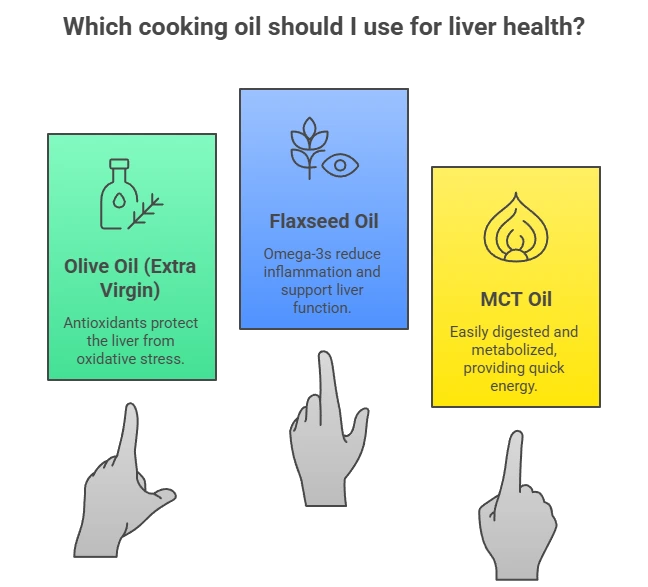
3. Liver & Inflammation
- Olive oil reduces fatty liver infiltration
- Omega-3 oils reduce CRP and inflammatory markers
- Excess omega-6 oils worsen systemic inflammation
4. Risks from Reheated Oils
Repeated frying forms toxic aldehydes and oxidized fats, linked to:
- Atherosclerosis
- Insulin resistance
- Cancer risk (WHO, EFSA)
Culinary Uses & Stability
| Oil | Best Use |
|---|---|
| Olive oil | Salad, sauté, baking |
| Avocado oil | Frying |
| Peanut oil | Deep frying |
| Sesame oil | Flavor finishing |
| Flaxseed oil | Cold use only |
Refined vs Unrefined Oils
| Type | Pros | Cons |
|---|---|---|
| Unrefined | High antioxidants | Lower smoke point |
| Refined | Stable at heat | Fewer nutrients |
Special Considerations
Children
Use olive, canola, sunflower. Avoid hydrogenated fats.
Pregnancy
Use olive oil + omega-3 oils for fetal brain development.
Elderly
Olive oil slows cognitive decline.
Allergies
Avoid peanut and sesame oils if allergic.
Myths vs Facts
| Myth | Reality |
|---|---|
| Coconut oil is heart healthy | Raises LDL significantly |
| Olive oil can’t be heated | Safe up to medium heat |
| All fats are bad | MUFA & omega-3 are protective |
Practical Consumer Tips
- Use olive or avocado oil daily
- Avoid hydrogenated oils completely
- Limit coconut/ghee to occasional use
- Store oils in dark bottles, cool places
- Rotate oils monthly for balance
- Intake guideline: 2–3 tablespoons/day
Cooking oils are not neutral ingredients—they are metabolic regulators.
By choosing olive, avocado, canola, and omega-3 rich oils, limiting saturated fats, and avoiding trans fats, you can significantly reduce your risk of heart disease, diabetes, liver disorders, and inflammation—while improving longevity.
Your oil choice today determines your vascular health tomorrow.
References
- American Heart Association. (2022). Dietary Fats and Cardiovascular Disease.
- Harvard T.H. Chan School of Public Health – Fats and Cholesterol.
- WHO – Trans Fat Replacement Initiative.
- EFSA Journal – Oxidation products in heated oils.
- Estruch R. et al., NEJM (2018). Mediterranean Diet & Cardiovascular Risk.
- Schwingshackl L. et al., BMJ (2021). Fats and Mortality Risk.
The cooking oil you use every day could raise your risk of heart disease, diabetes, and fatty liver. Doctors reveal which oils protect your heart — and which silently harm it.
Q: What is the healthiest cooking oil?
Olive oil and avocado oil are the healthiest daily cooking oils due to their high monounsaturated fat content, antioxidant protection, and strong evidence for reducing heart disease and diabetes risk.
Q: Which cooking oil is best for frying?
Avocado oil, refined olive oil, and peanut oil are best for frying because they have high smoke points and resist oxidation.
Q: Is coconut oil healthy?
Coconut oil raises LDL cholesterol and should be used only occasionally, not as a primary daily cooking oil.
| Question | Short Answer |
|---|---|
| What oil is best for heart health? | Olive, avocado, canola |
| Which oils should be avoided? | Hydrogenated oils, margarine |
| Is olive oil safe for cooking? | Yes, safe up to medium heat |
| Is ghee healthier than oil? | No — ghee is high in saturated fat |
| How much oil should we consume daily? | 2–3 tablespoons |
| Oil | Smoke Point | Fat Type | Best Use | Heart Safety |
|---|---|---|---|---|
| Olive | Medium | MUFA | Sauté, salads | ★★★★★ |
| Avocado | High | MUFA | Frying | ★★★★★ |
| Canola | High | MUFA+PUFA | Frying | ★★★★☆ |
| Coconut | Medium | Saturated | Occasional | ★★☆☆☆ |
| Palm | High | Saturated | Avoid | ★☆☆☆☆ |

Dr. Mohammed Abdul Azeem Siddiqui, MBBS, M.Tech (Biomedical Engineering – VIT, Vellore)
Registered Medical Practitioner – Reg. No. 39739
Physician • Clinical Engineer • Preventive Diagnostics Specialist
Dr. Mohammed Abdul Azeem Siddiqui is a physician–engineer with over 30 years of dedicated clinical and biomedical engineering experience, committed to transforming modern healthcare from late-stage disease treatment to early detection, preventive intelligence, and affordable medical care.
He holds an MBBS degree in Medicine and an M.Tech in Biomedical Engineering from VIT University, Vellore, equipping him with rare dual expertise in clinical medicine, laboratory diagnostics, and medical device engineering. This allows him to translate complex laboratory data into precise, actionable preventive strategies.
Clinical Mission
Dr. Siddiqui’s professional mission centers on three core pillars:
Early Disease Detection
Identifying hidden biomarker abnormalities that signal chronic disease years before symptoms appear — reducing complications, hospitalizations, and long-term disability.
Preventive Healthcare
Guiding individuals and families toward longer, healthier lives through structured screenings, lifestyle intervention frameworks, and predictive diagnostic interpretation.
Affordable Evidence-Based Treatment
Delivering cost-effective, scientifically validated care accessible to people from all socioeconomic backgrounds.
Clinical & Technical Expertise
Across three decades of continuous practice, Dr. Siddiqui has worked extensively with:
Advanced laboratory analyzers and automation platforms
• Cardiac, metabolic, renal, hepatic, endocrine, and inflammatory biomarker systems
• Preventive screening and early organ damage detection frameworks
• Clinical escalation pathways and diagnostic decision-support models
• Medical device validation, calibration, compliance, and patient safety standards
He is recognized for identifying subclinical biomarker shifts that predict cardiovascular disease, diabetes, fatty liver, kidney disease, autoimmune inflammation, neurodegeneration, and accelerated biological aging long before conventional diagnosis.
Role at IntelliNewz
At IntelliNewz, Dr. Siddiqui serves as Founder, Chief Medical Editor, and Lead Clinical Validator. Every article published is:
Evidence-based
• Clinically verified
• Technology-grounded
• Free from commercial bias
• Designed for real-world patient and physician decision-making
Through his writing, Dr. Siddiqui shares practical health intelligence, early warning signs, and preventive strategies that readers can trust — grounded in decades of frontline medical practice.
Contact:
powerofprevention@outlook.com
📌 Disclaimer: The content on IntelliNewz is intended for educational purposes only and does not replace personalized medical consultation. For individual health concerns, please consult your physician.