
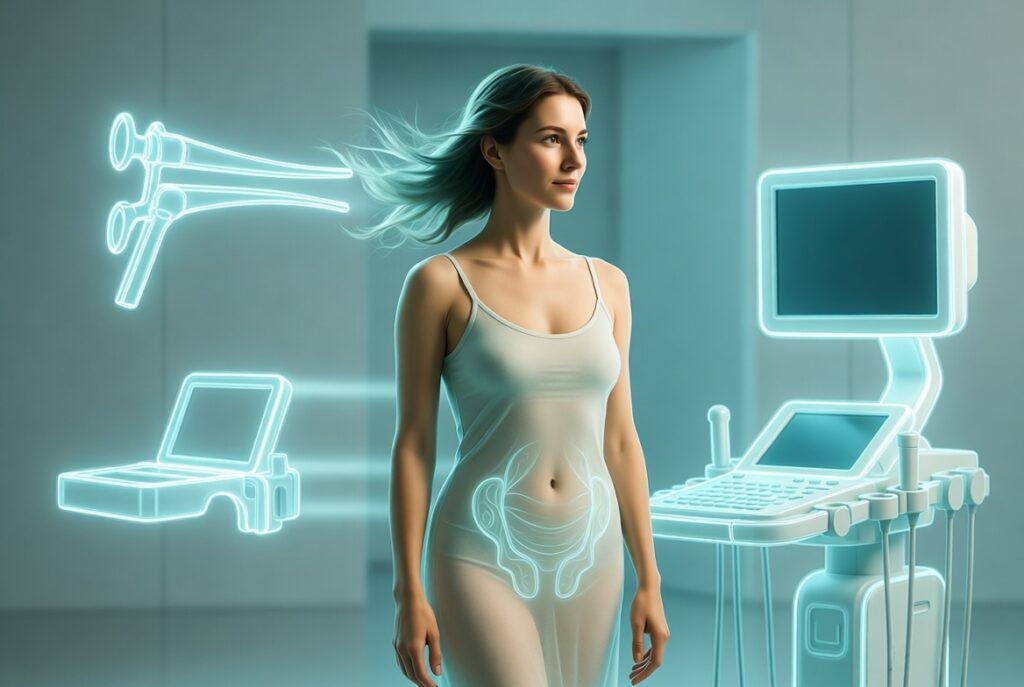

Pelvic floor disorders (PFDs)—including urinary incontinence, pelvic organ prolapse, fecal incontinence, and obstructive defecation—affect nearly one-quarter of women in Western countries . For years, the diagnostic journey has been invasive, uncomfortable, and often embarrassing: digital palpation (a gloved finger exam), catheter-based urodynamics, or X-ray defecography.
But the landscape is changing rapidly. A new generation of non-invasive tests is empowering women to assess their pelvic health from the comfort of home or through painless imaging techniques. From wearable biofeedback devices that gamify Kegel exercises to advanced ultrasound and MRI protocols that visualize muscle function in real-time, the options for diagnosis and monitoring have never been more accessible.
This article explores the full spectrum of non-invasive pelvic floor tests available to USA consumers—from clinical imaging to at-home consumer devices—with affiliate links to purchase relevant products on Amazon.
Part 1: The Clinical Gold Standards (Non-Invasive Imaging)
Before we dive into at-home devices, it is important to understand what “non-invasive” means in a clinical setting. These tests require no needles, no catheters, and no internal cameras.
1. Transperineal Ultrasound (TPUS)
What it is: A handheld ultrasound probe placed on the perineum (the skin between the vagina and anus). Unlike a transvaginal ultrasound, nothing enters the body.
What it measures: Pelvic floor muscle contraction quality, bladder neck movement, levator hiatus area (the opening through which organs can prolapse), and pelvic organ descent .
Why it is revolutionary: A 2025 study published in Acta Obstetricia et Gynecologica Scandinavica compared TPUS to traditional digital palpation in 442 women. The results were striking:
- TPUS showed high inter-rater reliability (ICC = 0.92) , meaning different clinicians get the same result.
- Digital palpation showed only moderate agreement (Cohen’s kappa = 0.55) , meaning it is highly subjective .
Key cut-off values for clinical interpretation:
- Proximal urethral axis angle change <9.5° → Absent contraction
- Proximal urethral axis angle change >16.5° → Strong contraction
Clinical availability: TPUS is available at major urology and gynecology centers, often covered by insurance when medically indicated.
2. MRI Defecography
What it is: A dynamic MRI that images the pelvis while the patient rests, contracts pelvic muscles, strains, and eventually evacuates a ultrasound gel (simulating a bowel movement) .
What it measures: Anorectal angle, pubococcygeal line, H and M lines, minimal prolapse level, and levator plate angle. It can detect cystoceles (bladder prolapse), rectoceles (rectal prolapse into the vagina), enteroceles (small bowel prolapse), and intussusception .
Why it is superior: Unlike physical exam (POP-Q), MRI defecography visualizes all three pelvic compartments simultaneously and detects multicompartmental prolapse that might be missed on examination .
When it is used: Particularly valuable when there is a discrepancy between a patient’s symptoms and physical exam findings, or in complex postoperative cases.
3. Total Pelvic Floor Ultrasound (TPFUS)
What it is: An integrated ultrasound approach combining transperineal, endoanal, and transvaginal views.
How it compares to defecation proctography (the current gold standard): A 2025 prospective study of 216 patients found that TPFUS has a positive predictive value of 85% for rectoceles, making it an effective screening tool for defecatory dysfunction. While not yet a complete replacement for proctography, it is far less invasive and can guide surgical planning .
Part 2: At-Home Biofeedback Devices (Wearable & Insertable)
This is where technology meets convenience. These consumer devices allow women to assess and strengthen their pelvic floor muscles at home, with real-time visual feedback via smartphone apps.
1. Elvie Pelvic Floor Trainer
Best for: Tech-savvy women who want gamified, data-driven pelvic floor exercises.
The Elvie is a medical-grade silicone insertable device that connects via Bluetooth to a smartphone app. Using patented motion-sensor technology, it detects contraction strength, speed, and endurance in real-time .
Key features:
- Biofeedback games: A crystal ball moves on screen as you contract; the goal is to keep it above a line or hit moving targets.
- Incorrect contraction detection: The device alerts you if you are pushing down instead of lifting up (a common and potentially harmful error).
- Six exercises: Strength, Pulse, Lift, Hold, Speed, and Step, spread across four difficulty levels.
- Progress tracking: The app provides scores out of 100% and graphs your improvement over weeks .
Clinical evidence: A recent study noted that 30% of women perform Kegel exercises incorrectly when using only verbal instructions. Biofeedback devices like Elvie address this gap .
User experience: One postpartum reviewer noted: “After a vaginal birth with my second child, I suffered with incontinence. After 6-7 weeks using Elvie, I am able to run again without the feeling of gushing from my vagina” .
Price point: Premium (typically $119–$199).
2. Perifit Care+
Best for: Women wanting the most accurate dual-sensor technology with engaging games.
Perifit+ uses patented dual pressure sensors to measure both the strength and precision of pelvic floor contractions. It connects to an app with interactive games where you control characters, pop balloons, or navigate mazes using only your pelvic floor muscles .
Key features:
- 5D analysis system: Measures strength, endurance, precision, contraction quality, and speed.
- 7 customized programs: Tailored to specific needs (postnatal recovery, incontinence, general strengthening).
- Real-time visual feedback: See exactly how well you are contracting during each exercise.
- CE Class 1 certified medical device: Recommended by over 1,000 healthcare professionals worldwide .
Why it stands out: The dual-sensor technology claims to be the most accurate on the market, detecting even subtle differences between correct lifting and incorrect bearing down.
Price point: Mid-range.
3. TensCare Liberty Mini Probe
Best for: Women who already own a TENS/EMS unit and want a budget-friendly option.
This is a passive probe—it does not have its own electronics. Instead, it connects to a compatible TENS or muscle stimulator device (like the TensCare Elise or iTouch Sure). The probe delivers gentle electrical stimulation to contract the pelvic floor muscles passively .
Key features:
- Smaller diameter (25mm): Designed for comfort, especially for women who find standard probes too large.
- Reusable for up to six months: Single-patient use.
- Budget-friendly: Typically under $25.
Limitations: This is a probe only; you must purchase a stimulator device separately. It does not provide biofeedback (visual feedback of your contraction quality)—only stimulation.
Best for: Women with very weak pelvic floors who cannot contract voluntarily at all, as the electrical stimulation triggers the contraction for you.
Part 3: Vaginal Microbiome Tests (At-Home Lab Analysis)
While not a direct test of muscle function, the vaginal microbiome plays a critical role in pelvic health. Imbalances in Lactobacillus bacteria are linked to recurrent infections, fertility challenges, and even pelvic discomfort.
At-Home Vaginal Microbiome Test Kits
These kits allow you to swab yourself at home and mail the sample to a CLIA-certified lab for DNA sequencing.
What they measure:
- Percentage of Lactobacillus species (the “good” bacteria that maintain acidic pH)
- Presence of BV-associated bacteria (Gardnerella, Atopobium)
- Overall vaginal community state type (CST)
Why this matters for pelvic floor health: Recurrent bacterial vaginosis or yeast infections can cause chronic inflammation, pelvic pain, and discomfort during intercourse—all of which can be mistaken for or exacerbate pelvic floor dysfunction.
What these tests cost: Typically $80–$200, not covered by insurance.
Popular brands (available via Amazon affiliate links below):
- Evvy Vaginal Microbiome Test (most comprehensive, uses metagenomic sequencing)
- Thorne Vaginal Health Test (qPCR-based, integrates with broader health platform)
- Juno Bio (research-grade 16S sequencing)
- Search Link: Click here to browse at-home vaginal microbiome test kits on Amazon
Part 4: At-Home UTI & pH Tests
Urinary tract infections (UTIs) and abnormal vaginal pH are often confused with pelvic floor dysfunction. These at-home tests help you distinguish between the two.
Urinary Tract Infection (UTI) Test Strips
These dipstick tests detect nitrites (specific to E. coli bacteria) and leukocytes (white blood cells indicating infection). They are available over-the-counter and provide results in 2 minutes.
When to use: If you have burning with urination, urgency, or frequency—symptoms that overlap with pelvic floor disorders but require antibiotics if infectious.
- Search Link: Click here for at-home UTI test kits on Amazon
Vaginal pH Test Strips
Normal vaginal pH is 3.8–4.5. A pH above 4.5 suggests bacterial vaginosis or trichomoniasis rather than a yeast infection (which usually has normal pH).
- Search Link: Click here for vaginal pH test strips on Amazon
Part 5: How to Choose the Right Test for You
| If your primary symptom is… | Recommended non-invasive test | Where to get it |
|---|---|---|
| Urine leakage with coughing/sneezing | Transperineal ultrasound (TPUS) or Elvie/Perifit trainer | Urology clinic or at-home device |
| Pelvic pressure or “something falling out” | MRI defecography or TPUS | Radiology/gynecology clinic |
| Constipation or incomplete emptying | Total pelvic floor ultrasound (TPFUS) or defecography | Specialized pelvic floor center |
| You don’t know if you are doing Kegels correctly | Elvie or Perifit (biofeedback device) | Amazon (see links above) |
| Recurrent yeast/BV infections | Vaginal microbiome test | At-home kit (mail-in) |
| Burning with urination | UTI test strips | Pharmacy or Amazon |
The Future: Ultrasound as Biofeedback
An exciting clinical trial currently underway (NCT07065708) is investigating whether transperineal ultrasound can be used as a visual biofeedback tool for postpartum women. In the study, women in the intervention group watch their own pelvic floor muscles move on the ultrasound screen in real-time, allowing them to see exactly what a correct contraction looks like .
The hypothesis: Visual feedback will produce more effective pelvic floor muscle training than verbal instructions alone. If proven, this could become a standard part of postpartum care.
Non-invasive tests are powerful tools, but they are not a substitute for professional medical advice. If you have pelvic pain, blood in your urine, fever, or sudden inability to empty your bladder or bowels, seek immediate medical attention. Always discuss test results with a qualified healthcare provider.
This article contains affiliate links. As an Amazon Associate, the author may earn a commission from qualifying purchases at no additional cost to you.
Summary Table: At-Home Products at a Glance
| Product | Type | Best For | Amazon Search Link |
|---|---|---|---|
| Elvie Pelvic Floor Trainer | Insertable biofeedback device | Gamified Kegel training | Search on Amazon → |
| Perifit Care+ | Insertable dual-sensor device | Most accurate contraction analysis | Search on Amazon → |
| TensCare Liberty Mini Probe | Passive stimulation probe | Very weak pelvic floor (with TENS unit) | Search on Amazon → |
| Vaginal Microbiome Test (multi-brand) | At-home mail-in lab test | Recurrent infections / fertility | Search on Amazon → |
| At-Home UTI Test Strips | Dipstick test | Distinguish UTI from PFD | Search on Amazon → |
| Vaginal pH Test Strips | Dipstick test | Screen for BV vs. yeast | Search on Amazon → |
The era of guessing about pelvic floor health is ending. Whether through a $25 probe or a $200 MRI, women now have unprecedented access to objective, non-invasive data about their own bodies. The question is no longer “What is wrong?” but “Which tool will help me find out?”
Pelvic Floor Dysfunction Symptoms
Common symptoms include:
- Urinary leakage when coughing, sneezing, laughing, or exercising (stress incontinence)
- Sudden, intense urge to urinate followed by leakage (urge incontinence)
- Frequent urination (8+ times per day) or waking to urinate 2+ times per night
- Difficulty starting urination or straining to empty the bladder
- Feeling of incomplete bladder or bowel emptying
- Accidental loss of gas or stool (fecal incontinence)
- Constipation or straining during bowel movements
- Pelvic pressure, heaviness, or feeling “something is falling out” (prolapse)
- Pain during intercourse (dyspareunia)
- Lower back pain or tailbone pain
- Pelvic muscle spasms or generalized pelvic pain
How to Tell If Pelvic Floor Is Tight or Weak
This is the most common confusion because symptoms overlap. Here is the distinction:
| Weak Pelvic Floor | Tight (Hypertonic) Pelvic Floor |
|---|---|
| Leaking urine (stress incontinence) | Difficulty starting urination |
| Pelvic organ prolapse sensation | Pain during intercourse (deep) |
| Fecal incontinence | Chronic pelvic or tailbone pain |
| Feeling of “heaviness” | Urinary frequency without leakage |
| Inability to stop urine midstream | Pain with inserting tampons or speculum |
| Kegels feel impossible or ineffective | Kegels make symptoms worse |
The key test at home: Try to contract your pelvic floor (as if stopping urine and gas simultaneously).
- If you feel nothing or very little → likely weak
- If you feel excessive tension, pain, or inability to relax after contracting → likely tight
The rule: Never assume weakness. Many women with pelvic pain actually have tight muscles, and doing Kegels makes it worse. A pelvic floor physical therapist can confirm with internal palpation.
Weak Pelvic Floor Symptoms Female
Specific to weakness (hypotonic dysfunction):
- Stress urinary incontinence: Leaking with cough, sneeze, jump, or laugh
- Pelvic organ prolapse: Sensation of a bulge or pressure in the vagina
- Fecal urgency or incontinence: Unable to hold gas or stool
- Difficulty holding a tampon in place
- Reduced sensation during intercourse
- Postpartum issues: Especially after vaginal delivery or forceps use
- Chronic constipation: Due to inability to coordinate pushing
Pelvic Floor Dysfunction Treatment
Treatment depends entirely on whether the problem is weakness, tightness, or incoordination.
| Condition | First-Line Treatment | Avoid |
|---|---|---|
| Weak pelvic floor | Kegel exercises, biofeedback devices (Elvie, Perifit), vaginal weights | Nothing |
| Tight pelvic floor | Pelvic floor physical therapy (reverse Kegels, stretching, diaphragmatic breathing, trigger point release) | Kegel exercises (they worsen tightness) |
| Mixed | Specialized PT with biofeedback to learn both contraction AND relaxation | Self-guided programs |
Other treatments:
- Behavioral modifications: Bladder training, timed voiding, fluid management
- Vaginal pessary: For prolapse (a removable silicone device)
- Medications: For overactive bladder (anticholinergics, beta-3 agonists)
- Procedures: Nerve stimulation (sacral neuromodulation), Botox injections (for tightness or overactive bladder)
- Surgery: For severe prolapse or stress incontinence (sling procedures)
Pelvic Floor Dysfunction Test
Clinical tests performed by a specialist:
| Test | What It Does | Invasive? |
|---|---|---|
| Digital internal exam | Palpates pelvic floor muscles for strength, tone, tenderness, and ability to contract/relax | Yes (gloved finger) |
| Transperineal ultrasound | Visualizes pelvic floor movement and bladder neck position | No (probe on skin) |
| MRI defecography | Images pelvic organs during rest, squeeze, and strain | No (but requires rectal gel) |
| Urodynamics | Measures bladder pressure and urine flow | Mild (small catheter) |
| POP-Q exam | Quantifies prolapse stage using measurements | Yes (speculum and ruler) |
At-home self-checks (not diagnostic, but informative):
- Stop-test: Try to stop urine midstream once (not repeatedly—can cause UTIs). If you cannot, weakness is possible.
- Symptom diary: Track leaks, frequency, and triggers for 3 days.
- Mirror exam: Lie down, insert a mirror, and bear down. If you see a bulge, possible prolapse.
Definitive answer: See a pelvic floor physical therapist or urogynecologist for a proper internal assessment.
Pelvic Floor Dysfunction Exercises
For WEAK pelvic floor (hypotonic):
- Kegels (classic): Contract as if stopping urine and gas. Hold 3–10 seconds. Relax completely for 10 seconds. Repeat 10 times, 3x/day.
- Elevator Kegels: Imagine lifting the pelvic floor up in stages (floor 1, 2, 3) and then lowering slowly.
- Quick flicks: Rapid contractions (1 second) to train reflex control for sneezes/coughs.
- Squats (with good form): Strengthens glutes and pelvic floor together.
- Bridge pose: Lying on back, knees bent, lift hips while contracting pelvic floor.
For TIGHT pelvic floor (hypertonic):
- Reverse Kegels (pelvic floor drop): Deep diaphragmatic breathing; on exhale, consciously relax and let the pelvic floor “fall” open.
- Happy Baby pose: Lying on back, grab feet, rock gently—stretches pelvic floor.
- Deep squats with relaxation: Hold a deep squat and breathe into the pelvic floor.
- Child’s pose: Knees wide, sit back on heels, breathe deeply.
- Trigger point release: Use a pelvic floor ball or foam roller on inner thighs, glutes, and obturator internus (with guidance).
For BOTH (coordination training):
- Diaphragmatic breathing: Place one hand on belly, one on chest. Inhale deeply (belly rises), exhale fully (pelvic floor relaxes).
- Biofeedback devices: Elvie or Perifit (see Amazon links below) show you in real time whether you are contracting correctly or bearing down.
Pelvic Floor Dysfunction Treatment at Home
For weakness:
- Biofeedback device: Elvie or Perifit (daily for 5–10 minutes)
- Vaginal cones/weights: IntiMD or similar (wear for 15 minutes, 2x/day)
- Pelvic floor exercise apps: Squeezy (NHS-recommended) or Kegel Trainer
- Posture correction: Avoid sitting on a wallet; sit on sitz bones
For tightness:
- Pelvic wand: Therawand or Intimate Rose (for internal trigger point release)
- Stretching routine: Daily child’s pose, happy baby, deep squats
- Heat therapy: Warm bath or heating pad on lower abdomen and perineum
- Stress reduction: Diaphragmatic breathing 5 minutes, 3x/day
For both (general pelvic health):
- Avoid chronic straining during bowel movements (use a squatty potty)
- Stay hydrated (6–8 glasses water/day)
- Avoid holding urine for hours (empty every 3–4 hours)
- Treat chronic cough or constipation promptly
- Search Link for Pelvic Floor Trainers (Elvie, Perifit) on Amazon: Click here
- Search Link for Pelvic Wands on Amazon: Click here
Can Pelvic Floor Dysfunction Be Cured?
Yes, for most people—with the right diagnosis and treatment.
| Condition | Curable? | Typical Timeline |
|---|---|---|
| Mild to moderate weakness (stress incontinence) | Yes, with consistent PT or biofeedback | 8–12 weeks |
| Tight pelvic floor (hypertonic) | Yes, with relaxation training and trigger point release | 6–16 weeks |
| Postpartum pelvic floor issues | Often resolves within 6–12 months with treatment | Variable |
| Severe prolapse (POP-Q stage 3-4) | Managed, not cured without surgery | Surgery + 6 months recovery |
| Chronic neuromuscular dysfunction | Managed long-term with maintenance exercises | Lifelong adherence |
| Pelvic floor dysfunction from nerve damage | Partially improvable, often not fully curable | Depends on cause |
Key point: “Cured” means symptom-free without ongoing treatment for many. Others require lifelong maintenance exercises (like 5 minutes of Kegels or stretches daily) to prevent recurrence.
Realistic expectation: Most women see significant improvement (50–90% symptom reduction) within 3 months of dedicated, correctly performed therapy.
How Are Pelvic Floor Disorders Diagnosed?
Step-by-step diagnostic pathway:
- Medical history: Detailed symptom diary (leaks, frequency, pain, bowel habits, childbirth history, surgeries)
- Bladder/bowel diary: 3-day log of fluid intake, urination times, leakage episodes, and bowel movements
- Physical examination:
- Visual inspection for prolapse (bearing down in lithotomy position)
- Digital vaginal exam to assess resting tone, contraction strength, endurance, and ability to relax
- Rectal exam (for fecal incontinence or constipation)
- Questionnaires: Validated tools like PFDI-20 (Pelvic Floor Distress Inventory)
- Specialized tests (if needed):
- Urodynamics: For complex incontinence or prior failed surgeries
- Transperineal ultrasound: To visualize pelvic floor movement
- MRI defecography: For obstructed defecation or multicompartmental prolapse
- Cystoscopy: To rule out bladder lesions (rare)
Who diagnoses: Urogynecologists (best), urologists, colorectal surgeons, or specially trained pelvic floor physical therapists.
What Is the Best Treatment for Pelvic Floor Dysfunction?
There is no single “best” treatment—it depends on the diagnosis.
| Diagnosis | Best First-Line Treatment | Second-Line |
|---|---|---|
| Weak pelvic floor (stress incontinence) | Supervised pelvic floor PT + biofeedback | Vaginal weights, then surgery (sling) |
| Tight pelvic floor (pelvic pain) | Pelvic floor PT with manual trigger point release + relaxation training | Botox injections, nerve blocks |
| Overactive bladder (urge incontinence) | Bladder training + pelvic floor relaxation + anticholinergic medication | Sacral neuromodulation, PTNS |
| Prolapse (symptomatic) | Vaginal pessary + pelvic floor PT | Surgery (native tissue repair or mesh) |
| Fecal incontinence | Pelvic floor PT + biofeedback + bulking agents | Sacral neuromodulation, sphincteroplasty |
The evidence: A 2024 meta-analysis confirmed that pelvic floor muscle training (PFMT) is the most effective non-invasive treatment for urinary incontinence, with success rates of 70-80% when performed correctly .
Bottom line: Start with pelvic floor physical therapy. It has no side effects and works for most common PFDs.
Does a Urologist Treat Pelvic Floor Dysfunction?
Yes, but with limitations.
| Specialist | What They Treat | What They May Not Treat |
|---|---|---|
| Urologist | Urinary incontinence, overactive bladder, recurrent UTIs, bladder pain | Pelvic organ prolapse, obstetrical injuries, fecal incontinence |
| Urogynecologist (best option) | All pelvic floor disorders in women (urinary, prolapse, defecatory, pain) | Everything—this is their specialty |
| Colorectal surgeon | Fecal incontinence, constipation, rectocele, rectal prolapse | Urinary issues |
| Pelvic floor physical therapist | Muscle weakness, tightness, incoordination, pain | Surgical or medical management |
If you see a urologist: They can prescribe medications, perform urodynamics, and offer procedures (Botox, sling surgery, neuromodulation). They will refer you to a physical therapist for muscle retraining.
Ideal team: Urogynecologist (diagnosis + medical management) + Pelvic floor PT (rehabilitation).
How Do I Know If My Pelvic Floor Is Weak or Tight?
The 5-question self-screen:
| Question | Answer “Yes” suggests… |
|---|---|
| 1. Do you leak urine when coughing, sneezing, or jumping? | Weak (stress incontinence) |
| 2. Do you have pelvic pain, tailbone pain, or pain with intercourse? | Tight (hypertonic) |
| 3. Do you feel a bulge or pressure in your vagina? | Weak (prolapse) |
| 4. Is it hard to start urinating, or do you push to empty? | Tight (dyssynergia) |
| 5. Do Kegel exercises make your symptoms worse? | Tight (classic sign) |
The home “contract and release” test:
- Empty your bladder.
- Lie on your back with knees bent.
- Contract your pelvic floor as if stopping urine and gas.
- Hold for 3 seconds, then fully release.
Interpretation:
- No sensation of contraction → Weak
- Contraction feels strong but then pain/spasm afterward → Tight
- You cannot tell if you contracted or not → Likely weak or poor awareness (common)
- You feel a bulging sensation when bearing down → Possible prolapse (weakness)
The safest answer: Do not self-diagnose. See a pelvic floor physical therapist. They will perform a digital internal exam and tell you definitively. Doing the wrong exercises (Kegels for tightness) can cause significant harm.
Quick Reference Summary
| Question | Short Answer |
|---|---|
| PFD symptoms? | Leaking, urgency, prolapse sensation, pain with sex, constipation, pelvic heaviness. |
| Weak vs. tight? | Weak = leaking, prolapse. Tight = pain, difficulty starting flow. Kegels help weakness; hurt tightness. |
| Weak pelvic floor symptoms (female)? | Stress incontinence, prolapse feeling, fecal urgency, inability to hold tampon. |
| PFD treatment? | PT + biofeedback for weakness; PT + relaxation for tightness; surgery for severe cases. |
| PFD test? | Digital internal exam (gold standard), transperineal ultrasound, MRI defecography. |
| PFD exercises? | Kegels (weakness); reverse Kegels + stretching (tightness); never guess—get assessed. |
| PFD treatment at home? | Biofeedback devices (Elvie/Perifit) for weakness; pelvic wand + stretching for tightness. |
| Can PFD be cured? | Yes, for most weakness and tightness with correct therapy (8–16 weeks). Severe prolapse requires surgery. |
| How diagnosed? | History + physical exam + possibly imaging/urodynamics. See a urogynecologist. |
| Best treatment? | Pelvic floor physical therapy (first-line for almost all PFDs). |
| Does urologist treat PFD? | Yes, for urinary symptoms only. Urogynecologist is better for women. |
| Know weak vs. tight at home? | Try a Kegel. If pain or worse symptoms → likely tight. If no sensation → likely weak. But see a PT. |
Disclaimer: This information is for educational purposes and does not constitute medical advice. Pelvic floor disorders can mimic other conditions. Always consult a healthcare provider for diagnosis and treatment.
Affiliate Links (USA Amazon, store ID: cosmoclinic-20):