
In the event of a bomb explosion, the visible devastation—fire, shrapnel, collapsing structures—is terrifyingly obvious. However, the invisible killer is the blast wave itself. This guide explains the primary mechanisms of injury from a high-order explosive and provides immediate, life-saving actions you can take if you survive the initial blast.
Disclaimer: This guide is for informational purposes only. In any emergency, prioritize moving to absolute safety and contacting emergency services immediately.
Part I: The Invisible Enemy – Understanding the Blast Wave
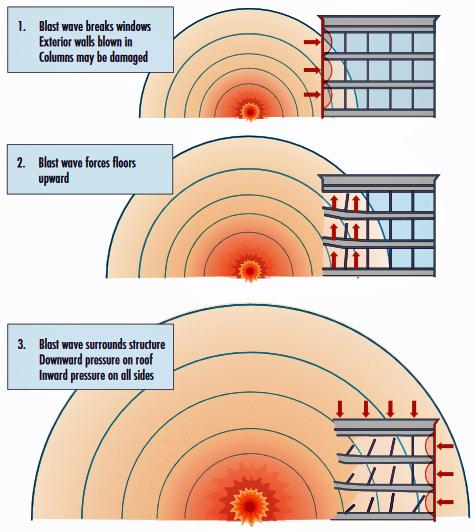
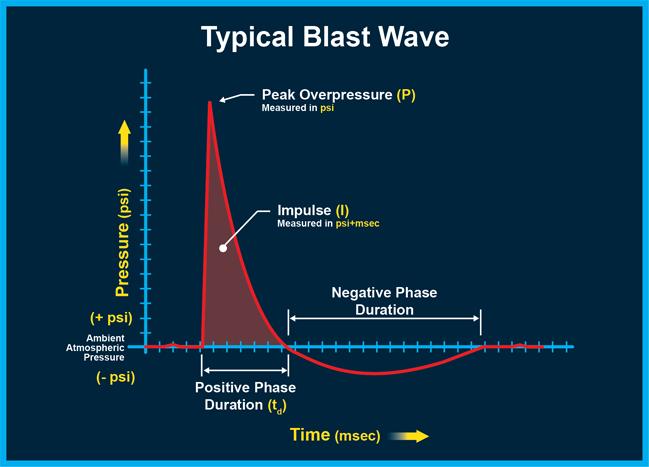
When a bomb detonates, it creates an instantaneous, massive pressure wave traveling faster than the speed of sound. This is called the blast overpressure wave.
BOMB
SURVIVAL
+ immediate steps
SHOUT OUT
✅ DO THIS NOW
- 1️⃣ GET LOW & GO – crawl to solid cover (concrete).
- 2️⃣ SIDE POSITION – if unconscious but breathing, roll on side.
- 3️⃣ OXYGEN – high flow if available.
- 4️⃣ TOURNIQUET – severe limb bleed, tight above wound.
- 5️⃣ COVER EARS LOOSELY – loose gauze over ear, never inside.
❌ NEVER DO THIS
- 🚫 NEVER PLUG EARS – no cotton/gauze inside bleeding ear. let drain.
- 🚫 NEVER GIVE WATER/FOOD – risk of surgery/airway.
- 🚫 NEVER IGNORE CONFUSION – “just confused” = brain injury. sit & talk.
- 🚫 NEVER LAY FLAT – if pink froth (blast lung), keep upright/on side.
BLAST LUNG
- 🫁 Coughing up pink frothy blood
- 🫁 Gasping / slow heartbeat (bradycardia)
- 🫁 Blue lips (cyanosis)
- 🫁 Low blood pressure
screenshot each card · print · keep with emergency kit
- The Blast Front: A wall of compressed air that can reach speeds of hundreds of miles per hour.
- The Overpressure: A sudden, massive spike in atmospheric pressure that can crush and tear tissue.
- The Underpressure (Vacuum): Immediately following the overpressure is a vacuum, which causes secondary injuries as air rushes back into the space.
- The Drag Force: The high-speed wind following the wave can pick up and hurl a human body.
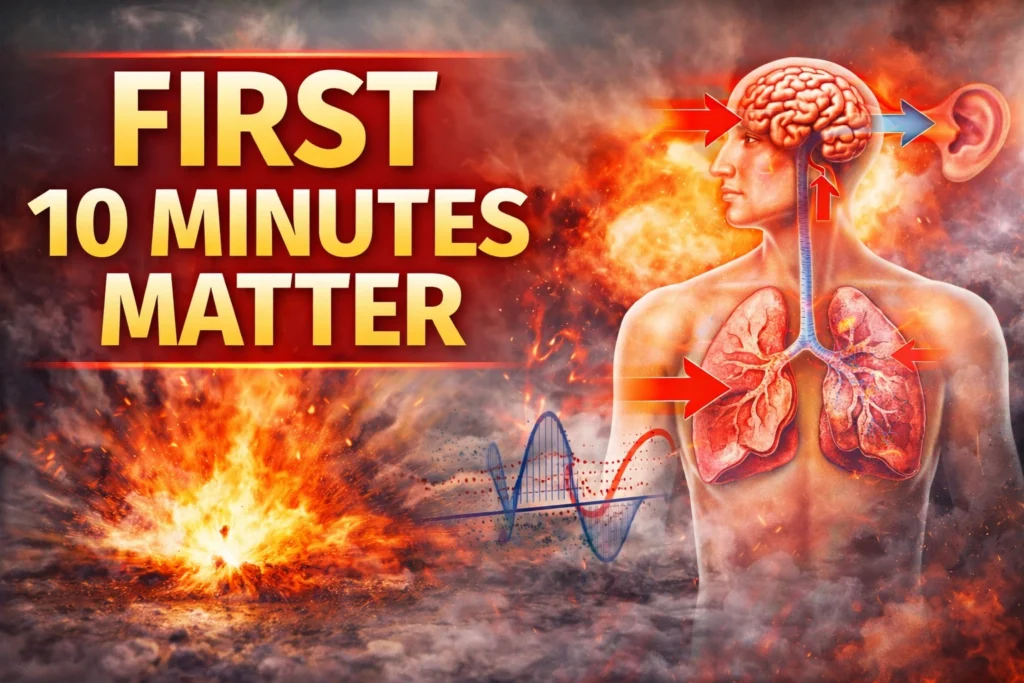
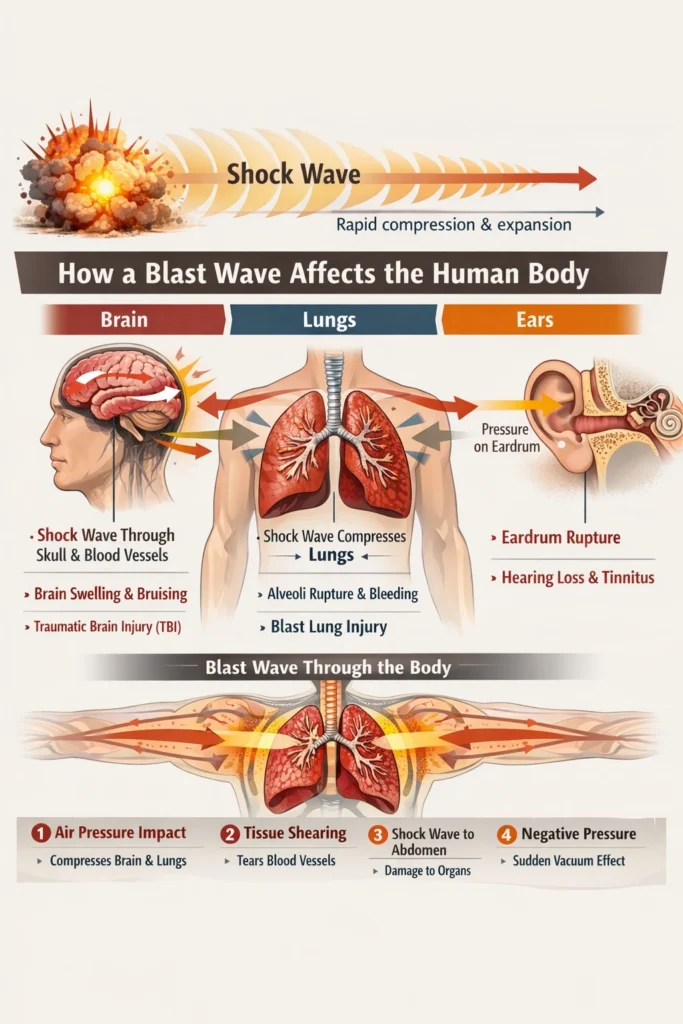
Your body’s air-filled organs (lungs, ears, gastrointestinal tract) and complex soft tissues (brain) are most vulnerable to this sudden pressure change.
Part II: How Blast Waves Cause Devastating Internal Injuries
Here is what happens inside the body when a blast wave passes through it.
1. The Brain: Primary Blast Neurotrauma
Even if the victim has no visible head wound, the brain is critically injured.
- The Mechanism: The blast wave accelerates the head, causing the brain to slam against the inside of the skull. Simultaneously, the pressure wave travels through the skull and bodily fluids, causing microscopic tearing of neurons and blood vessels. This is distinct from a concussion caused by a blunt object.
- The Damage:
- Cerebral Edema: Immediate and rapid swelling of the brain.
- Vascular Injury: Shearing of small blood vessels, leading to micro-hemorrhages.
- Neurological Deficit: Immediate confusion, loss of consciousness, dizziness, and “seeing stars.”
- Long-Term Concern: Even if the victim wakes up, they may suffer from severe post-concussion syndrome, memory loss, and emotional dysregulation.
2. The Lungs: The Silent Killer (Blast Lung)
The lungs are the most vulnerable internal organ to blast waves.
- The Mechanism: The sudden overpressure wave hits the chest wall and compresses the thoracic cavity. As the wave passes, the chest re-expands violently (spalling and implosion). This causes extensive tearing of the delicate alveolar sacs where oxygen exchange occurs.
- The Damage:
- Pulmonary Hemorrhage: The alveoli fill with blood. The victim is essentially drowning in their own blood.
- Pneumothorax: Air escapes the lungs into the chest cavity, causing the lung to collapse.
- Air Embolism: The blast can force air bubbles directly into the pulmonary veins. These bubbles travel to the heart or brain, causing a stroke or heart attack instantly.
- Symptoms: Look for the “blast lung triad”—apnea (stopping breathing), bradycardia (slow heart rate), and hypotension (low blood pressure). The victim may cough up pink, frothy blood.
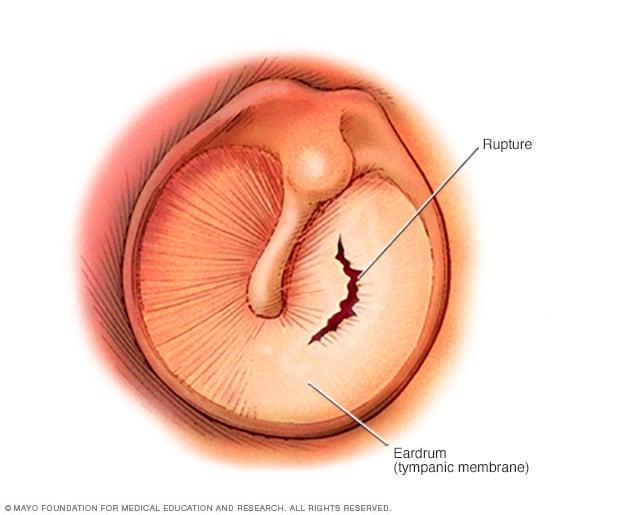
3. The Ears: The Body’s Early Warning System
The ears are the most sensitive to blast overpressure and will always be damaged first. If someone has ear damage, you must assume they also have lung and brain damage.
- The Mechanism: The pressure wave travels down the ear canal and ruptures the tympanic membrane (eardrum).
- The Damage:
- Tympanic Membrane Rupture: Blood draining from the ear is a clear sign of exposure to a high-pressure wave.
- Ossicular Chain Disruption: The tiny bones of the middle ear can be dislocated or fractured.
- Sensorineural Hearing Loss: The blast can destroy the delicate hair cells in the cochlea, leading to permanent hearing loss and debilitating tinnitus (ringing in the ears).
Part III: What To Do Immediately (The Golden Minutes)
If you are alive and conscious after an explosion, you have entered the “golden minutes.” Your actions can mean the difference between life and death.
Phase 1: Get to Safety (Prevent Tertiary Injuries)
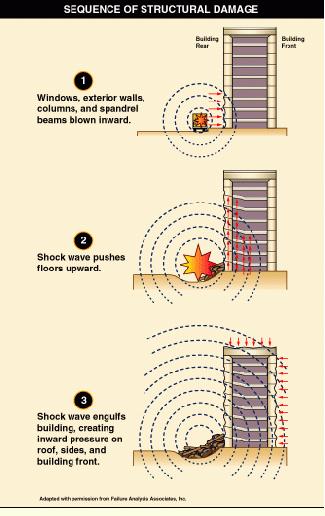
- Move Away: The primary blast wave is instantaneous, but secondary fires, collapsing structures, and secondary devices are imminent. Crawl or run to the nearest solid cover (a concrete barrier, the base of a heavy wall).
- Get Low: The blast overpressure wave is often strongest at head height and can reflect off walls. Stay low to the ground to avoid the “drag force” and debris.
Phase 2: Assess and Treat Blast Injuries
Priority: Airway and Breathing
- Check for “Blast Lung”: If the victim is conscious but struggling to breathe, or is unconscious, assume they have blast lung.
- Positioning:
- If the victim is unconscious but breathing, place them in the recovery position (on their side). This allows blood and fluid to drain from the mouth rather than choking them.
- Do NOT lay them flat on their back if they are coughing up blood—they will aspirate.
- Oxygen: If you have access to medical oxygen, administer it immediately. High-flow oxygen is the primary treatment for blast lung to keep blood oxygen levels up while the lungs are hemorrhaging.
Priority: Circulation and Bleeding
- Recognize Internal Bleeding: A person with blast injuries may look fine externally but be bleeding internally. Look for distended neck veins (sign of tension pneumothorax) or a rigid, painful abdomen.
- Treat External Bleeding First: Use a tourniquet for severe limb bleeding. Use direct pressure for torso or head wounds. Internal bleeding requires immediate surgical evacuation—you cannot stop it in the field.
Priority: The Ears
- Do NOT Plug the Ears: If you see blood draining from the ears, do not pack them with gauze or cotton. The blood indicates a rupture; plugging it can trap bacteria and cause a severe infection or increase intracranial pressure.
- Cover Loosely: Place a loose, sterile gauze pad over the ear to keep debris out, but allow blood to drain.
Phase 3: The “Walking Wounded” – Concussion Protocol
Many survivors will be “walking wounded” but have severe brain injuries.
- Stop Them: A person with a blast concussion is disoriented and may walk into danger. Gently guide them to safety and sit them down.
- Keep Them Awake: If they are drowsy, try to keep them awake and talking until medics arrive. A declining level of consciousness indicates worsening brain swelling.
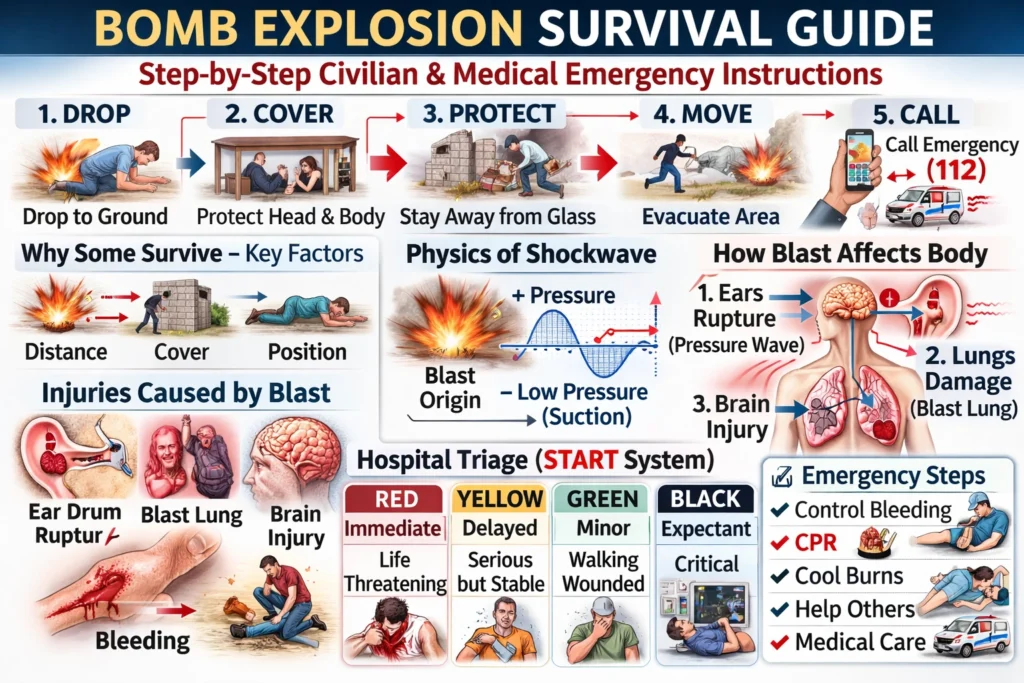
Here is a simple step-by-step explanation of the three main factors that decide survival in a blast disaster.
1. Physics (Distance and Barriers)
This simply means how close you are to the explosion and what is between you and the blast.
Step 1: Distance from the explosion
When a bomb explodes, it produces a powerful pressure wave.
- The closer you are, the stronger the blast.
- The farther you are, the weaker the blast.
For example:
- Someone very close may suffer serious injuries.
- Someone farther away may only hear a loud sound or feel pressure.
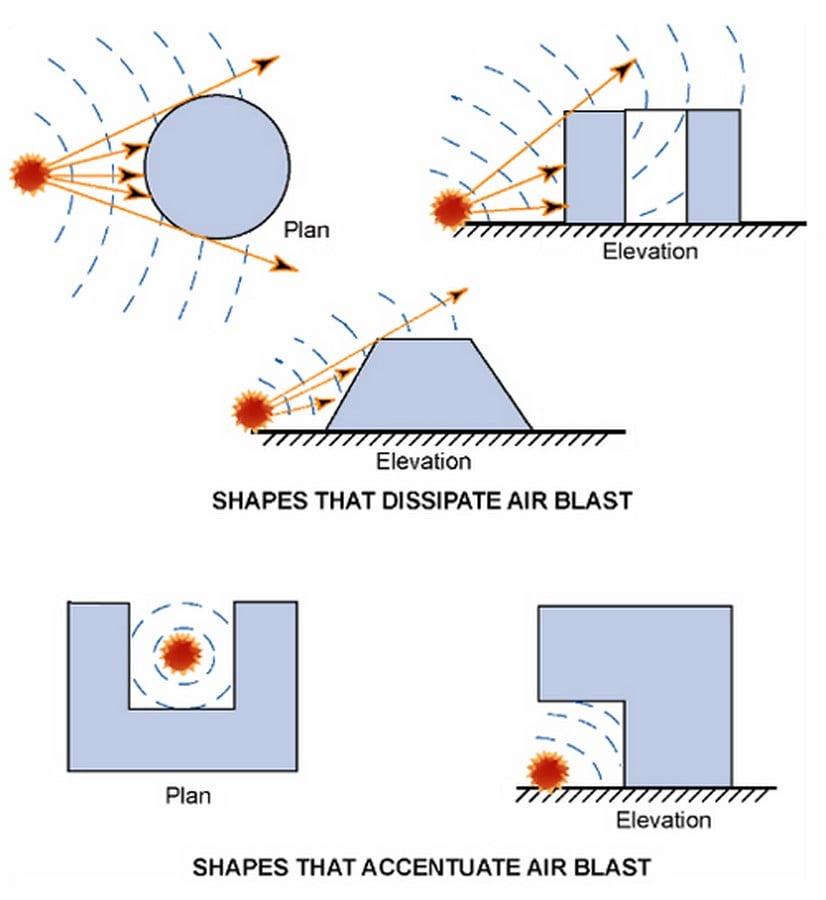
Step 2: Objects that block the blast
Solid objects can protect you from the blast wave and flying debris.
Examples of protective barriers:
- Concrete walls
- Buildings
- Large vehicles
- Thick pillars
- Ground or trenches
If something strong is between you and the explosion, it can reduce the force reaching your body.
2. Biology (How the Body Reacts)
This refers to how the blast wave affects different organs in the body.
Step 1: Ears are the most sensitive
The eardrum is very thin, so it can rupture easily during strong pressure waves.
Symptoms may include:
- sudden hearing loss
- ringing in the ears
- dizziness
This condition is called Tympanic Membrane Perforation.
Step 2: Lungs can be damaged
The lungs contain tiny air sacs called alveoli.
The blast wave can:
- compress the chest
- rupture these air sacs
- cause bleeding inside the lungs
This is known as Blast Lung.
Symptoms may include:
- difficulty breathing
- coughing blood
- chest pain
Step 3: Brain injuries can occur
The blast wave can also affect the brain by:
- shaking the head suddenly
- sending pressure waves through blood vessels
This can lead to Traumatic Brain Injury.
Symptoms may include:
- confusion
- headache
- memory loss
- unconsciousness
3. Medical Response (Speed of Treatment)
After an explosion, quick medical help greatly improves survival.
Step 1: Emergency teams arrive
Paramedics and doctors quickly assess the situation and start helping injured people.
Step 2: Triage is performed
Doctors use a system called START Triage.
This system helps them decide:
- who needs treatment immediately
- who can wait
- who has minor injuries
This allows doctors to save the most lives during disasters.
Step 3: Immediate life-saving treatment
Doctors focus on critical problems first:
- stopping severe bleeding
- helping the patient breathe
- giving oxygen
- treating shock
Fast treatment can prevent death from complications.
Simple Final Summary
Survival in a blast disaster depends mainly on three things:
1️⃣ Physics
How close you are to the explosion and whether something protects you.
2️⃣ Biology
How the blast affects sensitive organs like ears, lungs, and brain.
3️⃣ Medical Response
How quickly doctors and emergency teams provide treatment.