Preventive Medical Intelligence Platform by IntelliNewz™
Detect Early. Prevent Strong. Reverse Smart.
Authored by:
Dr. Mohammed Abdul Azeem Siddiqui, MBBS, MTech (Biomedical Engineering)
Founder – IntelliNewz™
@intellinewz.com
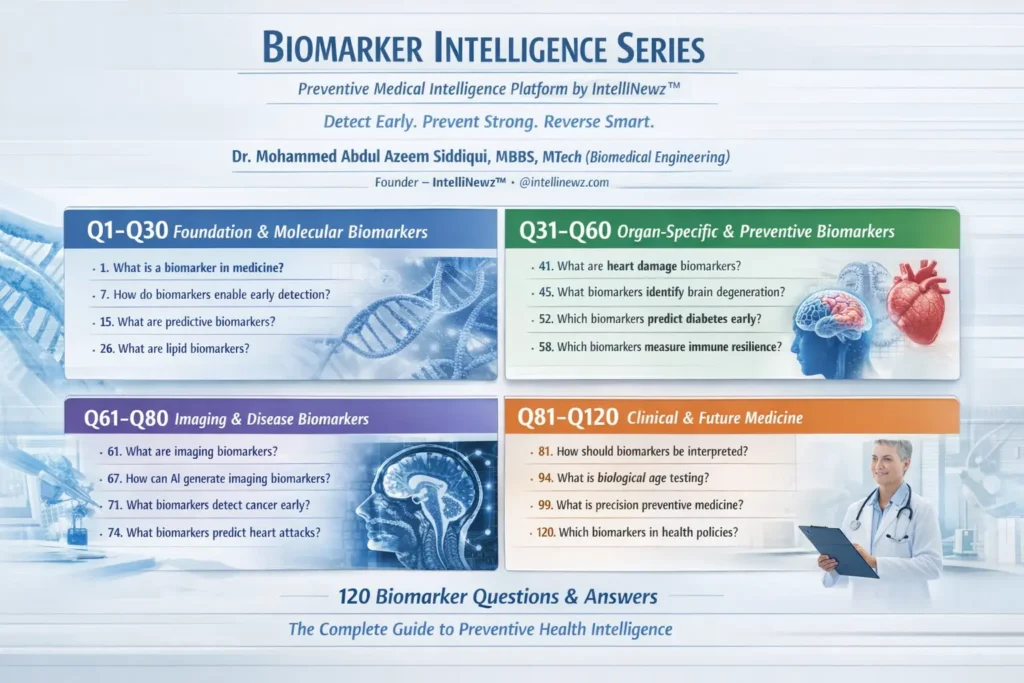
BIOMARKER INTELLIGENCE SERIES
What is a biomarker in clinical medicine?
A biomarker is any objectively measurable biological parameter that reflects the current functional, metabolic, genetic, inflammatory, or cellular status of the human body. Biomarkers act as early biological warning signals that reveal silent organ stress, disease initiation, progression, and response to therapy—often years before symptoms appear.
- How are biomarkers different from symptoms and clinical signs?
Symptoms are subjective patient experiences and signs are observable physical findings. Biomarkers are objective, quantifiable biological measurements that detect disease at the molecular and cellular level long before clinical manifestations develop. - Why are biomarkers central to preventive medicine?
Preventive medicine is built on early interception. Biomarkers allow detection of silent pathology during reversible phases—enabling disease prevention rather than late-stage disease management. - How did biomarker science evolve over the last 30 years?
Biomarker science has evolved from basic biochemical testing into advanced multi-omics, AI-assisted analytics, and predictive modeling—transforming medicine from reactive care into predictive health intelligence. - What defines an ideal biomarker?
An ideal biomarker must be sensitive, specific, reproducible, non-invasive, cost-effective, and clinically predictive of outcomes. - Why are biomarkers more reliable than symptom-based diagnosis?
Symptoms appear after structural organ damage. Biomarkers detect molecular dysfunction first, making them superior tools for early detection, prognosis, and treatment optimization. - How do biomarkers enable early disease detection?
They identify subclinical inflammation, metabolic dysfunction, oxidative stress, and cellular aging long before anatomical damage develops. - What is the difference between screening biomarkers and diagnostic biomarkers?
| Screening Biomarkers | Diagnostic Biomarkers |
|---|---|
| Detect early risk | Confirm disease |
| Used in healthy populations | Used in symptomatic patients |
| Example: ApoB | Example: Troponin |

- Why are biomarkers critical in personalized medicine?
They allow therapies to be tailored to individual biological response profiles instead of population averages. - How do biomarkers predict future disease risk?
They measure metabolic, inflammatory, genetic, and cellular dysfunctions that precede disease development. - What are the main types of biomarkers?
Risk, diagnostic, prognostic, predictive, monitoring, pharmacodynamic, and safety biomarkers. - What are susceptibility or risk biomarkers?
Markers indicating predisposition to disease (e.g., ApoB, HbA1c, genetic polymorphisms). - What are diagnostic biomarkers?
Markers confirming disease presence (e.g., Troponin). - What are prognostic biomarkers?
Markers predicting disease outcome irrespective of therapy. - What are predictive biomarkers?
Markers predicting treatment response (e.g., HER2). - What are monitoring biomarkers?
Markers used to track disease progression or treatment response. - What are pharmacodynamic biomarkers?
Markers reflecting biological response to therapy. - What are safety biomarkers?
Markers detecting drug toxicity or organ injury. - What are surrogate endpoint biomarkers?
Markers replacing clinical endpoints in trials. - How are biomarkers classified by function?
By their role in prediction, diagnosis, monitoring, prognosis, therapeutic guidance, and safety surveillance.
Q21–Q40 — Genetic, Epigenetic, Proteomic, Metabolomic & Blood Biomarkers
- What are molecular biomarkers?
Biochemical indicators measured at DNA, RNA, protein, lipid, or metabolite levels reflecting cellular health and early disease processes. - What are genetic biomarkers?
Inherited or acquired DNA variations predicting disease susceptibility and drug response. - What are epigenetic biomarkers?
Markers measuring gene expression control (methylation, histone modification, microRNA) reflecting lifestyle, toxins, aging, and inflammation. - What are proteomic biomarkers?
Circulating or tissue proteins indicating immune activity, tissue damage, and disease response. - What are metabolomic biomarkers?
Small molecules produced during metabolism reflecting insulin resistance, mitochondrial dysfunction, and nutrient status. - What are lipid biomarkers?
Markers assessing atherogenic risk, vascular inflammation, and lipid metabolism efficiency. - What are inflammatory biomarkers?
Detect systemic inflammation driving cardiovascular, metabolic, autoimmune, and neurodegenerative diseases. - What are hormonal biomarkers?
Assess endocrine balance, metabolic regulation, stress, reproduction, and aging. - What are cellular biomarkers?
Evaluate cell counts, immune function, and circulating tumor cells to detect immune suppression, cancer, and systemic stress. - What are circulating tumor cell biomarkers?
Detect early metastatic activity and monitor cancer recurrence before imaging changes. - What are blood biomarkers?
Powerful indicators of metabolic, inflammatory, immune, and organ health. - What are urine biomarkers?
Detect kidney injury, oxidative stress, toxins, and malnutrition. - What are saliva biomarkers?
Measure hormones, immunity, and stress physiology non-invasively. - What are stool biomarkers?
Reflect gut inflammation, microbiome balance, malabsorption, and colorectal cancer risk. - What are tissue biomarkers?
Confirm pathological changes and receptor status for targeted therapies. - What are cerebrospinal fluid biomarkers?
Detect neurodegeneration and brain inflammation earlier than imaging. - Which biomarkers are best for non-invasive screening?
Blood, urine, saliva, stool, and digital biomarkers. - Which biomarkers detect silent organ damage?
hs-CRP, ApoB, microalbumin, ALT, NfL, homocysteine. - Which biomarkers predict early metabolic disease?
Fasting insulin, HOMA-IR, triglyceride-HDL ratio, ferritin, uric acid. - Which biomarkers reflect nutritional deficiencies?
Vitamin D, B12, ferritin, magnesium, omega-3 index.

Q41–Q60 — Organ-Specific & Preventive Intelligence Biomarkers
- What are heart damage biomarkers?
High-sensitivity troponin, NT-proBNP, hs-CRP, ApoB, Lp(a). - What biomarkers detect early kidney damage?
Microalbuminuria, cystatin-C, NGAL, creatinine clearance, uric acid. - What biomarkers predict fatty liver disease?
ALT, AST, GGT, ferritin, fasting insulin, triglycerides, FIB-4. - What biomarkers detect silent thyroid disease?
TSH, free T3/T4, anti-TPO, anti-TG antibodies. - What biomarkers identify brain degeneration?
NfL, homocysteine, vitamin B12, amyloid-beta, tau proteins. - What biomarkers indicate bone loss?
Vitamin D, PTH, calcium, CTX, P1NP, DEXA T-scores. - What biomarkers detect gut inflammation?
Fecal calprotectin, CRP, zonulin, stool lactoferrin, microbiome diversity. - What biomarkers predict autoimmune disease?
ANA, RF, anti-CCP, ESR, hs-CRP, cytokines, vitamin D. - What biomarkers reflect pancreatic damage?
Fasting insulin, C-peptide, amylase, lipase, HbA1c, HOMA-IR. - What biomarkers indicate vascular inflammation?
hs-CRP, homocysteine, Lp(a), fibrinogen, ApoB, oxidized LDL. - Which biomarkers are best for preventive screening?
ApoB, Lp(a), fasting insulin, hs-CRP, HbA1c, vitamin D, ferritin, TSH, creatinine, microalbumin, omega-3 index. - Which biomarkers predict diabetes before sugar rises?
Fasting insulin, C-peptide, triglyceride-HDL ratio, HOMA-IR. - Which biomarkers detect cardiovascular risk early?
ApoB, Lp(a), hs-CRP, homocysteine, oxidized LDL. - Which biomarkers predict cancer risk?
CRP, ferritin, insulin, IGF-1, vitamin D, genomic panels. - Which biomarkers reveal oxidative stress?
GGT, uric acid, malondialdehyde, 8-OHdG. - Which biomarkers detect mitochondrial dysfunction?
Lactate, pyruvate, CoQ10, organic acid panels. - Which biomarkers reflect biological aging?
Telomere length, DNA methylation clocks, NfL, inflammatory burden. - Which biomarkers measure immune resilience?
Vitamin D, zinc, lymphocyte count, hs-CRP, immunoglobulins. - Which biomarkers detect nutrient deficiencies early?
Ferritin, vitamin B12, vitamin D, magnesium RBC, omega-3 index. - Which biomarkers predict chronic fatigue syndromes?
Ferritin, cortisol, thyroid hormones, vitamin D, mitochondrial markers.
Q61–Q80 — Imaging, Digital & Disease-Specific Biomarkers
- What are imaging biomarkers?
Quantifiable structural and functional measurements from MRI, CT, PET, ultrasound, DXA. - What are PET, MRI, and CT biomarkers?
Tumor volume, coronary calcium score, brain atrophy, plaque density, perfusion indices. - What are digital biomarkers?
Continuous physiological data from wearables, smartphones, and biosensors. - How do wearable biomarkers improve prevention?
Continuous early detection of cardiovascular instability, metabolic decline, sleep disorders, neurological dysfunction. - What is heart rate variability as a biomarker?
Reflects autonomic balance, cardiovascular risk, stress load, recovery. - What is gait speed as a biomarker?
Predicts mortality, cognitive decline, functional aging. - How can AI generate imaging biomarkers?
Extracts micro-structural and radiomic features invisible to human analysis. - How reliable are digital biomarkers?
When clinically validated, provide real-time, non-invasive preventive intelligence. - How will smart devices replace conventional biomarkers?
By complementing lab tests with continuous early-warning monitoring. - What is continuous health monitoring?
Real-time biomarker tracking to prevent disease onset. - What biomarkers detect cancer early?
Circulating tumor DNA, tumor markers, microRNAs, inflammatory profiles, AI imaging signatures. - What biomarkers detect Alzheimer’s early?
Amyloid-beta, tau, NfL, MRI volumetrics, digital cognitive markers. - What biomarkers detect Parkinson’s disease?
Alpha-synuclein, dopamine transporter imaging, gait digital markers. - What biomarkers predict heart attacks?
ApoB, Lp(a), hs-CRP, coronary calcium score, HRV. - What biomarkers detect silent strokes?
Carotid intima-media thickness, homocysteine, MRI micro-infarcts. - What biomarkers predict kidney failure?
Cystatin-C, NGAL, microalbumin, eGFR slope. - What biomarkers predict fatty liver?
FIB-4, ALT, ferritin, triglycerides, insulin resistance indices. - What biomarkers detect autoimmune flares?
Cytokine panels, ESR, CRP, digital symptom markers. - What biomarkers predict infertility?
AMH, FSH, LH, testosterone, progesterone, prolactin. - What biomarkers detect hormonal imbalance?
Thyroid panels, cortisol rhythms, sex hormone panels, insulin.
Q81–Q120 — Clinical Interpretation, Future Medicine & Public Health Authority
- How should biomarkers be interpreted clinically?
Absolute value, trend, organ-specific thresholds, and patient profile are critical. - Why reference ranges are misleading?
Population-based ranges may miss early disease; personalized thresholds are better. - What is optimal vs normal biomarker range?
“Normal” is population-based; “optimal” minimizes disease risk. - How to read biomarker trends?
Serial measurements detect progression or reversal more accurately than a single snapshot. - Which biomarkers fluctuate with age?
Vitamin D, sex hormones, kidney markers, inflammatory markers, telomere length. - Which biomarkers change before symptoms?
hs-CRP, ApoB, fasting insulin, microalbumin, homocysteine, NfL. - How to correlate biomarkers with imaging?
Combine biochemical, genetic, and cellular biomarkers with imaging to detect subclinical organ damage. - How to correlate biomarkers with lifestyle factors?
Diet, exercise, sleep, stress, and environment directly impact biomarkers. - How often should biomarkers be tested?
Depends on age, risk profile, family history; quarterly to yearly. - Which biomarkers require fasting?
Glucose, insulin, triglycerides, lipid panels, some metabolites. - What is multi-omics biomarker profiling?
Integration of genomics, epigenomics, proteomics, metabolomics, microbiomics. - What are composite biomarker panels?
Combine multiple biomarkers for better risk prediction. - What are polygenic risk scores?
Aggregate genetic variants predicting complex disease susceptibility. - What is biological age testing?
Telomere length, DNA methylation, inflammation measure physiological aging. - What is longevity biomarker profiling?
Integrates inflammatory, metabolic, hormonal, oxidative stress, mitochondrial markers. - How AI will change biomarker interpretation?
Analyzes complex data to detect early trends and personalize prevention. - What are predictive digital twins?
Virtual patient models simulating disease and intervention response. - What biomarkers will dominate future medicine?
Multi-omics panels, circulating tumor DNA, NfL, digital biomarkers, mitochondrial markers. - What is precision preventive medicine?
Tailoring prevention using personal biomarker profiles to detect and reverse disease early. - Why biomarkers will replace symptom-based medicine?
They detect disease before symptoms, allowing earlier intervention. - Which biomarkers can detect disease 10 years early?
ApoB, hs-CRP, Lp(a), microalbumin, fasting insulin, telomere length, NfL, DNA methylation clocks. - Which biomarkers predict silent heart attacks?
ApoB, Lp(a), hs-CRP, coronary calcium score, troponin trends. - Which biomarkers indicate silent kidney damage?
Microalbuminuria, cystatin-C, NGAL, eGFR trajectory. - Which biomarkers predict sudden death risk?
HRV, hs-CRP, Lp(a), ApoB, QTc interval. - Which biomarkers detect silent inflammation?
hs-CRP, IL-6, TNF-alpha, fibrinogen, homocysteine. - Which biomarkers predict dementia early?
NfL, tau, amyloid-beta, B12, homocysteine, digital cognitive markers. - Which biomarkers predict cancer recurrence?
Circulating tumor DNA, CTCs, inflammatory markers, tumor antigens. - Which biomarkers predict longevity?
Telomere length, DNA methylation, mitochondrial efficiency, inflammatory load, vitamin D, omega-3 index. - Which biomarkers indicate hidden insulin resistance?
Fasting insulin, HOMA-IR, triglyceride/HDL ratio, C-peptide. - Which biomarkers predict metabolic collapse?
High insulin, ApoB, uric acid, low vitamin D, rising inflammation. - Which biomarkers should every adult test yearly?
Lipid panel, hs-CRP, ApoB, fasting glucose/insulin, vitamin D, liver/kidney markers, thyroid. - Which biomarkers should be screened after age 30?
ApoB, Lp(a), hs-CRP, fasting insulin, liver/kidney markers, vitamin D, thyroid. - Which biomarkers should be screened after age 40?
Add HbA1c, homocysteine, ferritin, bone density, cardiovascular imaging. - Which biomarkers should be screened after age 50?
Add cancer-specific, neurodegenerative markers, digital mobility markers. - Which biomarkers predict premature aging?
Telomere shortening, DNA methylation clocks, mitochondrial, inflammatory, oxidative stress markers. - Which biomarkers predict early disability?
NfL, gait speed, grip strength, inflammatory and mitochondrial markers. - Which biomarkers reduce mortality risk?
Optimized ApoB, hs-CRP, fasting insulin, vitamin D, omega-3, mitochondrial markers. - Which biomarkers predict silent organ failure?
Microalbuminuria, cystatin-C, NfL, ALT/AST trends, troponin, hs-CRP. - Which biomarkers should be in preventive health programs?
ApoB, Lp(a), hs-CRP, fasting insulin, microalbumin, vitamin D, HbA1c, liver/kidney, thyroid, NfL, digital markers. - Which biomarkers should be mandatory in future health policies?
High-risk predictive markers: ApoB, Lp(a), hs-CRP, fasting insulin, microalbumin, vitamin D, NfL for early intervention.

Dr. Mohammed Abdul Azeem Siddiqui, MBBS, M.Tech (Biomedical Engineering – VIT, Vellore)
Registered Medical Practitioner – Reg. No. 39739
Physician • Clinical Engineer • Preventive Diagnostics Specialist
Dr. Mohammed Abdul Azeem Siddiqui is a physician–engineer with over 30 years of dedicated clinical and biomedical engineering experience, committed to transforming modern healthcare from late-stage disease treatment to early detection, preventive intelligence, and affordable medical care.
He holds an MBBS degree in Medicine and an M.Tech in Biomedical Engineering from VIT University, Vellore, equipping him with rare dual expertise in clinical medicine, laboratory diagnostics, and medical device engineering. This allows him to translate complex laboratory data into precise, actionable preventive strategies.
Clinical Mission
Dr. Siddiqui’s professional mission centers on three core pillars:
Early Disease Detection
Identifying hidden biomarker abnormalities that signal chronic disease years before symptoms appear — reducing complications, hospitalizations, and long-term disability.
Preventive Healthcare
Guiding individuals and families toward longer, healthier lives through structured screenings, lifestyle intervention frameworks, and predictive diagnostic interpretation.
Affordable Evidence-Based Treatment
Delivering cost-effective, scientifically validated care accessible to people from all socioeconomic backgrounds.
Clinical & Technical Expertise
Across three decades of continuous practice, Dr. Siddiqui has worked extensively with:
Advanced laboratory analyzers and automation platforms
• Cardiac, metabolic, renal, hepatic, endocrine, and inflammatory biomarker systems
• Preventive screening and early organ damage detection frameworks
• Clinical escalation pathways and diagnostic decision-support models
• Medical device validation, calibration, compliance, and patient safety standards
He is recognized for identifying subclinical biomarker shifts that predict cardiovascular disease, diabetes, fatty liver, kidney disease, autoimmune inflammation, neurodegeneration, and accelerated biological aging long before conventional diagnosis.
Role at IntelliNewz
At IntelliNewz, Dr. Siddiqui serves as Founder, Chief Medical Editor, and Lead Clinical Validator. Every article published is:
Evidence-based
• Clinically verified
• Technology-grounded
• Free from commercial bias
• Designed for real-world patient and physician decision-making
Through his writing, Dr. Siddiqui shares practical health intelligence, early warning signs, and preventive strategies that readers can trust — grounded in decades of frontline medical practice.
Contact:
powerofprevention@outlook.com
📌 Disclaimer: The content on IntelliNewz is intended for educational purposes only and does not replace personalized medical consultation. For individual health concerns, please consult your physician.