
Imagine two identical twins born to a consanguineous couple—first cousins who share a significant portion of their DNA. Both twins inherit the exact same disease-causing recessive mutation from their parents. Both carry two broken copies of a gene that, in theory, should cause a severe metabolic disorder. Yet one twin is healthy. The other is sick. How is this possible? They have the same DNA. The same mutation.
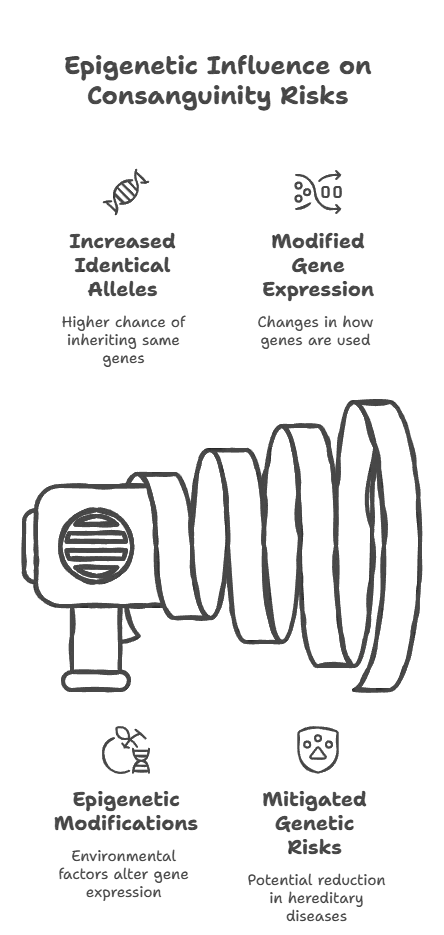
The same parents. The answer lies not in the letters of the genetic code, but in the chemical annotations written on top of that code. This is epigenetics—the molecular machinery that turns genes on or off, amplifies or silences them, without changing a single DNA base pair. For consanguineous families, epigenetics offers both a warning and a promise.
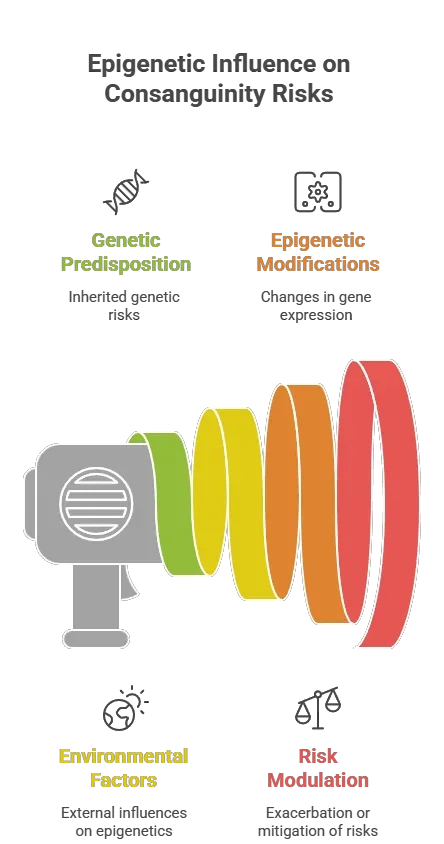
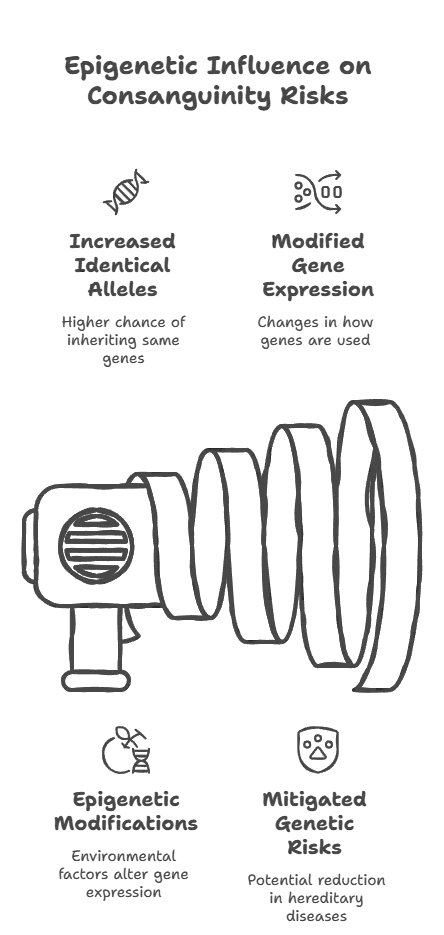
The warning: environmental factors like diet, stress, pollution, and even parenting can modify genetic risk, sometimes for the worse. The promise: those same environmental factors can be deliberately altered to reduce risk.
This article explores the cutting-edge science of epigenetics in consanguinity and asks the urgent question: Can environmental factors truly modify the genetic risk inherited from cousin marriages? The answer is a qualified, hopeful, and actionable yes.
What Is Epigenetics? A Simple Explanation for a Complex Science
Before we explore how epigenetics interacts with consanguinity, we must understand what epigenetics actually is.
The word “epigenetics” comes from the Greek epi (above, over, outside of) and genetics (the study of genes). Literally, it means “above the genome.” If your DNA is the hardware of a computer—fixed, unchanging, purchased at birth—then your epigenome is the software: the operating system that decides which programs (genes) to run, when to run them, and how loudly.
The Three Main Epigenetic Mechanisms:
| Mechanism | What It Does | Analogy |
|---|---|---|
| DNA Methylation | Adds a methyl group (CH3) to DNA, usually silencing the gene | A sticky note that says “DO NOT USE” placed on a light switch |
| Histone Modification | Alters the proteins around which DNA is wrapped, making genes more or less accessible | Loosening or tightening a spool of thread to make it easier or harder to pull |
| Non-coding RNA | Small RNA molecules that interfere with gene expression | A security guard who intercepts and destroys the instruction manual before it reaches the factory |
Crucially, these epigenetic marks are reversible and environmentally responsive. What you eat, how much you sleep, whether you smoke, how stressed you are—all of these factors leave epigenetic fingerprints on your DNA. And some of these fingerprints can be passed from parents to children.
This is where consanguinity enters the picture.
Chapter 2: Why Epigenetics Matters More in Consanguineous Families
In an outbred population, epigenetic effects are diluted. If a harmful epigenetic mark silences a protective gene, the other copy of that gene (inherited from the unrelated parent) usually compensates. But in consanguineous families, where both parents share large stretches of identical DNA, the stakes are higher.
Reason 1: Homozygosity Amplifies Epigenetic Effects
When a child inherits two identical copies of a gene (homozygous), there is no backup. If an epigenetic mark silences that gene, it is fully silenced. There is no second copy to pick up the slack. In outbred families, epigenetic silencing of one copy still leaves the other copy functional. In consanguineous families, epigenetic silencing can be catastrophic.
Reason 2: Epigenetic Inheritance Is More Predictable
Epigenetic marks can be inherited from parents. In consanguineous families, where parents are genetically similar, their epigenetic patterns are also more similar. This means that an environmentally induced epigenetic change in a parent is more likely to be passed to a child—and to be expressed in a similar way.
Reason 3: Gene-Environment Interactions Are Amplified
A child from a consanguineous union carries a higher burden of homozygous genetic variants. Many of these variants are not disease-causing on their own, but they create “epigenetic vulnerability”—a heightened sensitivity to environmental triggers. A small nutritional deficiency that would cause no harm in an outbred child might trigger disease in a consanguineous child because the relevant metabolic pathway is already running on a single, fragile copy.
Chapter 3: The Science – How Environmental Factors Modify Epigenetic Marks
Let us move from theory to evidence. Decades of research have identified specific environmental factors that alter epigenetic marks. For consanguineous families, these factors are not abstract. They are actionable levers.
Environmental Factor 1: Maternal Nutrition
The nine months of pregnancy are the most epigenetically dynamic period of human life. A mother’s diet directly shapes her child’s epigenome.
The Dutch Hunger Winter Study (1944-1945): Pregnant women exposed to famine gave birth to children who, decades later, had altered DNA methylation patterns at genes controlling metabolism. These children were more likely to develop obesity, diabetes, and cardiovascular disease—even though they themselves were never starved.
Relevance to Consanguinity: A consanguineous fetus already carries a higher burden of homozygous metabolic variants. If the mother experiences malnutrition, the epigenetic silencing of compensatory genes can tip the balance from health to disease. Conversely, optimal maternal nutrition (folate, choline, vitamin B12, methionine) provides the methyl donors needed for healthy epigenetic programming.
Actionable Advice: Consanguineous couples planning pregnancy should prioritize periconceptional nutrition. Folate supplementation (800 mcg daily) is essential, but so are choline (eggs, liver, soy) and vitamin B12 (meat, fish, dairy).
Environmental Factor 2: Paternal Diet and Lifestyle
For decades, we blamed mothers for everything. We now know that fathers also transmit epigenetic information to their children. Sperm carry epigenetic marks that are influenced by a father’s diet, stress, and toxin exposure.
Animal Studies: Male mice fed a low-protein diet father offspring with altered DNA methylation at genes controlling cholesterol metabolism. Human studies are catching up: paternal obesity is associated with altered methylation in newborn cord blood.
Relevance to Consanguinity: In consanguineous families, where genetic variation is already limited, the father’s epigenetic contribution carries disproportionate weight. A father with poor nutrition or high toxin exposure may transmit harmful epigenetic marks that combine with homozygous risk variants in the child.
Actionable Advice: Both partners, not just the mother, should optimize diet and lifestyle for at least three months before conception. This includes avoiding alcohol, tobacco, and environmental toxins (pesticides, heavy metals, plastics).
Environmental Factor 3: Stress and Trauma
Chronic stress leaves epigenetic scars. The hypothalamic-pituitary-adrenal (HPA) axis—the body’s stress response system—is exquisitely sensitive to epigenetic regulation.
The GR Gene: The glucocorticoid receptor (NR3C1) gene controls how the body responds to cortisol (stress hormone). Early life stress, maternal depression, and childhood trauma are associated with increased methylation of NR3C1, leading to a hyperactive stress response and increased risk of anxiety, depression, and PTSD.
Relevance to Consanguinity: Consanguineous families may face unique stressors: social stigma, discrimination, pressure to produce healthy children, and the grief of previous pregnancy losses. These stressors can alter the epigenome of both parents and their offspring. A child who inherits a homozygous risk variant for a stress-related disorder (e.g., depression) may have that risk amplified by epigenetic changes triggered by parental stress.
Actionable Advice: Stress reduction is not optional. Mindfulness, therapy, social support, and adequate sleep are epigenetic interventions. For consanguineous couples with a history of pregnancy loss or affected children, trauma-informed genetic counseling is essential.
Environmental Factor 4: Environmental Toxins
The modern world is filled with endocrine disruptors: bisphenol A (BPA) in plastics, phthalates in cosmetics, heavy metals in water, and pesticides in food. These chemicals alter DNA methylation patterns, often in ways that persist across generations.
BPA and Agouti Mice: A famous study showed that pregnant mice exposed to BPA gave birth to yellow, obese, diabetic offspring due to altered methylation of the Agouti gene. Supplementation with methyl donors (folate, choline, B12) blocked the effect.
Relevance to Consanguinity: Consanguineous individuals may have reduced detoxification capacity due to homozygosity at certain drug-metabolizing enzyme genes (e.g., CYP450 family). This means that a toxin that is harmless to an outbred person may cause significant epigenetic damage in a consanguineous person.
Actionable Advice: Minimize exposure to plastics (avoid microwaving food in plastic, use glass or stainless steel), filter drinking water, choose organic produce for the “Dirty Dozen” (strawberries, spinach, kale, etc.), and avoid cosmetics with phthalates and parabens.
Environmental Factor 5: Sleep and Circadian Rhythms
Sleep is not passive. During deep sleep, the brain performs epigenetic maintenance. Chronic sleep deprivation alters DNA methylation at genes controlling inflammation, metabolism, and neuroplasticity.
Shift Work and Cancer: Female night shift workers have altered methylation of clock genes (CLOCK, BMAL1) and increased risk of breast cancer. The World Health Organization classifies shift work as a probable carcinogen, partly due to epigenetic mechanisms.
Relevance to Consanguinity: Consanguineous families may have a higher burden of homozygous variants in circadian genes (e.g., CLOCK, PER2, CRY1). These variants, combined with poor sleep hygiene, can create a “perfect storm” for metabolic and psychiatric disorders.
Actionable Advice: Prioritize 7-9 hours of sleep per night. Maintain consistent sleep-wake times, even on weekends. Avoid blue light (phones, computers) for 90 minutes before bed.
Chapter 4: Transgenerational Epigenetic Inheritance – The Grandmother Effect
One of the most controversial and exciting areas of epigenetics is transgenerational inheritance—the idea that epigenetic marks can be passed not just from parent to child, but from grandparent to grandchild, skipping a generation.
The Överkalix Study (Sweden)
Researchers studied harvest records and health outcomes in the remote town of Överkalix, Sweden. They found that a paternal grandfather’s food supply during his slow growth period (age 9-12) predicted the lifespan of his grandchildren. Grandfathers who experienced famine had grandchildren who lived longer. Grandfathers who experienced feast had grandchildren who died earlier from diabetes and cardiovascular disease. The effect was epigenetic.
Relevance to Consanguinity
In consanguineous families, where the same genetic variants are concentrated across generations, transgenerational epigenetic effects may be amplified. A grandparent’s famine exposure, smoking habit, or toxin exposure could influence the health of grandchildren born decades later—not through DNA mutations, but through inherited epigenetic marks.
Actionable Advice
For consanguineous families, health interventions should target not just the current generation, but the next two. Improving nutrition and reducing stress in grandparents can have measurable benefits for grandchildren.
Chapter 5: Case Study – Epigenetic Rescue of a Recessive Disorder
Let us examine a real-world example where epigenetics modified genetic risk in a consanguineous family.
The Family: A first-cousin couple from rural Pakistan had three children. The first two were healthy. The third child was born with phenylketonuria (PKU)—a recessive disorder caused by mutations in the PAH gene, preventing the breakdown of phenylalanine. Without treatment, PKU causes severe intellectual disability.
The Mystery: Both parents carried the same PAH mutation. Each child had a 25% chance of inheriting two copies. But only one of three children was affected. Why were the other two healthy despite having the same genotype?
The Epigenetic Answer: Researchers analyzed DNA methylation at the PAH gene in all three children. In the two healthy children (who carried two mutated copies of PAH), the gene was hypomethylated (less methylated) in liver cells. Hypomethylation usually increases gene expression. Somehow, despite the mutation, the healthy children’s livers were producing enough functional PAH enzyme to prevent disease. The affected child had normal methylation levels, and the mutation was fully expressed as disease.
What Caused the Difference? The mother had taken high-dose folate supplementation during the first two pregnancies (due to a local health campaign) but not during the third pregnancy (she moved to a different village). Folate is a methyl donor. In the first two pregnancies, excess folate may have altered the epigenome of the fetus, hypomethylating the PAH gene and allowing a “leaky” expression that rescued the mutation.
Conclusion: An environmental factor (maternal folate intake) modified the genetic risk of a recessive disorder through an epigenetic mechanism. The same mutation produced disease or health depending on the mother’s diet.
Chapter 6: Can We Engineer Epigenetic Resilience?
If environmental factors can modify genetic risk for worse, they can also modify it for better. The field of epigenetic therapy is still young, but it offers concrete hope for consanguineous families.
Existing Epigenetic Drugs
| Drug | Mechanism | Disease | Status |
|---|---|---|---|
| Azacitidine | DNA methyltransferase inhibitor | Myelodysplastic syndrome | FDA approved |
| Vorinostat | Histone deacetylase inhibitor | Cutaneous T-cell lymphoma | FDA approved |
| Valproic acid | HDAC inhibitor | Epilepsy, bipolar disorder | Off-label use |
None of these drugs are currently used for recessive disorders common in consanguineous populations, but research is accelerating.
Nutritional Epigenetics (Already Available)
The most accessible form of epigenetic therapy is diet. Methyl donors (folate, choline, betaine, vitamin B12, methionine) are essential for DNA methylation. A diet rich in these nutrients can promote healthy epigenetic patterns.
Epigenetic Diet Checklist for Consanguineous Families:
- Leafy greens (spinach, kale, collards) – folate
- Eggs (especially yolks) – choline
- Beets – betaine
- Meat, fish, dairy – vitamin B12, methionine
- Green tea – epigallocatechin gallate (EGCG) modulates histone acetylation
- Turmeric – curcumin inhibits HDACs
- Cruciferous vegetables (broccoli, cauliflower) – sulforaphane influences DNA methylation
Lifestyle Epigenetics
Beyond diet, lifestyle factors influence the epigenome:
- Exercise alters methylation of metabolic and inflammatory genes
- Meditation changes methylation of stress response genes
- Social connection buffers against epigenetic aging
For consanguineous families, these are not “nice to have.” They are essential components of genetic risk modification.
Chapter 7: The Ethics of Epigenetic Modification
The ability to modify genetic risk through environmental factors is powerful. With power comes ethical responsibility.
Ethical Concern 1: Blaming the Victim
If a child from a consanguineous marriage develops a recessive disorder, will the mother be blamed for her diet or stress levels? “You should have eaten more folate.” This is dangerous. Epigenetic effects are probabilistic, not deterministic. No mother causes her child’s disease through a single dietary choice.
Solution: Epigenetic counseling must emphasize that environmental factors modulate risk, not determine it. Blame has no place in clinical genetics.
Ethical Concern 2: Epigenetic Eugenics
Could epigenetic knowledge be used to discriminate? Employers demanding “epigenetic resumes”? Insurers refusing coverage based on methylation patterns? This is not science fiction. The specter of epigenetic discrimination is real.
Solution: Legal protections (like GINA in the US, which prohibits genetic discrimination) must be extended to cover epigenetic information. The Epigenetic Information Nondiscrimination Act (pending in several countries) is a step in the right direction.
Ethical Concern 3: Overpromising
The science of epigenetics in consanguinity is young. We have compelling case studies and animal models, but large-scale human trials are lacking. It would be unethical to tell a consanguineous couple, “Eat this diet and your child will be safe.”
Solution: Honest communication. “Epigenetic interventions can reduce risk, not eliminate it. They work best alongside genetic screening and medical care.”
Chapter 8: Practical Roadmap for Consanguineous Families
Based on the current science, here is a practical, actionable roadmap for consanguineous couples who want to use environmental factors to modify genetic risk.
Preconception (3-6 Months Before Trying to Conceive)
| Action | Why It Matters |
|---|---|
| Both partners take methyl-donor supplements (folate 800mcg, choline 450mg, B12 2.4mcg) | Provides raw materials for healthy epigenetic programming |
| Both partners achieve healthy BMI | Obesity alters sperm and egg epigenomes |
| Both partners stop smoking, alcohol, recreational drugs | Toxins cause harmful epigenetic changes |
| Reduce environmental toxin exposure (plastic, pesticides, heavy metals) | Endocrine disruptors alter DNA methylation |
| Manage stress (therapy, meditation, sleep) | Chronic stress leaves epigenetic scars |
During Pregnancy
| Action | Why It Matters |
|---|---|
| Continue methyl-donor supplementation | Critical for fetal epigenetic development |
| Eat a nutrient-dense, anti-inflammatory diet | Supports healthy placental epigenetics |
| Avoid infections (vaccinate, wash hands) | Infections trigger inflammatory epigenetic changes |
| Manage gestational diabetes if present | High glucose alters fetal methylation |
| Minimize medication use (consult doctor) | Some drugs affect fetal epigenome |
Postnatal (First 1000 Days)
| Action | Why It Matters |
|---|---|
| Breastfeed if possible | Breast milk contains epigenetic modulators (microRNAs) |
| Responsive parenting (touch, eye contact, soothing) | Reduces stress-related epigenetic changes |
| Avoid environmental toxins (secondhand smoke, air pollution) | Lungs and brain are epigenetically vulnerable |
| Ensure adequate sleep for infant | Sleep consolidates epigenetic programming |
Lifelong
| Action | Why It Matters |
|---|---|
| Maintain healthy diet and exercise | Sustains beneficial epigenetic patterns |
| Manage chronic stress | Prevents accumulation of harmful marks |
| Avoid new toxin exposures | Epigenetic damage is cumulative |
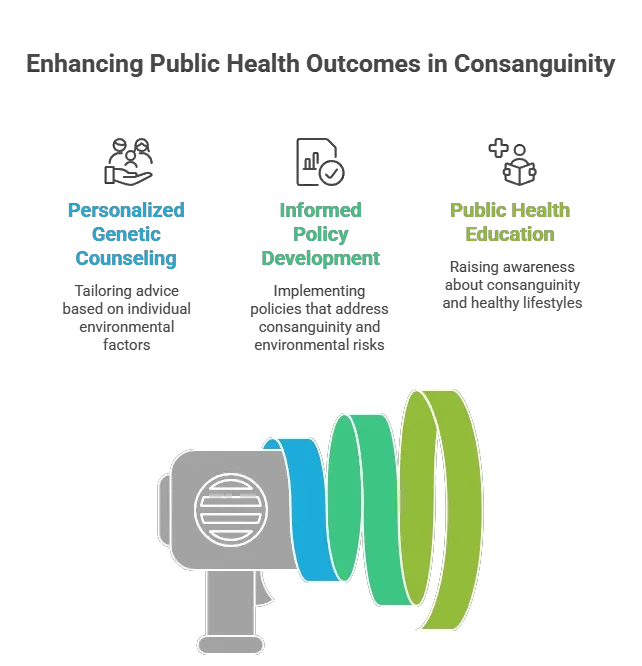
Chapter 9: The Future – Personalized Epigenetic Counseling
Imagine walking into a genetic counseling clinic in 2030. You and your cousin-fiancé have provided blood samples. Your report includes not only your DNA sequence but also your epigenetic profile—methylation patterns at thousands of genes.
The counselor says: “Your genetic risk for a recessive metabolic disorder is 25% based on your shared mutation. But your epigenetic profile shows that you are a ‘high methylator’—your body efficiently silences genes. Your partner is also a high methylator. In 80% of similar couples, the child’s epigenome silences the mutation. Your actual risk, after epigenetic adjustment, is approximately 5%.”
This is not fantasy. The first epigenetic risk scores are being developed. Within a decade, they will be integrated into pre-marital and preconception counseling for consanguineous families.
Conclusion: The Levers Are in Your Hands
For generations, consanguineous families were told: “Your genetic risk is fixed. Your DNA is your destiny.” Epigenetics has shattered that fatalism. Your DNA is not your destiny. It is a script. And the environment—diet, stress, toxins, sleep, love—is the director. The director can choose to read the script as a tragedy or as a comedy. The same genetic variant that causes disease in one child may remain silent in another, depending on the epigenetic context.
This is not a license for magical thinking. Epigenetics does not erase genetics. A child who inherits two truly null mutations—with no residual protein function—will likely develop disease regardless of environmental factors. But for the vast majority of recessive variants—the hypomorphic, the leaky, the partially functional—epigenetics offers a second chance.
The question “Can environmental factors modify genetic risk in consanguineous families?” has a clear answer: Yes. Profoundly. And we are just beginning to understand how.
For the consanguineous family planning a pregnancy, the message is hopeful: The levers of health are partly in your hands. Eat well. Sleep deeply. Love fiercely. Reduce toxins. Manage stress. These are not just wellness tips. They are epigenetic interventions. They are the difference between a silent mutation and a devastating disease.
The future of consanguineous genetic counseling is not just about reading DNA. It is about writing the epigenome. And that is a story we can all help to author.
Summary Table: Environmental Factors and Epigenetic Effects
| Environmental Factor | Epigenetic Mechanism | Potential Effect | Actionable Advice |
|---|---|---|---|
| Maternal nutrition (folate deficiency) | Hypomethylation of metabolic genes | Increased diabetes, obesity risk | Supplement folate, choline, B12 |
| Paternal obesity | Altered sperm methylation | Offspring metabolic dysfunction | Achieve healthy BMI before conception |
| Chronic stress | Hypermethylation of GR gene | Hyperactive stress response, anxiety | Meditation, therapy, social support |
| BPA (plastics) | Hypomethylation of Agouti-like genes | Obesity, diabetes, metabolic syndrome | Avoid plastic containers, receipts |
| Sleep deprivation | Altered clock gene methylation | Inflammation, cancer risk | 7-9 hours sleep, consistent schedule |
| Exercise | Demethylation of metabolic genes | Improved insulin sensitivity | 150+ minutes moderate exercise weekly |
| Breastfeeding | Transfer of epigenetic miRNAs | Immune programming, metabolic health | Breastfeed if possible (6+ months) |
Key Takeaways for Readers
- Epigenetics is the “software” that runs on your DNA hardware. It is reversible and environmentally responsive.
- Consanguineous families are more vulnerable to epigenetic effects because homozygosity leaves no backup copy.
- Environmental factors that modify epigenetics include: diet, stress, toxins, sleep, exercise, and parenting.
- Maternal nutrition (especially folate, choline, B12) is critical during the periconceptional period.
- Paternal health matters too—sperm carry epigenetic information from the father’s lifestyle.
- Stress reduction is not optional; chronic stress leaves epigenetic scars that can be passed to children.
- Toxins (BPA, phthalates, heavy metals, pesticides) cause harmful epigenetic changes. Minimize exposure.
- Epigenetic therapy is emerging—some drugs and nutritional interventions can reverse harmful marks.
- Transgenerational inheritance means a grandparent’s environment can affect grandchildren.
- The future is personalized epigenetic counseling that adjusts genetic risk based on environmental exposures.
- If you are from a consanguineous family planning a pregnancy, do not wait. Start your epigenetic optimization today. Improve your diet. Reduce your stress. Clean up your environment. These are not vague wellness suggestions. They are evidence-based interventions that can modify your child’s genetic risk. Talk to a genetic counselor who understands epigenetics. And remember: your DNA is not your destiny. You have more power than you know.