

Cortisol is a steroid hormone produced by the adrenal glands (located on top of your kidneys). It’s often called the “stress hormone” because it plays a central role in how your body responds to stress—but its functions go far beyond that.
🧠 What cortisol does in the body
Cortisol is essential for survival and regulates multiple systems:
- Stress response: Helps your body react to danger (“fight or flight”)
- Metabolism control: Regulates how your body uses carbohydrates, fats, and proteins
- Blood sugar levels: Increases glucose availability for energy
- Immune system modulation: Controls inflammation (both suppressing and activating it when needed)
- Blood pressure regulation
- Sleep–wake cycle: Follows a daily rhythm (highest in the morning, lowest at night)
This daily pattern is controlled by the circadian rhythm.
⚡ How cortisol affects humans
1. Short-term (acute) effects — beneficial
When you face a stressful situation:
- Increases alertness and focus
- Boosts energy supply
- Temporarily suppresses non-essential functions (like digestion)
This is part of the fight-or-flight response, which is crucial for survival.
2. Long-term (chronic) effects — harmful
When cortisol stays elevated for too long (chronic stress), it can negatively impact your health:
🧍 Physical effects
- Weight gain (especially abdominal fat)
- High blood pressure
- Increased risk of Type 2 Diabetes
- Muscle weakness
- Fatigue
🧠 Mental & emotional effects
- Anxiety and irritability
- Depression
- Brain fog / poor concentration
- Sleep disturbances
🛡️ Immune system
- Suppressed immunity → more frequent infections
- Slower wound healing
⚠️ Disorders related to cortisol imbalance
High cortisol
- Cushing’s syndrome
- Caused by prolonged excess cortisol
- Symptoms: round face, fat accumulation, thin skin, high blood sugar
Low cortisol
- Addison’s disease
- Caused by insufficient cortisol production
- Symptoms: fatigue, weight loss, low blood pressure
🕒 Cortisol levels throughout the day
- Morning: Highest (helps you wake up)
- Afternoon: Gradually decreases
- Night: Lowest (helps you sleep)
Disruption (e.g., night shifts, poor sleep) can lead to hormonal imbalance.
How to Lower Cortisol Naturally
1. 💤 Fix your sleep (highest impact)
Cortisol is tightly linked to your circadian rhythm.
What works:
- Sleep 7–9 hours consistently
- Sleep before midnight (ideal: 10–11 PM)
- Avoid screens 60–90 min before bed
- Get morning sunlight (10–20 min) to reset cortisol rhythm
Why it matters:
Poor sleep = elevated cortisol the next day → vicious cycle
2. 🏃 Exercise—but don’t overdo it
Exercise lowers cortisol long-term, but excessive intensity can spike it.
Best types:
- Strength training (3–4x/week)
- Walking (8–10k steps/day)
- Yoga / stretching
Avoid:
- Daily high-intensity workouts without recovery
- Overtraining (a hidden cortisol trigger)
3. 🧠 Control psychological stress
Chronic mental stress is the #1 driver of sustained cortisol elevation.
Proven tools:
- Meditation (10–20 min/day)
- Deep breathing (try 4-7-8 method)
- Journaling (reduces cognitive load)
Even simple breathwork can shift your nervous system from fight-or-flight → rest-and-digest.
4. 🥗 Eat to stabilize cortisol
Foods that HELP:
- Protein (eggs, chicken, paneer)
- Healthy fats (nuts, seeds, ghee, olive oil)
- Complex carbs (rice, oats, millets)
Key nutrients:
- Magnesium (calms stress response)
- Vitamin C (reduces cortisol spikes)
- Omega-3 fatty acids (anti-inflammatory)
Avoid:
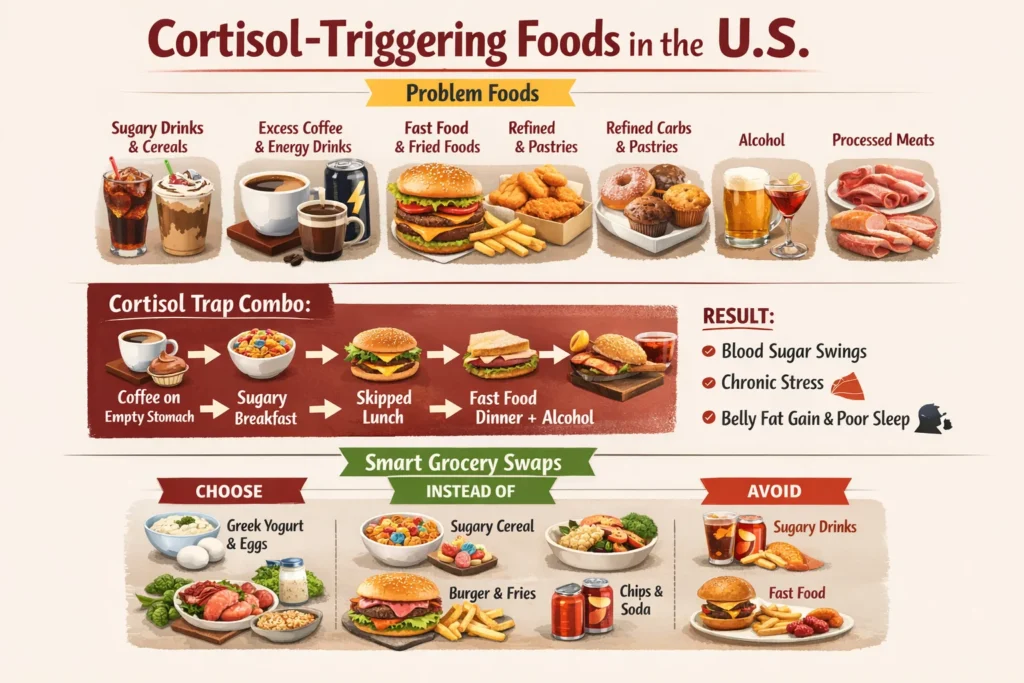
- Excess caffeine (especially on empty stomach)
- High sugar spikes → crashes → cortisol surge
5. ☀️ Sunlight + nature exposure
- Morning sunlight lowers cortisol dysregulation
- Nature (parks, greenery) reduces stress hormones measurably
Even 15 minutes daily helps reset hormonal balance.
6. 🤝 Social connection
Human interaction lowers cortisol through oxytocin release.
- Talk to friends/family
- Physical touch (hugging, etc.)
- Community engagement
Isolation = chronic stress signal to your brain
7. ☕ Manage caffeine smartly
- Avoid caffeine within 60–90 min of waking
- Limit to 1–2 cups/day
- Avoid after 2–3 PM
Caffeine artificially elevates cortisol if mistimed.
8. 🌿 Adaptogens
Some herbs help regulate stress response:
- Ashwagandha
- Rhodiola
- Holy basil (Tulsi)
Ashwagandha, in particular, has shown cortisol reduction in studies.
(Consult a doctor if you have medical conditions.)
9. 🎯 Structure your day
Uncertainty increases stress hormones.
- Plan your top 3 tasks daily
- Use time blocks
- Reduce multitasking
Predictability = safety signal → lower cortisol
10. 🚫 Reduce hidden stressors
Many people overlook these:
- Constant phone notifications
- News overload
- Poor work boundaries
- Lack of downtime
Your brain interprets these as continuous “micro-threats.”
⚠️ When to take it seriously
If you experience:
- Persistent fatigue
- Belly fat gain despite diet
- Anxiety + poor sleep
- Sugar cravings
…it may indicate chronically elevated cortisol or related issues like Type 2 Diabetes.
Lowering cortisol isn’t about one trick—it’s about aligning your biology with natural rhythms:
- Sleep well
- Move regularly
- Eat balanced meals
- Reduce mental overload
Cortisol-Lowering Daily Routine
🌅 6:30–7:30 AM — Wake + Reset Hormones
- Wake up at a consistent time (even weekends)
- Get 10–20 minutes of outdoor light (step outside, no sunglasses)
- Hydrate: water + pinch of salt or electrolytes
- Delay coffee 60–90 minutes
Why: Aligns cortisol with your circadian rhythm and prevents early spikes.
🍳 8:00 AM — Breakfast (High-Protein Start)
Typical U.S.-friendly options:
- Eggs + whole grain toast + avocado
- Greek yogurt + berries + nuts
- Protein smoothie (whey/plant protein + peanut butter + banana)
Goal: 25–35g protein to stabilize blood sugar → lower cortisol swings
💼 9:00 AM – 12:30 PM — Deep Work Block
- Tackle high-focus tasks early (cortisol naturally supports alertness)
- Use 90-minute work cycles + 5–10 min breaks
- Limit Slack/email checking to blocks (reduces stress spikes)
☕ Coffee window: 9:00–11:00 AM (1–2 cups max)
🥗 12:30–1:30 PM — Lunch + Walk
Balanced American-style lunch:
- Grilled chicken / salmon bowl
- Brown rice or quinoa
- Vegetables + olive oil dressing
Add a 10–15 minute walk outside
Why: Walking lowers post-meal glucose and reduces cortisol
⚡ 2:00–5:30 PM — Low-Stress Productivity
- Schedule meetings here (not morning)
- Expect a natural energy dip → avoid sugar snacks
Snack (if needed):
- Apple + peanut butter
- Almonds or protein bar (low sugar)
🚫 Avoid caffeine after ~2 PM
🏋️ 5:30–7:00 PM — Exercise Window
Best options:
- Strength training (45–60 min)
- OR brisk walk + light cardio
- OR yoga (if already stressed)
Avoid: Late-night intense workouts (can elevate cortisol before bed)
🍽️ 7:00–8:00 PM — Dinner (Light + Balanced)
Typical U.S. dinner:
- Lean protein (chicken, fish, tofu)
- Vegetables (broccoli, salad, etc.)
- Moderate carbs (sweet potato, rice)
Tip: Don’t go ultra low-carb at night—can increase nighttime cortisol
🌙 8:30–10:30 PM — Wind-Down Phase
- Dim lights (critical for hormone signaling)
- No intense work or stressful content
- Light activities:
- Reading
- Stretching
- Family time
Optional:
- Magnesium supplement
- Herbal tea (chamomile, peppermint)
😴 10:30–11:00 PM — Sleep
- Cool, dark room (65–68°F typical U.S. AC setting)
- No screens 30–60 min before bed
🛒 Grocery strategy (Whole Foods, Trader Joe’s, Costco)
Focus on:
- High-protein staples (eggs, chicken, Greek yogurt)
- Healthy fats (avocado, nuts)
- Frozen veggies (easy, cost-effective)
Avoid:
- Ultra-processed snacks
- Sugary cereals, sodas
🌳 Weekend cortisol reset
- Nature exposure (parks, hiking)
- Reduce screen time
- Social connection (friends/family)
🚗 Hidden U.S. stressors to manage
- Long commutes → use podcasts/music instead of news
- Constant notifications → batch them
- Over-scheduling → leave buffer time
⚠️ Signs this routine is working
- Better sleep quality
- Reduced belly fat
- Stable energy (no crashes)
- Improved mood and focus
🧩 Bottom line
In a U.S. lifestyle, cortisol control comes down to:
Stress load management (work + environment)
Timing (sleep, light, caffeine)
Blood sugar stability (diet)
Cortisol is essential in the right amounts, but harmful when chronically elevated or deficient. The key is balance—your body needs cortisol to function, but prolonged stress can push it into unhealthy territory.