
Imagine a library containing 20,000 books. Each book is a gene. In most libraries, a damaged page here or there rarely causes a problem because the second copy of the book—inherited from the other parent—is intact. But in communities where consanguineous marriages are common, both parents often inherited their books from the same ancestral library.
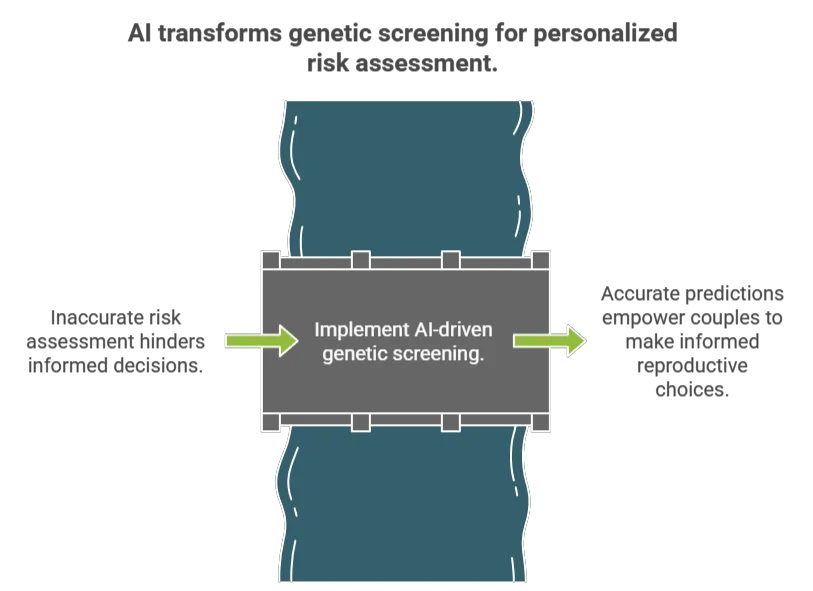
The same damaged pages appear in both copies. The result? A recessive disease—silent for generations, then suddenly visible in a child. These are the hidden mutations. And for too long, they have remained invisible to standard screening. But genomic sequencing is changing everything.
For the first time, we can systematically map the recessive disease burden in consanguineous populations—not as a vague statistical risk, but as a specific, preventable list of mutations carried by real families. This article is a roadmap to that future.
Chapter 1: What Are Hidden Mutations and Why Do They Stay Hidden?
A hidden mutation is a pathogenic variant that causes disease only when present in two copies (homozygous). In a single copy (heterozygous), it produces no symptoms. The carrier is perfectly healthy. This is why these mutations evade detection for generations. A family may have no memory of a genetic disease, yet both parents carry the same hidden mutation inherited from a common ancestor five generations back.
In consanguineous populations, the probability of two carriers meeting and having a child is dramatically higher than in outbred populations. A mutation that exists at 1% frequency in the general population might be found at 5-10% frequency within a specific tribal or cousin network due to founder effects and endogamy.
The term recessive disease burden refers to the total load of these harmful homozygous genotypes within a population. It is not a single number. It is a collection of dozens or hundreds of specific mutations, each with its own frequency, geographic distribution, and clinical severity. Mapping this burden requires moving beyond guesswork and into genomic sequencing.
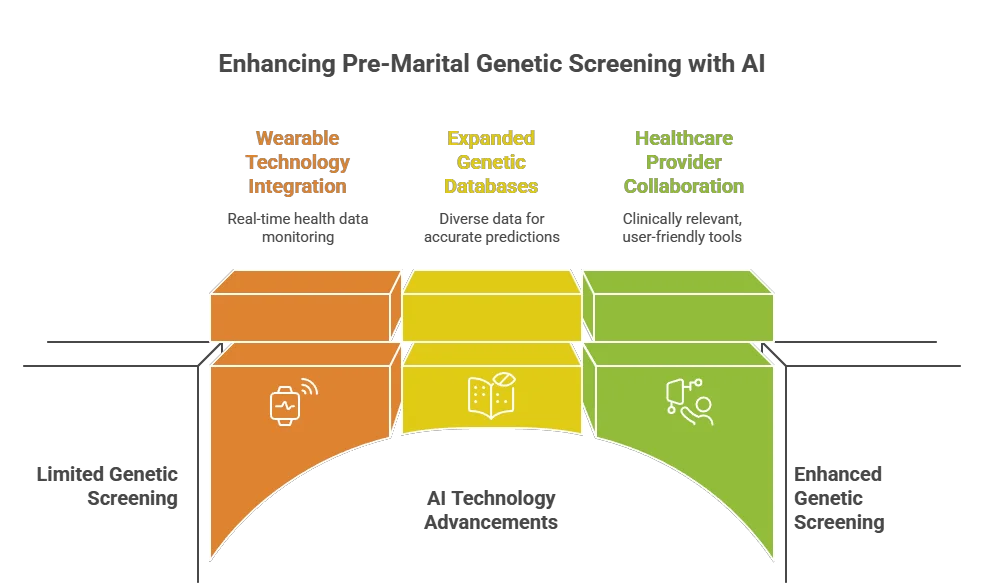
Chapter 2: What Is Consanguineous Population? Defining the Scope
To understand the map, we must first understand the territory. A consanguineous population is any community where unions between second cousins or closer exceed 10-15% of all marriages. Globally, this includes large swaths of:
- North Africa (Egypt, Morocco, Algeria, Tunisia)
- The Middle East (Saudi Arabia, Qatar, UAE, Kuwait, Oman, Jordan, Palestine)
- Central and South Asia (Pakistan, Afghanistan, parts of India, Iran, Turkey)
- Sub-Saharan Africa (Mali, Nigeria, Sudan)
- Diaspora communities (British Pakistanis, French North Africans, USA Arab-Americans)
Within these consanguineous populations, the recessive disease burden is not uniform. A mutation causing deafness in a Saudi tribe may be absent in a neighboring Egyptian village. A metabolic disorder common among Pakistani Punjabis may be rare among Sindhis. This heterogeneity is precisely why population-level genomic sequencing is essential. A one-size-fits-all carrier panel will always miss the hidden mutations that matter most to a specific family.
Chapter 3: The Old Way – Carrier Panels and Their Blind Spots
Traditional carrier screening for consanguineous populations typically uses a targeted panel of 100 to 500 known recessive genes. These panels are based on mutations previously identified in Western or Ashkenazi Jewish populations. They are woefully incomplete for most of the world.
Three Major Blind Spots:
| Blind Spot | Explanation |
|---|---|
| Population-specific mutations | A mutation causing Bardet-Biedl syndrome common in Bedouin tribes is not on any commercial panel |
| Novel mutations | Each family may have its own private mutation never seen before |
| Copy number variants | Deletions and duplications of entire exons are missed by standard SNP arrays |
The result is a false sense of security. A couple receives a “clear” carrier screening report, yet both unknowingly carry a hidden mutation specific to their village. Their child is born with a severe recessive disease. The family is devastated. The counselor is perplexed. The hidden mutation wins again.
Chapter 4: Genomic Sequencing – The Mapmaker’s Tool
Enter genomic sequencing. Unlike targeted panels, sequencing reads every letter of every gene—and even the non-coding regions that regulate gene expression. There are three main approaches:
1. Whole Exome Sequencing (WES)
Sequences all 20,000 protein-coding genes (~1-2% of the genome). Cost: ~$300-500 per sample. Detects single nucleotide variants and small insertions/deletions.
2. Whole Genome Sequencing (WGS)
Sequences the entire 3 billion base pairs. Cost: ~$600-1,000 per sample. Detects everything WES does, plus deep intronic variants, structural variants, and mitochondrial DNA.
3. Population-Specific Recessive Disease Panels (Next-Gen)
Custom-designed panels based on WGS data from 10,000+ individuals from the same consanguineous population. These panels combine the comprehensiveness of sequencing with the low cost of targeted assays.
For mapping recessive disease burden in consanguineous populations, the ideal workflow is:
Step 1: Perform WGS on 500-1,000 healthy individuals from the population to establish a baseline.
Step 2: Identify all rare homozygous variants with predicted pathogenicity.
Step 3: Validate the most common ones as a custom panel for clinical screening.
Step 4: For couples with positive family history, offer WES or WGS directly.
Chapter 5: Case Study – Mapping Recessive Deafness in a Pakistani Cohort
Let us examine a real-world example. In 2019, a research team sequenced 1,000 individuals from consanguineous families in Punjab, Pakistan, all with a history of unexplained hearing loss.
What Traditional Screening Would Have Missed:
- Standard panels test for GJB2 (connexin 26) mutations, which cause ~50% of recessive deafness in Europeans.
- In this Pakistani cohort, GJB2 explained only 12% of cases.
What Genomic Sequencing Found:
| Gene | Mutation | Frequency | Novel? |
|---|---|---|---|
| MYO15A | c.5650G>A | 18% | Yes |
| TMPRSS3 | c.916G>A | 11% | Yes |
| SLC26A4 | c.1334T>C | 9% | No (known but rare in Europeans) |
| OTOF | c.2485C>T | 7% | Yes |
| CDH23 | c.6043C>T | 6% | Yes |
The result: 51% of recessive deafness in this consanguineous population was explained by five hidden mutations not found on standard panels. A custom panel based on these findings would identify 4 out of 5 carriers. That is the power of population-specific genomic mapping.
Chapter 6: Visible Risks – What Mapping Reveals
When we systematically map recessive disease burden using genomic sequencing, several uncomfortable truths become visible risks.
Visible Risk #1: The Burden Is Higher Than Predicted
Traditional estimates suggested that offspring of first cousins have a 2-3% excess risk of recessive disease. Genomic sequencing studies in Saudi Arabia and Qatar suggest the true excess risk may be 4-6% when including ultra-rare and novel mutations. The hidden mutations were hiding a larger problem.
Visible Risk #2: Many Diseases Are Mildly Severe but Highly Prevalent
Classic recessive disorders like Tay-Sachs are devastating but rare. However, sequencing reveals a long tail of moderately severe conditions—mild intellectual disability, adult-onset ataxia, retinitis pigmentosa—that cumulatively affect 1-2% of all offspring from consanguineous unions. These conditions are often invisible to pediatricians because symptoms emerge in adolescence or adulthood.
Visible Risk #3: Homozygosity Burden Extends Beyond Known Genes
Long runs of homozygosity (ROH) can disrupt gene regulation even when no coding mutation exists. Sequencing reveals that 10-15% of consanguineous offspring have at least one ROH spanning a gene critical for neurodevelopment or metabolism. The clinical impact is subtle but real—lower IQ, shorter stature, higher blood pressure.
Chapter 7: From Mapping to Action – The Clinical Workflow
Mapping recessive disease burden is only useful if it changes clinical practice. Here is the workflow for integrating genomic sequencing into care for consanguineous populations.
For Preconception (Couples Planning Pregnancy)
- Population-specific carrier panel based on local sequencing data
- If both carry the same hidden mutation: Offer PGD or prenatal diagnosis
- If no shared mutations: Reassure, but do not stop there—proceed to polygenic risk scoring
For Prenatal (Already Pregnant)
- Trio exome sequencing (both parents + fetus via amniocentesis or CVS)
- Look for homozygous loss-of-function variants in known recessive genes
- Return results within 14 days for early decision-making
For Newborn (Symptomatic or Family History)
- Rapid WGS (results in 5-7 days)
- Identify the hidden mutation causing symptoms
- Guide treatment, prognosis, and family counseling
For Population-Level Public Health
- Sequencing-based newborn screening for all babies born to consanguineous parents
- Early identification of treatable recessive disorders (e.g., biotinidase deficiency, congenital adrenal hyperplasia)
- Build a national registry of recessive disease burden to guide research funding
Chapter 8: Ethical Challenges – When Visibility Hurts
Making hidden mutations visible is not without cost. Visible risks can lead to:
Stigma
Families identified as carrying a hidden mutation may face discrimination in marriage arrangements. “Mutation carriers” could become an underclass.
Psychological Burden
Learning that you carry a mutation for a severe disorder—even if your partner does not—can cause anxiety, depression, and marital conflict.
Genetic Determinism
A positive carrier result may be misinterpreted as a guarantee of disease in offspring, leading to unnecessary pregnancy terminations or avoidance of consanguineous marriage altogether.
Solutions:
- Mandatory genetic counseling before and after testing
- Community engagement to destigmatize carrier status (everyone carries 2-4 recessive mutations)
- Legal protections against genetic discrimination in marriage and employment
- Return of only actionable results (no variants of uncertain significance reported clinically)
Chapter 9: The Future – Universal Genomic Sequencing for All Consanguineous Couples
Within five years, the cost of WGS will drop below $200. At that price, it becomes feasible to offer universal sequencing to every consanguineous couple before marriage or conception. The vision:
A couple walks into a clinic in Riyadh, Karachi, or Cairo. They provide a saliva sample. Two weeks later, they receive a secure digital report listing:
- All recessive mutations they carry (individually)
- Any overlapping mutations (shared)
- Their combined recessive disease burden as a couple
- A personalized prevention plan
This is not eugenics. This is precision medicine. It respects the couple’s right to marry whomever they choose while ensuring they are never blindsided by a hidden mutation that could have been prevented.
Conclusion: The Map Is Not the Territory, But It Beats Walking Blind
For generations, consanguineous populations navigated the landscape of recessive disease burden without a map. They knew the risks in vague, statistical terms. They heard “4-6% chance” and shrugged. What could they do with that number? Nothing.
Now, genomic sequencing has handed them a map. Not a perfect map—it will miss some mutations, misinterpret others, and occasionally lead to false alarms. But it is infinitely better than walking blind.
The hidden mutations are no longer hidden. The visible risks are no longer abstract. For the first time, a couple planning a consanguineous marriage can say: “Show me exactly what we carry. Show me what our children might face. And then show me how to prevent it.”
That is the promise of genomic sequencing. Not to end consanguineous marriage—a practice too deeply woven into culture and faith to disappear. But to make it safer. Smarter. And finally, fully informed.
The map is here. It is time to use it.
Summary Table: Old vs New Approach
| Aspect | Traditional Carrier Screening | Genomic Sequencing Approach |
|---|---|---|
| What it detects | Known mutations from Western databases | All rare homozygous variants, including novel |
| Population specificity | Low (one panel fits few) | High (customized to each population) |
| Detection of copy number variants | No | Yes |
| Detection of deep intronic variants | No | Yes (with WGS) |
| Actionability | Binary (carrier or not) | Graded (pathogenicity scores, clinical guidance) |
| Cost per couple | $300-500 | $600-1,000 (falling rapidly) |
| False reassurance risk | High | Low |
Key Takeaways for Readers
- Hidden mutations are common in consanguineous populations but absent from standard panels.
- Genomic sequencing (WES or WGS) is the only reliable way to map recessive disease burden.
- Population-specific sequencing projects in Saudi Arabia, Qatar, and Pakistan have already identified dozens of novel recessive mutations.
- Visible risks include not only severe childhood disorders but also moderate adult-onset conditions.
- Ethical safeguards (counseling, anti-stigma campaigns, legal protections) must accompany universal sequencing.
- The future is universal WGS for all consanguineous couples at $200 or less per genome
If you are from a consanguineous population and planning a family, do not accept a generic carrier panel. Ask your genetic counselor: “Has this panel been validated on people from my specific community? If not, can we do exome sequencing?” Your hidden mutations are waiting to be found. Find them before they find your child.