
Honeybee Healing Secrets: How Nectar Compounds Support Tissue Repair
For over 8,000 years, honey has been documented as a healing agent. The ancient Sumerians inscribed it on clay tablets, the Egyptians applied it to lion fat as a salve, and Ayurvedic physicians classified it as a Yogavahi—a substance that carries the medicinal properties of herbs deep into the tissues.
MOLECULES OF HONEY
✦ BENEFITS
Chrysin – anxiety & inflammation
Galangin – antimicrobial
Pinocembrin – brain protection (unique to honey)
Apigenin – relaxation / sleep
Hesperetin – circulation & capillary health
✦ BENEFITS
Ferulic acid – UV skin protection, anti‑aging
Ellagic acid – chemopreventive properties
p‑Coumaric – antimicrobial support
Gallic acid – neuroprotective & anti‑fungal
✦ BENEFITS
Catalase – balances hydrogen peroxide, prevents cell damage
Invertase – creates glucose/fructose, delays crystallization
Diastase – digests starches, freshness marker
✦ BENEFITS
Acetic acid – antifungal / antibacterial
Citric acid – preservative, flavor
Formic acid – natural acaricide (anti‑mite)
✦ BENEFITS
Apidaecins – target Gram‑negative bacteria, broad synergistic shield
✦ BENEFITS
✦ BENEFITS
Yet, for the better part of the last century, modern medicine dismissed these traditions as folklore. We preferred synthetic molecules in sterile blister packs.
Now, facing the global crisis of antimicrobial resistance (AMR) , hospitals are urgently re-evaluating the hive. They are discovering that the bee is not just a passive producer of syrup, but an alchemist. Through the enzymatic transformation of nectar, the hive produces a biologically intelligent matrix of flavonoids, phenolic acids, and antimicrobial peptides that bacteria cannot easily outwit.
This article explores why modern medicine is re-exploring honey—not just as a topical antiseptic, but as a comprehensive tissue regeneration system that works from the outside in, and the inside out.
Part I: The Biology of Nectar Healing
To understand why honey works, we must look at how it is made. Nectar is primarily sucrose and water. It is a decent energy source, but it is not medicine. The magic begins inside the bee.
When worker bees collect nectar, they secrete enzymes from their hypopharyngeal glands directly into the liquid. Glucose oxidase is the most critical of these enzymes. During ripening, this enzyme converts a portion of the glucose into gluconic acid and hydrogen peroxide. This is the foundational act of pharmaceutical engineering: the bee creates a stable, shelf-stable prodrug that activates only when diluted.
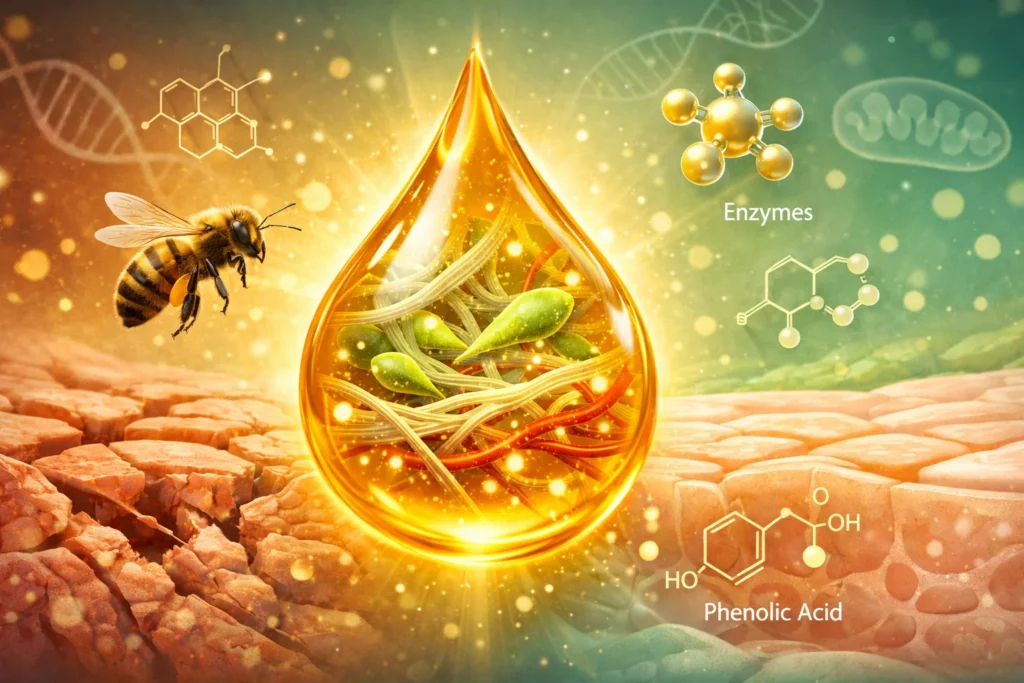
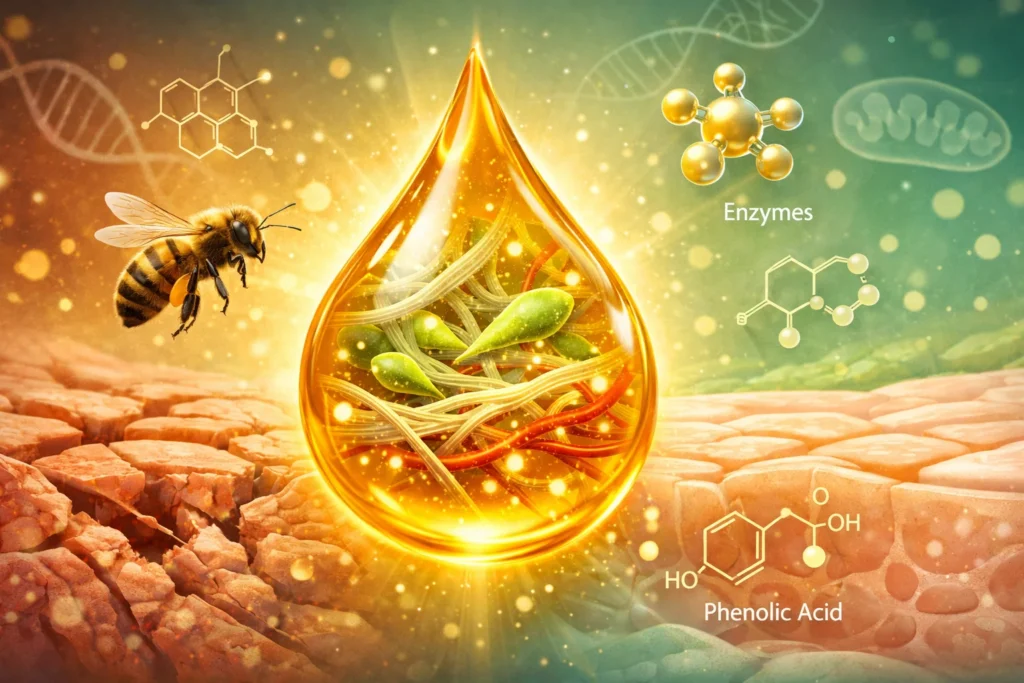
The result is a complex matrix containing over 180 compounds, including:
- Flavonoids (quercetin, chrysin, galangin, pinocembrin)
- Phenolic acids (caffeic acid, ferulic acid, ellagic acid)
- Enzymes (glucose oxidase, catalase, invertase)
- Organic acids (gluconic acid, acetic acid)
- Bee-derived antimicrobial peptides (bee-defensin-1)
Unlike a synthetic drug that targets a single receptor, this matrix engages in polypharmacology—simultaneously attacking pathogens, modulating the host immune system, and providing the nutritional scaffolding for new tissue growth.
Part II: Clinical Applications – The Hospital Hive
The Problem of Carbapenem-resistant Enterobacterales (CRE)
In the intensive care unit, time is measured in hours. When a patient develops a sepsis infection from Carbapenem-resistant Enterobacterales (CRE) , the options are terrifyingly limited. These "nightmare bacteria" possess enzymes (carbapenemases) that chew up our most powerful antibiotics.
Recent 2024 research has confirmed that Manuka honey with a high Methylglyoxal (MGO) content severely inhibits CRE growth. Even at low concentrations (15–18%), Manuka disrupts bacterial quorum sensing—the chemical communication bacteria use to coordinate attacks and build biofilms. This does not just kill the bacteria; it disarms them.
Bioactive Hydrogels and Modern Delivery
The challenge with using honey in a surgical setting is rheology—it is sticky, messy, and difficult to dose. Enter thermoresponsive hydrogels. Researchers at the Technological University of the Shannon have successfully bonded bioactive Irish honey with Pluronic F127. This polymer is a liquid when cool, but sets into a stable gel at body temperature. Hydrogen bonds form between the honey’s sugars and the polymer micelles, creating a fractal aggregate scaffold that releases antimicrobial compounds slowly, precisely, and without leakage.
This is not just dressing; it is programmable biomaterial.
Part III: The Cellular Mechanisms of Tissue Regeneration
Honey is often labeled as an "antiseptic," but this is a severe understatement. Sterility does not heal a wound; regeneration does. Honey activates four distinct biological pathways that drive true tissue repair.
1. Oxygen Release and Fibroblast Stimulation
The low-level hydrogen peroxide produced by honey does more than kill bacteria. It acts as a signaling molecule. It stimulates fibroblasts—the master builders of the dermis—to migrate into the wound bed and synthesize collagen. Simultaneously, honey’s acidic pH (3.2–4.5) triggers hemoglobin to release oxygen more readily. A well-oxygenated wound is a healing wound.
2. Angiogenesis
Using chick embryo models, researchers have demonstrated that honey significantly increases the density of blood vessels entering a wound site. This process, angiogenesis, is the difference between a scar and a regeneration. Without new capillaries, the tissue starves.
3. Immunomodulation and TGF-β Activation
Chronic wounds are stuck in a state of inflammatory arrest. Honey suppresses the NF-κB pathway, effectively turning off the "fire alarm" of the immune system. It simultaneously increases Transforming Growth Factor Beta (TGF-β) , the master switch for collagen remodeling and epithelialization.
Part IV: Propolis – The Immune Repair Resin
Honey is the most famous hive product, but propolis is arguably the most potent. Propolis is the resinous sealant bees collect from tree buds and bark. They use it to sterilize the hive entrance and encase invaders too large to eject—a "living mummy" preservation system.
For human medicine, propolis is a cellular defense amplifier.
Key Compounds in Propolis
- Caffeic Acid Phenethyl Ester (CAPE) : Perhaps the most studied compound in propolis. CAPE is a potent inhibitor of NF-κB, making it a powerful anti-inflammatory agent.
- Pinocembrin: A flavonoid unique to propolis with broad-spectrum antifungal activity.
- Chrysin: Known for its anxiolytic and antioxidant properties.
What Propolis Does at the Cellular Level
- Macrophage Activation: Propolis primes macrophages (the "big eaters" of the immune system) to clear cellular debris more efficiently, while simultaneously preventing them from releasing excessive inflammatory cytokines.
- Epithelial Migration: In skin repair, keratinocytes must crawl across the wound bed. Propolis accelerates this migration speed, closing the wound faster.
- Gut Barrier Integrity: Propolis strengthens tight junctions between intestinal cells, reducing permeability ("leaky gut") and preventing endotoxins from entering the bloodstream.
Part V: Internal Regeneration – Healing from the Inside Out
Modern medicine has traditionally viewed honey as a topical agent. This is a cultural bias, not a scientific one. Ayurveda has long prescribed honey for internal disorders, and emerging research supports this.
1. Gut Repair and Microbiome Support
The gut is a wound that never closes. It is constantly assaulted by dietary antigens, pathogens, and pharmaceuticals. Raw honey acts as a prebiotic, selectively feeding beneficial Lactobacillus and Bifidobacterium strains while suppressing pathogens like Helicobacter pylori and Clostridium difficile.
Propolis reduces intestinal permeability. In animal models, CAPE prevents the disruption of tight junctions caused by stress or alcohol. For patients with Crohn’s disease or ulcerative colitis, propolis tinctures are emerging as a low-cost, low-toxicity adjunct therapy.
2. Liver and Cellular Detoxification
The liver is the body’s primary regeneration organ. Flavonoids in honey (particularly quercetin) reduce oxidative stress in hepatocytes. This is not merely antioxidant scavenging; these compounds upregulate the body’s own detoxification enzymes (Phase II conjugation pathways), helping the liver process toxins more efficiently.
3. Immune Cell Recovery
Royal jelly—the exclusive food of the queen bee—contains specific proteins (Royalactin and defensins) that stimulate stem-cell-like activity in bone marrow. While human studies are nascent, the implication is significant: bee products may support hematopoietic recovery in patients undergoing chemotherapy or radiation.
Part VI: Practical Applications – How to Use Honey and Propolis Safely
Not all honey is medicine. The honey sold in a plastic bear for tea sandwiches is usually heat-filtered, which denatures glucose oxidase and destroys bee-defensin-1. To access the regenerative properties discussed in this article, specificity is required.
For Skin Regeneration (Burns, Wounds, Scars, Eczema)
- Choose the Right Honey: Use medical-grade Manuka with a UMF 10+ rating or raw organic honey from a verified local source. Active Leptospermum honey is preferred for infected wounds.
- Preparation: Clean the wound with sterile saline. Do not use hydrogen peroxide from the bottle; it is too aggressive and destroys granulation tissue.
- Application: Apply a 3–5mm layer of honey to the wound bed. Cover with a non-stick silicone or hydrocolloid dressing. Change every 24–48 hours.
- For Acne or Eczema: Apply a thin film of honey or propolis balm to clean skin. Leave for 20–60 minutes as a mask. Rinse with lukewarm water.
For Internal Regeneration (Gut, Immunity, Liver)
- Raw Honey: Consume 1 teaspoon of raw, unprocessed honey 20 minutes before meals. This allows the enzymes to coat the esophagus and stomach, soothing inflammation and feeding beneficial microbes.
- Propolis Tincture: Standard dosage is 15–20 drops in water, 2–3 times daily. Propolis is fat-soluble; taking it with a meal containing healthy fats (coconut oil, olive oil) improves absorption.
- Honey and Cinnamon: A traditional Ayurvedic preparation for immune support. Mix raw honey with Ceylon cinnamon; the synergistic antioxidant load exceeds either substance alone.
Safety Considerations
- Infants under 12 months: Do not administer honey due to risk of infant botulism.
- Diabetes: Honey has a lower glycemic index than sucrose, but it is still sugar. Monitor blood glucose and adjust insulin accordingly.
- Allergies: Individuals allergic to bees or pollen may react to propolis or raw honey containing pollen grains.
Part VII: The 8,000-Year Feedback Loop
There is a quiet irony in this moment. We have spent billions of dollars developing high-tech antimicrobials, only to watch bacteria evolve resistance in real time. Meanwhile, the bee—an insect with a brain the size of a grass seed—has been manufacturing a resistance-proof therapeutic for 50 million years.
The Egyptians used honey, frankincense, and grease. The Greeks used thyme honey for pleurisy. The Ayurvedic texts describe honey as a vehicle that carries herbs into the deepest tissues (Yogavahi). We are now using the tools of proteomics and polymer chemistry to validate what these traditions already knew: the hive is a pharmacy.
This is not a rejection of science; it is the expansion of it. We are learning to read the biological code written in nectar. We are discovering that Caffeic Acid Phenethyl Ester (CAPE) suppresses the same inflammatory cascades targeted by patent-protected biologics. We are learning that a hydrogel impregnated with bioactive Irish honey can outperform silver sulfadiazine in burn units.
The future of regenerative medicine may not look like a sterile laboratory. It may look like a comb—hexagonal, ancient, and full of gold.