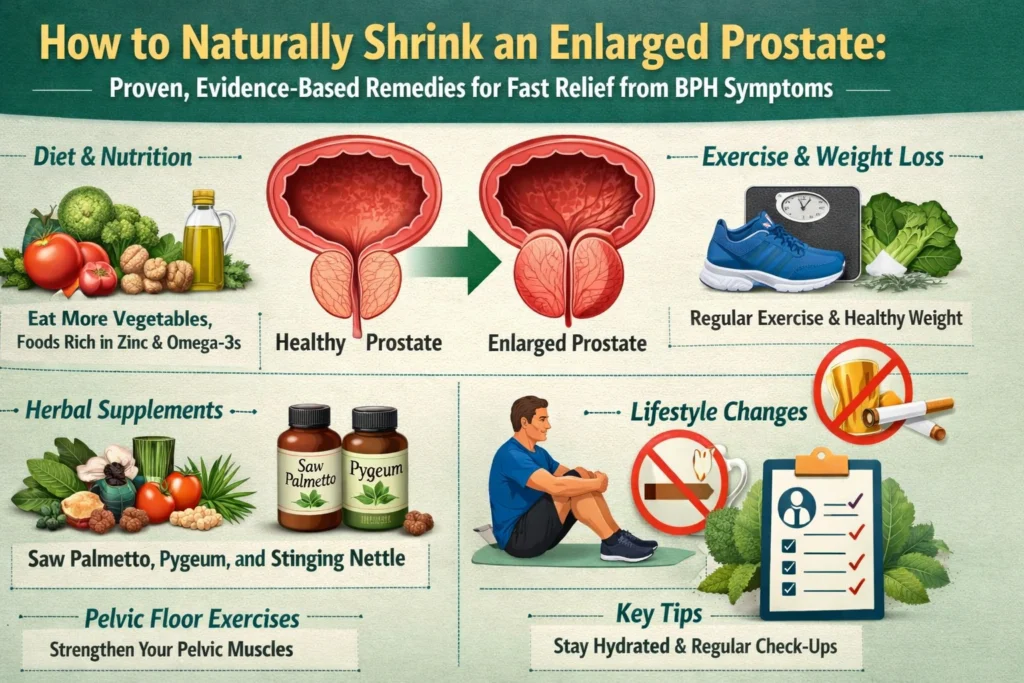

If you’re one of the millions of men dealing with an enlarged prostate—medically known as benign prostatic hyperplasia (BPH)—you know the frustration all too well. The constant urge to urinate, the weak stream, the middle-of-the-night bathroom trips that shatter your sleep. By age 50, half of all men experience BPH symptoms, and by age 80, that number jumps to a staggering 90% .
The good news? While you can’t completely “cure” BPH naturally, emerging research confirms that specific dietary changes, targeted nutrients, and lifestyle modifications can significantly reduce prostate size and dramatically improve symptoms—often without the side effects associated with prescription medications .
This comprehensive guide walks you through the most effective, evidence-based natural strategies for shrinking an enlarged prostate.
Understanding Your Prostate: What’s Actually Happening?
Before diving into solutions, it’s crucial to understand what you’re dealing with. The prostate is a small, walnut-sized gland located just below the bladder, wrapping around the urethra. Its primary job is producing fluid that nourishes and transports sperm.
As men age, hormonal shifts—particularly the conversion of testosterone to dihydrotestosterone (DHT)—cause prostate cells to multiply. This growth constricts the urethra, creating the classic BPH symptoms :
- Weak or interrupted urine stream
- Difficulty starting urination
- Frequent urination, especially at night (nocturia)
- Feeling that your bladder isn’t completely empty
- Sudden, urgent need to urinate
Left untreated, BPH can lead to urinary retention, bladder damage, and even kidney problems . But here’s what most doctors don’t emphasize enough: your daily habits have profound power over prostate health.
The Scientific Foundation: What the Latest Research Reveals
A comprehensive 2025 review published in the National Institutes of Health database analyzed decades of research on integrative approaches to prostate disease management. The findings are striking:
Plant-based diets rich in fruits, vegetables, whole grains, and healthy fats demonstrate protective effects against prostate conditions, while diets high in saturated fats and processed foods significantly increase risk .
The study specifically highlighted that bioactive compounds—including lycopene, omega-3 fatty acids, and polyphenols—are directly linked to reduced disease progression. Physical activity emerged as another critical factor, enhancing hormonal balance and reducing inflammation throughout the body .
Let’s translate this science into actionable strategies.
1. The Prostate-Shrinking Diet: Foods That Fight Enlargement
Lycopene-Rich Foods: The Tomato Connection
Lycopene is a powerful antioxidant that gives tomatoes, watermelon, and pink grapefruit their vibrant red color. Research consistently links higher blood lycopene levels with reduced risk of prostate enlargement and prostate cancer .
How to maximize lycopene absorption:
- Cooked tomatoes are superior to raw. Tomato sauce, paste, and cooked tomatoes contain lycopene that’s more easily absorbed by your body
- Pair with healthy fats. Cooking tomatoes in olive oil dramatically increases lycopene absorption
- Aim for 5-10 servings weekly. Think pasta sauce, tomato soup, or even pizza with tomato base
Top lycopene sources:
- Cooked tomatoes and tomato products
- Watermelon
- Pink grapefruit
- Guava
- Red bell peppers (cooked)
Cruciferous Vegetables: Nature’s Prostate Protectors
Broccoli, cauliflower, kale, and Brussels sprouts contain sulforaphane and other phytochemicals that studies show can inhibit prostate cell growth and reduce inflammation .
What to eat:
- Broccoli — especially the florets
- Cauliflower
- Brussels sprouts
- Cabbage
- Kale
- Arugula
Try this: Aim for at least one serving of cruciferous vegetables daily. Lightly steam them to preserve nutrients while making them digestible.
Zinc: The Prostate’s Favorite Mineral
The prostate gland stores more zinc than any other organ in the body. This mineral prevents prostate enlargement and may actually help shrink an already swollen prostate .
Best food sources:
- Pumpkin seeds (in the shell) — one of the richest sources
- Oysters
- Nuts — especially cashews and almonds
- Beans — chickpeas, kidney beans, black beans
👉 Shop Zinc Supplements on Amazon
Omega-3 Fatty Acids: The Anti-Inflammatory Powerhouse
Omega-3s reduce systemic inflammation, which plays a significant role in prostate enlargement. The Mediterranean diet, rich in omega-3s from fish, has been shown to lower BPH risk and improve urinary symptoms .
Best sources:
- Fatty fish: Salmon, sardines, mackerel, anchovies (2-3 servings weekly)
- Flaxseeds and chia seeds
- Walnuts
Soy and Plant Proteins: The Red Meat Replacement
Multiple studies have found that men who consume more red meat have a higher risk of enlarged prostate. Conversely, plant-based proteins offer protective benefits .
Replace red meat with:
- Tofu and tempeh
- Edamame
- Lentils
- Beans and chickpeas
- Soy — specifically, soy consumption has been linked to reduced prostate enlargement risk
2. Supplements That Actually Work
The supplement market is flooded with prostate products, but not all are created equal. Here are the ingredients with the strongest scientific backing.
Saw Palmetto (Serenoa repens)
Saw palmetto is the most researched herbal remedy for BPH. It works by inhibiting 5-alpha-reductase—the same enzyme targeted by prescription prostate-shrinking medications—effectively reducing DHT levels that drive prostate growth .
What the research shows: Saw palmetto extract improves urinary symptoms including frequent urination, weak flow, and the sensation of incomplete bladder emptying .
How to use: Look for standardized extracts with 85-95% fatty acid content. Supercritical CO2 extraction methods produce the highest quality products without chemical solvents .
Beta-Sitosterol
This plant sterol is found in pumpkin seeds, saw palmetto, and pygeum. It works by reducing inflammation and improving urinary flow. Some studies suggest it’s particularly effective for reducing residual urine volume—the amount left in your bladder after urination .
Natural sources: Pumpkin seeds, rice bran, wheat germ, pecans
Pygeum Africanum
Extracted from African cherry tree bark, pygeum has been used for centuries to treat urinary problems. Modern research confirms it reduces inflammation and improves urinary symptoms .
How it works: Pygeum contains phytosterols that reduce inflammation in the prostate and bladder neck, improving urine flow and reducing nighttime urination.
👉 Shop Pygeum Supplements on Amazon
Stinging Nettle Root
Despite its painful name, stinging nettle root is a powerful ally for prostate health. It contains bioactive phytochemicals that help shrink prostate tissue and acts as a natural diuretic, flushing inflammatory wastes through urination .
Preparation: You can drink nettle root tea by steeping 1 teaspoon of dried leaves in hot water for 10 minutes, 2-3 times daily .
Pumpkin Seed Oil
Pumpkin seeds are rich in fatty acids and phytosterols that act on 5-alpha reductase—the same mechanism as prescription BPH medications. This helps release pressure on the urinary canal and improves urine output .
Benefits: Regular pumpkin seed consumption is associated with reduced prostate size and improved urinary flow .
👉 Shop Pumpkin Seed Oil on Amazon
Important Warning: Avoid Selenium and Vitamin E Supplements
This is critical: Do not take high-dose selenium or vitamin E supplements for prostate health. A landmark 2014 study published in the Journal of the National Cancer Institute found that:
- Selenium supplements nearly doubled aggressive prostate cancer risk in men with already-high selenium levels
- Vitamin E supplements more than doubled prostate cancer risk in men with low selenium levels
Multivitamins containing standard doses are safe, but avoid standalone high-dose supplements of these nutrients .
3. Lifestyle Strategies That Shrink the Prostate
Exercise: The Non-Negotiable Habit
Physical activity is one of the most powerful tools for prostate health. It stabilizes hormone levels, reduces inflammation, and helps maintain a healthy weight—all critical factors for managing BPH .
The recommendation: 150 minutes of moderate aerobic activity OR 75 minutes of vigorous activity weekly
What works:
- Brisk walking (30 minutes, 5 days weekly)
- Cycling
- Swimming
- Resistance training (strengthens pelvic muscles)
Why it matters: Exercise reduces abdominal fat, which directly worsens lower urinary tract symptoms. For men already diagnosed with BPH, regular physical activity significantly reduces symptom severity .
Pelvic Floor Exercises (Kegels)
Strengthening your pelvic floor muscles improves bladder control and can significantly reduce BPH symptoms .
How to do them correctly:
- Identify your pelvic floor muscles by trying to stop urination mid-stream (do this only once to locate the muscles—don’t do it regularly)
- Empty your bladder completely
- Lie on your back with knees bent and apart
- Tighten your pelvic floor muscles for 5 seconds
- Relax for 5 seconds
- Repeat 10-20 times, 2-3 times daily
Sitz Baths: An Old-School Remedy That Works
Hydrotherapy, specifically alternating hot and cold baths, increases blood circulation in the pelvic area and reduces prostate swelling .
The protocol:
- Fill one tub with hot water (105-115°F / 40-46°C) and add ½ cup Epsom salt
- Fill a second tub with cold water (55-85°F / 13-29°C) with a few drops of lavender essential oil
- Sit in hot water for 3 minutes
- Move to cold water for 1 minute
- Repeat 3 times, ending with cold
Why it works: The temperature contrast creates a pumping action that reduces inflammation and promotes healing. A study on patients recovering from prostate surgery found that those who used sitz baths had fewer complications and faster recovery .
Apple Cider Vinegar
Raw, unfiltered apple cider vinegar contains astringent properties that may help shrink swollen prostate glands. It also supports weight management and helps prevent urinary tract infections—common BPH complications .
How to use:
- Mix 1-2 tablespoons raw ACV with 1 tablespoon honey in warm water
- Drink twice daily
- Alternatively, add 1 cup ACV to a cool bath and soak for 10 minutes
4. Foods and Habits to Avoid
Red Meat and Saturated Fats
High-fat diets reduce antioxidant production in the body, leaving your prostate vulnerable to inflammation and enlargement. The Prostate Cancer Foundation notes that excessive saturated fat intake is strongly linked to BPH progression .
Caffeine and Alcohol
Both substances irritate the bladder and act as diuretics, making you feel like you need to urinate more frequently. Cutting back—especially in the evening—can dramatically reduce nighttime bathroom trips .
Fluid Timing
Stop drinking fluids 2-3 hours before bedtime to reduce nocturia (waking to urinate). This simple change alone can transform sleep quality .
Grilled and Charred Meats
Carcinogens produced when grilling meats can inflame the prostate. Choose baking, broiling, poaching, or steaming instead .
5. Stress Management: The Overlooked Factor
Chronic stress worsens BPH symptoms and may accelerate disease progression. Stress triggers inflammation throughout the body and tightens pelvic muscles, making urination more difficult .
Evidence-based stress reduction techniques:
- Mindfulness meditation — reduces urinary symptoms and improves quality of life
- Yoga — combines physical activity with stress reduction
- Cognitive-behavioral therapy — helps manage the psychological impact of chronic symptoms
Quick Reference: Your Natural Prostate-Shrinking Protocol
| Category | Action | Frequency |
|---|---|---|
| Diet | Eat cooked tomatoes, cruciferous vegetables, pumpkin seeds, fatty fish | Daily |
| Avoid | Red meat, saturated fats, caffeine, alcohol (especially evening) | Daily |
| Supplements | Saw palmetto, beta-sitosterol, pygeum, zinc | As directed |
| Exercise | Aerobic activity + resistance training | 150 min/week |
| Kegels | Pelvic floor contractions | 10-20 reps, 2-3x daily |
| Sitz Bath | Alternating hot/cold baths | 3 cycles, 2-3x weekly |
| Hydration | Stop fluids 2-3 hours before bed | Daily |
Important Medical Disclaimer
While natural approaches can be remarkably effective, they work best as part of a comprehensive plan developed with your healthcare provider. BPH symptoms can mimic prostate cancer, and proper diagnosis is essential. Always consult your urologist before starting any supplement regimen, especially if you’re taking prescription medications.
If you experience:
- Complete inability to urinate
- Blood in your urine
- Severe pain with urination
- Fever or chills
Seek immediate medical attention.
Final Thoughts
An enlarged prostate doesn’t have to control your life. The strategies outlined here—rooted in decades of scientific research and clinical experience—give you a roadmap to naturally reduce prostate size, improve urinary symptoms, and reclaim your quality of life.
Consistency is key. These aren’t quick fixes; they’re lifestyle changes that work synergistically over time. Start with one or two changes, build momentum, and watch as your symptoms gradually improve.
Your prostate has been working for you your entire life. Now it’s time to return the favor.
🥗 Enlarged Prostate Diet List
🟢 1. Pumpkin Seeds & Flaxseeds (Daily Core Habit)
These are among the most researched foods for supporting Benign Prostatic Hyperplasia.
Why they matter:
- Pumpkin seeds → high in zinc (supports prostate tissue health)
- Flaxseeds → rich in omega-3 + lignans (reduce inflammation)
👉 Daily dose: 1–2 tablespoons
🛒 Shop on Amazon (cosmocare-20)
👉 https://www.amazon.com/s?k=pumpkin+seeds+organic&tag=cosmocare-20
👉 https://www.amazon.com/s?k=flaxseed+organic+ground&tag=cosmocare-20
Pro Tip: Choose raw, unsalted, organic variants for maximum benefit.
🟢 2. Green Tea (Daily Hormonal Support)
Green tea contains catechins that may help regulate pathways involved in prostate enlargement.
👉 Daily intake: 2–3 cups
🛒 Shop on Amazon
👉 https://www.amazon.com/s?k=organic+green+tea+bags&tag=cosmocare-20
👉 https://www.amazon.com/s?k=matcha+green+tea+powder&tag=cosmocare-20
🟢 3. Healthy Fats (Upgrade Your Cooking Oil)
Replace processed oils with:
- Extra virgin olive oil
- Avocados
- Fatty fish (salmon, sardines)
👉 Helps reduce systemic inflammation (a key driver of prostate issues)
🛒 Shop on Amazon
👉 https://www.amazon.com/s?k=extra+virgin+olive+oil+cold+pressed&tag=cosmocare-20
🟢 4. Herbal Supplements
These are widely used in natural prostate support protocols:
- Saw Palmetto → supports hormone balance
- Pygeum → supports urinary flow
- Pumpkin seed oil → symptom relief
🛒 Shop on Amazon
👉 https://www.amazon.com/s?k=saw+palmetto+supplement&tag=cosmocare-20
👉 https://www.amazon.com/s?k=prostate+support+supplement+men&tag=cosmocare-20
👉 https://www.amazon.com/s?k=pumpkin+seed+oil+capsules&tag=cosmocare-20
🟢 5. Vegetables That Support Prostate Health
Eat 2–3 servings daily:
- Broccoli, cauliflower (cruciferous vegetables)
- Spinach, kale
- Tomatoes (rich in lycopene)
👉 These support detox pathways and hormone metabolism.
🟢 6. Fruits for Antioxidant Protection
- Pomegranate
- Berries (blueberries, strawberries)
- Citrus fruits
👉 Help combat oxidative stress linked to prostate enlargement.
❌ Foods to Avoid
Limit or eliminate:
- Red meat
- Processed/fried foods
- Excess dairy
- Alcohol & caffeine (can worsen urinary symptoms)
🧠 Simple Daily Routine (High Compliance Plan)
Morning
- Warm water + flaxseed
- Green tea
Lunch
- Vegetable-rich meal + olive oil
- Add pumpkin seeds
Evening
- Green tea + nuts
Night
- Light, low-fat dinner
- If you focus on just 3 daily habits, choose:
- ✔ Pumpkin seeds
- ✔ Green tea
- ✔ Cruciferous vegetables
- These directly target:
- Inflammation
- Hormonal imbalance
- Urinary symptoms of Benign Prostatic Hyperplasia
Best Prostate Supplements in 2026: Doctor-Recommended Picks for Fast Relief from BPH Symptoms
If you’re struggling with frequent urination, weak flow, or disrupted sleep, you’re not alone. Millions of men deal with Benign Prostatic Hyperplasia—and many are turning to natural supplements for relief.
But here’s the problem:
👉 Most supplements don’t work.
👉 Some are underdosed.
👉 Others are just marketing hype.
🔬 What Actually Works for Prostate Health?
Before buying anything, understand this:
The most effective prostate supplements contain at least 2–3 of these clinically studied ingredients:
- Saw Palmetto → reduces DHT (hormone linked to prostate growth)
- Beta-sitosterol → improves urinary flow
- Pygeum → reduces nighttime urination
- Pumpkin seed oil → supports bladder function
- Zinc → essential for prostate health
👉 If a product doesn’t include these, skip it.
Top Prostate Supplements
1. Best Overall: Saw Palmetto-Based Formula
✔ Ideal for daily long-term support
👉 Shop on Amazon
https://www.amazon.com/s?k=saw+palmetto+supplement&tag=cosmocare-20
Why it works:
- Targets hormone imbalance
- Reduces prostate swelling
- Backed by multiple studies
2. Best for Fast Symptom Relief: Multi-Ingredient Prostate Complex
✔ Best for men with frequent urination
👉 Shop on Amazon
https://www.amazon.com/s?k=prostate+support+supplement+men&tag=cosmocare-20
Look for:
- Saw palmetto + pygeum + beta-sitosterol combo
- Added zinc + vitamin D
3. Best Natural Option: Pumpkin Seed Oil Capsules
✔ Great for mild symptoms
👉 Shop on Amazon
https://www.amazon.com/s?k=pumpkin+seed+oil+capsules&tag=cosmocare-20
Benefits:
- Improves bladder control
- Reduces nighttime urination
- Very low side effects
4. Best Budget Option: Zinc + Herbal Blend
✔ Good entry-level supplement
👉 Shop on Amazon
https://www.amazon.com/s?k=zinc+prostate+supplement&tag=cosmocare-20
⚠️ Common Mistakes to Avoid
❌ Buying “cheap” supplements with tiny doses
❌ Expecting results in 2–3 days (takes 4–8 weeks)
❌ Ignoring diet (supplements alone are not enough)
🧠 Combine Supplements with This Daily Routine
To maximize results:
Morning
- Green tea
- Flax seeds
Lunch
- Vegetable-rich meal
- Olive oil
Evening
- Pumpkin seeds
Night
- Take supplement consistently
📊 How Long Before You See Results?
- Week 2–3 → slight improvement
- Week 4–6 → reduced urgency
- Week 8+ → noticeable symptom relief
Consistency is the key variable.⚖️ Final Verdict (Conversion Insight)
If you want the highest success rate, follow this stack:
✔ Saw palmetto supplement
✔ Pumpkin seeds daily
✔ Green tea habit
👉 This combination targets:
- Hormones
- Inflammation
- Urinary flow
- Q1. Can supplements shrink an enlarged prostate?
- They may not “shrink” dramatically, but they can significantly reduce symptoms and improve quality of life.
- Q2. Are prostate supplements safe?
- Most natural supplements are safe when taken as directed, but consult a doctor if you’re on medication.
- Q3. What is the #1 ingredient for prostate health?
- Saw palmetto is the most studied and widely used.
Did you find this guide helpful? Share it with someone who might benefit from learning about natural prostate health strategies.
Medical Disclaimer: This article is for informational purposes only and does not constitute medical advice. Always consult with a qualified healthcare provider before starting any new supplement regimen or making significant dietary changes. The Amazon links provided are for convenience and may earn commission; they are not a substitute for professional medical guidance.