

Foods to Eat, High-Glycaemic Fruits to Avoid & Healthy Fasting Tips
Fasting during Ramadan is a deeply spiritual practice, but it also places unique demands on the body. Long hours without food and water can affect blood sugar levels, hydration, digestion, and energy if not managed carefully. By following the right precautions and choosing the right foods, you can fast safely while maintaining good health throughout the holy month.
Oral Medication Planner for Ramadan Fasting
1. Patient Profile
2. Current Oral Medications
Medical decision support tool v2.0 · Dr. Mohammed Abdul Azeem Siddiqui, Cosmo General Hospital · 2026
Always verify with clinical judgment. High-risk patients should not fast.
Quick Reference Card: Oral Medications During Ramadan
| Drug Class | Examples | Ramadan Recommendation | Hypo Risk |
|---|---|---|---|
| Metformin | Glucophage | Continue. Split dose: ½ at Iftar, ½ at Suhoor | Low |
| Sulfonylureas (old) | Glibenclamide | AVOID – switch to safer alternative | 🔴 HIGH |
| Sulfonylureas (newer) | Gliclazide MR, Glimepiride | Reduce dose 30-50%, take with Iftar only | 🟡 Moderate |
| DPP-4 Inhibitors | Sitagliptin, Vildagliptin | Continue. Once daily with Iftar. Twice daily: Iftar + Suhoor | 🟢 Low |
| SGLT2 Inhibitors | Empagliflozin, Dapagliflozin | Continue with Iftar. HYDRATION CRITICAL | 🟢 Low |
| Meglitinides | Repaglinide | Take ONLY with meals. Skip if not eating | 🟡 Moderate |
| TZDs | Pioglitazone | Continue once daily with Iftar | 🟢 Low |
| Alpha-glucosidase inhibitors | Acarbose | Take with first bite of Iftar and Suhoor | 🟢 Low |
| GLP-1 agonists | Liraglutide, Semaglutide | Continue. Once daily: with Iftar | 🟢 Low |
1. Stay Well Hydrated
Dehydration is one of the most common problems during fasting, especially in hot climates.
Tips:
- Drink 8–10 glasses of water between Iftar and Suhoor.
- Avoid caffeine (tea, coffee, soft drinks) as it increases water loss.
- Include water-rich foods like cucumber, watermelon, and soups at Iftar.
2. Never Skip Suhoor
Suhoor is your body’s fuel for the day. Skipping it can cause fatigue, dizziness, and low blood sugar.
Best Suhoor foods:
- Whole grains (oats, brown rice, whole-wheat bread)
- Protein (eggs, yogurt, lentils)
- Healthy fats (nuts, seeds, olive oil)
These foods release energy slowly and keep you full longer.
3. Break the Fast Gently
Avoid overeating or starting with heavy, oily foods.
Healthy Iftar routine:
- Start with 1–2 dates and water.
- Have a light soup or fruit.
- Eat a balanced meal after Maghrib prayers.
4. Avoid Fried & Sugary Foods
Deep-fried snacks, sweets, and sugary drinks cause sudden blood sugar spikes followed by energy crashes, fatigue, and weight gain.
Limit: samosas, pakoras, jalebi, soft drinks, sweet syrups.
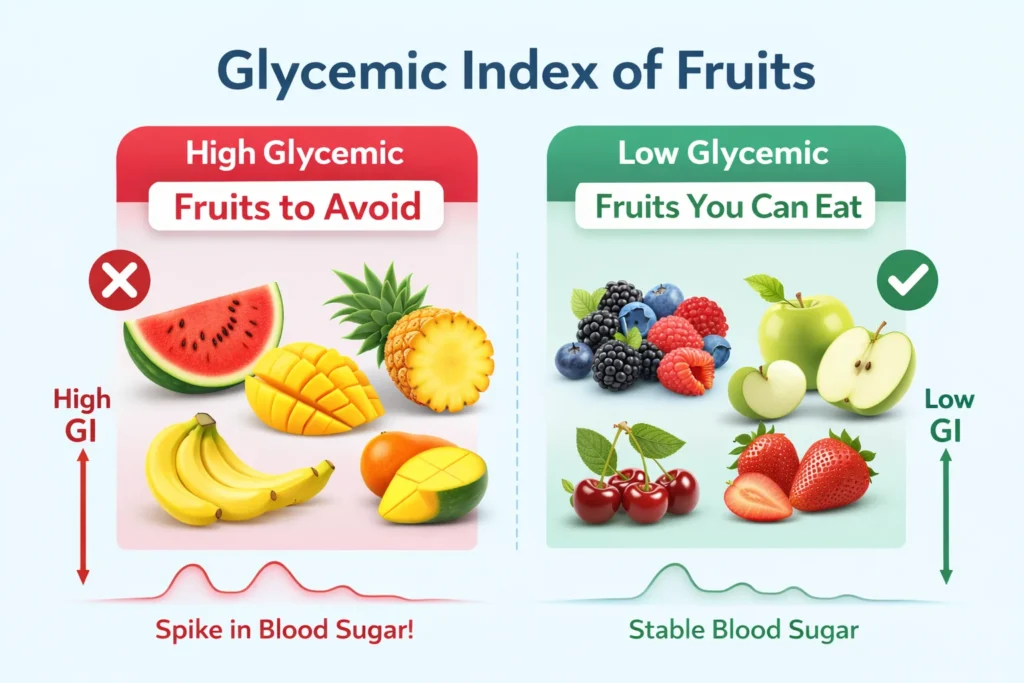
5. High Glycaemic Index (GI) Fruits to Avoid During Ramadan
High-GI fruits raise blood sugar quickly, leading to hunger, thirst, and tiredness during fasting hours. These should be limited, especially for diabetics or those trying to maintain energy.
❌ High-GI Fruits to Avoid or Limit
| Fruit | Glycaemic Index (Approx.) |
|---|---|
| Watermelon | 72 |
| Pineapple | 66 |
| Ripe Banana | 62 |
| Mango | 60 |
| Papaya | 60 |
| Dates (in excess) | 70+ |
| Jackfruit | 75 |
| Overripe Grapes | 59–65 |
These fruits can be eaten in small portions at Iftar, but should be avoided at Suhoor.
6. Better Low-GI Fruit Options
Choose fruits that release sugar slowly and keep you full.
✅ Low-GI Fruits
- Apples
- Pears
- Oranges
- Berries
- Guava
- Kiwi
- Cherries
7. Control Portion Sizes
Even healthy foods can cause problems when eaten in large quantities. Eat slowly and stop before feeling overly full.
8. Get Enough Rest
Lack of sleep affects metabolism and immunity. Aim for 6–8 hours of sleep daily, including short naps if needed.
9. Light Physical Activity
Gentle walks after Iftar or before Suhoor help digestion and blood circulation. Avoid intense workouts while fasting.
10. Special Advice for Diabetics & Elderly
People with diabetes, heart conditions, or low blood pressure should consult a doctor before fasting and monitor blood sugar regularly.
Final Words
Ramadan fasting can be a powerful way to detox your body and strengthen your spirit—if done correctly. By staying hydrated, eating balanced meals, avoiding high-glycaemic fruits, and practicing moderation, you can enjoy a healthy and energetic Ramadan.