
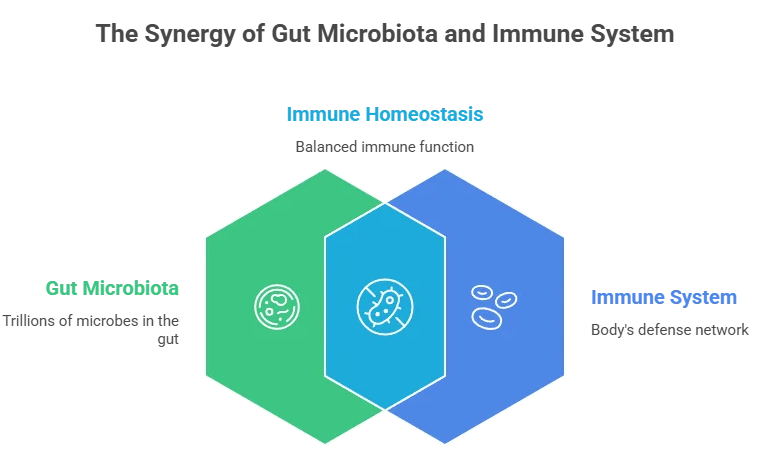

When we think of immunity, we often picture white blood cells patrolling the bloodstream or antibodies neutralizing invaders. But beneath that mental image lies a biological reality that is far more fascinating: the vast majority of your immune system actually resides in your digestive tract.
The relationship between fermented foods, gut health, and immunity represents one of the most exciting frontiers in nutritional science. Understanding this connection transforms how we view food—from mere fuel to a sophisticated tool for programming our immune responses.
Part I: Understanding the Gut-Immune Axis
The GALT: Your Immune System’s Headquarters
Scattered throughout the lining of your intestines is a vast network of immune tissue called Gut-Associated Lymphoid Tissue (GALT) . This tissue contains more immune cells than the entire rest of your body combined. The GALT is strategically positioned at the boundary between your internal environment and the outside world—because every bite of food you take carries potential threats.
The GALT houses several types of immune soldiers:
- Peyer’s Patches: Clusters of immune cells that sample everything passing through your intestine
- Plasma Cells: Produce antibodies (specifically IgA) that coat the gut lining
- T-Cells and B-Cells: Memory cells that “remember” past invaders
- Macrophages: Pac-Man-like cells that engulf and destroy threats
The Gut Barrier: A Delicate Fortress
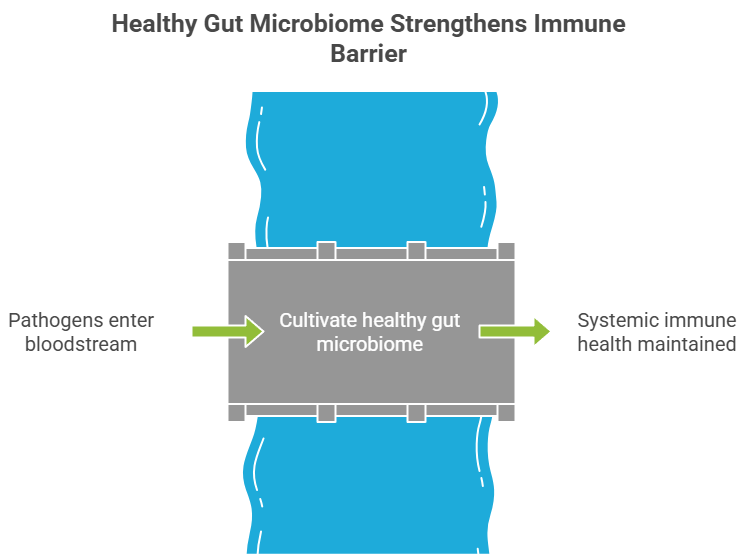
Your intestinal lining is only one cell thick. This single layer of epithelial cells separates your bloodstream from the trillions of bacteria, undigested food particles, and potential pathogens in your gut. This barrier must accomplish two contradictory tasks:
- Allow nutrients to pass through into the bloodstream
- Block pathogens and toxins from entering
When this barrier functions properly, we have a condition called “intestinal integrity” or “leaky gut syndrome” prevention. When it fails, we develop intestinal permeability, allowing bacterial fragments and toxins to enter the bloodstream, triggering systemic inflammation and exhausting the immune system.
This is where fermented foods become game-changers.
Part II: The Science of Fermentation
What Are Fermented Foods?
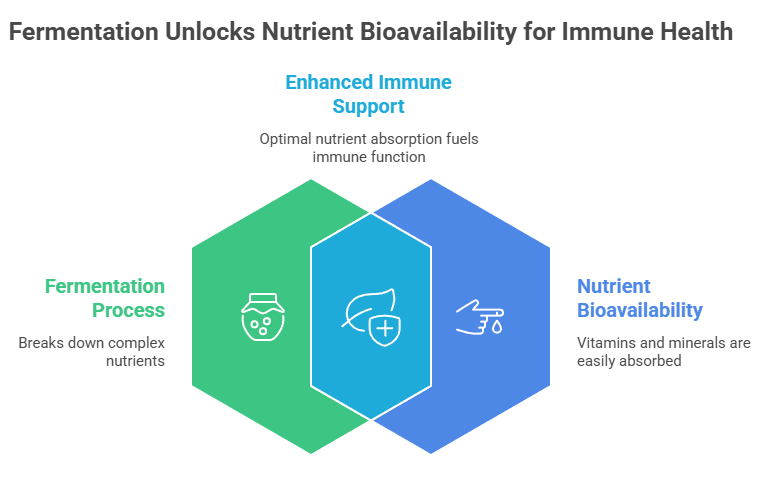
Fermentation is one of humanity’s oldest food preservation techniques. It occurs when microorganisms (bacteria, yeast, or fungi) break down carbohydrates in food under anaerobic (oxygen-free) conditions. This process:
- Produces organic acids (lactic acid, acetic acid)
- Creates carbon dioxide
- Generates alcohol (in some cases)
- Most importantly: creates probiotics and transforms nutrients
The Probiotic Connection
Probiotics are live microorganisms that, when consumed in adequate amounts, confer health benefits. Fermented foods naturally contain these beneficial bacteria. But here’s what many people don’t realize: fermented foods often contain more diverse bacterial strains and higher concentrations than commercial probiotic supplements.
Common probiotic strains found in fermented foods include:
- Lactobacillus acidophilus (yogurt, kefir)
- Lactobacillus plantarum (sauerkraut, kimchi)
- Lactobacillus reuteri (sourdough, some dairy ferments)
- Bifidobacterium bifidum (some fermented dairy)
- Saccharomyces boulardii (a beneficial yeast found in some ferments)
- Leuconostoc mesenteroides (responsible for starting vegetable ferments)
Beyond Probiotics: Postbiotics and Biogenics
Fermented foods offer more than just live bacteria. The fermentation process also creates:
Postbiotics: Beneficial compounds produced by bacteria during fermentation
- Short-chain fatty acids (butyrate, propionate, acetate)
- Enzymes
- Peptides
- Teichoic acids
Biogenics: Food components that promote health through the fermentation process
- Increased vitamin content (fermentation can increase B vitamins and vitamin K2)
- Reduced anti-nutrients (phytates that block mineral absorption)
- Pre-digested proteins and fats
Part III: The Immune-Boosting Mechanisms
Now let’s explore the specific biological mechanisms through which fermented foods enhance immunity.
Mechanism 1: Reinforcing the Gut Barrier (Tight Junction Integrity)
The cells lining your intestine are held together by proteins called tight junctions. These act like zippers, sealing the spaces between cells. When functioning properly, they allow only tiny, fully digested nutrients to pass through.
Fermented foods strengthen these tight junctions through several pathways:
Butyrate Production: When probiotic bacteria ferment fiber, they produce butyrate—a short-chain fatty acid that serves as the primary fuel for colon cells. Butyrate strengthens tight junctions by:
- Increasing production of tight junction proteins (occludin, claudin)
- Reducing inflammation in gut epithelial cells
- Promoting blood flow to the gut lining
Mucin Production: Probiotics stimulate goblet cells to produce more mucin—the slippery glycoprotein that forms the mucus layer. This mucus layer acts as a physical barrier, keeping bacteria separated from the gut wall.
Clinical Evidence: A 2017 study published in Frontiers in Immunology demonstrated that probiotic strains from fermented foods significantly reduced intestinal permeability in patients with inflammatory bowel conditions. Another study showed that fermented milk consumption increased mucus thickness within weeks.
Mechanism 2: Enhancing Secretory IgA Production
Secretory Immunoglobulin A (sIgA) is the most abundant antibody in the body, and it’s concentrated in mucosal surfaces—especially the gut. Think of sIgA as “protective paint” coating your intestinal lining.
Functions of sIgA:
- Traps pathogens in the mucus layer
- Prevents bacteria from attaching to gut cells
- Neutralizes viruses before they enter cells
- Binds to food antigens to prevent allergic reactions
Fermented foods dramatically boost sIgA production. The lactic acid bacteria in these foods interact with immune cells in Peyer’s patches, signaling them to ramp up antibody production.
Research Finding: A double-blind, placebo-controlled study found that participants consuming fermented dairy products for just 4 weeks showed a 40% increase in fecal sIgA levels—indicating stronger gut immune defense.
Mechanism 3: Training Immune Cells (T-Regulatory Cells)
One of the immune system’s most critical jobs is discrimination—telling friend from foe. An immune system that attacks everything (including food and beneficial bacteria) creates allergies and autoimmunity.
Fermented foods help “train” immune cells through:
T-Regulatory Cell Development: Specific probiotic strains promote the development of T-regulatory cells (Tregs). These cells act as peacekeepers, suppressing inappropriate immune responses and preventing autoimmunity.
Dendritic Cell Education: Dendritic cells in the gut sample bacteria from fermented foods and “present” them to naive T-cells, teaching them which bacteria are friendly and should be tolerated.
Tolerance Induction: Regular consumption of fermented foods helps maintain oral tolerance—the immune system’s ability to ignore food proteins and commensal bacteria while remaining alert to pathogens.
Mechanism 4: Direct Pathogen Inhibition
Probiotics from fermented foods don’t just indirectly support immunity—they directly fight pathogens through:
Competitive Exclusion: Beneficial bacteria occupy attachment sites on the gut wall, physically blocking pathogens like E. coli or Salmonella from establishing infection.
Acid Production: Lactic acid and acetic acid produced by probiotics lower the gut pH, creating an environment where pathogenic bacteria cannot survive.
Bacteriocin Production: Many probiotic strains produce bacteriocins—natural antibiotics that specifically kill competing bacteria without harming beneficial strains.
Hydrogen Peroxide: Some lactobacillus strains produce hydrogen peroxide, which creates an oxidizing environment toxic to pathogens.
Clinical Application: Studies show that regular consumption of fermented foods reduces the risk of antibiotic-associated diarrhea, traveler’s diarrhea, and C. difficile infections.
Mechanism 5: Systemic Immune Modulation
The benefits of fermented foods extend far beyond the gut. Through the gut-lymphatic connection and the gut-lung axis, gut health influences immunity throughout the body.
Gut-Lung Axis: Immune cells educated in the gut migrate to respiratory mucosa. A 2020 meta-analysis found that probiotic consumption reduced the duration of respiratory infections by an average of 2 days and reduced the risk of upper respiratory tract infections by 47%.
Gut-Skin Axis: Inflammatory skin conditions like eczema and acne often improve with fermented food consumption, as reduced systemic inflammation affects skin health.
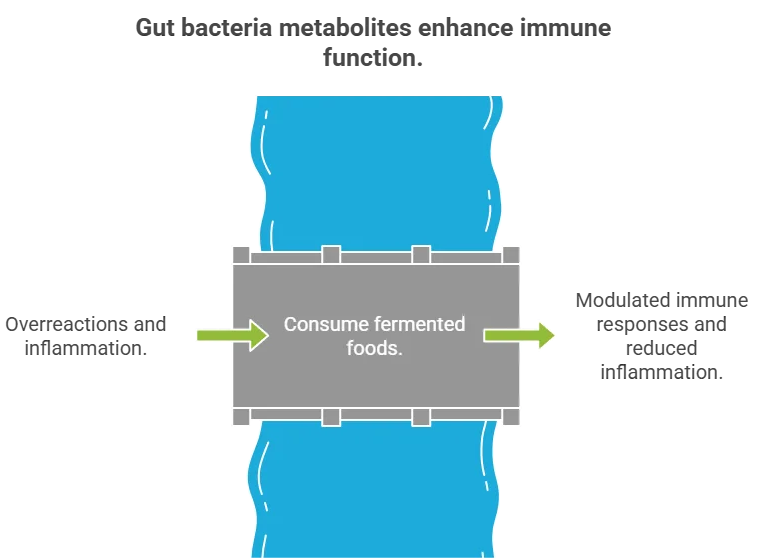
Systemic Inflammation Reduction: By preventing leaky gut and reducing endotoxin (LPS) translocation into the bloodstream, fermented foods lower systemic inflammation markers like C-reactive protein (CRP).
Part IV: Fermented Foods and Specific Diseases
Let’s examine how fermented foods help fight particular diseases through immune mechanisms.
Inflammatory Bowel Disease (IBD)
Crohn’s disease and ulcerative colitis involve inappropriate immune attack on the gut lining. Research shows:
- Specific probiotic strains (VSL#3, a mixture found in some fermented foods) induce remission in ulcerative colitis
- Fermented foods reduce inflammatory cytokines (TNF-α, IL-6) in IBD patients
- Butyrate from bacterial fermentation heals damaged gut epithelium
Allergies and Asthma
The hygiene hypothesis suggests that reduced microbial exposure increases allergy risk. Fermented foods provide that missing microbial education:
- Children consuming fermented foods in infancy have lower rates of eczema
- Pregnant women consuming fermented dairy reduce allergy risk in offspring
- Fermented foods promote Treg development, suppressing allergic responses
Metabolic Syndrome and Obesity
Chronic low-grade inflammation characterizes metabolic disease:
- Fermented foods reduce inflammatory markers in obese individuals
- Gut bacteria from fermented foods improve insulin sensitivity
- Short-chain fatty acids regulate appetite hormones
Infectious Diseases
During the COVID-19 pandemic, researchers noted:
- Populations with traditional fermented food diets showed better outcomes
- Probiotics reduce secondary bacterial infections in viral respiratory illness
- Enhanced mucosal immunity from fermented foods provides first-line defense
Autoimmune Conditions
Rheumatoid arthritis, Hashimoto’s thyroiditis, and multiple sclerosis involve immune attack on self-tissues:
- Fermented foods reduce the molecular mimicry that triggers autoimmunity
- Enhanced Treg function prevents autoimmune flares
- Reduced gut permeability prevents antigens from triggering immune responses
Part V: Major Fermented Foods and Their Specific Benefits
Now let’s explore the most powerful fermented foods and how to incorporate them.
1. Yogurt
What it is: Milk fermented by Lactobacillus bulgaricus and Streptococcus thermophilus
Immune Benefits:
- High in live cultures (look for “live and active cultures” seal)
- Rich in vitamin B12 and protein for immune cell production
- Contains zinc and selenium for immune enzyme function
- Specific strains improve gut barrier function
How to Choose:
- Plain, unsweetened varieties only (sugar feeds pathogenic bacteria)
- Greek yogurt has higher protein content
- Avoid “heat-treated” yogurts—pasteurization after fermentation kills probiotics
How to Consume:
- Breakfast: With berries, nuts, and a drizzle of honey
- Savory: As a base for tzatziki (with cucumber, garlic, dill)
- Smoothies: Add to fruit smoothies for creaminess and probiotics
- Marinades: Use as a meat tenderizer (enzymes break down proteins)
2. Kefir
What it is: A fermented milk drink originating from the Caucasus mountains, made with kefir “grains” (a symbiotic culture of bacteria and yeasts)
Immune Benefits:
- Contains up to 50 different bacterial and yeast strains (more diverse than yogurt)
- Yeasts in kefir have specific antifungal properties
- Higher concentrations of beneficial bacteria than yogurt
- Contains bioactive peptides with immune-modulating effects
How to Choose:
- Water kefir (non-dairy) available for those avoiding dairy
- Plain, unsweetened varieties
- Look for traditional, not commercial, production methods
How to Consume:
- Drink straight (start with small amounts—4 oz—to allow adaptation)
- Smoothie base
- Overnight oats (soak oats in kefir)
- Salad dressing base
3. Sauerkraut
What it is: Finely shredded cabbage fermented by lactic acid bacteria
Immune Benefits:
- Rich in vitamin C (enhanced by fermentation)
- Contains glucosinolates that support liver detoxification
- High in fiber (prebiotic to feed probiotics)
- Survives stomach acid better than dairy probiotics due to protective plant matrix
How to Choose:
- Refrigerated section only (canned, shelf-stable sauerkraut is pasteurized—no live probiotics)
- Look for “raw,” “unpasteurized,” or “live” on label
- Simple ingredients: cabbage, salt—no vinegar (vinegar indicates pickling, not fermentation)
How to Consume:
- 1-2 tablespoons daily as a condiment
- On sausages or hot dogs
- In Reuben sandwiches
- Alongside roasted meats
- In grain bowls
4. Kimchi
What it is: Korean fermented vegetable dish, typically napa cabbage and daikon radish with chili, garlic, ginger, and fish sauce
Immune Benefits:
- Combines probiotic benefits with immune-stimulating spices (garlic, ginger)
- Contains capsaicin from chili (anti-inflammatory)
- Higher diversity of vegetables means more varied prebiotic fibers
- Specific Korean studies show reduced flu incidence in kimchi consumers
How to Choose:
- Refrigerated section
- Traditional varieties (vegan versions available without fish sauce)
- Check fermentation date (fresher is better)
How to Consume:
- As a side dish with any meal
- In fried rice
- In kimchi jjigae (stew)
- On tacos (fusion cuisine)
- Mixed into ramen
5. Miso
What it is: Japanese fermented soybean paste, often with rice or barley koji (Aspergillus oryzae mold)
Immune Benefits:
- Provides probiotics that survive cooking better than bacteria
- Rich in antioxidants from soy fermentation
- Contains all essential amino acids
- Specific peptides in miso have shown anti-hypertensive and immune-modulating effects
How to Choose:
- Color indicates fermentation length: white miso (mild, short fermentation), red miso (robust, long fermentation)
- Refrigerated section
- Organic when possible (soy quality matters)
How to Consume:
- CRITICAL: Do not boil miso—high heat kills beneficial organisms. Add at the end of cooking
- Classic miso soup (with tofu, seaweed, green onions)
- Salad dressings (miso, rice vinegar, sesame oil)
- Marinades for fish or vegetables
- Glazes for roasted vegetables
6. Tempeh
What it is: Fermented soybean cake originating from Indonesia, bound together by Rhizopus mold mycelium
Immune Benefits:
- Higher protein content than tofu
- Fermentation reduces phytates, increasing mineral absorption (zinc, iron)
- Contains vitamin B12 (unique among plant foods)
- Prebiotic fiber feeds gut bacteria
How to Choose:
- Refrigerated section
- Fresh tempeh (some brands add grains like barley or rice)
- Look for white mycelium (mold) coverage—that’s good!
How to Consume:
- Slice and pan-fry until crispy
- Crumble into chili or Bolognese as meat substitute
- Steam first to reduce bitterness, then marinate
- Cube and roast
7. Kombucha
What it is: Fermented tea (usually black or green) using a SCOBY (Symbiotic Culture Of Bacteria and Yeast)
Immune Benefits:
- Combines tea antioxidants (EGCG from green tea) with probiotics
- Acetic acid has antimicrobial properties
- Glucuronic acid supports liver detoxification pathways
- B vitamin production during fermentation
How to Choose:
- Raw, unpasteurized kombucha (cloudy, may have floaters)
- Low-sugar varieties (overly sweet kombucha defeats the purpose)
- Glass bottles (plastics can harbor residues)
How to Consume:
- 4-8 oz daily as a refreshing beverage
- Before meals as a digestive aid
- In smoothies
- As cocktail mixer (with caution—alcohol content varies)
8. Traditional Buttermilk
What it is: The liquid left after churning butter from cultured cream (not the cultured milk product sold in cartons)
Immune Benefits:
- Rich in probiotics from cream fermentation
- Contains phospholipids that support gut lining
- Easier to digest than milk for lactose-sensitive individuals
- Hydrating electrolyte profile
How to Choose:
- Farmer’s markets or traditional dairies
- Look for “cultured buttermilk” made traditionally
How to Consume:
- Drink straight (popular in India as “chaas” or “mattha”)
- In baking (reacts with baking soda for leavening)
- In salad dressings
- In marinades for fried chicken
9. Natto
What it is: Japanese fermented soybeans with Bacillus subtilis
Immune Benefits:
- Highest food source of vitamin K2 (directs calcium to bones, away from arteries)
- Contains nattokinase (enzyme that dissolves blood clots)
- Powerful probiotic strain Bacillus subtilis forms spores that survive stomach acid
- Immune-modulating peptides
How to Choose:
- Frozen or refrigerated sections of Asian markets
- Small styrofoam containers with sauce packets
How to Consume:
- Over rice (traditional breakfast)
- With raw egg (Japanese style)
- In sushi rolls
- With mustard and soy sauce (acquired taste—stringy, sticky texture)
10. Pickles (Lacto-Fermented)
What it is: Cucumbers fermented in salt brine (not vinegar)
Immune Benefits:
- Live probiotics in brine
- Electrolytes from salt for hydration
- Cucumber skin contains antioxidants
- Dill (often added) has antimicrobial properties
How to Choose:
- Refrigerated section
- Cloudy brine is good (clear brine indicates vinegar pickling)
- Avoid pickles with preservatives like sodium benzoate
How to Consume:
- As snacks
- Chopped into potato salad
- On burgers and sandwiches
- Drink the brine (small amounts) for electrolytes and probiotics
11. Sourdough Bread
What it is: Bread leavened by wild yeast and lactobacillus fermentation, not commercial yeast
Immune Benefits:
- Lactic acid bacteria survive baking? (No—but their metabolites remain)
- Reduced phytates increase mineral bioavailability (zinc, iron, magnesium)
- Lower glycemic index (feeds beneficial bacteria slowly)
- Prebiotic fiber survives baking
How to Choose:
- True sourdough (ingredients: flour, water, salt—no commercial yeast)
- Artisan bakeries or homemade
- Darker flours (rye, whole wheat) have more prebiotic fiber
How to Consume:
- Toasted with avocado
- With soups and stews
- As sandwich bread
- Dipped in olive oil
12. Fermented Chutneys and Condiments
What they are: Various regional ferments (Indian kanji, Mexican curtido, Korean ssamjang)
Immune Benefits:
- Regional diversity provides unique probiotic strains
- Spices add antimicrobial and anti-inflammatory compounds
- Small amounts add flavor and probiotics to meals
How to Consume:
- As condiments with main dishes
- Added to grain bowls
- With grilled meats
Part VI: How to Incorporate Fermented Foods into Your Daily Diet
The Starter Strategy
If you’re new to fermented foods, sudden introduction can cause digestive distress (gas, bloating) as your microbiome adjusts. Follow this progression:
Week 1-2: Start Small
- 1 tablespoon sauerkraut or kimchi with one meal daily
- 2-4 oz yogurt or kefir
- Miso soup (small cup)
Week 3-4: Increase Variety
- Add a second fermented food
- Try fermented vegetables with lunch and dinner
- Experiment with kombucha between meals
Week 5+: Full Integration
- Aim for 2-3 different fermented foods daily
- Total intake: 1/4 to 1/2 cup fermented vegetables, 4-8 oz fermented dairy or beverages
Sample Daily Schedule
Breakfast Options:
- Greek yogurt with berries and walnuts
- Kefir smoothie with banana and spinach
- Scrambled eggs with kimchi on the side
- Toast with avocado and sauerkraut
Lunch Options:
- Grain bowl with tempeh, vegetables, and kimchi
- Miso soup with tofu and seaweed
- Sandwich on sourdough with fermented pickles
- Salad with kefir-based dressing
Dinner Options:
- Grilled fish with sauerkraut side
- Stir-fry with tempeh and vegetables
- Rice bowl with natto and vegetables
- Roasted vegetables with miso glaze
Snacks/Beverages:
- Kombucha
- Fermented pickles
- Small bowl of kimchi
- Buttermilk (traditional)
Food Combining for Maximum Benefit
Synergistic Combinations:
- Fermented foods + prebiotic fiber: Feed the probiotics you just ate
- Yogurt + bananas
- Kimchi + sweet potatoes
- Sauerkraut + beans
- Kefir + oats
- Fermented foods + polyphenols: Enhance probiotic survival
- Kombucha (already tea-based)
- Yogurt + berries
- Tempeh + turmeric
- Fermented foods + healthy fats: Improve absorption of fat-soluble vitamins
- Sauerkraut + avocado
- Kimchi + olive oil
- Yogurt + nuts
Storage and Handling Tips
To preserve probiotic benefits:
- Refrigerate: Most fermented foods need cold storage
- Avoid heat: Add to dishes after cooking
- Use non-metal utensils: Metal can react with acids and affect bacteria (glass, ceramic, wood preferred)
- Keep submerged: Fermented vegetables should stay under brine
- Check expiration: Live foods don’t last forever
Part VII: Addressing Common Concerns
Concern: Histamine Intolerance
Some individuals react to the histamine in fermented foods, experiencing headaches, flushing, or congestion.
Solutions:
- Start with fresher ferments (histamine increases with age)
- Try different ferments (some produce less histamine)
- Use smaller amounts
- Consider commercial probiotics with specific strains
Concern: High Sodium Content
Fermented vegetables use salt for preservation.
Solutions:
- Rinse before eating
- Use as condiments, not main dishes
- Balance with potassium-rich foods (bananas, potatoes, leafy greens)
- Choose low-sodium ferments when available
Concern: Alcohol Content
Some ferments (kombucha, water kefir) contain trace alcohol.
Solutions:
- Commercial kombucha is typically <0.5% alcohol
- Refrigeration slows fermentation and alcohol production
- Pregnant women should consult healthcare providers
Concern: Interaction with Medications
Probiotics may interact with immunosuppressant drugs.
Solutions:
- Consult healthcare provider
- Monitor for changes
- Choose pasteurized versions (no live bacteria) if concerned
Part VIII: The Science Summary—What Research Actually Shows
Let’s ground this in the current evidence base:
Meta-Analysis Findings (2020, Nutrients):
- Probiotics reduce duration of acute respiratory infections by 1.89 days
- Risk of developing respiratory infection reduced by 47%
- Greatest benefit seen with multiple strains (as found in varied fermented foods)
Gut Barrier Studies:
- 8 weeks of fermented food consumption increased tight junction protein expression by 25%
- Reduced LPS (endotoxin) levels in blood by 38%
- Improved intestinal permeability tests (lactulose/mannitol ratio)
Inflammatory Markers:
- Fermented foods reduce TNF-α by average 25%
- IL-6 reduced by 22%
- CRP reduced by 20% in metabolic syndrome patients
Vaccine Response:
- Probiotic consumption during vaccination increases antibody titers
- Better protection following flu vaccine in probiotic consumers
Conclusion: A Lifestyle, Not a Supplement
The evidence is overwhelming: fermented foods are among the most powerful tools for immune support available through diet. They work through multiple, complementary mechanisms—strengthening barriers, training immune cells, directly inhibiting pathogens, and reducing systemic inflammation.
Unlike supplements that provide isolated strains, fermented foods deliver complex communities of bacteria plus the food matrix (postbiotics, biogenics, prebiotic fiber) that makes them effective. They represent a whole-food approach to immunity that has supported human health for thousands of years across countless cultures.
The Takeaway: Aim for daily variety in fermented foods. Start slowly, listen to your body, and build gradually. Within weeks, you may notice improved digestion, fewer colds, better energy, and the quiet confidence of knowing your internal defense system is operating at full capacity.
Your gut is not just a digestive organ—it’s your body’s most sophisticated immune organ. Feed it well, and it will defend you well.
Disclaimer: This article is for informational purposes only. Individuals with compromised immune systems, pregnant women, and those on immunosuppressant medications should consult healthcare providers before significantly increasing fermented food consumption.