In today’s always-on American lifestyle—endless Zoom calls, commute traffic, social media scrolls, processed snacks, and chronic stress—feeling bloated, sluggish, or constantly low on energy has become the norm for millions. The root cause for many? An imbalanced gut microbiome, disrupted by ultra-processed diets, frequent antibiotics, sedentary habits, and high stress levels.
The exciting news: Three traditional fermented superstars—sauerkraut, kimchi, and kombucha—deliver a simple, delicious, and science-backed way to reset your gut. Recent research (2021–2026, including the landmark Stanford fermented-food trial in Cell and multiple 2025 RCTs) shows that consistent intake of these foods increases microbial diversity, reduces inflammation, improves digestion, strengthens immunity, supports metabolic health, and helps restore natural energy. These aren’t just probiotic pills—they’re whole-food “synbiotics” packed with live beneficial bacteria, prebiotic fibers, and powerful postbiotics (like short-chain fatty acids/SCFAs such as butyrate and acetate) that nourish and rebalance your existing gut ecosystem.
Why Your Gut Microbiome Is Everything (and How Fermented Foods Help)
Your gut is home to trillions of microbes that influence digestion, immune function, mood (via the gut-brain axis), blood sugar control, inflammation levels, and even weight. Low diversity and dysbiosis are linked to bloating, IBS symptoms, fatigue, frequent colds, metabolic issues, and chronic low-grade inflammation—common complaints across the U.S.
Fermented foods act like natural “fertilizer” for your gut:
- Boost alpha-diversity (richer variety of good microbes)
- Enrich SCFA-producing families (Bifidobacterium, Faecalibacterium, Prevotella, Lachnospiraceae, Akkermansia)
- Reduce inflammation-linked genera (Ruminococcus torques, Dorea)
- Strengthen the gut barrier, lower inflammatory markers (e.g., CRP, IL-6), and balance immune responses
- Produce SCFAs that fuel colon cells, reduce inflammation, improve motility, and support healthy blood sugar and cholesterol
The 2021 Stanford RCT (and follow-up analyses) found that 6+ daily servings of fermented foods dramatically increased microbiome diversity and cut 19 inflammatory proteins in blood. 2025 studies confirm these foods shift the microbiome toward healthier patterns—especially in people with Western-diet imbalances.
Sauerkraut: The Gentle, Everyday Gut Reshaper
Classic fermented cabbage (lacto-fermented with salt) delivers live lactic acid bacteria (Lactiplantibacillus plantarum, Leuconostoc), prebiotic fibers, and protective postbiotics.
Key benefits: Better digestion, reduced bloating/IBS symptoms, stronger gut barrier, lower inflammation, immune support. Recent trials show favorable taxonomic shifts and long-term microbiome stability.
How to enjoy: Choose raw, unpasteurized (refrigerated section at Whole Foods, Trader Joe’s, Costco, or local health stores). Start with 1–2 tbsp/day on salads, sandwiches, hot dogs, or as a side.
Kimchi: The Spicy, Multi-Ingredient Immunity & Metabolism Powerhouse
Napa cabbage + radish + garlic, ginger, gochugaru, and more—fermented into a bold, complex mix with diverse probiotics and phytonutrients (capsaicin, alliums).
Key benefits: Boosts Bifidobacterium and SCFA-producers; lowers fasting glucose, triglycerides, blood pressure; supports anti-obesity effects; strong immune modulation (2025 npj trial: enhanced antigen-presenting cells, balanced T-cell responses). Ideal for metabolic health and inflammation control.
How to enjoy: Raw/unpasteurized versions from H-Mart, Whole Foods, or brands like Mother-in-Law’s. Add ¼ cup to rice bowls, tacos, eggs, burgers, or eat as a side. Rinse if watching sodium.
Kombucha: The Bubbly, Antioxidant-Rich Daily Sip
Fermented tea (black or green) with a SCOBY creates acetic/lactic acids, polyphenols, and probiotics (Weizmannia coagulans, Bifidobacterium).
Key benefits: Enriches beneficial taxa; reduces constipation/bloating; modest improvements in triglycerides/glucose (2025 RCTs); extra antioxidant/anti-inflammatory power from tea polyphenols. A refreshing, low-sugar soda alternative.
How to enjoy: Raw/low-sugar brands (GT’s, Health-Ade, Kevita, Brew Dr.) widely available at grocery stores and cafes. Start with 4–8 oz/day; sip with meals or as an afternoon pick-me-up.
Why the Trio Works So Well Together
- Maximum microbial diversity — Different bases (cabbage vs. multi-veggie vs. tea) introduce varied probiotics, prebiotics, and metabolites.
- Synergistic effects — Sauerkraut & kimchi provide solid-food fiber/probiotics; kombucha adds liquid antioxidants and acids.
- Easy daily integration — Fits American meals: sauerkraut on sandwiches, kimchi in bowls/tacos, kombucha as a drink.
2025–2026 wellness trends highlight fermented foods as a top strategy for gut health—variety beats relying on one source.
Practical Tips for Everyday Americans
- Buy raw/unpasteurized at grocery chains, health stores, or online (Thrive Market, Amazon).
- Start slow (small portions) to minimize temporary gas as your microbiome adjusts.
- Aim for: ¼–½ cup ferments + 8–12 oz kombucha several times per week.
- Pair with high-fiber foods (veggies, beans, whole grains, fruits) for amplified results.
- Watch sodium/spice: Rinse kimchi/sauerkraut if needed; choose low-sugar kombucha.
Cautions: Generally safe, but consult your doctor if immunocompromised, pregnant, have reflux/SIBO, or histamine intolerance. Not a replacement for medical care or a balanced diet.
The Fermented Trio gives you a tasty, evidence-based reset for your gut—one that fits busy American life. From crushing bloating to reclaiming steady energy, a few tangy bites and bubbly sips could make a real difference. Give it a try—your gut (and your energy) might thank you!
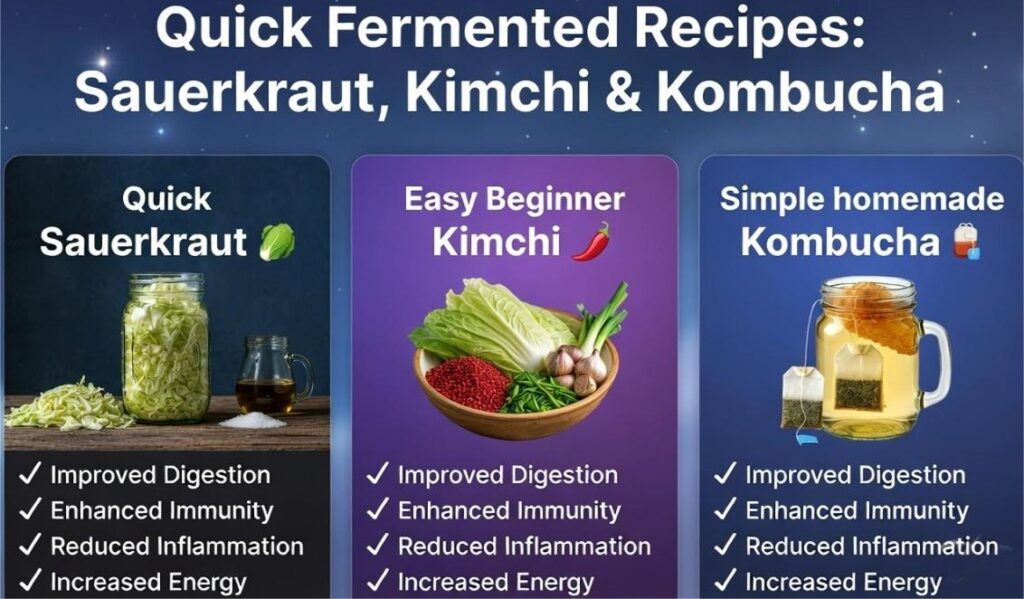
Here are quick, beginner-friendly recipes for preparing sauerkraut, kimchi, and kombucha at home. These are simple versions using common ingredients and minimal equipment—perfect for trying fermented foods without a long wait. Note that true traditional fermentation takes time (days to weeks), but these focus on easy, fast-prep methods that get you enjoying them sooner.
1. Quick Sauerkraut (Ready in About 1 Hour – Fresh Style)
This is a fast “quick kraut” or vinegar-brined version inspired by simple recipes—no long fermentation needed for immediate tangy crunch.
Ingredients (makes about 1 quart):
- ½ head green cabbage (about 1–1.5 lbs), finely shredded
- 1 cup distilled white vinegar
- 1 cup water
- 1 tbsp salt (kosher or sea salt)
- 1 tbsp sugar (optional, for balance)
- Optional: ½ onion, diced; caraway seeds or juniper berries for flavor
Steps:
- Shred the cabbage finely (use a food processor or knife).
- In a saucepan, combine water, vinegar, salt, and sugar. Bring to a boil, stirring until salt/sugar dissolve (about 3 minutes).
- Pack the shredded cabbage tightly into a clean quart mason jar (add onion or spices if using).
- Pour the hot brine over the cabbage, pressing down so it’s fully submerged (use a clean weight or small jar if needed).
- Let cool to room temperature, then seal and refrigerate.
- Ready to eat after 30–60 minutes (flavor deepens over 1–2 days). Keeps in fridge up to 2–3 weeks.
Enjoy on sandwiches, hot dogs, salads, or as a side—crunchy and tangy!
2. Easy Beginner Kimchi (Mak Kimchi – Ready in 1–2 Days)
This simplified “easy kimchi” (mak kimchi) uses pre-cut cabbage for speed—no whole-head wrapping. Vegan-friendly version without fish sauce.
Ingredients (makes about 1–2 quarts):
- 1 medium napa cabbage (about 2–3 lbs), cut into bite-size pieces
- ¼ cup sea salt (for brining)
- 1 cup water (for paste)
- 2–3 tbsp gochugaru (Korean red chili flakes; adjust for heat)
- 4–5 garlic cloves, minced
- 1-inch piece fresh ginger, minced
- 1 tbsp sugar or apple/pear puree
- 2–3 green onions, chopped
- Optional: 1 small daikon radish or carrot, julienned; 1–2 tbsp soy sauce or miso for umami
Steps:
- Place chopped cabbage in a large bowl, sprinkle with salt, and massage gently. Let sit 1–2 hours (or overnight in fridge) until wilted and watery.
- Rinse cabbage 2–3 times under cold water; drain well.
- Make paste: Mix gochugaru, garlic, ginger, sugar, and water into a thick paste (add soy/miso if using).
- In a large bowl, toss drained cabbage, green onions, and paste until evenly coated (wear gloves—it’s spicy!).
- Pack tightly into clean jars, pressing down to remove air bubbles and submerge in its juices.
- Leave at room temperature 1–2 days (taste daily; burp jars to release gas), then refrigerate.
- Ready after 1–3 days (flavor peaks in 1–2 weeks). Keeps 1–2 months in fridge.
Serve as a side, in fried rice, tacos, or bowls—spicy, garlicky, and addictive!
3. Simple Homemade Kombucha (First Fermentation – Ready in 7–14 Days)
This basic batch method uses store-bought starter or a SCOBY (grow your own or buy one). It’s beginner-simple; second fermentation adds fizz/flavor later.
Ingredients (makes 1 gallon):
- 1 gallon filtered water (divide: 4 cups for boiling + rest cold)
- 6–8 black tea bags (or 2–3 tbsp loose black/green tea)
- 1 cup cane sugar (organic preferred)
- 1 SCOBY (symbiotic culture) + 1–2 cups starter tea (from previous batch or store-bought raw kombucha)
Steps:
- Boil 4 cups water, add tea bags, steep 10–15 minutes (strong brew).
- Remove tea bags, stir in sugar until dissolved.
- Add remaining cold water to cool mixture to room temperature (important—hot kills SCOBY).
- Pour into a clean 1-gallon glass jar, add SCOBY and starter tea.
- Cover with a clean cloth/towel and rubber band (allows air but keeps bugs out).
- Ferment at room temperature (68–85°F) away from direct sun for 7–14 days. Taste daily after day 7—tangy and less sweet when ready.
- Remove SCOBY (save with some tea for next batch), bottle the kombucha, and refrigerate. (Optional: second fermentation in bottles with fruit for carbonation.)
Enjoy plain or flavored—refreshing, lightly fizzy, and gut-friendly!
Tips for All:
- Use clean glass jars and utensils to avoid contamination.
- Start small if new to ferments—your gut may need time to adjust (mild gas is normal).
- Store in fridge once ready to slow fermentation.
- For true live probiotics, keep raw/unpasteurized.
These quick recipes make fermented foods approachable and fun—try one this weekend! Your gut will love the variety.
Disclaimer: This is for educational purposes only and not medical advice. Fermentation involves live cultures—consult a healthcare professional if you have health conditions, are pregnant, or immunocompromised before trying.

Dr. Mohammed Abdul Azeem Siddiqui, MBBS, M.Tech (Biomedical Engineering – VIT, Vellore)
Registered Medical Practitioner – Reg. No. 39739
Physician • Clinical Engineer • Preventive Diagnostics Specialist
Dr. Mohammed Abdul Azeem Siddiqui is a physician–engineer with over 30 years of dedicated clinical and biomedical engineering experience, committed to transforming modern healthcare from late-stage disease treatment to early detection, preventive intelligence, and affordable medical care.
He holds an MBBS degree in Medicine and an M.Tech in Biomedical Engineering from VIT University, Vellore, equipping him with rare dual expertise in clinical medicine, laboratory diagnostics, and medical device engineering. This allows him to translate complex laboratory data into precise, actionable preventive strategies.
Clinical Mission
Dr. Siddiqui’s professional mission centers on three core pillars:
Early Disease Detection
Identifying hidden biomarker abnormalities that signal chronic disease years before symptoms appear — reducing complications, hospitalizations, and long-term disability.
Preventive Healthcare
Guiding individuals and families toward longer, healthier lives through structured screenings, lifestyle intervention frameworks, and predictive diagnostic interpretation.
Affordable Evidence-Based Treatment
Delivering cost-effective, scientifically validated care accessible to people from all socioeconomic backgrounds.
Clinical & Technical Expertise
Across three decades of continuous practice, Dr. Siddiqui has worked extensively with:
Advanced laboratory analyzers and automation platforms
• Cardiac, metabolic, renal, hepatic, endocrine, and inflammatory biomarker systems
• Preventive screening and early organ damage detection frameworks
• Clinical escalation pathways and diagnostic decision-support models
• Medical device validation, calibration, compliance, and patient safety standards
He is recognized for identifying subclinical biomarker shifts that predict cardiovascular disease, diabetes, fatty liver, kidney disease, autoimmune inflammation, neurodegeneration, and accelerated biological aging long before conventional diagnosis.
Role at IntelliNewz
At IntelliNewz, Dr. Siddiqui serves as Founder, Chief Medical Editor, and Lead Clinical Validator. Every article published is:
Evidence-based
• Clinically verified
• Technology-grounded
• Free from commercial bias
• Designed for real-world patient and physician decision-making
Through his writing, Dr. Siddiqui shares practical health intelligence, early warning signs, and preventive strategies that readers can trust — grounded in decades of frontline medical practice.
Contact:
powerofprevention@outlook.com
📌 Disclaimer: The content on IntelliNewz is intended for educational purposes only and does not replace personalized medical consultation. For individual health concerns, please consult your physician.