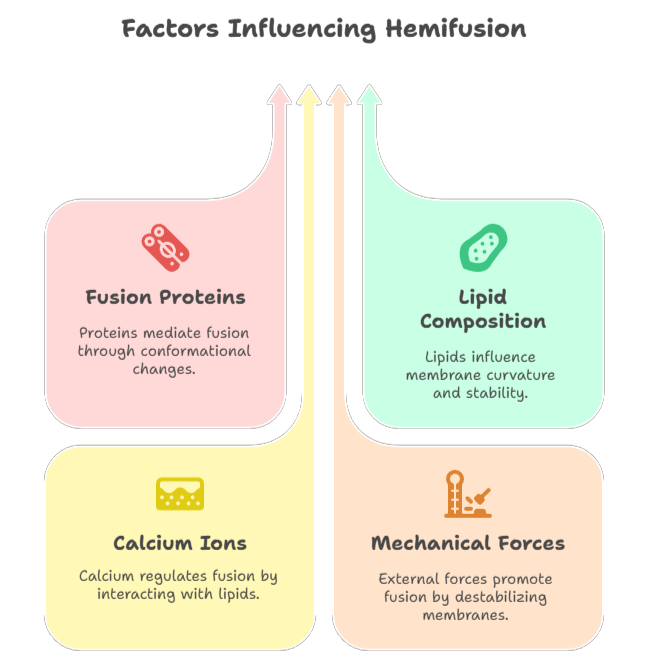

Discover the hemifusome—a key germline stem-cell structure in Drosophila that drives egg-chamber development and may hold clues to fertility.
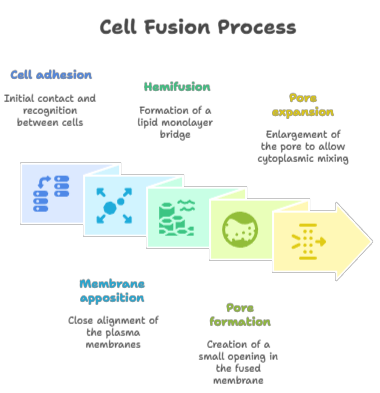
While the hemifusome remains speculative at present, the idea stimulates exciting questions in cell biology. If confirmed, it could expand our view of cellular organization, inter-organelle communication, and mechanisms of disease. For now, rigorous research — microscopy, molecular biology, imaging — will determine whether the hemifusome moves from conjecture to accepted biology.
What Is the Hemifusome?
The hemifusome is a specialized cellular structure best known from studies of Drosophila (fruit-fly) oogenesis.
- It acts as a hub for cell–cell communication between germline stem cells and the developing egg chambers.
- Composed largely of a fusome-like network of membranes and cytoskeletal elements, the hemifusome provides a half-sized or hemi branch of the full fusome, hence its name.
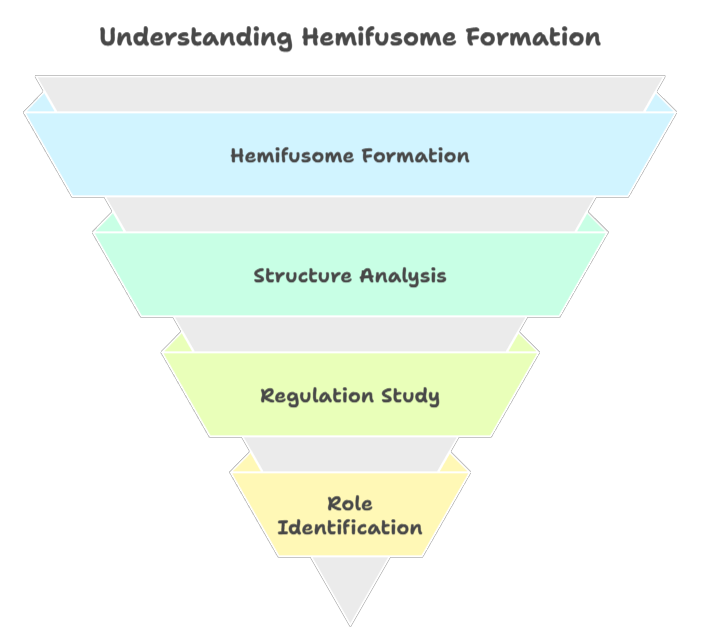
Researchers believe the hemifusome helps guide:
- Cytoplasmic transport of key RNAs and proteins,
- Organelle positioning, and
- Signal transduction essential for proper egg-cell development.
Structure and Location
- Origin: Derived from the endoplasmic reticulum and vesicular membranes.
- Appearance: Electron-microscopy studies describe it as a dense, branching, membrane-rich organelle located at the interface of germline cells within the ovary.
- Relationship to Fusome: While the fusome spans multiple cells in a cyst, the hemifusome is restricted to the germline stem cell and its immediate daughter cell before full cyst formation.

Biological Significance
- Stem Cell Maintenance
The hemifusome maintains polarity cues that help a germline stem cell decide between self-renewal and differentiation. - Cyst Formation
By seeding the growth of the fusome, it orchestrates the initial steps of cystoblast development, ensuring that egg chambers form with the correct number of cells. - Asymmetric Division
It influences how cellular components are unequally distributed during division, a process critical for fertility.
Current Research and Discoveries
- Molecular Composition:
Ongoing work uses proteomics and live-cell imaging to identify hemifusome-specific proteins such as Hu li tai shao (Hts) and Adducin-like proteins. - Genetic Studies:
CRISPR knockouts in Drosophila reveal that disrupting hemifusome formation leads to defective cysts and reduced fertility. - Comparative Biology:
Scientists are exploring whether hemifusome-like structures exist in other organisms, including vertebrates, to understand evolutionary conservation.
Future Directions
- High-Resolution Imaging
Advanced super-resolution microscopy is being applied to map hemifusome dynamics in living cells. - Human Relevance
Although most work is in flies, researchers are investigating whether analogous mechanisms operate in human germline stem cells, which could illuminate causes of certain infertility disorders. - Potential Therapeutic Insights
Understanding hemifusome signaling may eventually aid in regenerative medicine or fertility treatments.
Key Takeaways
- Hemifusome = Early fusome: A transitional, stem-cell–associated structure guiding egg-chamber development.
- Essential for fertility: Its proper formation is critical for normal reproduction in Drosophila.
- Active research: Scientists are still uncovering its full protein composition and potential parallels in higher organisms.
Possible Structure & Location
- Membrane composition: It could have a dual membrane structure, one side similar to endoplasmic reticulum (ER), the other side closer to mitochondrial or Golgi membranes.
- Size range: Estimated to be in the tens to hundreds of nanometers in diameter or length, depending on cell type.
- Cell types: Proposed to be more prominent in secretory cells, neurons, or rapidly dividing cells where trafficking and metabolic demands are high.
- Localization: Could be perinuclear, in cytosolic regions between organelles, or even forming transient structures during certain physiological states.
Why Researchers Are Interested
- Enhanced understanding of intracellular transport: If present, hemifusomes could represent previously overlooked paths for material exchange inside cells.
- Disease links: Defects in inter-organelle communication are implicated in neurodegenerative diseases, metabolic disorders, and aging. A hemifusome component might be involved.
- Drug delivery & targeting: Being a novel structure, hemifusome could offer new drug targeting strategies or biomarkers.
- Evolutionary biology: Understanding how new cellular structures arise or are conserved across species could tell us more about cell evolution.
Challenges & Skepticism
- Lack of concrete evidence: To date, there are no definitive imaging, biochemical, or genetic studies confirming the existence of hemifusomes.
- Distinguishing from known organelles: It may be that what is being called a “hemifusome” is a variant or substructure of known organelles (ER, Golgi, mitochondria, endosomes).
- Technical limitations: High-resolution microscopy, membrane-proteomics and live-cell imaging would be necessary. Artifacts in sample preparation could lead to misinterpretation.
Disclaimer: Dr. Mohammed Abdul Azeem Siddiqui, MBBS
Registered Medical Practitioner (Reg. No. 39739)
With over 30 years of dedicated clinical experience, Dr. Siddiqui has built his career around one clear mission: making quality healthcare affordable, preventive, and accessible.
He is deeply passionate about:
- Early disease diagnosis – empowering patients with timely detection and reducing complications.
- Preventive healthcare – guiding individuals and families towards healthier, longer lives through lifestyle interventions and screenings.
- Affordable treatments – ensuring cost-effective, evidence-based medical solutions that reach people from all walks of life.
Through his blog, Dr. Siddiqui shares practical health insights, early warning signs, and preventive strategies that readers can trust. Every article is rooted in evidence-based medicine and enriched by decades of hands-on clinical practice.
Contact us on: powerofprevention@outlook.com
📌 Disclaimer: The content in this blog is for educational purposes only and should not replace personalized medical consultation. For specific health concerns, please consult your physician.