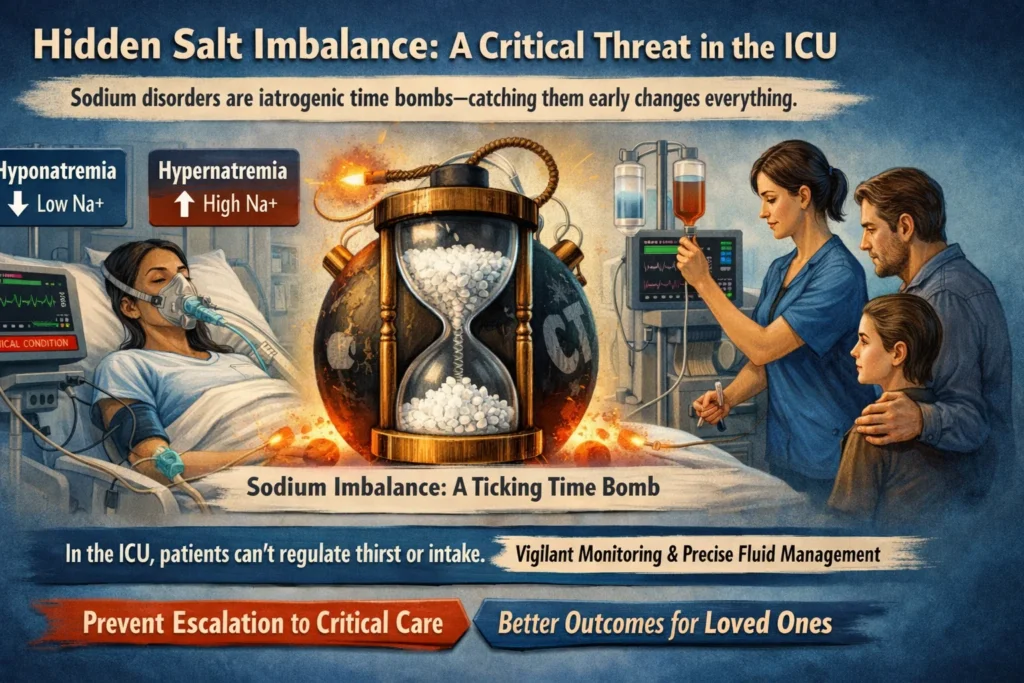

In the high-stakes environment of the intensive care unit (ICU), electrolyte disorders are incredibly common—often affecting more than 70-80% of critically ill patients. Among these, disturbances in sodium (the body’s primary “salt” electrolyte) stand out as particularly dangerous. Sodium imbalances—hyponatremia (low sodium) and hypernatremia (high sodium)—are frequently “hidden” because they develop insidiously during hospitalization, masquerade as symptoms of the underlying illness (like confusion from sepsis or brain injury), and are overlooked until they precipitate life-threatening complications that require urgent ICU escalation.
These imbalances aren’t just lab abnormalities; they disrupt brain function, fluid balance, and organ perfusion, driving seizures, coma, prolonged ventilation, kidney failure, and dramatically higher mortality. Studies show ICU-acquired sodium disorders independently predict worse outcomes, with mortality rates soaring 2-5 times higher in affected patients compared to those with normal levels.
Why Sodium Imbalances Are So “Hidden” in Critical Illness
Sodium regulates extracellular fluid volume and osmolality. Normal serum sodium is tightly maintained at 135–145 mmol/L through thirst, antidiuretic hormone (ADH), and kidney handling of water and salt.
In ICU patients, this balance is easily disrupted:
- Iatrogenic factors — Excessive intravenous fluids (e.g., hypotonic solutions causing dilutional hyponatremia) or hypertonic fluids/saline boluses (causing hypernatremia).
- Underlying critical illness — Sepsis, pneumonia, heart failure, liver cirrhosis, or brain injury trigger inappropriate ADH release (SIADH), leading to water retention and low sodium.
- Impaired access to water — Sedated, intubated, or delirious patients can’t drink freely, so free water deficits build up, pushing sodium high.
- Multiple insults — Diuretics, osmotic diuresis from high-protein feeds, fever-induced insensible losses, or diarrhea compound the problem.
Hyponatremia often creeps in quietly (prevalence ~15-35% on admission or acquired), while hypernatremia frequently develops during the ICU stay (up to 26% acquired), making it a classic “hospital-acquired” hidden threat.
Hyponatremia: The Silent Brain Sweller
Hyponatremia (<135 mmol/L, severe <120-125 mmol/L) is the most frequent electrolyte disorder in hospitalized patients and a top reason for ICU transfer when acute or symptomatic.
Common hidden triggers in ICU:
- SIADH from pneumonia, sepsis, subarachnoid hemorrhage, or drugs (e.g., SSRIs, carbamazepine).
- Fluid overload in heart failure, cirrhosis, or post-operative states.
- Adrenal insufficiency or hypothyroidism.
Why it sends patients to ICU:
- Brain cells swell as water shifts intracellularly → cerebral edema → seizures, coma, herniation.
- Even moderate levels cause falls, confusion (mimicking delirium), or respiratory arrest.
- Severe cases lead to prolonged ventilation, extended ICU stays, and doubled mortality risk.
Studies show ICU patients with hyponatremia have higher APACHE II scores, more mechanical ventilation days, and increased need for renal replacement therapy.
Hypernatremia: The Dehydrated Brain Shrinker
Hypernatremia (>145 mmol/L, severe >155-160 mmol/L) is less common on admission but explodes in prevalence during ICU care—often iatrogenic and under-recognized.
Hidden causes in critical care:
- Inadequate free water replacement in intubated/sedated patients.
- Excessive sodium administration (normal saline resuscitation, sodium bicarbonate for acidosis, hypertonic saline for brain edema).
- Osmotic diuresis from high urea (catabolism, tube feeds) or diabetes insipidus.
- GI losses (diarrhea) or fever/sweating without compensation.
Why it’s deadly:
- Brain shrinkage causes confusion, seizures, coma, and rhabdomyolysis.
- It prolongs mechanical ventilation, ICU length of stay, and independently raises mortality (often 30-60% in severe cases).
- ICU-acquired hypernatremia links to higher in-hospital death, with some data showing worse outcomes than hyponatremia.
Paradoxically, slow correction worsens prognosis in many studies—rapid free water repletion (e.g., D5W or enteral water) often improves survival without osmotic demyelination risk in acute settings.
Diagnosis and the Danger of Missing It
Routine labs catch sodium levels, but the “hidden” part is failing to act early:
- Check volume status (euvolemic? hypervolemic?) and urine osmolality/electrolytes.
- Differentiate acute vs. chronic to guide safe correction rates.
- Avoid overcorrection: For hyponatremia, limit rise to 8-10 mmol/L per day; for hypernatremia, aim for 0.5 mmol/L per hour in severe cases.
Prevention and Management: Turning the Tide
- Proactive monitoring — Daily electrolytes in at-risk patients.
- Balanced fluids — Use isotonic solutions judiciously; provide free water for hypernatremia risks.
- Targeted therapy — Hypertonic saline for symptomatic severe hyponatremia; hypotonic fluids/enteral water for hypernatremia.
- Address root causes — Treat sepsis, adjust diuretics, monitor tube feeds.
Early recognition and correction dramatically reduce ICU escalations, shorten stays, and save lives.
Conclusion: No Longer Hidden
Sodium imbalance isn’t a minor lab blip—it’s a frequent, underappreciated driver sending patients spiraling into critical care. In the ICU, where patients can’t self-regulate thirst or intake, these disorders become iatrogenic time bombs. Heightened vigilance, precise fluid management, and prompt correction can prevent many escalations. For clinicians and families alike, understanding this “hidden salt imbalance” is key to better outcomes in our most vulnerable patients. If you’re in critical care or caring for a loved one there, ask about sodium trends—catching it early changes everything.