
Medically reviewed by Dr. Zehra Siddiqui, MSc, PhD — Plant Cytogenetics & Biotechnology Specialist
Last Updated: 2025-12-28
Introduction
Many edible backyard weeds have dangerous doppelgängers that look harmless but can cause poisoning, neurological damage, or organ failure if consumed. Foraging accidents almost always occur due to misidentification.
“The most common cause of plant-related poisoning is confusion between edible species and visually similar toxic plants.” — American Association of Poison Control Centers
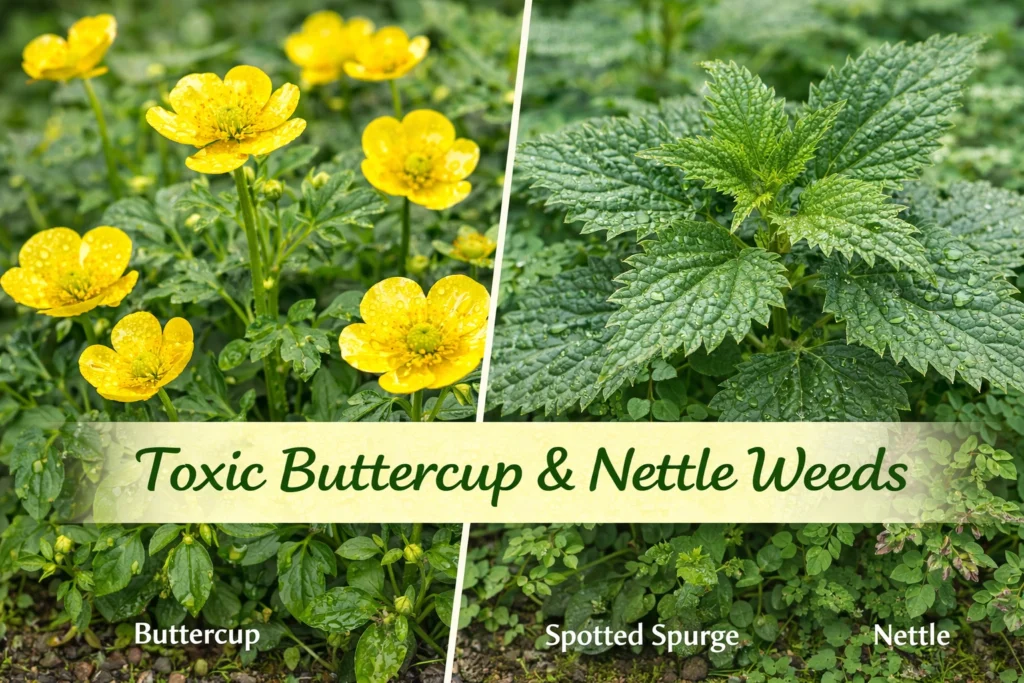
This guide highlights the most common toxic weed look-alikes so you can forage with confidence.
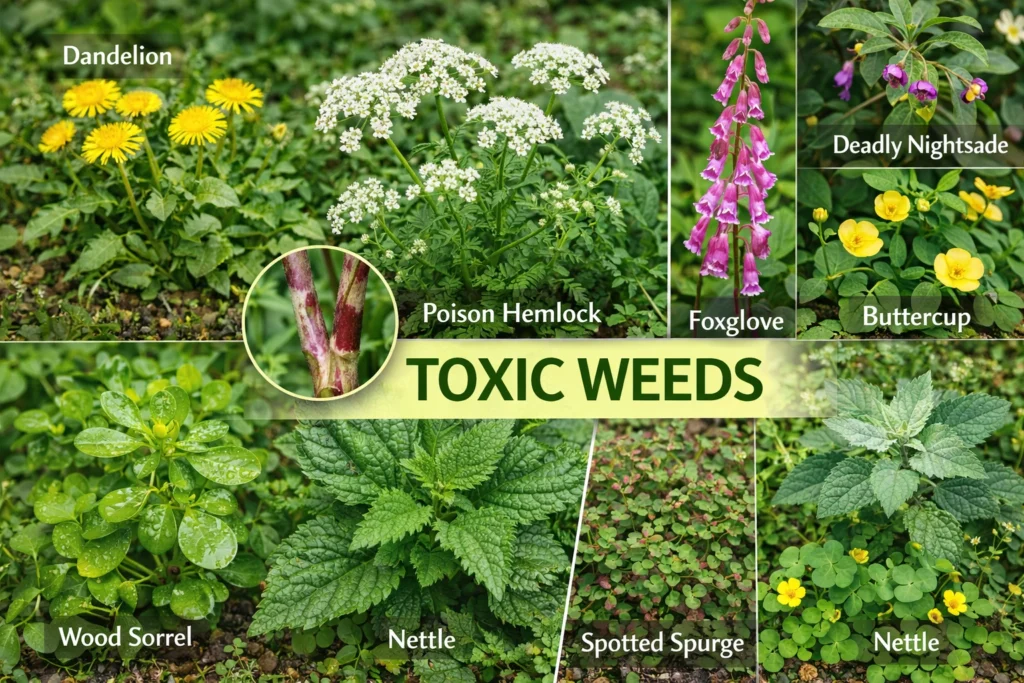
7 Toxic Look-Alikes to Know
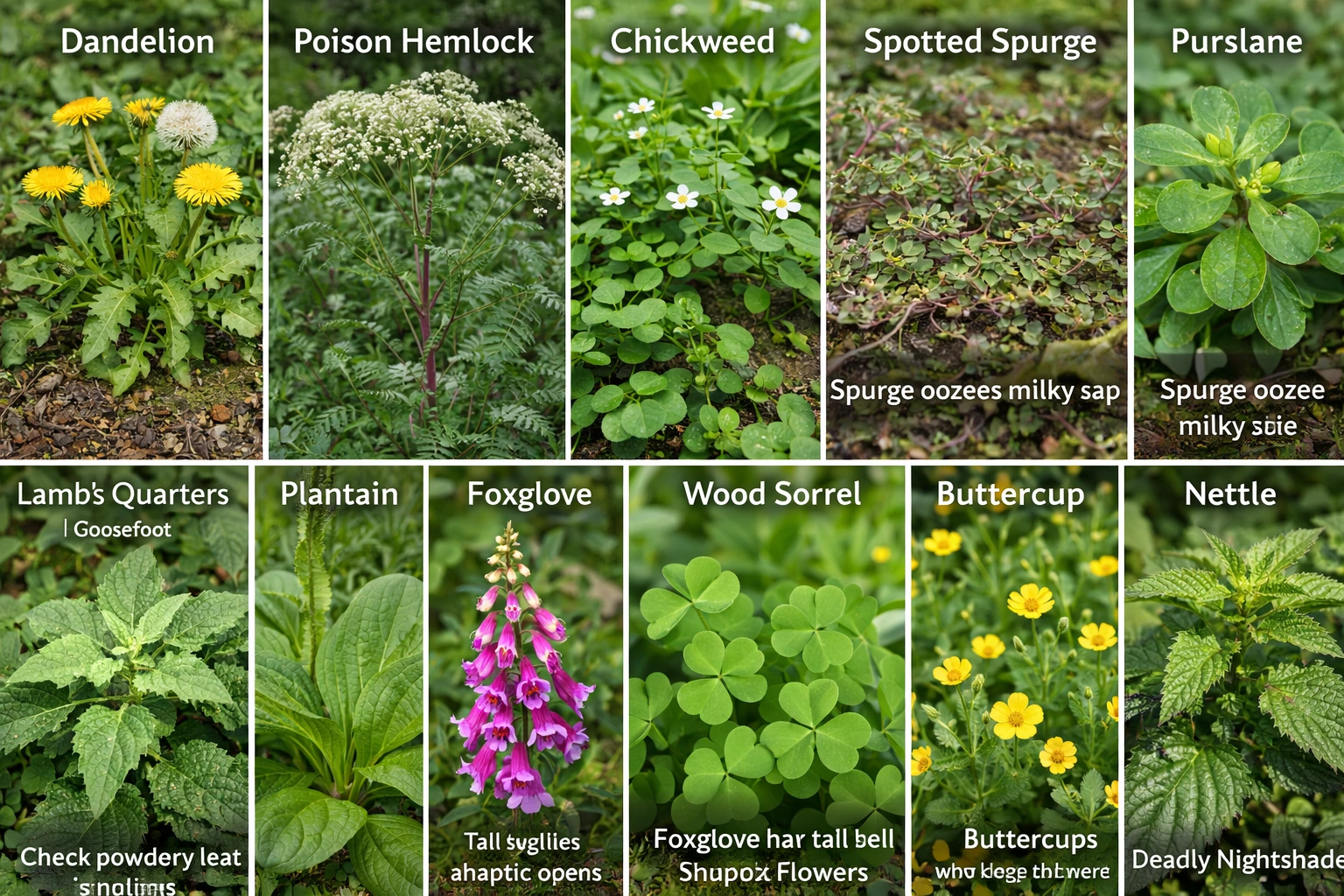
| Safe Weed | Toxic Look-Alike | How to Tell |
|---|---|---|
| Dandelion | Poison Hemlock | Hemlock has purple-blotched hollow stems |
| Chickweed | Spotted Spurge | Spurge oozes milky sap |
| Purslane | Spurge | Spurge has thin flat leaves and milky juice |
| Lamb’s Quarters | Goosefoot | Check powdery leaf coating |
| Plantain | Foxglove | Foxglove has tall bell-shaped flowers |
| Wood Sorrel | Buttercup | Buttercups are glossy and bitter |
| Nettle | Deadly Nightshade | Nightshade has dark berries |
“Foxglove and hemlock contain cardiac glycosides that can disrupt heart rhythm.” — NIH Toxic Plant Database
What Happens If You Eat a Toxic Look-Alike?
- Nausea, vomiting
- Dizziness or hallucinations
- Irregular heartbeat
- Liver or kidney injury
Seek medical help immediately if ingestion is suspected.
How to Forage Safely
- Verify using two separate sources
- Photograph plants before harvesting
- Never rely on smell alone
- Avoid harvesting immature plants
“When in doubt — leave it out.” — Dr. Zehra Siddiqui

Dr. Mohammed Abdul Azeem Siddiqui, MBBS
Registered Medical Practitioner (Reg. No. 39739)
With over 30 years of dedicated clinical experience, Dr. Siddiqui has built his career around one clear mission: making quality healthcare affordable, preventive, and accessible.
He is deeply passionate about:
Early disease diagnosis – empowering patients with timely detection and reducing complications.
Preventive healthcare – guiding individuals and families towards healthier, longer lives through lifestyle interventions and screenings.
Affordable treatments – ensuring cost-effective, evidence-based medical solutions that reach people from all walks of life.
Through his blog, Dr. Siddiqui shares practical health insights, early warning signs, and preventive strategies that readers can trust. Every article is rooted in evidence-based medicine and enriched by decades of hands-on clinical practice.
EMAIL: powerofprevention@outlook.com
📌 Disclaimer: The content in this blog is for educational purposes only and should not replace personalized medical consultation. For specific health concerns, please consult your physician.
Leave a Reply