Hormesis is a biological phenomenon where exposure to a low dose of a stressor—something that would be harmful at high doses—triggers adaptive responses that actually make an organism stronger, more resilient, and healthier so its imperative to know The Science of Hormesis That Makes You Stronger.
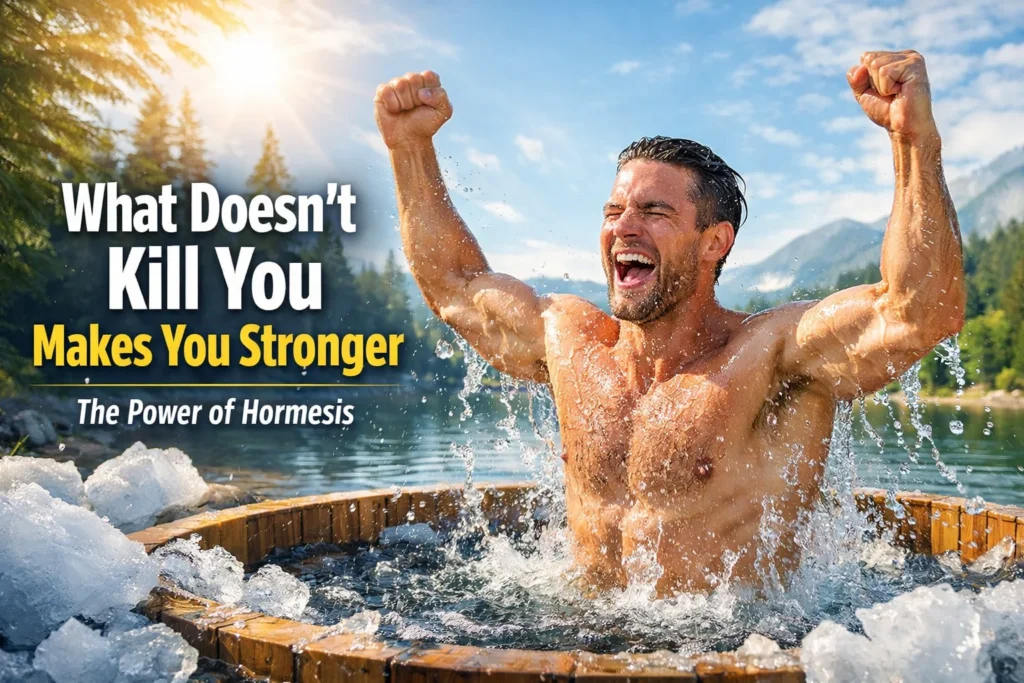
The simplest way to understand hormesis is the phrase: “What doesn’t kill you makes you stronger.”
The famous phrase “What doesn’t kill you makes you stronger” isn’t just motivational wisdom—it’s a surprisingly accurate description of a well-documented biological phenomenon called hormesis. Hormesis describes how low or moderate doses of a stressor—something that would be harmful or toxic at high levels—can trigger adaptive responses in the body, leading to improved health, resilience, and even longevity.
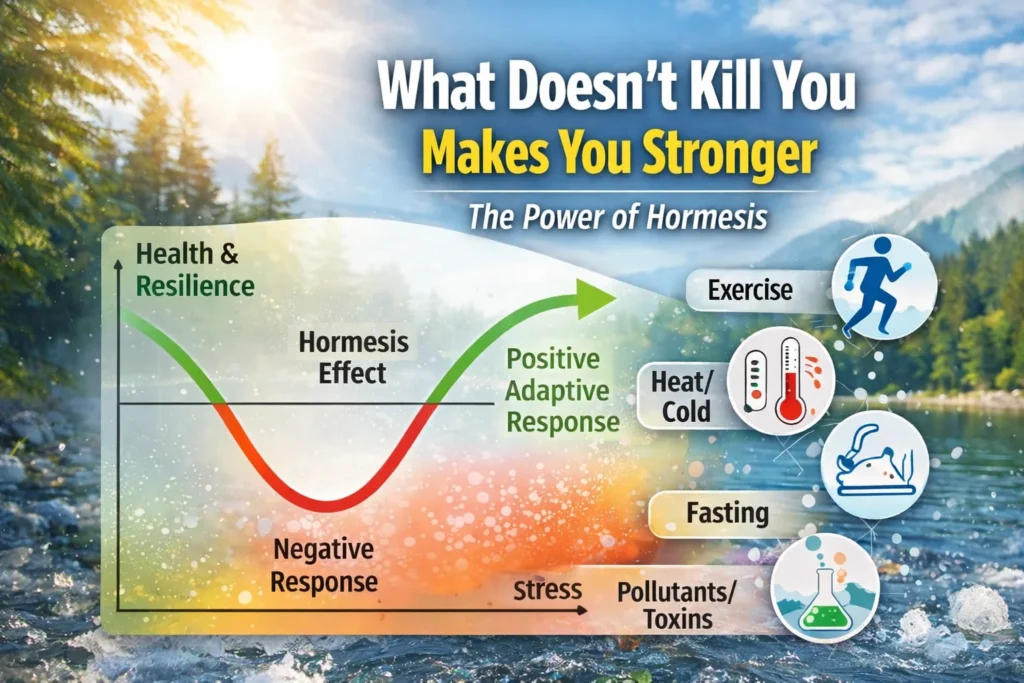
In simple terms, hormesis is the biphasic (two-phase) dose-response relationship: low doses stimulate beneficial effects, while high doses inhibit or damage. This concept challenges the traditional “linear no-threshold” view in toxicology, where any exposure to a harmful agent is assumed bad. Instead, hormesis suggests the body has built-in mechanisms to overcompensate for mild challenges, emerging stronger.
A Brief History of Hormesis
The idea traces back to early observations in the late 19th and early 20th centuries, such as low doses of toxins stimulating plant growth or low radiation promoting certain biological processes. The term “hormesis” was coined in 1943 by Chester Southam and John Ehrlich, derived from the Greek “hormaein,” meaning “to excite” or “to urge on.”
Modern hormesis research exploded thanks to toxicologist Edward J. Calabrese, who conducted extensive reviews of dose-response data. In the 2000s, Calabrese demonstrated that hormetic responses appear in thousands of studies across chemicals, radiation, and physiological stressors. His work established hormesis as a fundamental biological principle, conserved across species from microbes to humans, influencing fields like aging, neuroscience, and medicine.
How Hormesis Works in the Body
When a cell or organism encounters a mild stressor, it activates protective pathways:
- Antioxidant defenses ramp up to neutralize free radicals.
- Heat-shock proteins (chaperones) repair damaged proteins.
- Mitochondrial biogenesis increases energy efficiency.
- DNA repair and anti-inflammatory mechanisms kick in.
- Growth factors and neurotrophic signals support tissue repair and adaptation.
These responses often exceed what’s needed to recover from the initial stress, creating a “rebound” effect that enhances overall resilience. This is why brief stress can protect against future, more severe challenges—a process sometimes called “preconditioning” or “adaptive stress response.”
Everyday Examples of Hormesis in Action
Hormesis shows up in many familiar practices backed by science:
- Exercise Physical activity generates oxidative stress, muscle micro-damage, and metabolic demands. In response, the body boosts antioxidant enzymes (like superoxide dismutase), builds stronger muscles, improves cardiovascular function, and enhances insulin sensitivity. Studies show regular moderate exercise induces hormetic benefits, reducing inflammation, supporting healthy aging, and lowering chronic disease risk. Excessive overtraining, however, flips to harmful effects.
- Caloric Restriction and Intermittent Fasting Mild energy restriction mimics famine stress, activating pathways like AMPK and sirtuins that promote cellular cleanup (autophagy), DNA repair, and metabolic efficiency. This leads to extended healthspan in animal models and potential benefits in humans, such as improved longevity markers.
- Heat and Cold Exposure (Sauna, Cold Showers) Brief heat stress (sauna) or cold exposure triggers heat-shock proteins and brown fat activation, improving circulation, reducing inflammation, and enhancing stress tolerance.
- Phytochemicals in Plants Low doses of compounds like those in broccoli (sulforaphane), green tea (EGCG), or red wine (resveratrol) act as mild stressors, activating Nrf2 pathways for antioxidant defense without toxicity at higher levels.
- Low-Dose Radiation (Controversial) Some evidence suggests very low ionizing radiation doses may stimulate DNA repair and reduce cancer risk in certain contexts, though this remains debated and not a recommended practice.
The Hormesis Curve
Think of it as a U-shaped or J-shaped relationship:
- Zero stress: No adaptive response, potential weakness from lack of challenge
- Low/moderate stress: Beneficial effects—cells activate repair mechanisms, boost defenses, become more resilient
- High stress: Harmful effects—damage overwhelms repair systems, toxicity occurs
Everyday Examples of Hormesis
| Stressor | Low Dose (Beneficial) | High Dose (Harmful) |
|---|---|---|
| Exercise | Moderate workouts strengthen muscles, heart, and antioxidant defenses | Overtraining causes injury, immune suppression, oxidative damage |
| Heat/Cold | Sauna or cold plunge improves circulation, activates protective proteins | Extreme temperatures cause burns, hypothermia |
| Sunlight | Moderate sun exposure produces vitamin D | Excessive exposure causes skin cancer, premature aging |
| Plants | Resveratrol in grapes, sulforaphane in broccoli—these are toxins plants produce that mildly stress human cells, activating longevity pathways | Concentrated plant toxins can be poisonous |
| Fasting | Intermittent fasting triggers cellular cleanup (autophagy) and stress resistance | Starvation causes malnutrition, organ damage |
How Hormesis Works at the Cellular Level
When cells encounter mild stress, they don’t just passively endure it—they actively respond by:
- Activating defense genes: Turning on production of antioxidant enzymes, heat shock proteins, and repair factors
- Slowing growth: Conserving energy for protection and maintenance
- Enhancing mitochondrial function: Improving energy production efficiency
- Triggering autophagy: Cleaning out damaged components
These adaptations don’t just protect against the original stressor—they create broad-spectrum resilience against many types of future challenges.
Hormesis and Oxidative Stress
In the context of your article, hormesis explains why not all oxidative stress is bad:
- Low-level oxidative stress from exercise or certain plant compounds signals cells to boost their antioxidant defenses
- This prepares the body to handle future, more severe oxidative challenges—like infections, toxins, or the natural accumulation of damage with aging
As mentioned in your article, this is why moderate exercise is beneficial—it creates temporary oxidative stress that triggers adaptive responses, making cells more resilient over time.
Key Hormetic Stressors for Healthy Aging
Scientists have identified several hormetic interventions that may extend healthspan:
- Caloric restriction / intermittent fasting
- Physical exercise (particularly high-intensity interval training)
- Heat/cold exposure (sauna, cold plunges)
- Phytochemicals (resveratrol, curcumin, sulforaphane from broccoli sprouts)
- Hypoxia (low oxygen training)
Hormesis reframes how we think about stress. Instead of viewing all stress as harmful, hormesis reveals that controlled, mild challenges are essential for maintaining and building biological resilience. The goal isn’t a stress-free life—it’s strategic exposure to the right kinds of stress, in the right doses, to keep your body’s defense systems strong and responsive.
FAQs:
1. What is hormesis?
Hormesis is a biological phenomenon where low-dose exposure to a stressor triggers adaptive beneficial responses, while high-dose exposure causes harm. In humans, this principle underlies many health practices: exercise, fasting, temperature exposure, and even mild oxidative stress. Essentially, small, controlled stress strengthens the body and improves resilience.
2. What does “The Science of Hormesis That Makes You Stronger” actually mean?
This phrase refers to the evidence-based principle that strategically applied stress triggers cellular and systemic adaptations. By applying mild stress—like exercise or cold exposure—you activate repair pathways, mitochondrial growth, antioxidant production, and autophagy, which collectively enhance strength, resilience, and long-term health.
3. How does hormesis work in the human body?
Hormesis activates cellular defense systems. Low-level stress stimulates transcription factors like Nrf2 and AMPK, heat shock proteins, and autophagy pathways. The result is improved metabolic efficiency, enhanced antioxidant capacity, better protein repair, and stronger mitochondrial function, all contributing to durable health.
4. What is a hormetic stressor?
A hormetic stressor is any low-dose stress that triggers beneficial adaptation. Examples include:
- Physical exertion (resistance or endurance exercise)
- Temperature extremes (cold plunges, sauna)
- Nutritional stress (intermittent fasting, caloric restriction)
- Low-level oxidative stress from certain plant compounds (polyphenols)
5. Is hormesis scientifically proven?
Yes. Hormesis is widely documented in cellular biology, toxicology, and exercise science. Multiple studies show that controlled stress improves mitochondrial density, antioxidant defense, metabolic flexibility, and even lifespan in humans and model organisms. It is not anecdotal—it is a core principle in adaptive physiology.
6. What is the hormetic dose-response curve?
Hormesis follows an inverted U-shaped curve:
- Low stress: triggers adaptation and benefits
- Optimal stress: maximizes adaptive response
- Excess stress: causes damage and dysfunction
Understanding this curve is critical to applying stress safely and effectively.
7. Why is hormesis described as biphasic?
It is “biphasic” because it has two phases:
- Low-dose beneficial response
- High-dose harmful response
This two-phase response explains why moderate stress is good, but overexposure leads to injury or fatigue.
8. What is the difference between stress and hormetic stress?
- Stress: any physical, chemical, or psychological strain on the body
- Hormetic stress: a low-level, controlled stress that stimulates adaptation without overwhelming recovery systems
Not all stress is hormetic; only the right intensity and duration produce benefits.
9. Can stress really be good for you?
Yes. Moderate, strategic stress strengthens the body and mind. Exercise-induced muscle microdamage, cold exposure, and fasting are examples where short-term discomfort triggers long-term resilience, improved metabolism, and enhanced cellular repair.
10. Is hormesis the same as resilience?
Hormesis is the mechanism, resilience is the outcome. By exposing the body to controlled stress, hormesis activates adaptive pathways that build physical and mental resilience over time.
11. How does hormesis activate antioxidant defenses?
Hormetic stress stimulates Nrf2, a transcription factor that upregulates antioxidant enzymes like glutathione and superoxide dismutase. This reduces oxidative damage, supports cellular repair, and enhances overall stress tolerance.
12. Does hormesis increase mitochondrial function?
Yes. Mild stress activates PGC-1α, promoting mitochondrial biogenesis. More mitochondria mean more energy production, better endurance, and increased cellular resilience to future stress.
13. How does exercise exemplify hormesis?
Exercise induces controlled micro-damage to muscle fibers, generating inflammatory signals. During recovery, muscles repair stronger than before. High-intensity interval training (HIIT) or progressive overload principles follow hormetic adaptation, optimizing strength, endurance, and metabolic flexibility.
14. How does fasting work as a hormetic stressor?
Intermittent fasting triggers metabolic stress that activates autophagy, clears damaged proteins, enhances insulin sensitivity, and improves mitochondrial efficiency. Short-term nutrient restriction signals the body to adapt and optimize energy use, rather than break down.
15. Are cold plunges a form of hormesis?
Absolutely. Cold exposure is a thermal stressor that increases norepinephrine, improves circulation, activates brown fat, and may boost mitochondrial activity. In moderation, it trains the body to tolerate and adapt to environmental challenges.
16. What is the optimal dose of hormetic stress?
The “optimal dose” varies by stress type, fitness level, and age. Guidelines:
- Exercise: stress just enough to challenge muscles without overtraining
- Fasting: 12–16 hours intermittent fasting is effective for most adults
- Cold exposure: start 1–2 minutes in cold water, gradually increase
- Heat exposure: 10–20 minutes in sauna, 2–3 times per week
Key: progress gradually and monitor recovery.
17. Can hormesis improve longevity?
Research suggests yes. Hormetic stress activates repair pathways, mitochondrial health, antioxidant defenses, and autophagy—all mechanisms associated with slower aging and improved lifespan. Practices like fasting, sauna, and exercise leverage hormesis for longevity benefits.
18. How can hormesis improve mental resilience?
Controlled stress activates neural adaptation and stress-coping pathways. Over time, the brain becomes better at managing uncertainty, discomfort, and challenge. Practices like exposure therapy, cold immersion, or challenging workouts train both body and mind to thrive under stress.
19. Can you overdo hormesis?
Yes. Excessive stress leads to overtraining, chronic inflammation, hormonal imbalance, and burnout. Hormesis follows the inverted U-shaped curve: too little stress = no adaptation; too much = damage. Monitoring recovery, sleep, and energy levels is essential.
20. How do you apply hormesis safely for sustainable strength?
Safe application involves:
- Start small: low intensity, short duration
- Progress gradually: increase stress incrementally
- Prioritize recovery: sleep, nutrition, rest days
- Monitor your body: heart rate, fatigue, soreness, mood
- Individualize: adjust stress type and dose based on age, fitness, and health conditions
The goal: small, repeated challenges that compound into durable strength and resilience.

Dr. Mohammed Abdul Azeem Siddiqui, MBBS, M.Tech (Biomedical Engineering – VIT, Vellore)
Registered Medical Practitioner – Reg. No. 39739
Physician • Clinical Engineer • Preventive Diagnostics Specialist
Dr. Mohammed Abdul Azeem Siddiqui is a physician–engineer with over 30 years of dedicated clinical and biomedical engineering experience, committed to transforming modern healthcare from late-stage disease treatment to early detection, preventive intelligence, and affordable medical care.
He holds an MBBS degree in Medicine and an M.Tech in Biomedical Engineering from VIT University, Vellore, equipping him with rare dual expertise in clinical medicine, laboratory diagnostics, and medical device engineering. This allows him to translate complex laboratory data into precise, actionable preventive strategies.
Clinical Mission
Dr. Siddiqui’s professional mission centers on three core pillars:
Early Disease Detection
Identifying hidden biomarker abnormalities that signal chronic disease years before symptoms appear — reducing complications, hospitalizations, and long-term disability.
Preventive Healthcare
Guiding individuals and families toward longer, healthier lives through structured screenings, lifestyle intervention frameworks, and predictive diagnostic interpretation.
Affordable Evidence-Based Treatment
Delivering cost-effective, scientifically validated care accessible to people from all socioeconomic backgrounds.
Clinical & Technical Expertise
Across three decades of continuous practice, Dr. Siddiqui has worked extensively with:
Advanced laboratory analyzers and automation platforms
• Cardiac, metabolic, renal, hepatic, endocrine, and inflammatory biomarker systems
• Preventive screening and early organ damage detection frameworks
• Clinical escalation pathways and diagnostic decision-support models
• Medical device validation, calibration, compliance, and patient safety standards
He is recognized for identifying subclinical biomarker shifts that predict cardiovascular disease, diabetes, fatty liver, kidney disease, autoimmune inflammation, neurodegeneration, and accelerated biological aging long before conventional diagnosis.
Role at IntelliNewz
At IntelliNewz, Dr. Siddiqui serves as Founder, Chief Medical Editor, and Lead Clinical Validator. Every article published is:
Evidence-based
• Clinically verified
• Technology-grounded
• Free from commercial bias
• Designed for real-world patient and physician decision-making
Through his writing, Dr. Siddiqui shares practical health intelligence, early warning signs, and preventive strategies that readers can trust — grounded in decades of frontline medical practice.
Contact:
powerofprevention@outlook.com
📌 Disclaimer: The content on IntelliNewz is intended for educational purposes only and does not replace personalized medical consultation. For individual health concerns, please consult your physician.