

A 2024 NIH review confirms what decades of observation suggested: Blue Zone longevity isn’t about a single superfood or exercise routine—it’s about patterns that modern life has systematically erased
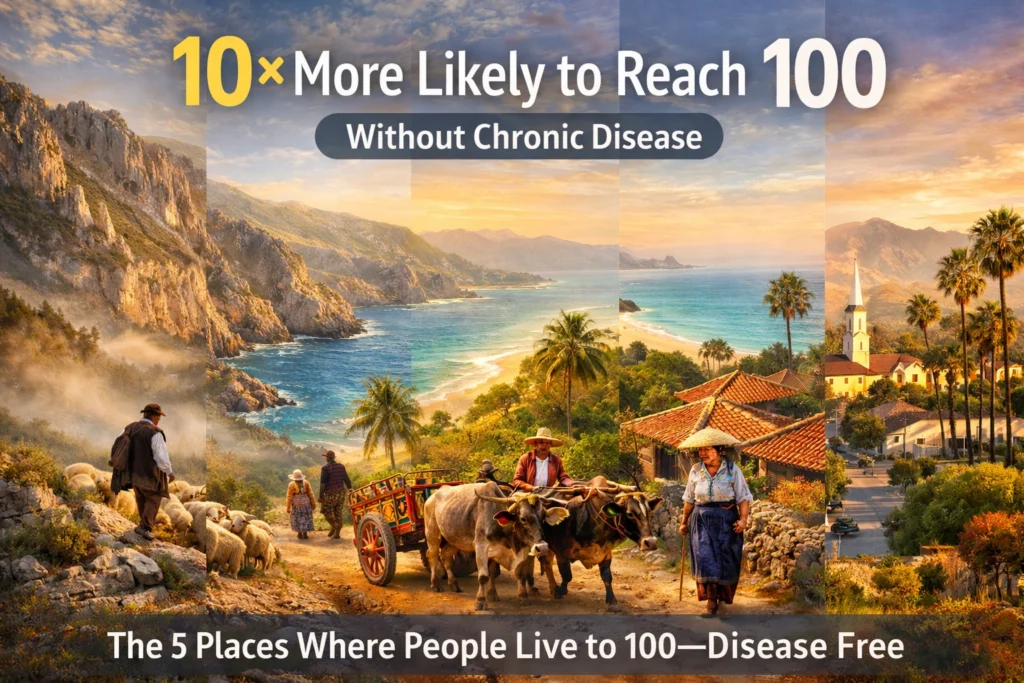
In the rugged mountains of Ogliastra, Sardinia, nonagenarians still tend sheep. On the Japanese island of Okinawa, elderly women gather in moais—lifelong social support circles—to share stories and sweet potatoes. In Loma Linda, California, Seventh-day Adventists walk to church on Saturdays, then walk home for plant-based lunches with friends.
These are the Blue Zones: five geographically distinct regions where people are ten times more likely to reach age 100 than Americans—and crucially, they reach that milestone disease-free.
A comprehensive 2024 NIH review has now synthesized decades of research into what actually protects these populations from cardiovascular disease, cancer, dementia, and the chronic inflammation that plagues modern societies. The findings confirm that longevity isn’t a product of isolated nutrients or miracle foods—it emerges from patterns that work synergistically, and that we’ve systematically engineered out of daily life.
The Protection Mechanisms: Beyond “Eat This, Not That”
The 2024 review identifies specific dietary components consistently present across Blue Zones: fibers, polyphenols, beta-glucans, and unsaturated fatty acids. But the real story lies in what these compounds do inside the human body.
Two key mechanisms emerge:
First, these dietary patterns inhibit the NF-kB pathway—a protein complex that acts as a master switch for inflammation. When activated, NF-kB triggers production of pro-inflammatory cytokines that drive “inflammaging,” the chronic low-grade inflammation underlying nearly every age-related disease. Blue Zone diets keep this switch in the “off” position.
Second, they induce T regulatory cells—immune cells that produce interleukin-10, an anti-inflammatory cytokine that calms overactive immune responses. This isn’t merely reducing bad inflammation; it’s actively programming the immune system for peace.
The result: Sardinian shepherds in their 90s with cardiovascular systems resembling people 30 years younger. Okinawan centenaries with cognitively sharp minds and cancer-free bodies. Ikarian farmers who’ve never taken blood pressure medication.
The Disease-by-Disease Breakdown
Cardiovascular Disease: Blue Zone diets deliver steady streams of unsaturated fatty acids (from olive oil, nuts, fish) and beta-glucans (from oats, barley, legumes) that maintain flexible arteries and optimal cholesterol profiles. But the protection goes deeper—the anti-inflammatory environment prevents the endothelial dysfunction that initiates atherosclerosis.
Cancer: Polyphenols from locally grown fruits, vegetables, and herbs provide multiple anticancer mechanisms: antioxidant protection against DNA damage, modulation of hormone receptors, and inhibition of angiogenesis (blood vessel formation that tumors require to grow). The variety matters—different polyphenols target different cancer pathways.

Dementia: The brain benefits from the same anti-inflammatory environment as blood vessels. But Blue Zones add another layer: intense social engagement and purposeful activity maintain cognitive reserve. Okinawans have a concept called ikigai (reason for being); Costa Ricans have plan de vida (life plan). Both correlate with reduced dementia risk independent of diet.
Inflammaging: This is the master condition underlying all others—the gradual escalation of inflammatory markers that accelerates aging. Blue Zone diets, combined with movement and social connection, keep inflammatory markers at levels typical of people decades younger.
The 10x Advantage: What Actually Creates It
The NIH review emphasizes that longevity protection doesn’t come from any single factor. Blue Zone residents don’t run marathons or follow exercise programs—they move constantly as part of living. Sardinian shepherds walk 5-10 miles daily on uneven terrain. Okinawan gardeners squat, bend, and carry for hours. This low-intensity, sustained movement produces different physiological effects than gym workouts: better glucose regulation, enhanced lymphatic circulation, and maintained muscle mass without the cortisol spikes of intense exercise.
Social structures matter equally. Ikarians maintain multigenerational households where elders remain integrated. Seventh-day Adventists prioritize community sabbaths. Okinawan moais create financial and emotional support networks that buffer stress. These aren’t lifestyle add-ons—they’re the infrastructure of daily existence.
And purpose—the reason to get up each morning—correlates with longevity as strongly as smoking correlates with early death. Without it, the protective biochemistry doesn’t fully engage.
What We’ve Engineered Out
The Blue Zone paradox is that these regions aren’t wealthy by global standards. Sardinia’s mountainous interior has long been economically disadvantaged. Okinawa suffered devastating losses in World War II. Nicoya has limited access to modern healthcare.
Yet their residents outlive populations with infinite medical resources.
The 2024 review suggests this isn’t despite their limitations—it’s because of them. When societies industrialize, they systematically dismantle Blue Zone conditions:
- Movement becomes optional, then rare
- Social structures fragment into nuclear isolation
- Purpose becomes tied to employment rather than community
- Whole foods are replaced by ultra-processed alternatives
The NF-kB pathway flips on. T regulatory cells decline. Inflammation rises. Disease follows.
A Pattern, Not a Prescription
The NIH review carries an important message: Blue Zones don’t require adopting specific cultural practices wholesale. Americans don’t need to become Sardinian shepherds or Japanese gardeners. But the patterns are transferable:
Movement embedded in life, not scheduled as exercise. Walking for transportation, gardening, stair-climbing, standing while working—these accumulate protective effects that gym sessions can’t replicate.
Plant-forward eating emphasizing variety, not restriction. The specific plants differ by region—Sardinians eat fava beans and barley; Okinawans eat sweet potatoes and bitter melon; Nicoyans eat corn and squash. What matters is the density of fibers, polyphenols, and unsaturated fats, not the specific sources.
Social connection as infrastructure, not optional entertainment. Regular shared meals, multigenerational interaction, community groups that provide both support and accountability.
Purpose recognized and honored. Whether called ikigai or plan de vida, the sense that one’s life matters to others appears biologically protective.
In the United States, chronic disease is not just common — it is expected.
- 6 in 10 U.S. adults have at least one chronic condition
- Cardiovascular disease remains the leading cause of death
- Type 2 diabetes and dementia rates continue to rise
Yet five regions in the world demonstrate something radically different:
- Ogliastra
- Ikaria
- Nicoya Peninsula
- Okinawa
- Loma Linda
These “Blue Zones” have up to 10 times more centenarians than the U.S. average — and many reach 90 or 100 without major chronic illness.
The key insight: longevity here is not medical. It is preventive.
Research popularized by Dan Buettner shows that shared lifestyle structures — not advanced hospitals or genetics — drive this advantage.
For Americans, this is not about copying foreign cultures. It is about redesigning daily life to reduce cardiometabolic risk.
The U.S. Chronic Disease Reality
Modern American health risks are largely behavioral:
- Sedentary occupations
- Ultra-processed food consumption
- Chronic psychological stress
- Social isolation
- Sleep deprivation
These factors accelerate:
- Systemic inflammation
- Insulin resistance
- Endothelial dysfunction
- Cognitive decline
Blue Zones function as living case studies in upstream disease prevention.
The Preventive Medicine Lessons Americans Can Apply
1️⃣ Movement as Infrastructure, Not Exercise
In Blue Zones, physical activity is not scheduled — it is embedded.
In the U.S., exercise is often:
- Intense
- Sporadic
- Gym-dependent
Preventive medicine data consistently shows:
Moderate, consistent daily movement reduces:
- Cardiovascular mortality
- All-cause mortality
- Insulin resistance
U.S. Application:
- Walking meetings
- Car-free errands when possible
- Standing desks
- Gardening
Longevity is built through low-intensity volume, not extreme workouts.
2️⃣ Plant-Forward Eating Reduces Disease Burden
Blue Zone diets are:
- Legume-based
- Fiber-rich
- Low in processed sugar
- Moderate in animal protein
For Americans, this directly targets:
- Hypertension
- Hyperlipidemia
- Obesity
- Type 2 diabetes
Clinical evidence supports:
- Mediterranean-style diets reduce cardiovascular events
- Higher fiber intake reduces colorectal cancer risk
- Legumes improve glycemic control
This is not vegan extremism — it is dietary pattern correction.
3️⃣ Caloric Moderation Without Diet Culture
Okinawan elders historically followed the “80% rule” — stopping before fullness.
In the U.S., portion distortion and hyper-palatable foods drive chronic overconsumption.
Excess caloric intake contributes to:
- mTOR overactivation
- Accelerated cellular aging
- Fat accumulation
- Chronic inflammation
Preventive framing:
Mild caloric restraint improves metabolic efficiency without restrictive dieting.
4️⃣ Social Integration Is a Biological InterventionLoneliness is now recognized as a mortality risk factor comparable to smoking.
Blue Zone populations maintain:
- Multigenerational households
- Faith participation
- Daily community interaction
In the U.S., isolation is epidemic.
Strong social ties correlate with:
- Lower cortisol
- Reduced depression
- Better immune function
- Improved longevity
This is preventive psychiatry and cardiology intersecting.
5️⃣ Stress Regulation Protects the Heart and Brain
Chronic stress elevates:
- Cortisol
- Blood pressure
- Inflammatory markers
Blue Zones incorporate:
- Daily prayer (notably in Loma Linda)
- Midday rest (Ikaria)
- Structured downtime
In preventive cardiology, unmanaged stress contributes directly to atherosclerosis progression.
For Americans:
- Scheduled decompression
- Technology boundaries
- Sleep prioritization
These are cardiovascular interventions, not lifestyle luxuries.
Why Genetics Is Not the Primary Factor
Twin and migration studies suggest genetics explains roughly 20–25% of lifespan variability.
When individuals leave longevity regions and adopt Westernized habits, their disease rates increase.
Environment shapes behavior.
Behavior shapes biology.
The Concept of “Compression of Morbidity”
The goal is not merely living longer.
It is delaying:
- Cardiovascular disease
- Dementia
- Functional disability
Blue Zone residents often remain independent into their 90s.
This reduces:
- Healthcare expenditures
- Long-term disability burden
- Caregiver strain
For U.S. public health systems, this model represents cost containment through prevention.
Why This Matters for American Healthcare Economics
Chronic disease drives the majority of U.S. healthcare spending.
Preventive lifestyle modification reduces:
- Hospital admissions
- Polypharmacy
- Surgical interventions
From a systems perspective, Blue Zone principles are low-cost, high-impact population health strategies.
The Core Insight for U.S. Readers
You do not need to move to Sardinia or Okinawa.
You need to:
- Engineer movement into daily routines
- Shift dietary defaults
- Rebuild social structure
- Regulate stress intentionally
- Moderate caloric intake
Longevity is not a supplement stack.
It is a behavioral ecosystem.
Final Takeaway
Americans are not dying from a lack of medical innovation.
They are dying from preventable lifestyle patterns.
The Blue Zone advantage demonstrates that when environment supports healthy defaults, disease rates decline dramatically.
Recreating those defaults — even partially — can significantly reduce cardiometabolic risk.
The science is not mysterious.
It is structural.