
What Herbs Are Anti-Cancer?
Anti-cancer herbs are plants that contain bioactive compounds capable of reducing cancer risk by fighting inflammation, neutralizing free radicals, slowing tumor growth, and promoting the death of cancer cells.
Anti-cancer herbs have gained attention in modern research due to their ability to influence biological pathways linked to cancer development. These herbs are rich in antioxidants, polyphenols, and phytochemicals that help protect DNA, boost immune function, and reduce chronic inflammation—one of the key drivers of cancer. While they are not cures, they play an important role in prevention and supportive care.
Which Herbs Are Known for Anti-Cancer Properties?
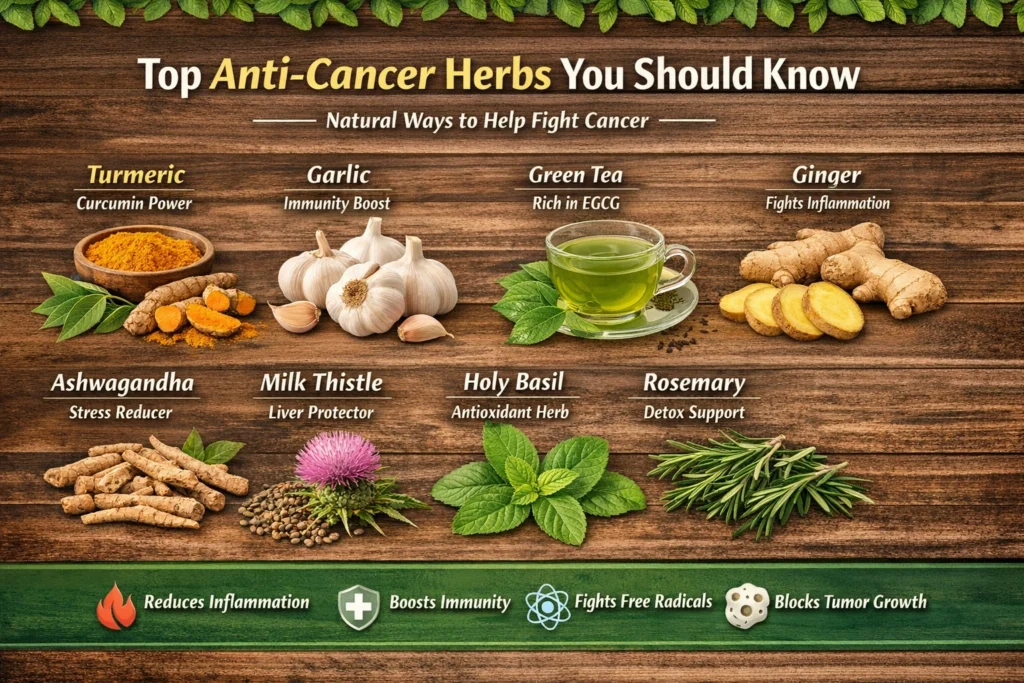
The most effective anti-cancer herbs include turmeric, garlic, green tea, ginger, ashwagandha, milk thistle, holy basil, and rosemary.
These herbs are widely studied for their anti-cancer potential due to their active compounds like curcumin (turmeric), allicin (garlic), and EGCG (green tea). They work through multiple mechanisms such as inhibiting tumor growth, enhancing immune response, and reducing oxidative stress. Regular inclusion of these herbs in diet or supplementation may contribute to long-term cancer prevention strategies.
Is Garlic Effective Against Cancer?
Garlic may help prevent cancer by boosting immune function, reducing inflammation, and neutralizing carcinogens through its sulfur compounds.
Studies suggest that garlic consumption is associated with a lower risk of stomach and colorectal cancers. Its active compound, allicin, supports detoxification enzymes and enhances the body’s natural defense system. Eating raw or lightly cooked garlic regularly provides the most benefit.
Can Green Tea Reduce Cancer Risk?
Green tea contains EGCG, a powerful antioxidant that may reduce cancer risk by slowing tumor growth and protecting cells from DNA damage.
EGCG (epigallocatechin gallate) has been shown to inhibit cancer cell proliferation and angiogenesis (formation of new blood vessels feeding tumors). Drinking 2–4 cups of green tea daily is often recommended for optimal benefits, especially when using high-quality tea leaves.
What Role Does Ginger Play in Cancer Prevention?
Ginger may help prevent cancer by reducing inflammation and inhibiting the growth of cancer cells through compounds like gingerol.
Research indicates that ginger can suppress tumor formation and is particularly beneficial for digestive system cancers. It also helps manage chemotherapy-related nausea, making it valuable for patients undergoing treatment.
Is Ashwagandha an Anti-Cancer Herb?
Ashwagandha exhibits anti-cancer properties by inducing cancer cell death and reducing stress, which can influence cancer progression.
The herb contains withanolides that have shown the ability to target cancer cells while sparing healthy ones. Additionally, ashwagandha helps regulate cortisol levels, improving overall resilience and immune function in cancer patients.
Cancer remains one of the leading global health challenges, driving interest in natural approaches that may support prevention and treatment. Among these, anti-cancer herbs have gained attention for their bioactive compounds, antioxidant properties, and ability to influence cellular processes linked to tumor growth.
What Makes an Herb “Anti-Cancer”?
Herbs are considered anti-cancer when they exhibit one or more of the following mechanisms:
- Antioxidant activity – neutralizing free radicals that damage DNA
- Anti-inflammatory effects – reducing chronic inflammation linked to cancer
- Apoptosis induction – triggering programmed cancer cell death
- Anti-proliferative effects – slowing tumor growth
- Anti-angiogenesis – preventing tumors from forming new blood vessels
- Top Herbs With Anti-Cancer Properties
1. Turmeric (Curcuma longa)
Key compound: Curcumin
Turmeric is one of the most extensively studied anti-cancer herbs.
Benefits:
Inhibits cancer cell growth
Reduces inflammation pathways (NF-κB)
May enhance effectiveness of chemotherapy
Best for: Breast, colon, prostate, and pancreatic cancers
How to use:
Add to food with black pepper (enhances absorption)
Curcumin supplements (consult doctor)
2. Garlic (Allium sativum)
Key compounds: Allicin, sulfur compounds
Garlic has strong immune-boosting and detoxifying properties.
Benefits:
Supports immune surveillance against cancer cells
Reduces risk of stomach and colorectal cancers
Helps detoxify carcinogens
Best for: Digestive cancers
How to use:
Raw or lightly cooked garlic
Daily inclusion in diet
3. Green Tea (Camellia sinensis)
Key compound: EGCG (Epigallocatechin gallate)
Green tea is rich in polyphenols with powerful anti-cancer effects.
Benefits:
Slows tumor growth
Prevents DNA damage
Supports metabolic regulation
Best for: Breast, prostate, and lung cancers
How to use:
2–4 cups daily
High-quality loose leaf preferred
4. Ginger (Zingiber officinale)
Key compounds: Gingerol, shogaol
Ginger offers both anti-inflammatory and anti-cancer benefits.
Benefits:
Inhibits cancer cell proliferation
Reduces chemotherapy-induced nausea
Supports gut health
Best for: Ovarian, colorectal cancers
How to use:
Fresh ginger tea
Added to meals
5. Ashwagandha (Withania somnifera)
Key compounds: Withanolides
A powerful adaptogen used in Ayurvedic medicine.
Benefits:
Induces apoptosis in cancer cells
Reduces stress (important in cancer progression)
Enhances immune response
Best for: Breast, lung, and colon cancers
How to use:
Powder with milk
Capsules under guidance
6. Milk Thistle (Silybum marianum)
Key compound: Silymarin
Known for liver protection and detoxification.
Benefits:
Protects liver from toxins and chemotherapy damage
May inhibit cancer cell growth
Supports detox pathways
Best for: Liver-related cancers
How to use:
Standardized extract supplements
7. Holy Basil (Tulsi)
Key compounds: Eugenol, ursolic acid
A sacred herb in traditional Indian medicine.
Benefits:
Reduces oxidative stress
Enhances immune defense
May slow tumor progression
Best for: General cancer prevention
How to use:
Tulsi tea
Fresh leaves
8. Rosemary (Rosmarinus officinalis)
Key compounds: Rosmarinic acid, carnosol
A culinary herb with potent medicinal properties.
Benefits:
Blocks carcinogen activation
Promotes cancer cell death
Supports detox enzymes
Best for: Breast and colon cancers
How to use:
Cooking herb
Herbal infusions
How to Use Anti-Cancer Herbs Effectively
To maximize benefits:
Combine herbs with a nutrient-rich diet
Use fresh, organic sources
Maintain consistent intake
Pair with healthy lifestyle habits (exercise, sleep)
Important Safety Considerations
While herbs offer promising benefits, they are not replacements for medical treatment.
Keep in mind:
Some herbs interact with chemotherapy or medications
High doses can cause side effects
Always consult a healthcare provider before use
Do Anti-Cancer Herbs Really Work?
Scientific research supports the preventive and supportive role of many herbs. However:
They are not standalone cures
Most evidence comes from lab and animal studies
Clinical trials are still ongoing
The best approach is integrative care—combining conventional medicine with evidence-based natural support.
Final Thoughts
Anti-cancer herbs like turmeric, garlic, green tea, and ashwagandha offer powerful natural compounds that can support the body’s defenses against cancer. When used correctly, they can play a valuable role in prevention, immune support, and overall wellness.
🔍 People Also Ask About Anti-Cancer Herbs
What is the best herb for cancer prevention?
Turmeric is widely considered one of the best herbs for cancer prevention because of curcumin, a compound with strong anti-inflammatory and antioxidant properties that help protect cells from damage.
Can herbs cure cancer naturally?
No, herbs cannot cure cancer on their own. However, they may support overall health, reduce inflammation, and complement medical treatments when used properly.
Which herb kills cancer cells fastest?
There is no single herb that kills cancer cells instantly, but turmeric, green tea, and garlic have shown strong anti-cancer activity in scientific research.
Can turmeric shrink tumors naturally?
Turmeric may help slow tumor growth due to its anti-inflammatory and anti-proliferative effects, but it should not replace standard cancer treatments.
Does eating garlic daily reduce cancer risk?
Regular garlic consumption may help reduce the risk of certain cancers, especially digestive cancers, due to its immune-boosting and detoxifying properties.
How many cups of green tea should I drink daily?
Drinking 2–4 cups of green tea daily is commonly recommended to gain its potential antioxidant and anti-cancer benefits.
Can ashwagandha slow cancer progression?
Some studies suggest ashwagandha may help slow cancer progression due to its bioactive compounds, but more human research is needed.
Is turmeric better than chemotherapy?
No, turmeric is not a substitute for chemotherapy. It may support treatment but should only be used alongside professional medical care.
Are herbal remedies safe for cancer patients?
Some herbs are safe, but others may interact with medications or treatments, so it’s important to consult a healthcare professional before use.
How long does it take for herbs to work?
Herbs work gradually and are most effective when used consistently as part of a long-term healthy lifestyle.
FAQs
What is the most powerful anti-cancer herb?
Answer:
Turmeric is often considered the most powerful anti-cancer herb due to its active compound curcumin, which has strong anti-inflammatory and antioxidant properties. It may help slow cancer cell growth and support overall immune function.
2. Can herbs really help prevent cancer?
Answer:
Yes, certain herbs may help reduce cancer risk by fighting oxidative stress, lowering inflammation, and boosting immunity. However, they should be used as part of a healthy lifestyle and not as a replacement for medical treatment.
3. How should I use anti-cancer herbs safely?
Answer:
Anti-cancer herbs should be used in moderation, preferably through diet or under medical supervision. Always consult a healthcare professional before using herbal supplements, especially if you are undergoing treatment
article reviewed by :Dr. Zehra Siddiqui, MSc, PhD
intellinewz@gmail.com
Dr. Zehra Siddiqui is an accomplished academic and researcher with over 27 years of professional experience in plant tissue culture, cytogenetics, biotechnology, and molecular genetics. She is presently serving as an Assistant Professor in the Department of Botany, PG College of Science, Osmania University.
She has made significant scholarly contributions through numerous publications in reputed national and international peer-reviewed journals, reflecting the depth and impact of her research. Her work is widely recognized within the scientific community, particularly in the domains of plant tissue culture and plant cytogenetics.
Dr. Siddiqui is also frequently invited as a guest lecturer by academic and research institutions, where she shares her expertise and practical insights with students, researchers, and faculty members. Her lectures are valued for their clarity, scientific rigor, and strong integration of theory with laboratory and field applications.
Through her research, publications, teaching, and invited academic engagements, Dr. Zehra Siddiqui continues to play a vital role in advancing education, research excellence, and capacity building in plant biotechnology and genetics.