
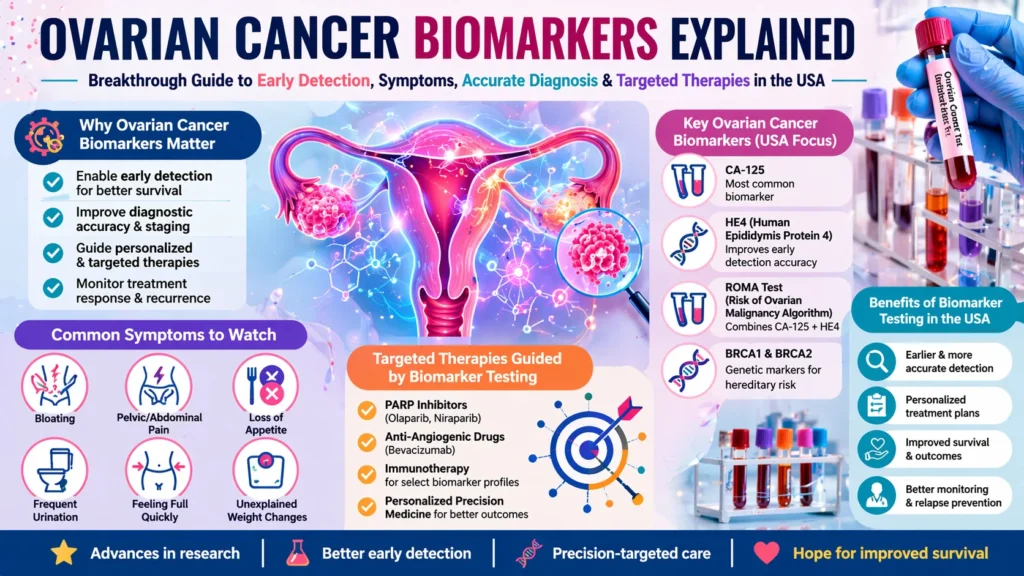

Ovarian cancer remains one of the most challenging gynecologic malignancies in the United States, often diagnosed at advanced stages due to vague or subtle early symptoms. Recent breakthroughs in ovarian cancer biomarkers are transforming how clinicians approach early detection, enabling more accurate diagnosis and opening the door to precision-targeted therapies.
From identifying high-risk individuals—such as those with BRCA mutations—to guiding personalized treatment strategies, biomarker research is rapidly reshaping patient outcomes. This comprehensive, USA-focused guide explores the latest advances in biomarker-driven screening, key warning symptoms, and cutting-edge targeted therapies, offering critical insights to support earlier intervention, improved survival, and more individualized care pathways.
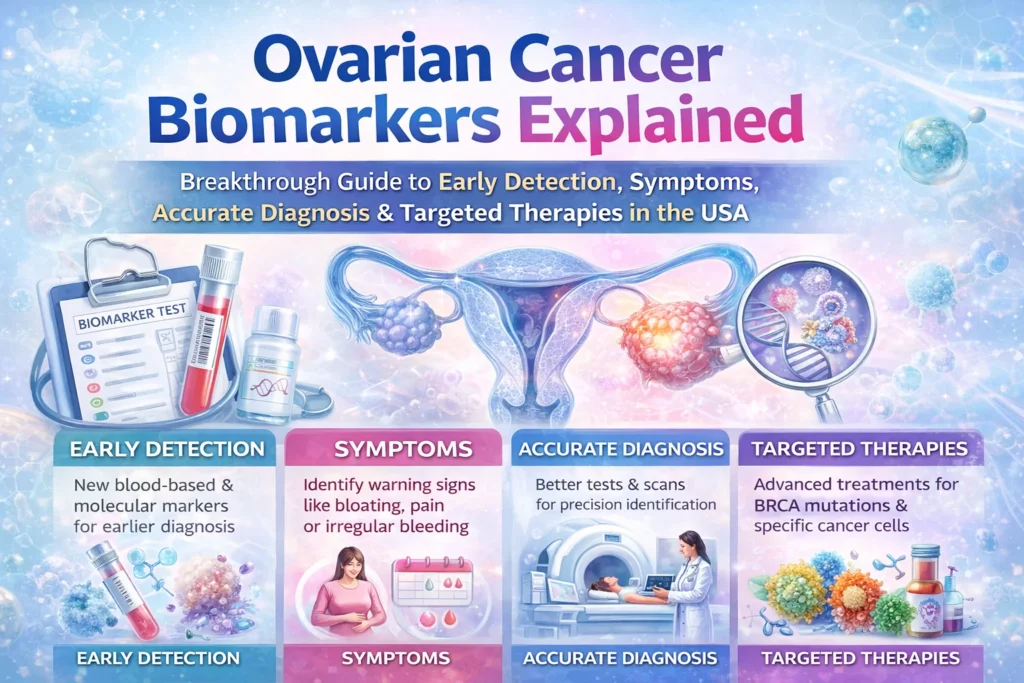
Ovarian cancer remains one of the most challenging gynecologic cancers in the United States, often diagnosed at advanced stages due to subtle early indicators. Understanding ovarian cancer biomarkers is crucial for improving outcomes through earlier intervention, personalized treatment, and ongoing monitoring. This article explores biomarker testing targeted therapies ovarian cancer, along with practical information on symptoms to help women recognize potential concerns and seek timely medical care.
Biomarkers for Early Detection of Ovarian Cancer
Biomarkers for early detection of ovarian cancer represent a rapidly evolving field. Researchers continue to investigate blood-based and molecular markers that could identify the disease before symptoms appear. While no single test is currently recommended for routine screening in average-risk women, advances in this area offer hope for high-risk groups, such as those with BRCA mutations or family history.
Biomarkers for Ovarian Cancer
Biomarkers for ovarian cancer include proteins like CA-125, which is elevated in many cases but can also rise due to benign conditions. Combining multiple markers enhances specificity. Healthcare providers in the USA often use these in conjunction with imaging for a more complete picture.
Biomarkers for Ovarian Cancer Diagnosis
Biomarkers for ovarian cancer diagnosis play a supportive role alongside imaging, biopsies, and clinical evaluation. They help differentiate malignant masses from cysts or other gynecologic issues, guiding decisions on surgery or further testing.
Glycolipid Biomarkers Early Detection Ovarian Cancer Startup
Emerging research highlights glycolipid biomarkers early detection ovarian cancer startup initiatives exploring novel glycolipid profiles as potential indicators. These startups are leveraging advanced proteomics and lipidomics to develop more precise, non-invasive tools that could transform how ovarian cancer is caught early in diverse US populations.
Ovarian Cancer Biomarker
An ovarian cancer biomarker refers to any measurable substance indicating the presence or progression of the disease. Common examples include HE4 and CA-125, often assessed together for better accuracy in clinical settings across the United States.
Ovarian Cancer Biomarker Test
An ovarian cancer biomarker test typically involves a simple blood draw analyzed in certified labs. While not diagnostic on its own, results inform risk assessment and treatment planning when interpreted by oncologists.
Biomarker for Ovarian Cancer
A biomarker for ovarian cancer can also guide prognosis and therapy selection. For instance, certain genetic or protein markers help identify patients who may benefit from specific interventions.
Biomarkers for Ovarian Cancer Detection and Therapy
Biomarkers for ovarian cancer detection and therapy are increasingly integrated into precision medicine. They not only aid detection but also predict response to treatments, allowing doctors to tailor approaches for better outcomes.
Biomarker Testing Targeted Therapies Ovarian Cancer
Biomarker testing targeted therapies ovarian cancer has revolutionized care. Testing for homologous recombination deficiency (HRD) or BRCA status can qualify patients for PARP inhibitors and other targeted drugs approved by the FDA, improving survival rates for eligible women in the USA.
Signs and symptoms of ovarian cancer are often vague and easily attributed to everyday issues like digestive problems or menstrual changes. Persistent bloating, pelvic or abdominal pain, feeling full quickly, and urinary urgency are classic red flags that warrant medical evaluation.
What Are the Signs and Symptoms of Ovarian Cancer?
What are the signs and symptoms of ovarian cancer? They can include fatigue, unexplained weight loss, changes in bowel habits, and back pain. Because these overlap with common conditions, many women delay seeking care—emphasizing the need for awareness.
What Are the Early Signs and Symptoms of Ovarian Cancer?
What are the early signs and symptoms of ovarian cancer? In initial stages, they may be mild or absent, which is why the disease is frequently diagnosed later. Subtle bloating or pelvic discomfort that persists for weeks should prompt a conversation with a healthcare provider.
Signs and Symptoms of Cervical Uterine or Ovarian Cancer
Signs and symptoms of cervical uterine or ovarian cancer can sometimes overlap, such as abnormal bleeding or pelvic pressure. Differentiating them requires professional diagnostic workup, including Pap smears, ultrasounds, or biopsies.
Signs and Symptoms of Ovarian Cancer After Hysterectomy
Signs and symptoms of ovarian cancer after hysterectomy may still occur if ovaries were retained. Women in this situation should remain vigilant for bloating, pain, or gastrointestinal changes, as residual ovarian tissue can still develop malignancy.
Signs and Symptoms of Advanced Ovarian Cancer
Signs and symptoms of advanced ovarian cancer often become more pronounced and may include ascites (fluid buildup causing abdominal swelling), shortness of breath, or significant fatigue due to metastasis.
Signs and Symptoms of Ovarian and Cervical Cancer
Signs and symptoms of ovarian and cervical cancer can coexist or share features like irregular bleeding and pelvic pain. Regular screenings remain essential for early differentiation.
Signs and Symptoms of Ovarian Cancer and Cervical Cancer
Signs and symptoms of ovarian cancer and cervical cancer frequently prompt women to seek gynecologic care. Any unusual discharge, bleeding between periods, or persistent discomfort deserves prompt attention.
Signs and Symptoms of Ovarian Cancer or Cysts
Signs and symptoms of ovarian cancer or cysts are often indistinguishable at first—both can cause bloating and pelvic pain. Imaging and biomarker tests help determine whether a mass is benign or malignant.
Signs and Symptoms of Ovarian Cancer Recurrence
Signs and symptoms of ovarian cancer recurrence may mirror the original disease, such as returning bloating, pain, or fatigue. Regular follow-up with oncologists, including biomarker monitoring, is vital for early detection of relapse.
Early awareness of these signs and symptoms of ovarian cancer can make a significant difference. In the United States, organizations like the American Cancer Society recommend discussing personal risk factors with a doctor, especially for those with family history or genetic predispositions.
Important Note: This information is for educational purposes only and is not a substitute for professional medical advice. Always consult a qualified healthcare provider for personalized screening, diagnosis, or treatment recommendations. Ovarian cancer care in the USA benefits from multidisciplinary teams and access to cutting-edge clinical trials.
For additional resources on related topics, explore these affiliate-linked searches: Search Amazon for ovarian cancer awareness and support resources Search Amazon for women’s health and wellness products
Staying informed about ovarian cancer biomarkers, biomarkers for ovarian cancer, and the full range of signs and symptoms of ovarian cancer empowers women to advocate for their health effectively. Regular check-ups and open dialogue with healthcare professionals remain the cornerstone of prevention and early intervention.