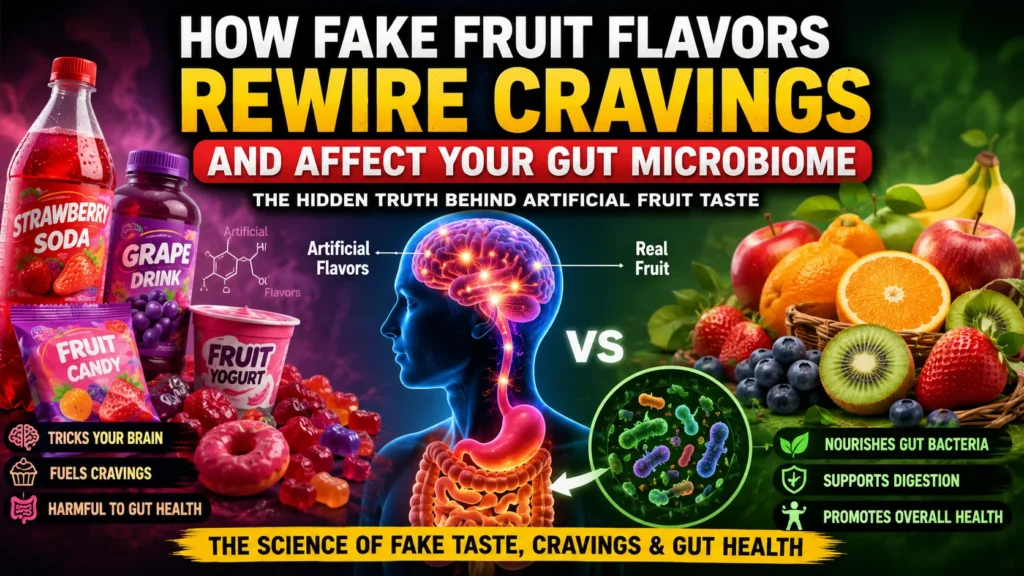

Bright strawberry candies, neon grape sodas, mango gummies, and artificially flavored fruit drinks are designed to taste even more exciting than real fruit itself. How Fake Fruit Flavors Rewire Cravings and behind these hyper-sweet flavors lies a growing scientific concern: artificial fruit flavors may be rewiring the brain’s reward system, changing taste perception, intensifying cravings, and potentially influencing the gut microbiome in ways researchers are only beginning to understand.
Modern processed foods use engineered aromas, sweetness enhancers, and sensory psychology to create “fake fruit taste” that feels addictive, emotionally comforting, and intensely satisfying — often more than actual fruit. Over time, this exaggerated flavor exposure may alter how the brain responds to natural foods, reduce sensitivity to real fruit sweetness, affect digestion and satiety signals, and contribute to unhealthy eating patterns linked to gut health imbalance.
As scientists explore the powerful connection between artificial flavoring, cravings, the Gut–Brain Axis, and the Gut Microbiome, an important question is emerging: are fake fruit flavors simply harmless fun, or are they subtly reshaping the way humans eat, crave, and digest food?
Artificial fruit flavors are everywhere. From neon-blue candies and strawberry yogurts to mango drinks and grape gummies, many modern foods are designed to taste more fruity than real fruit itself. Yet these flavors often contain little or no actual fruit.
The strange part is this: many people begin to crave these artificial fruit flavors more intensely than natural fruits. A child may reject a real strawberry but eagerly consume “strawberry-flavored” candy. Adults may find packaged mango beverages more satisfying than fresh mangoes.
This phenomenon is not just about taste. It involves psychology, neuroscience, marketing, digestive biology, and possibly even the gut microbiome.
The modern food industry has engineered flavors that interact with the brain in ways nature never intended. Researchers are now beginning to ask whether these hyper-stimulating flavor systems may influence appetite regulation, gut signaling, digestion, and long-term eating behavior.
What Is “Fake Fruit Taste”?
“Fake fruit taste” refers to artificially created or heavily modified fruit-like flavors that mimic or exaggerate natural fruit sensations.
These flavors may come from:
- Artificial flavoring chemicals
- Flavor esters
- Sweetener combinations
- Aroma engineering
- Color psychology
- Acidity manipulation
- Synthetic scent molecules
Interestingly, many artificial fruit flavors are not chemically identical to the real fruit.
For example:
- Artificial banana flavor is often based on isoamyl acetate, which resembles older banana varieties that most people have never eaten.
- Artificial grape flavor in candies tastes very different from real grapes.
- Watermelon-flavored snacks may contain no watermelon compounds at all.
The brain, however, accepts these sensory signals as “fruit-like,” especially when combined with bright colors and sugar.
Why Fake Fruit Flavors Feel More Addictive Than Real Fruit
Real fruits are biologically complex.
A real orange contains:
- Fiber
- Water
- Natural sugars
- Polyphenols
- Texture variation
- Bitterness
- Aroma diversity
- Satiety signals
Artificial fruit products remove many of these natural balancing factors while amplifying sweetness and aroma.
This creates what neuroscientists sometimes call a “supernormal stimulus” — a version of a natural reward that is exaggerated beyond what nature normally provides.
Examples include:
- Candy with stronger strawberry aroma than actual strawberries
- Fruit drinks sweeter than real fruit juice
- Gummies with concentrated flavor bursts
- Ice creams with amplified fruit esters
The brain’s reward system responds strongly to these exaggerated sensory signals.
Over time, natural fruit may begin to feel:
- Less exciting
- Less sweet
- Less rewarding
- More “boring”
This is similar to how highly processed foods can alter taste expectations.
The Brain–Gut Connection Behind Artificial Fruit Cravings
The gut and brain constantly communicate through what scientists call the gut-brain axis.
Gut–Brain Axis
When you eat food, the body does not only process calories. It also processes:
- Smell
- Taste intensity
- Texture
- Expectation
- Emotional reward
- Dopamine signaling
Artificial fruit flavors may confuse this communication system because the brain detects “fruit signals” without receiving the nutritional complexity of real fruit.
The brain expects:
- Fiber
- Micronutrients
- Phytochemicals
- Satiety
Instead, it may receive:
- Refined sugars
- Emulsifiers
- Artificial sweeteners
- Flavor chemicals
Some researchers believe this mismatch may contribute to:
- Persistent cravings
- Reduced satiety
- Overeating
- Altered reward responses
Can Fake Fruit Taste Affect the Gut Microbiome?
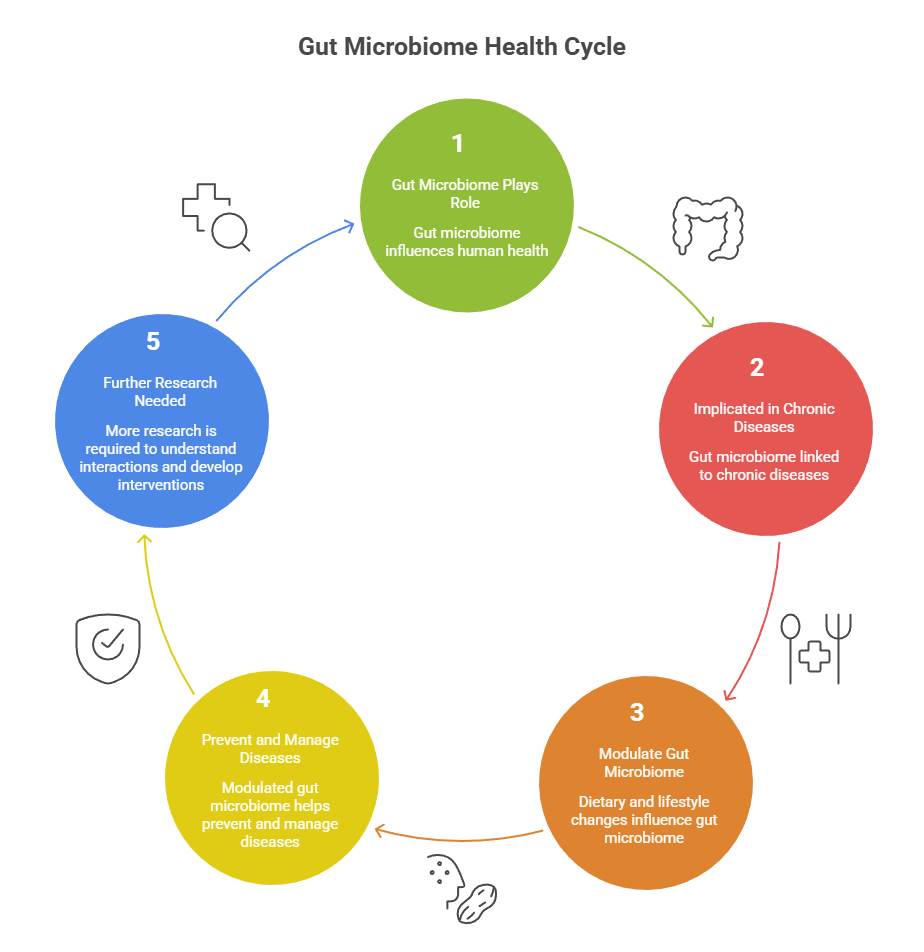
The gut microbiome consists of trillions of microorganisms living in the digestive tract.
Gut Microbiome
Real fruits help nourish beneficial gut bacteria because they contain:
- Prebiotic fiber
- Polyphenols
- Resistant starches
- Natural antioxidants
Many artificial fruit products lack these components entirely.
Instead, ultra-processed fruit-flavored foods may contain:
- High fructose syrups
- Artificial sweeteners
- Food dyes
- Stabilizers
- Preservatives
Emerging research suggests some additives may influence:
- Microbial diversity
- Intestinal permeability
- Inflammatory signaling
- Metabolic health
Scientists are still investigating how chronic exposure to flavor-enhanced processed foods affects long-term gut ecology.
The concern is not necessarily one artificial flavor alone. The issue may be the overall dietary pattern built around hyper-processed sensory stimulation.
The “Sensory Deception” Theory
Some nutrition researchers describe artificial flavor systems as a type of sensory deception.
The tongue and nose send a signal:
“Nutrient-rich fruit is arriving.”
But the digestive system receives a very different biochemical package.
This sensory mismatch may potentially affect:
- Hunger hormones
- Insulin signaling
- Fullness perception
- Dopamine regulation
The body evolved over thousands of years to associate sweet fruit aromas with actual nutrition and seasonal energy availability.
Modern engineered foods can hijack those ancient biological expectations.
Why Children Are Especially Vulnerable
Children are highly sensitive to flavor conditioning.
A child repeatedly exposed to:
- Bright fruit candies
- Sweetened fruit drinks
- Artificial fruit yogurts
- Colored gummies
may gradually recalibrate their taste expectations.
Real fruit may then seem:
- Sour
- Bland
- Less sweet
- Less stimulating
This can shape eating patterns for years.
Some pediatric nutrition experts worry that excessive exposure to ultra-sweet fruit flavor profiles may reduce acceptance of:
- Whole fruits
- Vegetables
- Natural textures
- Fiber-rich foods
The Role of Smell in Fake Fruit Taste
Much of what humans call “taste” is actually smell.
Artificial flavor companies carefully engineer:
- Volatile aroma molecules
- Flavor release timing
- Mouthfeel interactions
- Sweetness enhancement
Even color changes can alter perceived flavor intensity.
For example:
- Red drinks may seem sweeter
- Green colors may imply lime or apple
- Purple often signals grape flavor
This psychological conditioning is extremely powerful.
The brain learns to associate:
- Packaging
- Color
- Smell
- Texture
- Reward
with pleasure and comfort.
Could Fake Fruit Taste Influence Digestion?
Possibly.
Digestion begins before food enters the stomach.
The smell and anticipation of food activate:
- Saliva production
- Gastric acid secretion
- Digestive enzyme release
- Hormonal signaling
Cephalic Phase Response
If the brain expects nutrient-dense fruit but receives highly processed ingredients instead, researchers speculate this may alter digestive efficiency and satiety signaling.
This area remains under active scientific investigation.
Artificial Sweeteners, Fruit Flavor, and Gut Health
Some “sugar-free” fruit-flavored products combine:
- Artificial fruit aromas
- Non-nutritive sweeteners
- Acidifiers
Certain studies suggest some artificial sweeteners may influence:
- Gut bacteria composition
- Glucose tolerance
- Appetite regulation
However, evidence remains mixed and varies between individuals.
Not all artificial sweeteners affect the gut in the same way.
Why Real Fruit Feels Different to the Body
Real fruit has natural “brakes” that processed fruit-flavored foods often remove.
These include:
- Fiber slowing sugar absorption
- Chewing effort
- Water content
- Natural variability in sweetness
- Fullness signals
Chewing itself matters.
Mastication
Proper chewing:
- Improves digestion
- Enhances satiety
- Stimulates digestive enzymes
- Slows eating speed
Fruit-flavored processed foods are often designed for rapid consumption with minimal chewing.
This may reduce the body’s ability to properly regulate fullness.
The Emotional Side of Fake Fruit Flavors
Artificial fruit tastes are deeply tied to memory and emotion.
For many people:
- Strawberry candy reminds them of childhood
- Orange soda evokes celebrations
- Watermelon gum feels nostalgic
Food companies intentionally build emotional associations around flavors.
This emotional conditioning can strengthen cravings independent of hunger.
Are Artificial Fruit Flavors Dangerous?
Artificial fruit flavors are generally regulated for safety in approved amounts.
But safety and health optimization are not always the same thing.
The bigger concern may be:
- Dietary displacement of real foods
- Overconsumption of ultra-processed products
- Altered taste preferences
- Chronic metabolic overstimulation
Researchers are increasingly studying how processed sensory environments affect long-term human health.Do Artificial Sweeteners Destroy Gut Bacteria?
Artificial sweeteners do not completely “destroy” gut bacteria, but some studies suggest they may alter the balance of the gut microbiome in certain people.
Gut Microbiome
Research has linked some artificial sweeteners to:
- Reduced microbial diversity
- Changes in beneficial bacterial populations
- Altered glucose metabolism
- Increased intestinal inflammation in animal studies
Sweeteners commonly studied include:
- Saccharin
- Sucralose
- Aspartame
- Acesulfame potassium
However:
- Effects vary between individuals
- Dose matters
- Human evidence is still evolving
- Not all sweeteners behave the same way
Some newer sweeteners may have milder microbiome effects than older ones.
The bigger concern is often the overall ultra-processed dietary pattern rather than occasional sweetener use alone.
What Is the 7-Day Gut Reset?
A “7-day gut reset” is not an official medical treatment. It is usually a short-term diet and lifestyle plan intended to support digestive health and reduce processed food intake.
Common gut reset approaches focus on:
- Removing ultra-processed foods
- Reducing added sugars
- Increasing fiber intake
- Eating fermented foods
- Improving hydration
- Supporting sleep
- Reducing alcohol intake
Foods commonly included:
- Yogurt with live cultures
- Kefir
- Fruits
- Vegetables
- Whole grains
- Beans
- Nuts
- Fermented foods
Some people report:
- Less bloating
- Better bowel movements
- Reduced cravings
- Improved energy
But a true microbiome shift usually takes longer than 7 days. Long-term dietary patterns matter far more than short detox-style programs.
Does Fruit Help the Gut Microbiome?
Yes. Many fruits help nourish beneficial gut bacteria.
Prebiotic
Fruits support gut health because they contain:
- Fiber
- Polyphenols
- Natural antioxidants
- Water
- Prebiotic compounds
Examples especially helpful for gut bacteria include:
- Apples
- Bananas
- Berries
- Pomegranates
- Kiwi
- Pears
These compounds may help beneficial bacteria produce short-chain fatty acids, which support:
- Colon health
- Immune regulation
- Gut lining integrity
Whole fruits are generally better for the microbiome than fruit juices because fiber remains intact.
Does the Gut Microbiome Affect Cravings?
Yes — emerging research strongly suggests the gut microbiome may influence cravings and eating behavior.
Gut–Brain Axis
Gut bacteria may affect:
- Hunger hormones
- Dopamine signaling
- Satiety
- Sugar cravings
- Mood and stress responses
Some scientists believe certain microbes may indirectly influence cravings for:
- Sugar
- Fatty foods
- Processed foods
Possible mechanisms include:
- Production of neurotransmitter-related compounds
- Effects on inflammation
- Changes in blood sugar regulation
- Signaling through the vagus nerve
Diet heavily shapes these microbial populations.
A diet rich in:
- Fiber
- Fruits
- Vegetables
- Fermented foods
may support healthier craving regulation compared to highly processed diets dominated by refined sugars and artificial flavor systems.
How to Retrain the Brain Toward Real Fruit
People who feel addicted to hyper-sweet fruit flavors may gradually retrain their taste systems.
Strategies include:
- Eating whole fruits daily
- Reducing ultra-processed snacks
- Chewing slowly
- Combining fruit with fiber and protein
- Avoiding excessively sweet beverages
- Exploring less sweet fruits first
Over time, many people notice:
- Increased sensitivity to natural sweetness
- Reduced craving for artificial flavors
- Better satiety
- Improved digestion
Future Research Questions
Scientists are now exploring several fascinating questions:
- Can artificial flavor exposure alter the microbiome long-term?
- Do hyper-palatable fruit flavors affect dopamine pathways?
- Could flavor engineering contribute to overeating?
- Does reduced chewing impair gut signaling?
- Can artificial aroma compounds influence appetite hormones?
- Are children more neurologically sensitive to flavor conditioning?
These areas remain early-stage but increasingly important.
Final Thoughts
Fake fruit taste is more than a food trend. It is a modern sensory phenomenon shaped by neuroscience, psychology, and industrial food engineering.
The human brain evolved to recognize real fruit as a package of nutrition, fiber, aroma, and energy. Artificial fruit flavors separate those signals from their original biological context.
The result may be a subtle disconnect between:
- Taste and nutrition
- Craving and satiety
- Reward and nourishment
While occasional artificial fruit products are unlikely to harm most people, diets dominated by hyper-engineered flavor systems may gradually reshape taste perception, eating behavior, and possibly even gut health.
Understanding this relationship may become one of the most important future discussions in nutrition science and preventive medicine.
Disclaimer:
This article is intended for informational and educational purposes only and should not be considered medical advice, diagnosis, or treatment. The content discussing artificial fruit flavors, cravings, digestion, gut health, and the gut microbiome is based on emerging scientific evidence, nutritional research, and evolving theories in food science and preventive health. Individual responses to artificial sweeteners, processed foods, and dietary patterns may vary significantly depending on genetics, lifestyle, and existing medical conditions. Readers are advised to consult a qualified healthcare professional before making significant dietary or medical decisions, especially if they have digestive disorders, metabolic diseases, allergies, or chronic health conditions.
This article has been reviewed with insights from Dr. Mohammed Abdul Azeem Siddiqui, bringing over 30 years of clinical experience in patient care and preventive health awareness. However, the information provided here should not replace personalized medical consultation or professional treatment recommendations. Further long-term human studies are still needed to fully understand the relationship between artificial flavor systems, the brain, cravings, digestion, and gut microbiome health.